


Ever stared at the sky and wondered if there’s another you out there, living a totally different life?
Yeah, that mind-bending idea isn’t just sci-fi; it’s the heart of parallel universes and multiverse theory, where every choice splits reality into endless “what ifs.”
Grasping this stuff changes how you see everything, from quantum quirks to the Big Bang’s wild echoes. And it sparks big questions about fate, physics, and infinity.
Stick around. This blog breaks it down simply so you can understand theories like Many Worlds and bubble universes, and decide for yourself if our reality’s just one thread in a cosmic web.
The Basic Concept of the Multiverse Theory
At its core, the multiverse theory suggests our universe isn’t the only one out there. Instead, it’s part of a massive collection of universes that exist simultaneously.
Think of it like pages in a book; each page is a separate universe with its own timeline, physical laws, and possibly even different versions of you.
Some of these universes might be nearly identical to ours, while others could be completely alien.
The multiverse concept challenges everything we thought we knew about reality and forces us to ask: if infinite universes exist, what makes ours special?
Key Theories Behind the Multiverse
The multiverse isn’t just one idea; it’s actually several different theories that scientists have developed over time. Each theory approaches parallel universes from a unique angle, and they don’t all agree with each other.
1. Inflationary Multiverse (Bubble Universes)

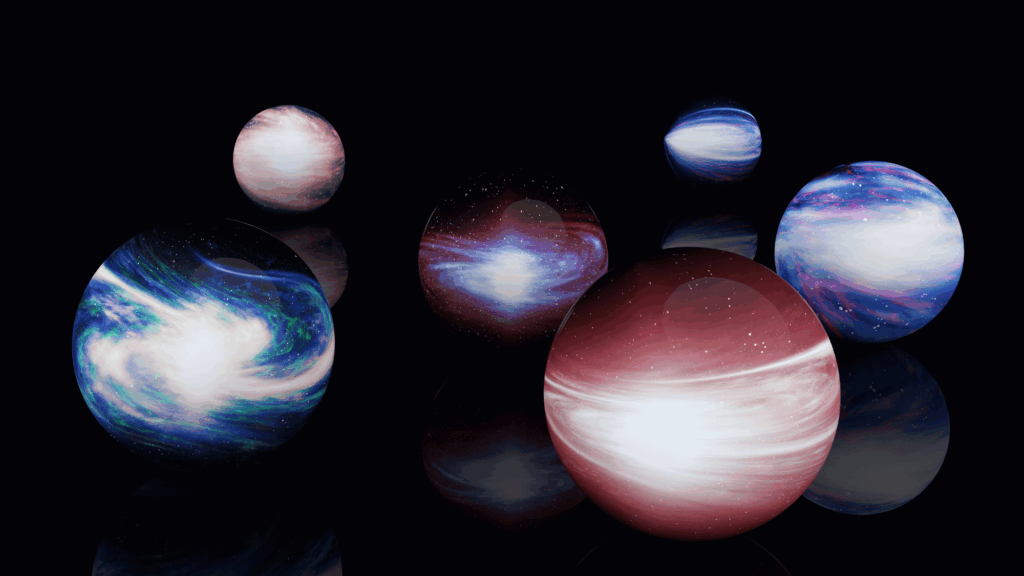
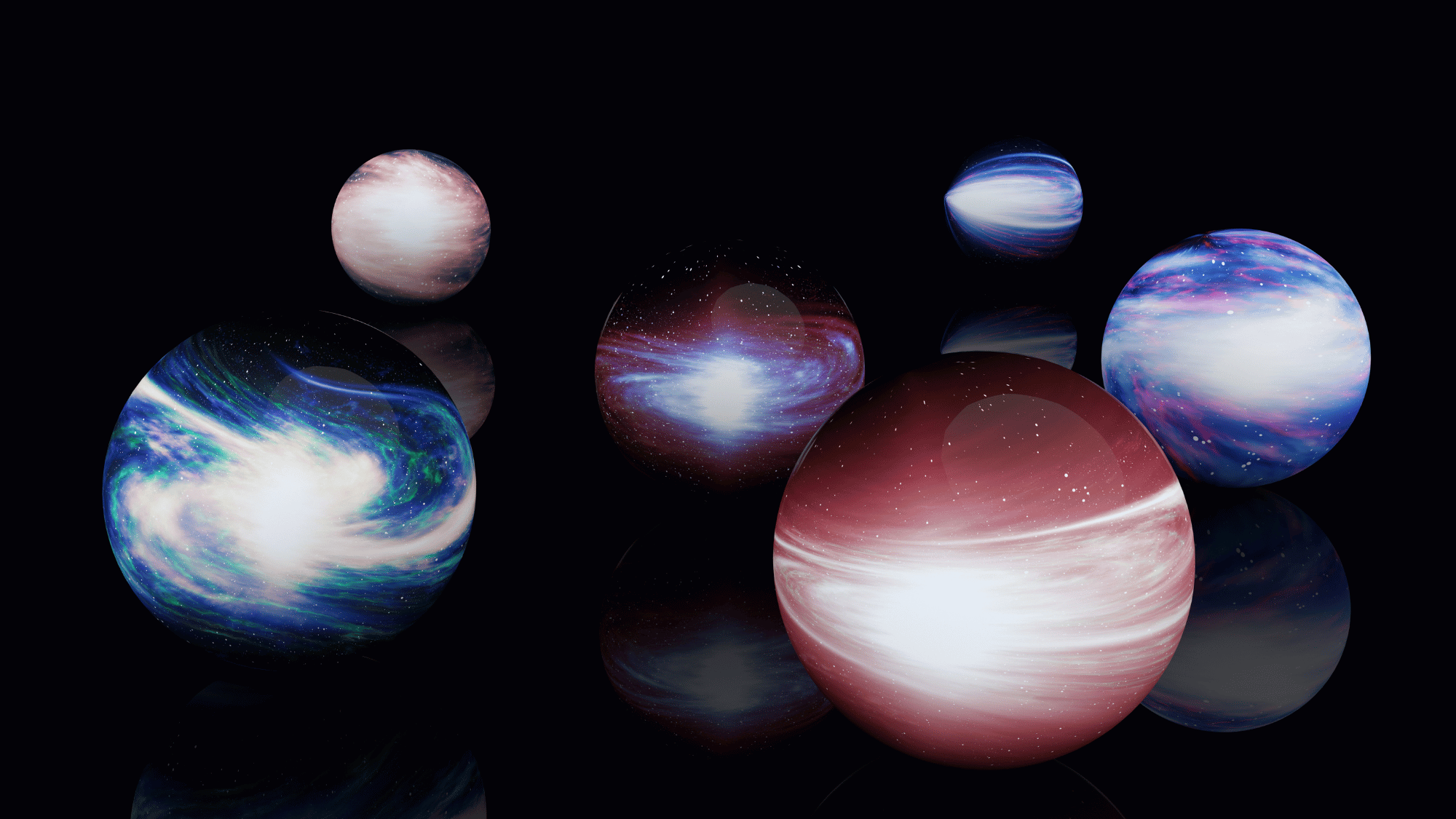
Picture the universe as a giant pot of boiling water, with bubbles constantly forming. That’s basically the inflationary multiverse theory.
After the Big Bang, space didn’t just expand once; it kept inflating in different regions, creating separate “bubble universes.”
Each bubble became its own universe with unique physical laws and properties. These bubbles can’t interact with each other, which makes proving this theory incredibly challenging for scientists today.
2. Many Worlds Interpretation of Quantum Mechanics

Every time you make a decision, the universe splits. That’s the bold claim of the Many Worlds Interpretation.
When quantum particles face multiple possibilities, they don’t just pick one outcome; every possible outcome happens in a separate universe.
This theory was proposed by physicist Hugh Everett in 1957 and suggests that reality constantly branches into an infinite number of parallel timelines with every quantum event.
3. String Theory and the Landscape Multiverse

String theory suggests everything in the universe is made of tiny vibrating strings of energy. The math behind string theory allows for about 10500 different ways these strings can vibrate and arrange themselves.
Each arrangement creates a universe with different physical constants and laws of nature. Scientists call this vast collection the “landscape multiverse.”
Some universes might have stronger gravity, while others might have weaker gravity. In most of them, life as we know it couldn’t exist. We just happen to live in one where conditions are right.
4. Brane Cosmology: Parallel Universes on Higher-Dimensional “Branes”
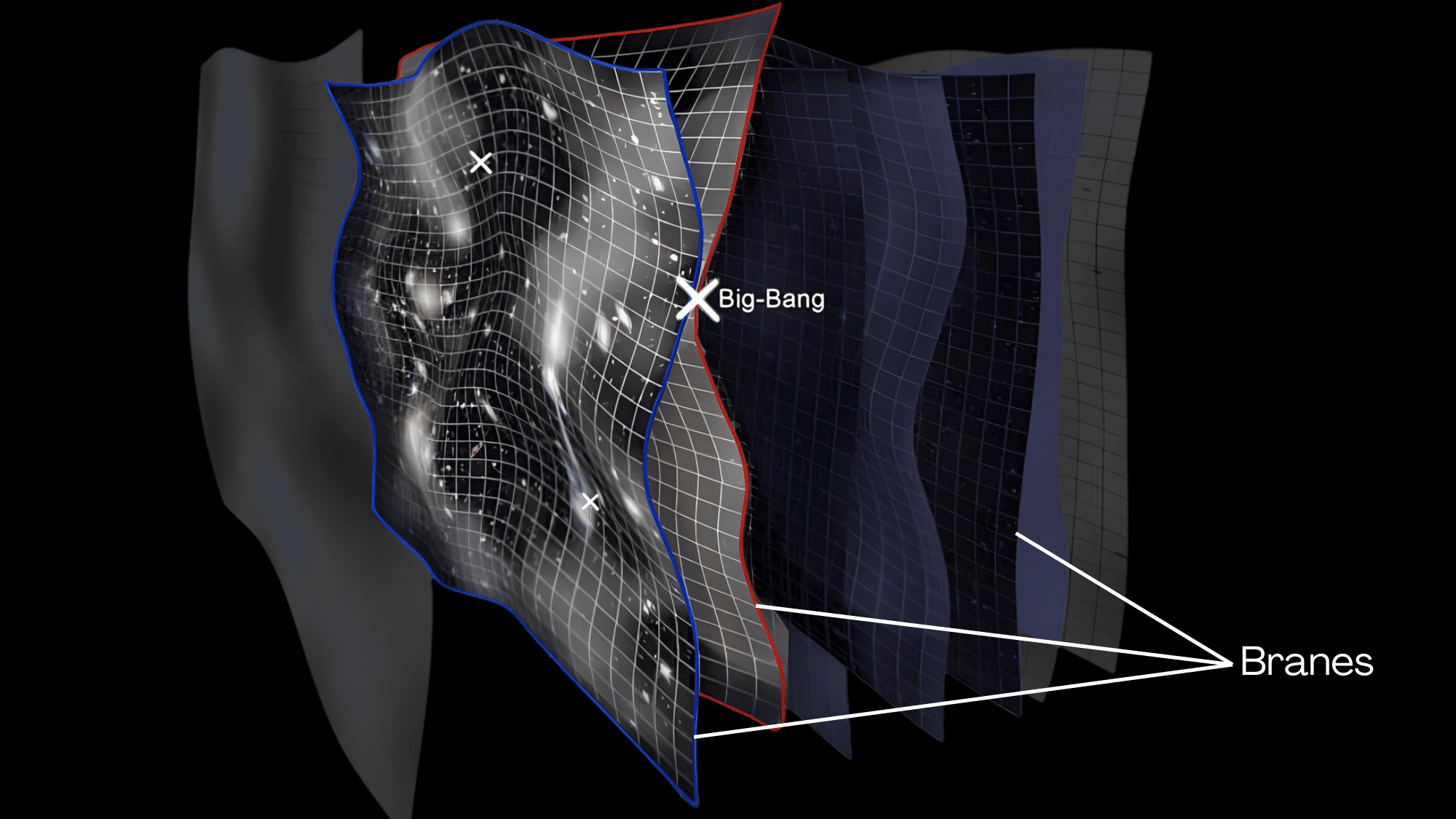
Imagine our entire universe as a flat sheet floating in a higher-dimensional space. That sheet is called a “brane,” short for membrane.
Brane cosmology suggests multiple branes exist, each containing its own universe, floating parallel to each other in extra dimensions we can’t perceive.
These branes might occasionally bump into each other, and some scientists think these collisions could explain the Big Bang. Gravity might even leak between branes, which could help explain why gravity seems weaker than other fundamental forces in our universe.
How These Theories Explain Parallel Universes
Each multiverse theory offers a different explanation for how parallel universes could exist and operate.
The inflationary model says they’re born from cosmic expansion, scattered across infinite space like islands in an ocean.
Quantum mechanics takes a different route; it claims that universes split every time a particle makes a choice, creating an endless branching of realities.
String theory approaches it mathematically, suggesting the laws of physics themselves can vary, producing universes with completely different rules.
And brane cosmology? It proposes we’re living on one slice of reality among many, stacked in dimensions our senses can’t detect.
While these theories seem wildly different, they all point toward the same stunning possibility: our universe isn’t alone. Understanding how each theory works helps scientists narrow down which version of the multiverse might actually be real.
Scientific Evidence and Challenges

The multiverse theory sounds amazing, but proving it is incredibly difficult. Scientists face a fundamental problem: how do you gather evidence for universes you can’t observe, touch, or measure?
- Cosmic Microwave B ackground Radiation: Patterns in the universe’s oldest light might show signs of collisions with other universes.
- Fine-Tuning of Physical Constants: Our universe’s laws seem perfectly calibrated for life, which statistical probability suggests could point to multiple universes.
- Quantum Superposition Experiments: Particles exist in multiple states simultaneously until observed, hinting at Many Worlds branching.
- Mathematical Consistency: String theory equations naturally produce multiple universe solutions, not just one.
- Dark Flow Phenomenon: Mysterious galaxy movements could indicate gravitational pull from matter outside our universe.
- Cold Spots in Space: Unexplained temperature variations in the cosmic background radiation might be bruises left by bubble-universe collisions.
Popular Culture and the Multiverse
The multiverse has jumped from scientific journals straight into movies, TV shows, and books. Marvel’s Spider-Man: Into the Spider-Verse brought multiple Spider-People together from different realities.
Rick and Morty explores infinite universes where anything can happen.
Everything Everywhere All at Once won Oscars by showing a woman experiencing her life across countless parallel worlds.
Even “The Flash” and “Doctor Strange” have made the multiverse a central plot device. These stories help people grasp complex scientific ideas through entertainment, though they often take creative liberties.
Still, pop culture keeps the conversation going and makes quantum physics surprisingly accessible to everyone.
To Conclude
The multiverse theory pushes the boundaries of human understanding. Sure, we can’t prove parallel universes exist yet; our technology just isn’t there. But that’s what makes this field so exciting.
Scientists continue gathering clues from cosmic radiation patterns, quantum experiments, and mathematical models.
Maybe one day we’ll find definitive proof that other universes are real. Until then, the multiverse remains one of physics’ most thrilling mysteries.
It reminds us that reality might be far stranger and more wonderful than we ever imagined. Keep questioning, keep wondering; that’s how science moves forward.