


Look up at the night sky. That glowing orb has watched over Earth for billions of years. But how much do most people really know about it?
The Moon holds secrets that even space fans might find surprising. From its odd movements to strange effects on our planet, this celestial neighbor is far more interesting than it appears.
Some facts seem too wild to be true, yet science backs them up. This article reveals Moon trivia that will change how readers see that familiar face in the sky.
Get ready to learn something new about Earth’s only natural satellite.
What Makes the Surface of the Moon Unique?
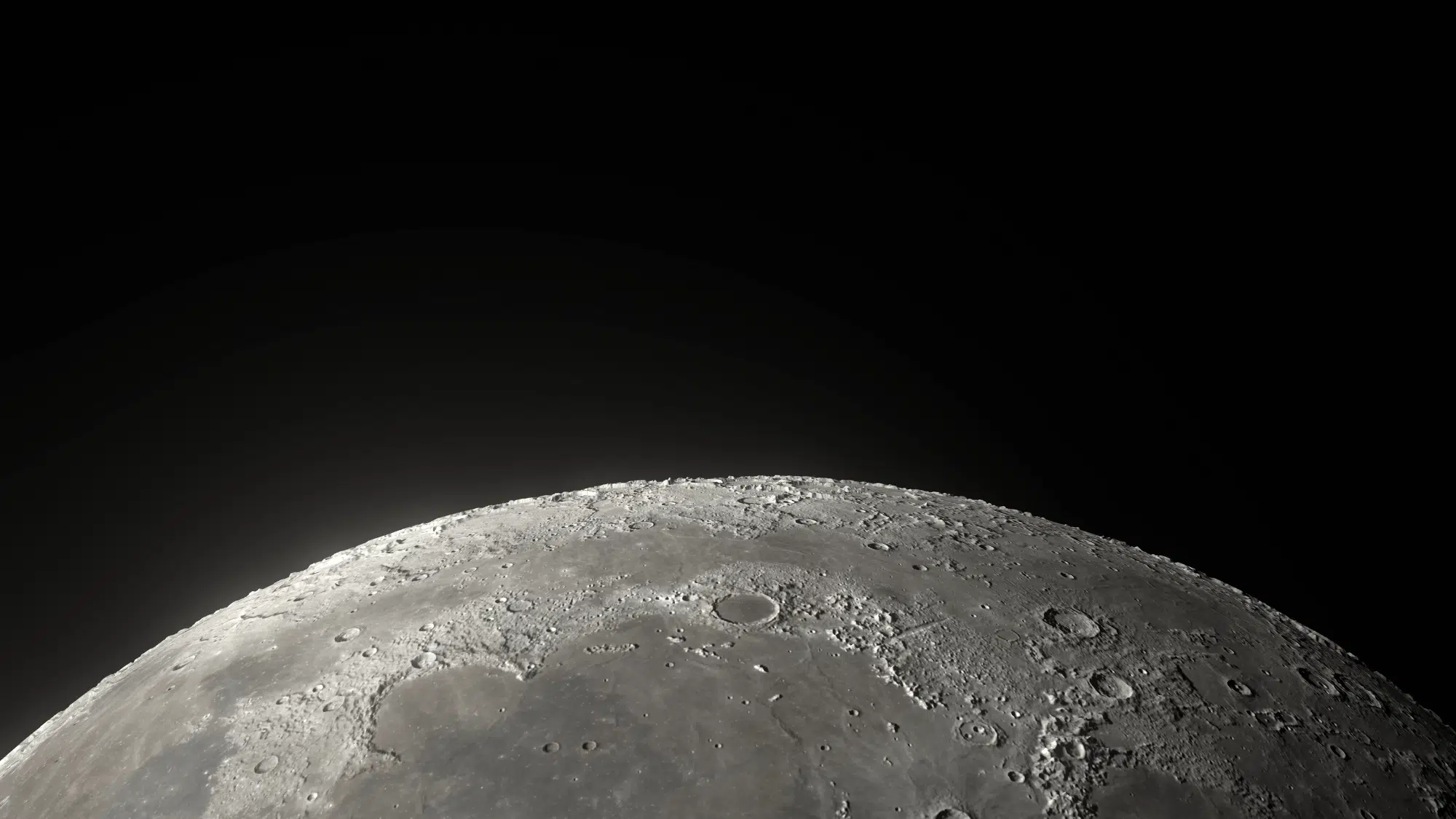
The Moon’s surface tells a story of cosmic violence spanning billions of years.
Unlike Earth, it has no atmosphere to burn up incoming space rocks. Every crater, every scar remains perfectly preserved.
The surface is covered in a fine, powdery dust called regolith. This dust is incredibly sharp because there’s no wind or water to smooth it down. It clings to everything it touches.
The temperature swings are extreme, too. During the day, the surface can hit 260 degrees Fahrenheit. At night, it plummets to minus 280 degrees.
No other place humans have visited has such brutal conditions
Rarest Fun Facts About the Moon
The Moon hides some truly bizarre secrets that most people never learn in school. These rare facts challenge common beliefs and reveal just how strange our nearest neighbor really is.
The Moon is the only natural satellite of Earth, estimated to be about 4.51 billion years old, forming shortly after our planet through what is widely known as the Giant Impact Hypothesis.
Measuring 3,474 kilometers in diameter, roughly one-quarter the size of Earth, the Moon has a mass equal to just one eighty-first of Earth’s.
Its surface gravity is approximately one-sixth that of Earth, which is why astronauts could move more easily during lunar missions.
The Moon orbits Earth at an average distance of about 384,400 kilometers, completing a sidereal orbit in approximately 27.3 days.
A single lunar day, from one sunrise to the next, lasts around 29.5 Earth days.
Because the Moon is tidally locked, it continually presents the same side to Earth, although its far side receives sunlight just as the near side does.
Although liquid water cannot exist on the Moon’s surface, scientists have confirmed the presence of ice within permanently shadowed craters at the poles.
Seismic activity known as moonquakes does occur, with some triggered by tidal forces exerted by Earth.
The Moon’s orbit slowly drifts outward at a rate of about 3.8 centimeters per year, which will eventually make total solar eclipses impossible.
By helping stabilize Earth’s axial tilt, the Moon contributes to long-term climate stability on our planet.
It is the fifth-largest moon in the solar system and the largest in proportion to the size of its host planet.
A total of 24 astronauts have traveled to the Moon, with 12 of them walking on its surface during the Apollo missions between 1969 and 1972.
Covering roughly 38 million square kilometers, the Moon’s surface area is slightly smaller than that of the Asian continent.
The Moon reflects very little sunlight, having a low albedo that makes its surface darker than weathered asphalt.
Lunar phases occur because of the shifting alignment between the Sun, Earth, and Moon; during a new moon, the illuminated side faces away from Earth.
The Moon’s core makes up roughly 20 percent of its radius and is believed to consist of iron with a partially molten outer layer.
Unlike Earth, the Moon lacks a global magnetic field, instead exhibiting only small, localized magnetic regions.
Ancient lava tubes beneath the surface may be large enough to serve as natural shelters for future lunar habitats.
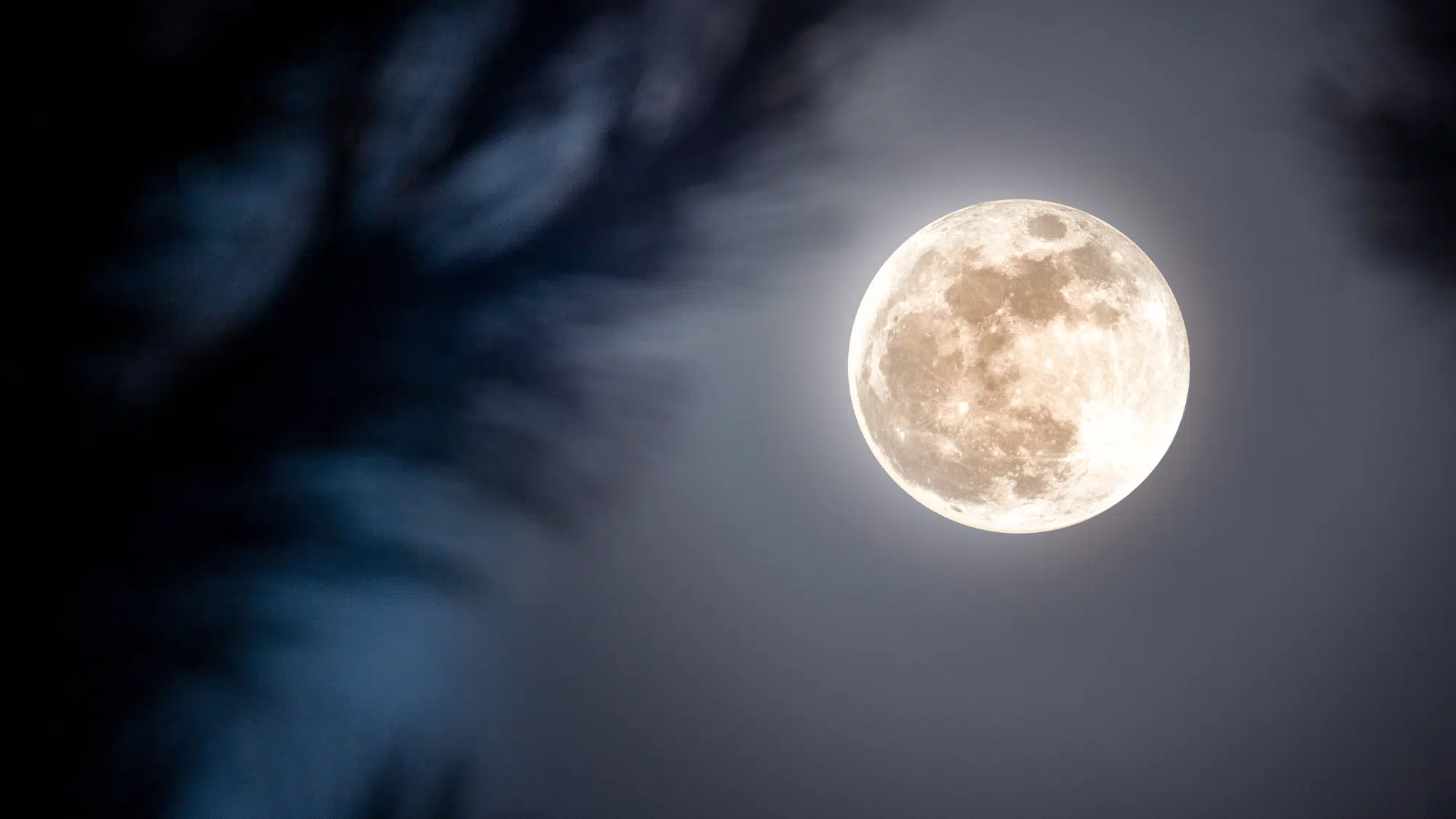
After the Sun, the Moon is the brightest object visible in Earth’s night sky.
The word “lunatic” originates from ancient beliefs that the Moon could influence human behavior and mental states.
The lunar gravitational pull drives Earth’s ocean tides, producing spring tides during full and new moons and neap tides during the quarter phases.
Because the Moon’s rotational period matches its orbital period, it exhibits synchronous rotation, always showing the same hemisphere to Earth.
Some rocks on Earth are older than the most ancient lunar samples brought back from the Apollo missions.
The Moon’s distance from Earth varies between perigee at about 363,000 kilometers and apogee at roughly 406,000 kilometers.
On average, the lunar crust is about 50 kilometers thick, with the near side being noticeably thinner than the far side.
The Moon is the second-densest satellite in the solar system, surpassed only by Jupiter’s moon Io.
Its slightly distorted shape, including a fossil bulge, reflects a time when the Moon orbited Earth at a much closer distance.
Over the past billion years, the Moon has contracted by about 100 meters, resulting in the formation of thrust fault scarps.
Cryptomaria: ancient volcanic deposits concealed beneath impact debris lie hidden under the lunar highlands.
Evidence suggests that pockets of relatively recent basaltic volcanic activity may exist within craters of the Orientale Basin.
Secondary impacts continuously churn the top layer of regolith, producing one of the highest crater-formation rates in the solar system.
Water ice has been confirmed at the lunar poles, with concentrations reaching up to about 1,000 parts per million in certain regions.
The Moon’s mantle is composed largely of minerals such as olivine and pyroxene, giving it a mafic, iron-rich character.
While the highlands are dominated by anorthosite, the maria consist mainly of dark basaltic rock.
Mons Huygens, the tallest mountain on the Moon, stands at about 5.5 kilometers high.
Retroreflectors left by Apollo astronauts enable scientists to measure the precise distance between Earth and the Moon using laser ranging.
Because the Moon has no atmosphere, sound cannot travel across its surface.
The Moon can appear larger near the horizon due to a psychological effect known as the Moon illusion.
A supermoon occurs when a full moon coincides with perigee, while a micromoon appears when a full moon aligns with apogee.
During a total lunar eclipse, the Moon often turns red as a result of Earth’s atmosphere scattering sunlight.
A blue moon is defined as the second full moon within a single calendar month.
The Moon’s gravitational pull not only affects Earth’s oceans but also produces subtle land movements known as Earth tides.
Some researchers theorize that an early binary-moon system may have merged to create the Moon’s present structure.
The pressure at the Moon’s core is estimated to be around 5 gigapascals.
The lunar exosphere is maintained by processes such as sputtering from solar radiation and gases released through radioactive decay within the crust.
The Moon has “simple” craters under 15 km in diameter with bowl-shaped depressions and “complex” craters larger than 15 km with central peaks caused by the rebound of the surface after impact.
Lunar basins often have multi-ring structures caused by massive impacts.
Impact melt pools created by the heat of large impacts solidify into smooth floors seen in many large craters.
Secondary craters are formed when ejecta from a primary crater impact falls back and causes smaller craters; these can form chains or clusters.
Some crater rays visible from Earth are bright streaks of ejected material radiating from young craters.
Moonquakes, though less frequent than earthquakes, can last up to an hour due to the lack of atmosphere damping.
Lunar dust is highly abrasive and was problematic for the Apollo astronauts’ equipment and suits.
The Moon’s regolith, a powdery soil, is made up of tiny fragments formed from billions of years of meteorite impacts.
Most major lunar basins formed around 3.9 billion years ago during the Late Heavy Bombardment.
Basins can expand multiple times larger than their initial craters due to structural collapse and faults.
Impact melt sheets in giant basins like South Pole-Aitken can be up to 50 km thick.
Ejecta from impacts can reach orbit, explaining lunar meteorites found on Earth.
Lunar breccia forms from shattered rock fragments glued by molten material post-impact.
The maria cover about 16% of the Moon’s surface, mostly on the near side.
Central peaks in complex craters can expose deep mantle material.
Terraced walls in large craters form as rim material slumps inward.
Significance of the Moon to Earth and Humans
The Moon does far more than light up the night sky. Its invisible forces shape Earth’s oceans, climate, and even the length of days in ways most people never realize.
- Tides: The Moon’s gravity creates ocean tides that shape coastal ecosystems and marine life cycles.
- Climate Stability: It stabilizes Earth’s axial tilt, preventing extreme climate swings and supporting consistent seasons.
- Weather Influence: Lunar gravity subtly affects atmospheric pressure and circulation, influencing weather patterns and ocean currents.
- Day Length: Tidal forces gradually slow Earth’s rotation, lengthening days over millions of years while pushing the Moon farther away.
- Cultural and Biological Impact: Moon phases guide marine reproduction cycles and have shaped human calendars, mythology, and culture for thousands of years.
Conclusion
The Moon isn’t just a rock floating in space. It’s Earth’s silent partner, shaping tides, steadying the climate, and even stretching out days.
Every crater on its surface tells an ancient story. Every phase guides life below. These facts reveal how deeply connected our world is to that dusty sphere overhead.
Next time the Moon rises, take a moment to appreciate it. Think about the invisible forces at work. Understanding the Moon means understanding Earth itself a little better.