


Looking up at the night sky, people have always wondered what lies beyond our planet. That curiosity led to something truly remarkable orbiting Earth right now.
The International Space Station represents one of humanity’s greatest achievements in space exploration. But this massive laboratory floating 250 miles above Earth didn’t just appear overnight. It had a predecessor that paved the way.
From early space stations to the advanced orbiting laboratory of today, understanding how we got here reveals the incredible journey of human ingenuity.
This blog defines both the ISS and the space station that came before it, showing how far space exploration has come.
What was the International Space Station’s Predecessor?
The International Space Station didn’t emerge from nowhere. Before countries joined forces to build the ISS, several space stations orbited Earth, each contributing valuable lessons.
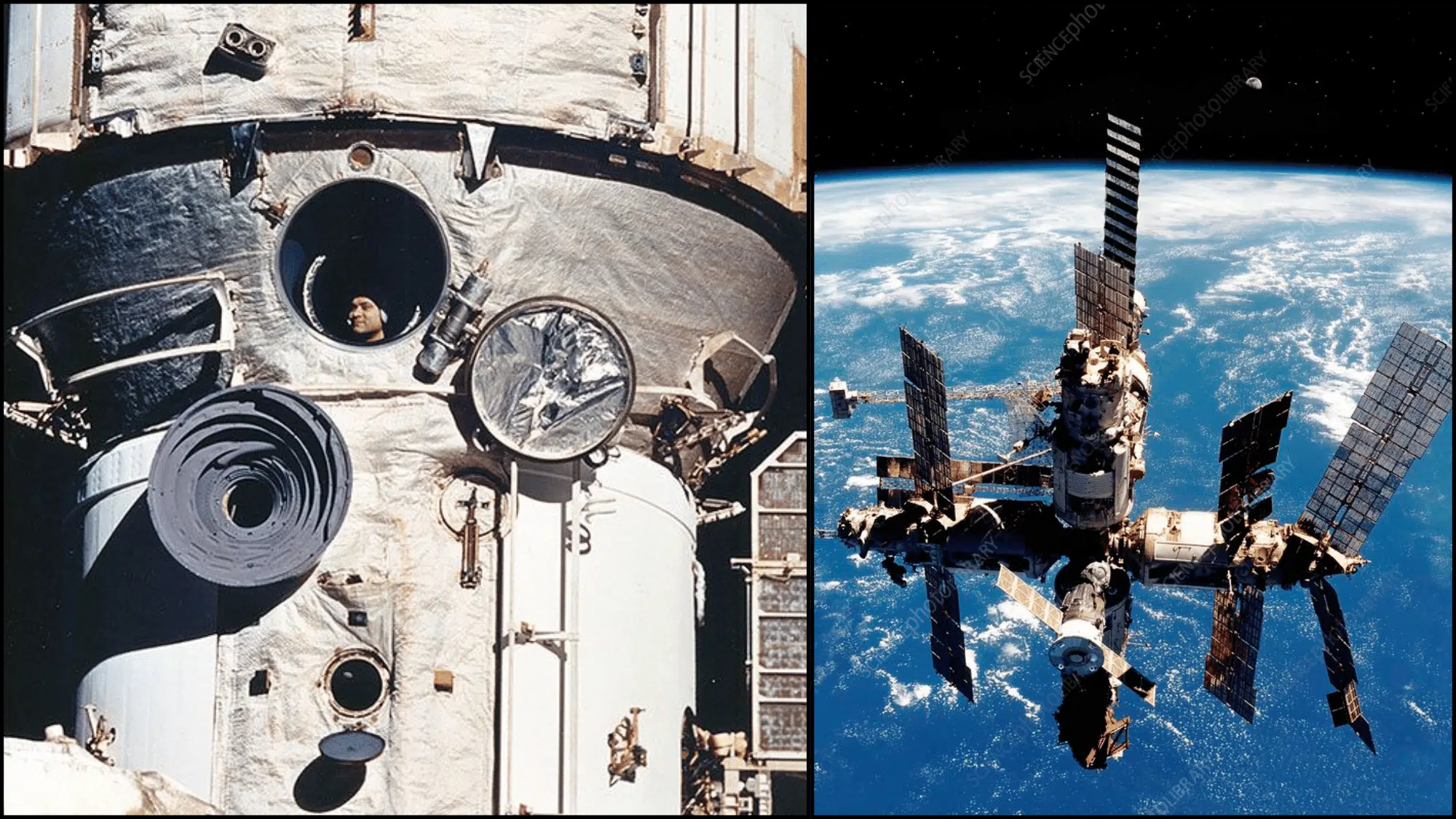
The Soviet Union’s Mir space station stands as the ISS’s most direct predecessor.
Launched in 1986, Mir operated for 15 years and became the first modular space station. It proved that humans could live and work in space for extended periods.
Mir also marked a turning point in space exploration. Former Cold War rivals began cooperating when American astronauts visited Mir in the 1990s.
These missions tested the international partnerships that would later make the ISS possible, transforming space from a battleground into common ground.
Understanding the History of the Mir Space Station
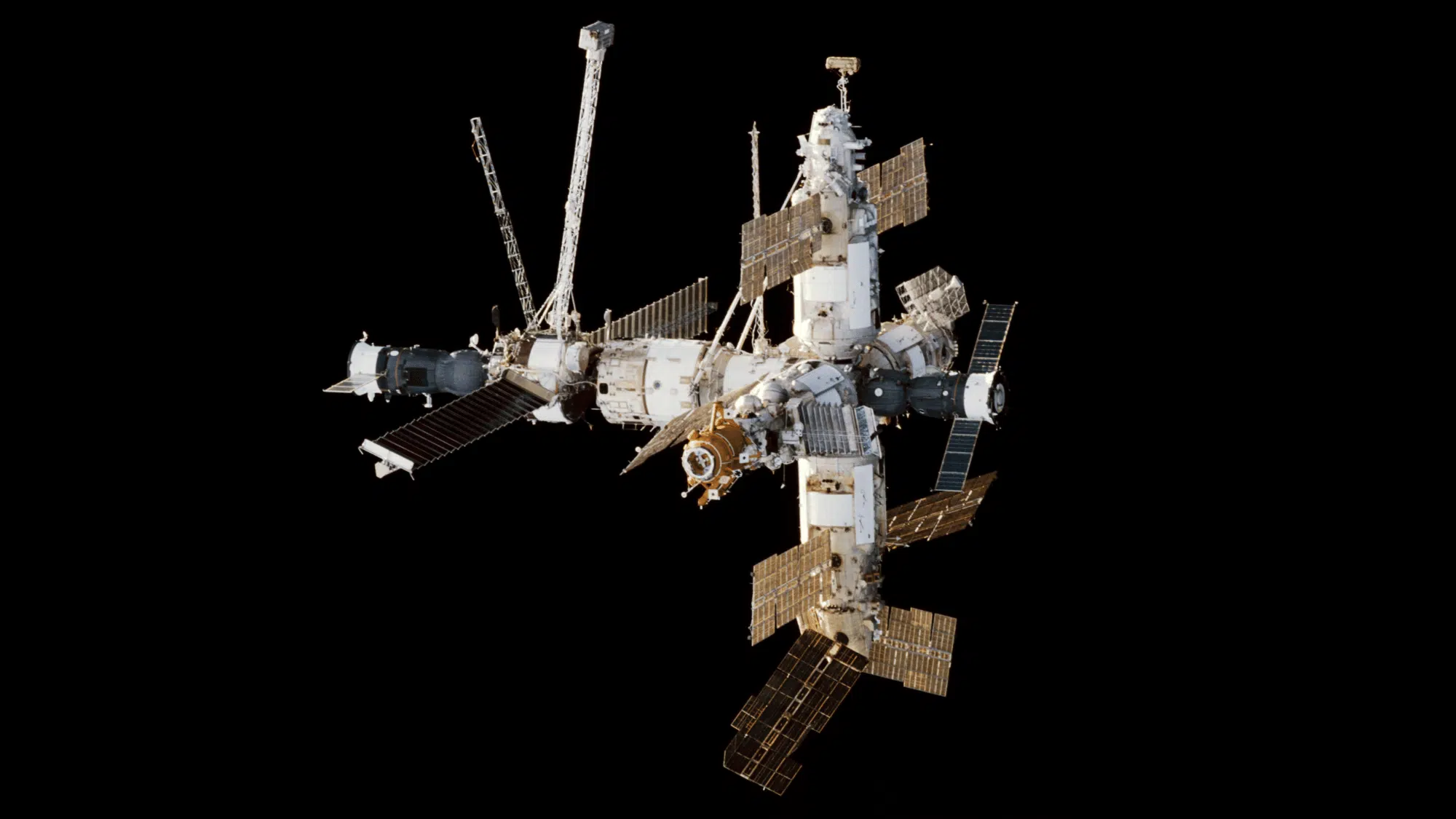
Image Source: Wikipedia
Mir’s 15-year journey showcased human determination and engineering brilliance. From a single module to a complex orbital laboratory, it rewrote space history.
Timeline of Core Module and Expansions
Mir didn’t arrive as one complete structure. The Soviets built it piece by piece, launching modules over a decade.
The core module launched on February 19, 1986. This base unit contained living quarters, life support systems, and control equipment. It measured 43 feet long and weighed nearly 21 tons.
Five additional modules followed:
- Kvant-1 (1987): Added astrophysics equipment and extended the station’s capabilities for scientific research.
- Kvant-2 (1989): Brought an airlock for spacewalks and additional life support systems.
- Kristall (1990): Included materials processing furnaces and docking ports for future spacecraft.
- Priroda (1996): Completed the station with Earth observation equipment.
- Spektr (1997): Carried American equipment and solar panels, marking increased international cooperation.
Each module docked automatically, creating a sprawling space complex that grew more capable with every addition.
Key Milestones and Achievements
Mir shattered records that seemed impossible when space exploration began. The numbers tell an impressive story.
The station hosted 28 long-term expeditions throughout its operational life. Cosmonauts and astronauts accumulated over 2,682 days of continuous human presence in space. That’s nearly six years of people living off Earth.
Some notable achievements include:
- First modular space station ever constructed
- Longest single spaceflight by a human (437 days by Valeri Polyakov)
- Over 23,000 scientific experiments have been conducted
- Hosted crews from 12 different countries
- Proved long-duration spaceflight was possible
Technical Specifications
| Specification | Details |
|---|---|
| Total Mass | 140 tons (fully assembled) |
| Habitable Volume | 350 cubic meters |
| Length | 100 feet (including docked spacecraft) |
| Solar Array Area | 2,500 square meters |
| Orbital Altitude | 240 miles above Earth |
| Number of Docking Ports | 6 ports |
| Crew Capacity | 3-6 people |
The solar arrays generated up to 28 kilowatts of power, enough to run the station’s systems and scientific equipment. Multiple docking ports allowed cargo ships to resupply the crew while visiting spacecraft came and went.
Mir orbited Earth every 90 minutes, completing about 16 orbits per day. This gave crew members 16 sunrises and sunsets daily.
How Mir Paved the Way for the ISS
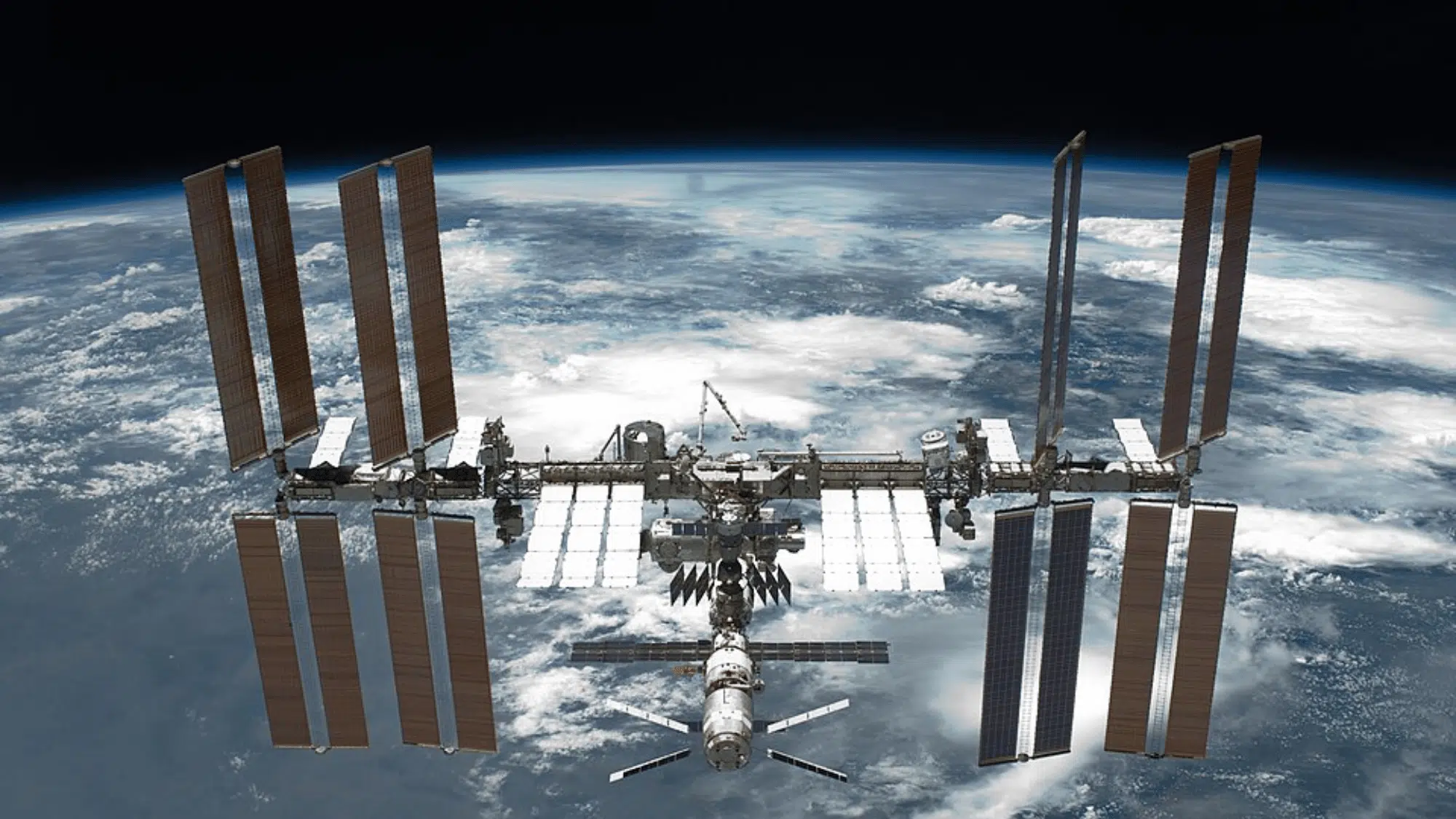
Image Source: Wikipedia
Mir wasn’t just another space station. It became a testing ground for everything the International Space Station would need to succeed.
The lessons learned from Mir’s triumphs and troubles directly shaped ISS design and operations. Engineers studied Mir’s modular construction, life support systems, and crew rotation schedules. They noted what worked brilliantly and what needed improvement.
But Mir’s greatest contribution went beyond technology. The Shuttle-Mir program of the 1990s brought American astronauts to the Russian station for extended stays. Former competitors worked side by side, sharing resources and knowledge. This unprecedented cooperation broke down decades of mistrust.
When the ISS launched in 1998, it carried Mir’s legacy forward. The partnerships forged aboard Mir became the foundation for international collaboration in space. Without Mir’s example, the ISS might never have left the drawing board.
Major Challenges and Breakthroughs of the Mir Era
Mir faced dangers that tested human resilience and problem-solving skills. Each crisis drove innovations that made future space stations safer and more reliable.
- 1997 Fire Incident: A lithium perchlorate canister ignited, filling the station with smoke for 90 seconds. Crew members couldn’t reach the fire extinguishers initially. This led to better fire suppression systems and oxygen candle placement on the ISS.
- Progress Collision (1997): A cargo ship crashed into the Spektr module during a manual docking test, puncturing the hull. The crew sealed off the damaged section within minutes. This accident revolutionized docking procedures and automated safety protocols.
- Aging Infrastructure: As Mir aged, systems failed more frequently. Power outages, computer crashes, and cooling system breakdowns became regular occurrences. Engineers developed better maintenance schedules and redundant systems for long-term missions.
- Psychological Strain: Cramped quarters and isolation took a mental toll on crews. Some missions experienced tension between crew members. These experiences shaped ISS crew selection, training programs, and habitat design for better living conditions.
- International Cooperation Hurdles: Language barriers and different operational procedures caused confusion during joint missions. Teams created standardized protocols and required astronauts to learn Russian while cosmonauts learned English.
- Life Support Advances: Mir tested recycling systems that converted urine into drinking water and removed carbon dioxide from the air. Though imperfect, these systems proved to be essential technology that the ISS refined and still uses today.
Mir vs. Skylab: The U.S. and Soviet Space Race Comparison
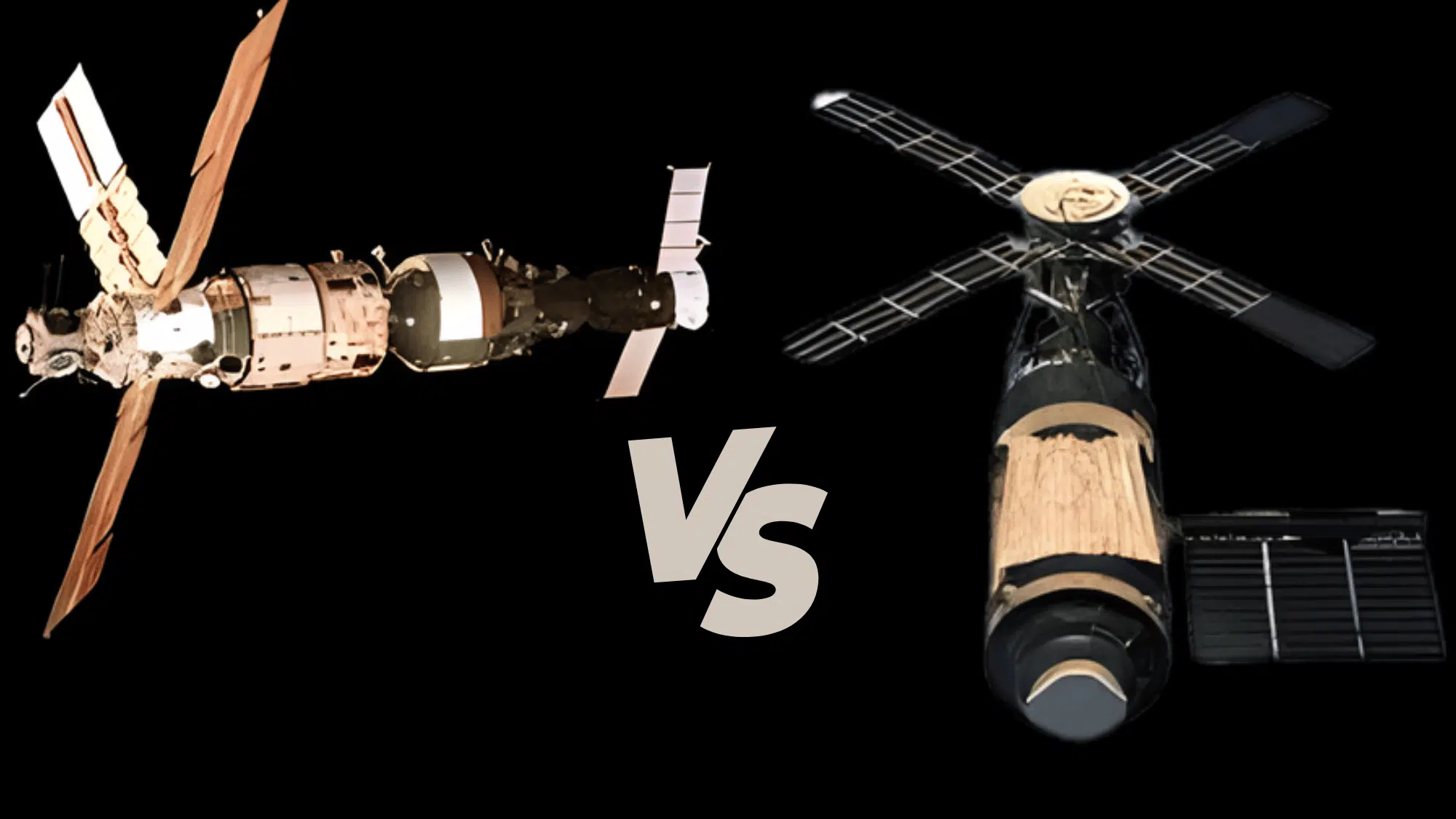
America’s Skylab and Soviet Mir represented two approaches to space stations. Their differences revealed each nation’s priorities during the space race era.
| Feature | Skylab (USA) | Mir (USSR/Russia) |
|---|---|---|
| Launch Date | May 14, 1973 | February 20, 1986 |
| Operational Period | 1973-1979 (6 years) | 1986-2001 (15 years) |
| Design Philosophy | Single-launch, complete station | Modular, expandable design |
| Total Mass | 77 tons | 140 tons (fully assembled) |
| Crew Capacity | 3 astronauts | 3-6 cosmonauts/astronauts |
| Number of Expeditions | 3 missions | 28 long-term expeditions |
| Total Crew Days | 513 days | 4,594 days |
| Construction Method | Converted rocket stage | Multiple modules added over 10 years |
| International Cooperation | None (U.S. only) | 12 countries participated |
| Primary Achievement | Proved humans could work in space | Demonstrated long-duration habitation |
| End of Mission | Uncontrolled reentry, 1979 | Controlled deorbit, 2001 |
Skylab showed what America could do with existing technology. Mir proved the Soviets thought long-term, building something that could grow and adapt over time.
Technological Innovations from Mir that Shaped ISS
Mir served as a laboratory for testing technologies that the ISS would depend on. These innovations became standard features in modern space stations.
- Modular Construction: Mir proved that launching separate modules and connecting them in orbit worked better than single-launch stations, becoming the ISS blueprint.
- Automated Docking Systems: The Kurs automated rendezvous system allowed unmanned cargo ships to dock safely, now used by Progress and other ISS supply vehicles.
- Long-Duration Life Support: Water recycling systems and air purification technology tested on Mir were refined and installed on the ISS for crew survival.
- Solar Array Deployment: Mir’s extendable solar panels demonstrated how to generate and manage power in space, directly influencing ISS energy systems.
- Elektron Oxygen Generation: This system splits water molecules to produce breathable oxygen, a critical technology now essential for ISS operations.
- International Docking Adapters: The Androgynous Peripheral Attach System (APAS) allowed American shuttles to dock with Mir, later standardized for ISS international compatibility.
To Conclude
The jump from Mir to the ISS wasn’t just about building a bigger space station. It represented a shift in how nations view space exploration.
Mir taught scientists that cooperation trumps competition when pushing boundaries. Those hard-won lessons from fires, collisions, and daily operations weren’t wasted. They’re embedded in every ISS system and procedure today.
Space stations evolved from Cold War symbols into humanity’s shared laboratory. Mir’s modular design, life support innovations, and international partnerships created the template. The ISS simply perfected it.
Next time that bright dot crosses the night sky, remember it carries Mir’s legacy. Two space stations, one incredible journey toward understanding our universe together.