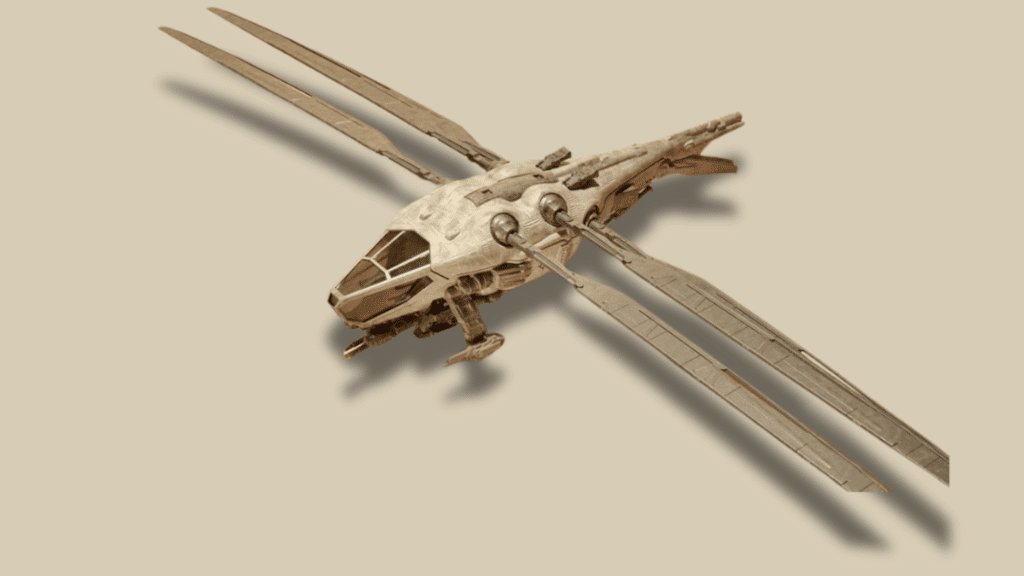




Frank Herbert’s Dune brought readers a universe filled with strange machines and alien technology.
Among these creations, one vehicle stands out for its unique design and cultural significance. The Atreides ornithopter has captured imaginations since the 1960s, but each new adaptation has brought its own vision to life.
From David Lynch’s 1984 film to Denis Villeneuve’s recent blockbusters, filmmakers have wrestled with how to portray these insect-like aircraft. The results reveal more than just the evolution of special effects.
They show how different directors interpret Herbert’s world and what they believe audiences need to see. How has this iconic vehicle changed across decades?
What is an Ornithopter in Dune?
Picture a dragonfly the size of a small plane, wings beating against Arrakis’ scorching winds. That’s the essence of a ‘thopter in Herbert’s universe. These anti-gravity aircraft don’t rely on traditional jet engines.
Instead, they use flapping wings to cut through the desert planet’s turbulent air. Sand would choke conventional engines within hours, but ornithopters thrive where others fail.
Their design serves multiple purposes: evading the massive sandworms that patrol the dunes, transporting precious spice harvests, and ferrying passengers across vast wastelands.
The technology reflects Herbert’s fascination with biomimicry; machines that learn from nature’s oldest flyers. On Arrakis, adapting to the environment isn’t optional. It’s survival.
Atreides Ornithopter: The Iconic Design Features
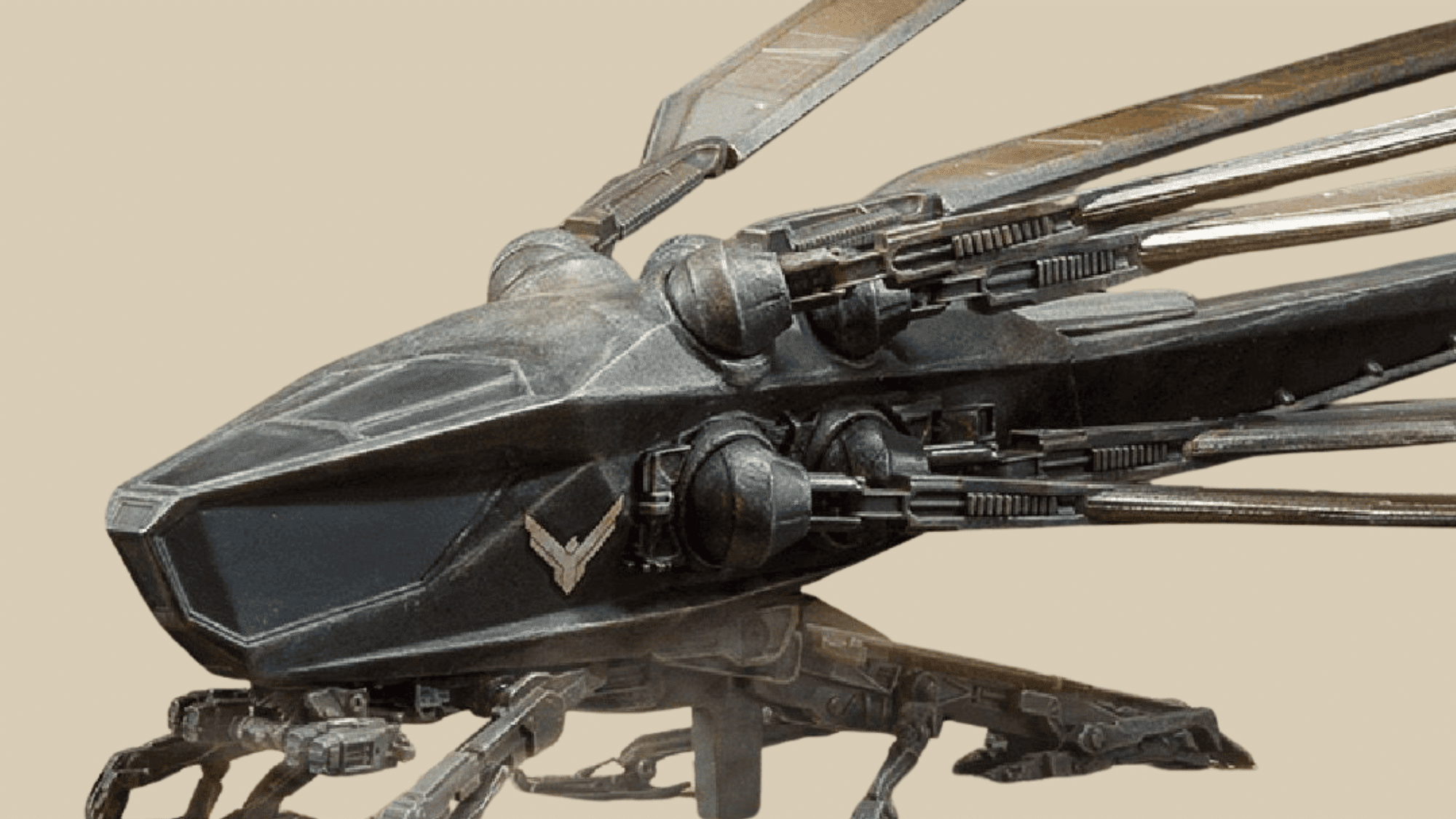
House Atreides ornithopters blend military precision with desert functionality. Their sleek profiles and articulated wings showcase noble engineering at its finest across multiple adaptations.
- Dragonfly-Inspired Wings: Articulated flaps mimic insect aerodynamics, allowing rapid direction changes and hover capabilities. This design separates Atreides craft from bulkier Harkonnen models through superior agility.
- Reinforced Cockpit Construction: Noble house pilots require protection from sandstorms and combat threats. Atreides’ thopters feature fortified cockpits with enhanced visibility for desert navigation and tactical operations.
- Militaristic Aesthetic: Sleek, angular lines convey House Atreides’ martial heritage. The design balances intimidation with efficiency, reflecting the family’s warrior-diplomat reputation throughout the Imperium.
- Modular Configuration System: Variants serve different roles: combat, scouting, or transport. This adaptability demonstrates Atreides’ engineering philosophy: one platform, multiple mission profiles for Arrakis survival.
- Booster Integration: Villeneuve’s films added jet assists to traditional flapping mechanisms. These hybrid systems provide speed bursts during worm encounters or emergency escapes from desert threats.
How Ornithopter Flight is Supposed to Work
Ornithopter mechanics blend biological inspiration with advanced engineering. Their flapping-wing system tackles Arrakis’ hostile conditions where conventional aircraft fail, creating a unique flight profile.
1. Wing Flapping Mechanics
The wings beat in rhythmic cycles mimicking birds and insects. Downstrokes push air downward, generating lift and thrust for hovering or climbing.
Upstrokes minimize drag through feathering, angling blades to slice through air resistance. This dual-phase motion allows vertical takeoffs and precise maneuvering in tight desert canyons or during sudden sandstorm evasions.
2. Bio-Engineered Heart Scallops
Herbert’s lore includes organic “Heart Scallops” that pulse electrically to drive wing motion. These bio-mechanical components respond to pilot controls, adjusting beat frequency for speed variations.
The system represents Dune’s fusion of living tissue with machinery, creating propulsion that’s both efficient and adaptable to rapidly changing desert wind conditions.
3. Hybrid Glide Mode
Wings lock into rigid positions for high-speed travel, transforming the craft into a fixed-wing glider. Jet assists provide additional thrust during these phases, conserving energy on long hauls.
This mode proves crucial for spice harvester support runs or quick escapes, where flapping alone can’t generate sufficient velocity against Arrakis’ brutal headwinds.
4. Arrakis-Specific Adaptations
Thin atmosphere and abrasive sand demand specialized engineering.
The flapping system creates greater air displacement than rotary props, countering low air density. Sealed mechanisms prevent sand infiltration.
These features enable sideways flight for worm-dodging and sudden dives into rocky outcrops, maneuvers impossible for traditional aircraft in desert environments.
Ornithopters Across Dune Adaptations
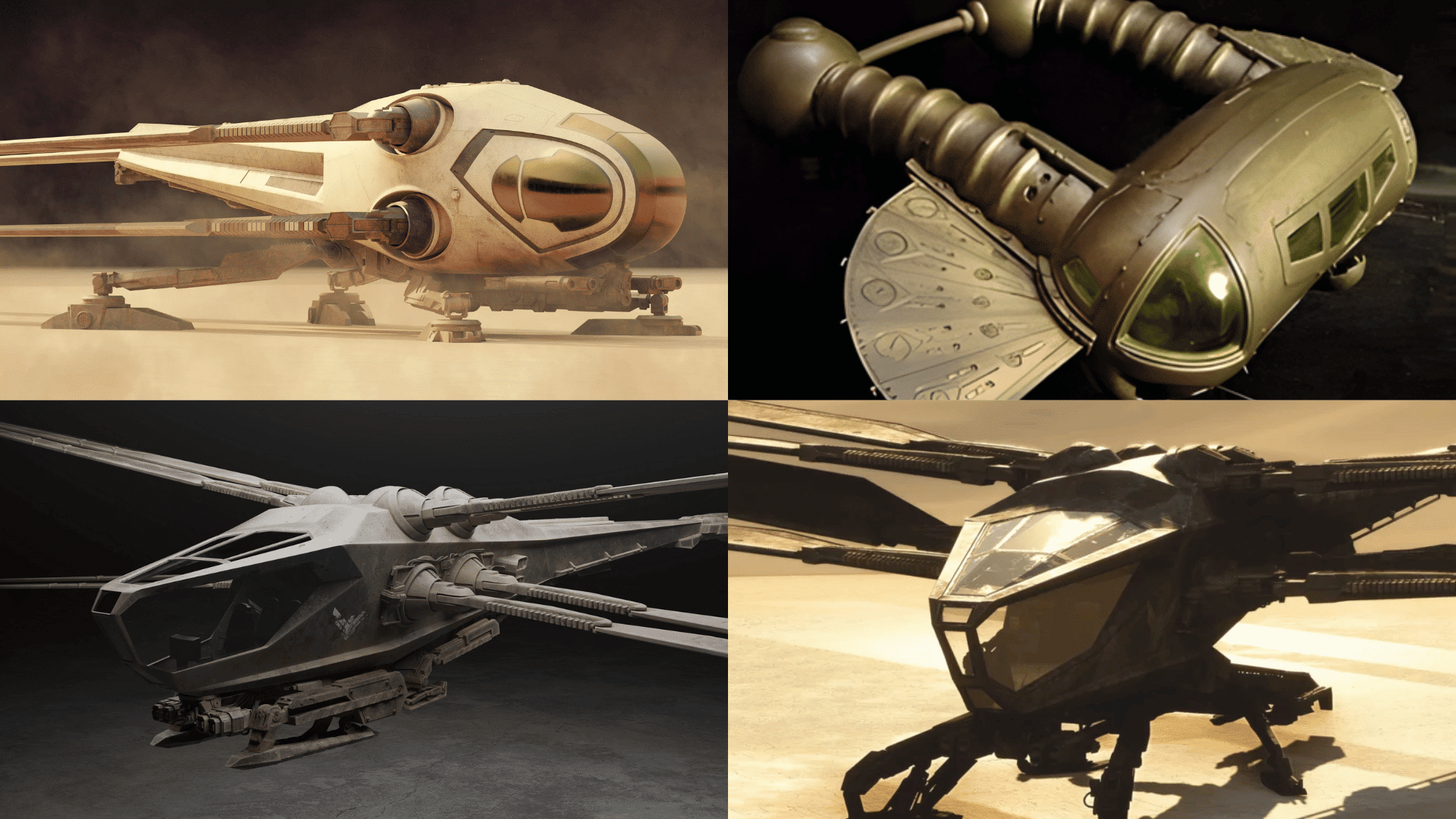
Each adaptation reimagines ornithopter design through its era’s technology and vision. Comparing these versions reveals evolving interpretations of Herbert’s insect-inspired aircraft.
| Adaptation | Wing Design | Flight Style | Atreides Characteristics |
|---|---|---|---|
| Lynch (1984) | Angular with rotary props | Rigid, jet-like speed | Sleek military aesthetic, minimal flapping shown |
| Miniseries (2000) | Beetle-inspired VTOL | Jump jet mechanics | Squat profile, reduced agility emphasis |
| Villeneuve (2021/24) | Dragonfly flaps with boosters | Realistic hover and glide transitions | Armed, chunky variants with physics-based motion |
| Early Games | Static wing models | Simplified arcade flight | Basic scout functionality, limited detail |
| Dune: Awakening | Modular hybrid systems | Dragonfly hover vs. Vulture glide modes | Scout variants prioritize Atreides agility |
Villeneuve’s films stand apart for their physics-realistic approach, drawing directly from dragonfly aerodynamics research to create believable desert flight mechanics.
How to Get an Ornithopter in Dune: Awakening
Players must navigate base-building systems and resource management to earn their first ornithopter. The process rewards exploration and strategic planning across Arrakis’ dangerous landscape.
Step 1: Unlock Schematics – Progress through main story missions or purchase blueprints from settlement vendors using Solari currency for MK1 ornithopter access.
Step 2: Gather Essential Resources – Collect steel, electronics, and rare materials from deep desert expeditions, avoiding sandworms and hostile players during resource runs.
Step 3: Construct Vehicle Workshop – Build or upgrade your base’s Vehicle Workshop facility to enable ornithopter assembly and future customization options.
Step 4: Craft Your Ornithopter – Select Scout or Transport variants at the Workshop, prioritizing Atreides-style models for early-game agility and spice hauling efficiency.
Step 5: Customize and Deploy – Equip armor, thrusters, or weapons for PvP readiness, then master wing deployment for hover and locked-wing modes for speed
The Bottom Line
The Atreides ornithopter represents more than fictional aircraft; it’s a testament to imaginative engineering solving extreme environmental challenges.
From Lynch’s angular interpretations to Villeneuve’s dragonfly realism, each adaptation has pushed creative boundaries while honoring Herbert’s biomimetic vision.
For Dune: Awakening players, mastering these crafts means understanding both lore and mechanics. The journey from blueprints to first flight mirrors the Atreides themselves: adaptable, resourceful, and built for survival.
So gear up, gather resources, and claim the skies above Arrakis. The spice fields await, and sandworms don’t give second chances.