


Mercury, the closest planet to the Sun, is a small, fast-moving world. It has extreme temperatures and a very short year.
One common question people ask is: how many moons does Mercury have? While some planets have dozens of moons, Mercury is different. It doesn’t have any.
This might seem strange at first, but there are clear reasons behind it. Its location near the sun and the strength of gravity play a big role.
This blog looks at the facts behind Mercury’s lack of moons and what makes this planet stand out in the solar system. Keep reading to learn more.
How Many Moons Does Mercury Have?
The simple answer: Mercury has zero moons. That’s right, not a single moon or even a small rock or natural satellite orbits this tiny planet.
Among all eight planets in our solar system, only two are moonless: Mercury and Venus. This might seem odd, especially since some planets, like Jupiter and Saturn, have dozens, even over a hundred moons.
But while the number is easy to remember, the explanation is more complex. Scientists have studied Mercury for years and asked why the moons of Mercury don’t exist.
Several ideas have been tested. One theory points to the sun’s powerful gravity pulling too hard on anything near Mercury. Another explanation focuses on Mercury’s small size and weak gravity, which makes it hard to hold onto a moon.
Why Do Some Planets Have Moons and Others Don’t?
Not all planets are the same. The ability of a planet to keep a moon in orbit depends on a few key things:
- Gravitational pull: A planet must be large or massive enough to pull a moon close and keep it there.
- Distance from the sun: The sun’s gravity can compete with a planet’s gravity, making it hard to hold onto moons.
- Formation history: Some planets formed in a way that allowed them to attract or keep moons.
- Nearby objects: Collisions with asteroids or comets may have created moons or prevented them from forming.
Let’s see how these factors apply to Mercury.
Main Factors Mercury Has No Moons
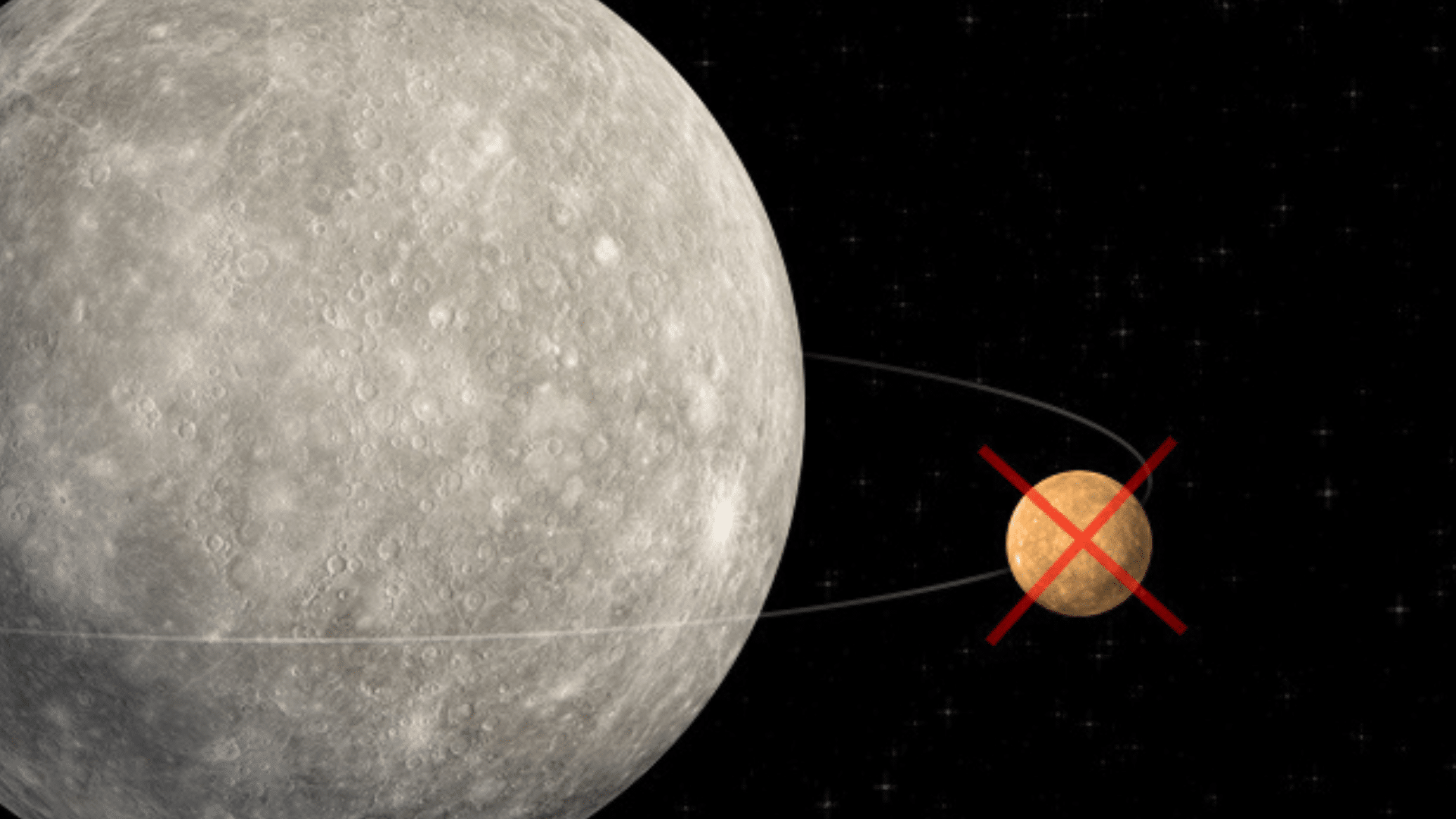
Mercury has no moons because several natural forces work against it. Its size, position in the solar system, and the sun’s strong pull all make it difficult for moons to form or survive around the planet. Below are the key reasons why the moons of Mercury do not exist.
1. Small Size Affects Its Gravity
Mercury is the smallest planet in the solar system. It’s only slightly larger than Earth’s moon.
Because of its small size, Mercury has weak gravity compared to other planets. This makes it hard for the planet to pull in or hold onto a moon.
Gravity is the force that keeps moons in orbit. If a planet’s gravity is too weak, any object trying to orbit it might drift away or crash into the planet.
Mercury’s small mass gives it a gravitational pull that isn’t strong enough to trap or keep a moon. Even if Mercury once had a moon, that moon might have escaped or crashed due to the planet’s weak grip.
2. Close Distance to the Sun
Another major reason Mercury has no moons is its location. Mercury is the closest planet to the sun. This puts it in a unique situation.
The sun’s gravitational pull is very strong near Mercury. In fact, it’s much stronger than Mercury’s own pull.
If a small object tried to orbit Mercury, the sun might easily “steal” it away.
The sun’s powerful gravity would overpower Mercury’s, pulling any potential moon into solar orbit or crashing it into the sun. In this battle of gravity, Mercury doesn’t stand a chance.
3. Tidal Forces from the Sun
Tidal forces are changes in gravity that happen when two large objects (like a planet and the sun) interact. On Earth, tidal forces from the moon cause ocean tides. But Mercury’s situation is different.
The sun’s tidal forces are so strong near Mercury that they make it very hard for a moon to stay in place.
Any object in orbit around Mercury would be stretched and pulled by the Sun’s gravity. Over time, this could cause the object to spiral inward and crash or escape into space.
Tidal forces don’t just prevent new moons from forming; they can also tear moons apart if they come too close.
4. The Fast Orbit of Mercury
Mercury has the fastest orbit in the solar system. It takes only 88 Earth days to go around the sun. This high speed adds another challenge.
Because Mercury moves so quickly, it doesn’t stay in one place for long. That makes it harder for objects to settle into orbit.
If a moon were to try orbiting Mercury, the fast-moving planet might shift position too quickly for the moon to stay locked in.
In short, Mercury’s speed makes it harder for any moon to stay put.
Could Mercury Have Had Moons in the Past?
It’s possible that Mercury once had a moon or two. Some scientists believe that early in the solar system’s history, a moon may have formed around Mercury or been captured by it.
But if that happened, two outcomes are likely:
- The moon crashed into Mercury. Over time, tidal forces may have pulled the moon closer until it smashed into the planet.
- The moon escaped into space. If it drifted too far out, the sun’s gravity could have pulled it away.
This means Mercury may have had moons long ago, but they didn’t last.
Comparing the Moons of Mercury to Other Planets
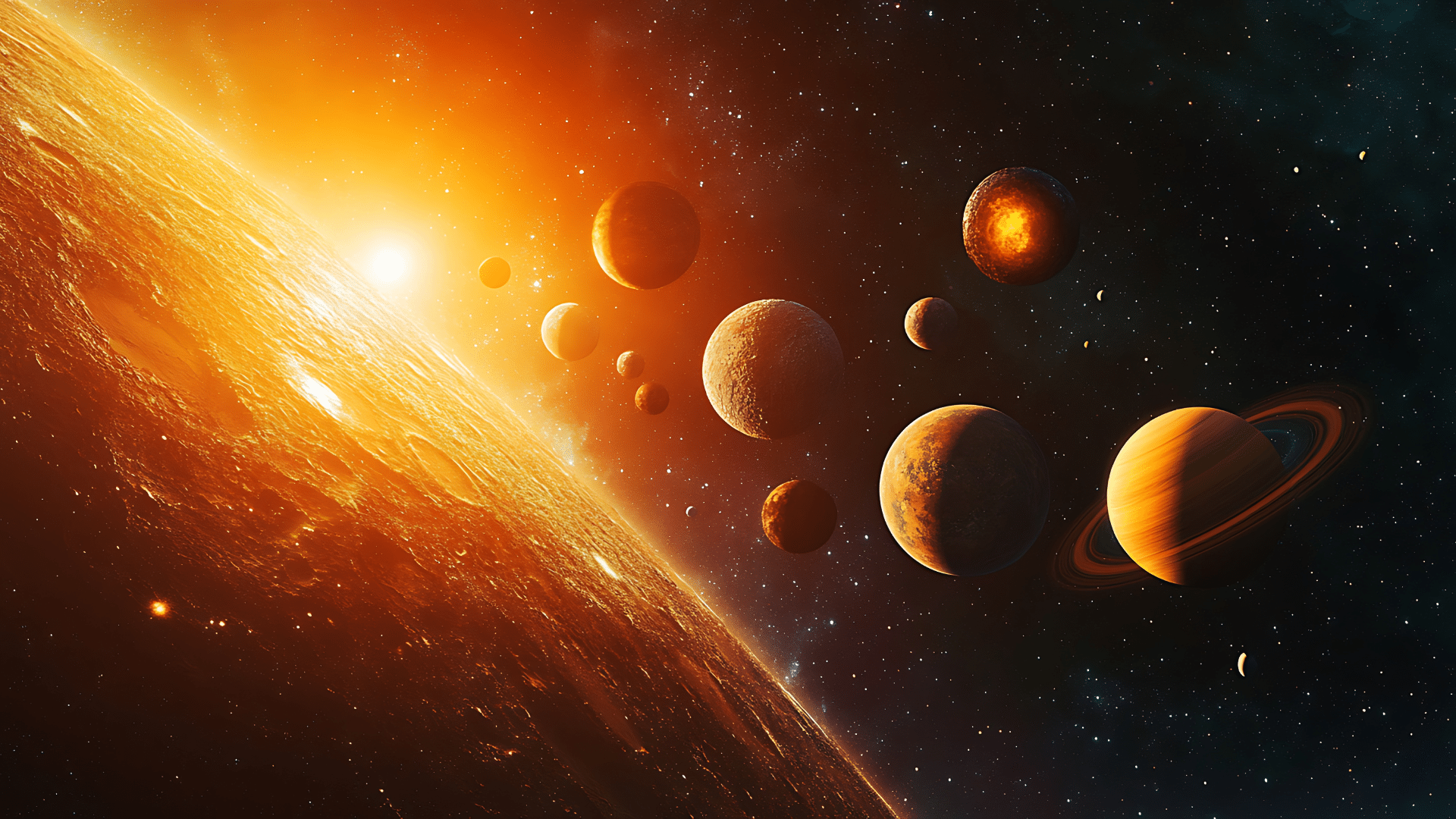
Let’s look at how many moons the other planets have to better understand how unusual Mercury is:
| Planet | Number of Moons |
|---|---|
| Mercury | 0 |
| Venus | 0 |
| Earth | 1 |
| Mars | 2 |
| Jupiter | 95+ |
| Saturn | 146+ |
| Uranus | 28 |
| Neptune | 16 |
What Makes Mercury Interesting Even Without Moons?
Mercury may not have any moons, but it is far from boring. This small planet has many unique traits that make it important to scientists and space researchers. Its surface and structure tell a long story about how planets form and change over time.
Key features of Mercury include:
- A huge iron core that takes up a large part of the planet and affects its magnetic field
- Extreme temperature changes, with scorching heat during the day and freezing cold at night
- A very thin atmosphere, made of atoms knocked off the surface by the sun’s energy
- Long cliffs called scarps, formed as the planet slowly cooled and shrank
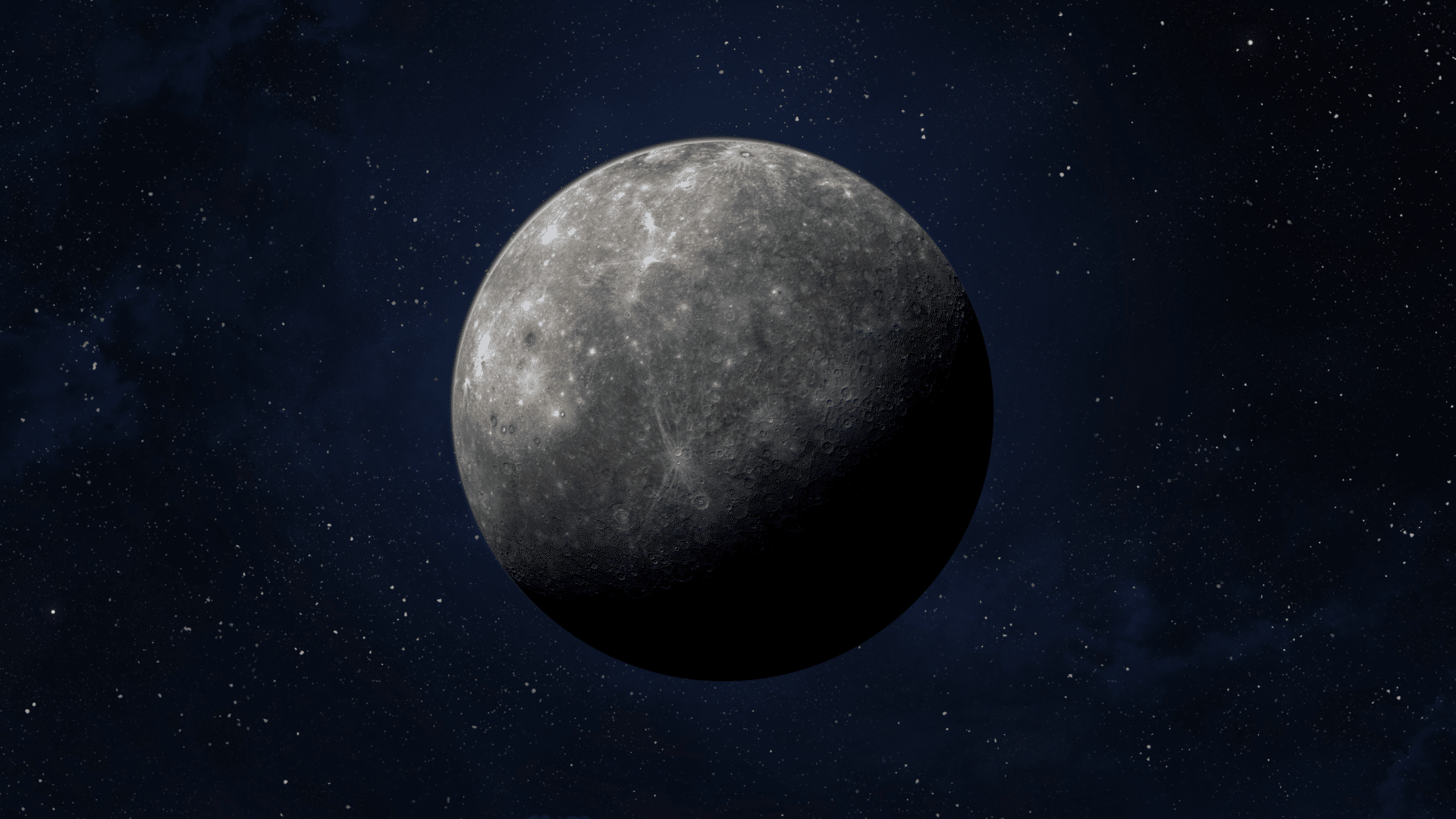
- A heavily cratered surface, similar to Earth’s moon, showing billions of years of impacts
Mercury may travel through space alone, but its features make it one of the most studied rocky planets in the solar system.
Missions That Helped Us Learn About Mercury
Even though Mercury is hard to study because of its closeness to the sun, two missions have helped us understand it:
1. Mariner 10 (1974–1975)
This NASA spacecraft flew by Mercury three times. It gave us the first close-up images of the planet and revealed its cratered surface.
2. MESSENGER (2004–2015)
This spacecraft orbited Mercury over 4,000 times. It studied the planet’s surface, gravity, and thin atmosphere. It helped confirm that Mercury has no moons.
Together, these missions gave us the answers we needed about the moons of Mercury and more.
To Conclude
Mercury may not have moons, but that doesn’t make it any less important. Its place near the sun and unique conditions give us insight into how planets behave under extreme forces.
The lack of moons is not an accident; it’s the result of powerful physics at work. While other planets build moon systems, Mercury remains alone, shaped by its size, speed, and solar gravity.
Still, it holds clues about the early solar system and remains a subject of deep interest.
Curious about more solar system mysteries? Check out our other space guides for clear answers to your biggest questions.