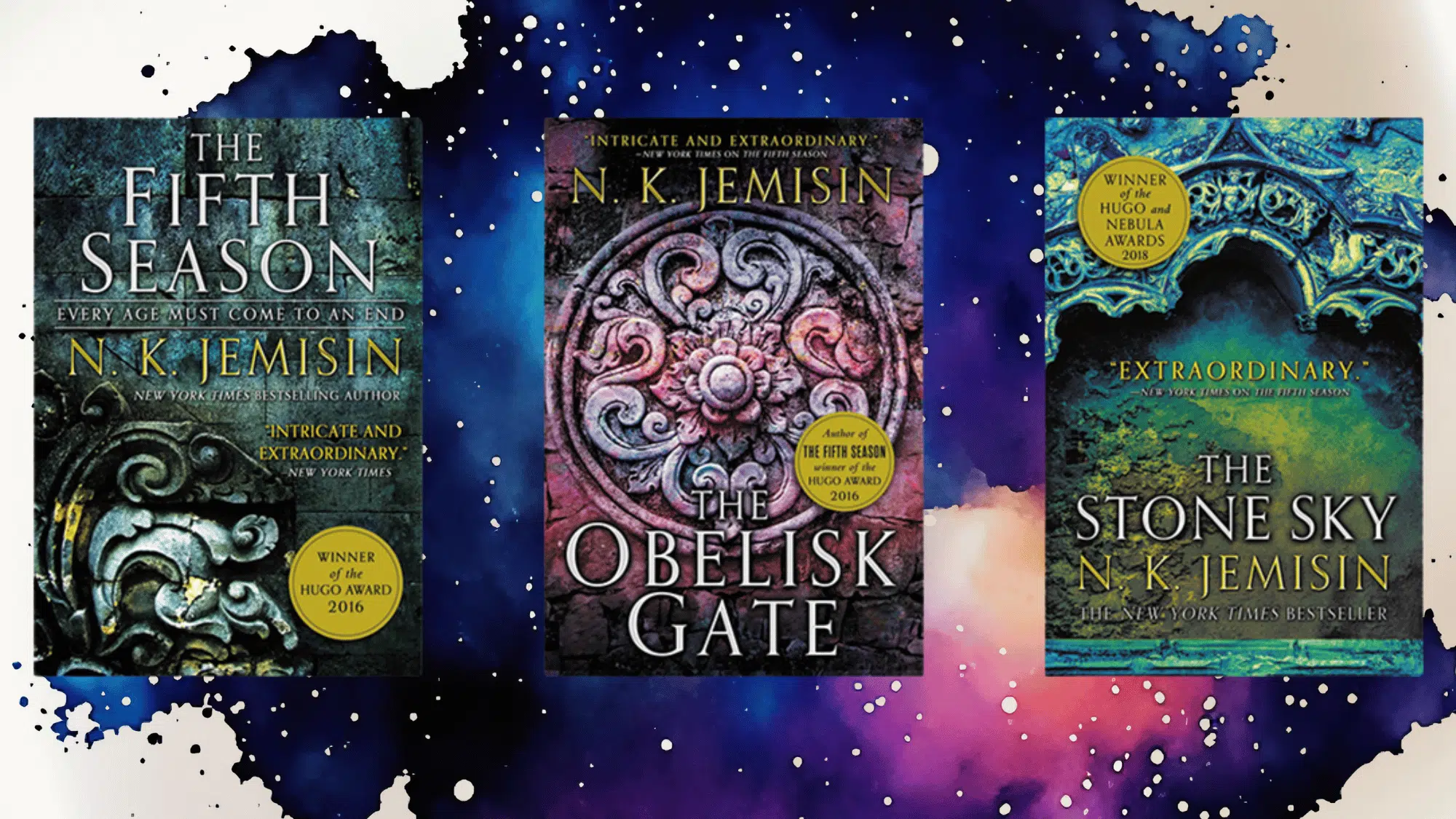


Fantasy readers know the feeling. You finish a series, and it stays with you for days, maybe weeks. N.K. Jemisin’s Broken Earth Trilogy is one of those rare finds that doesn’t just tell a story; it shakes things up.
This trilogy swept the Hugo Awards three years straight. That’s never happened before. But awards don’t tell the whole story.
What makes these books different? Why do readers keep coming back to this world of earthquakes, magic, and survival?
The answers lie in how Jemisin builds her world and tells her story. This review breaks down what works, what doesn’t, and whether the hype is real.
What is The Broken Earth Trilogy?
The Broken Earth Trilogy is N.K. Jemisin’s award-winning fantasy series is set in a world that won’t stop trying to kill its people.
The Stillness, a supercontinent, gets rocked by catastrophic earthquakes and climate disasters called Fifth Seasons. Some survive underground. Others don’t survive at all.
At the center are orogenes, people who can manipulate seismic energy.
Sounds useful, right? Except society treats them like weapons and slaves. The trilogy follows Essun, an orogene whose family gets torn apart just as the world enters its worst Season yet.
Three books. Three Hugo Awards. One brutal, unforgettable story about survival and power.
About N.K. Jemisin: The Author Behind The Broken Earth Trilogy
N.K. Jemisin didn’t follow the typical fantasy author path. Born in Iowa City in 1972, she studied psychology at Tulane and education at the University of Maryland.
She worked as a career counselor, living a pretty conventional life. Then she started writing seriously after turning 30.
Her debut novel, The Hundred Thousand Kingdoms (2010), won a Locus Award and kicked off the Inheritance Trilogy.
But the Broken Earth series changed everything. Jemisin became the first Black writer to win a Hugo Award for Best Novel with The Fifth Season. Then she won again. And again. Three books, three consecutive Hugos; a first in the award’s history.
In 2020, she received a MacArthur Fellowship for reshaping fantasy with stories about oppression, survival, and what it costs to rebuild worlds.
Plot Summary of The Broken Earth Trilogy
Three books track Essun’s search for her kidnapped daughter across a dying world where Earth itself fights back against humanity.
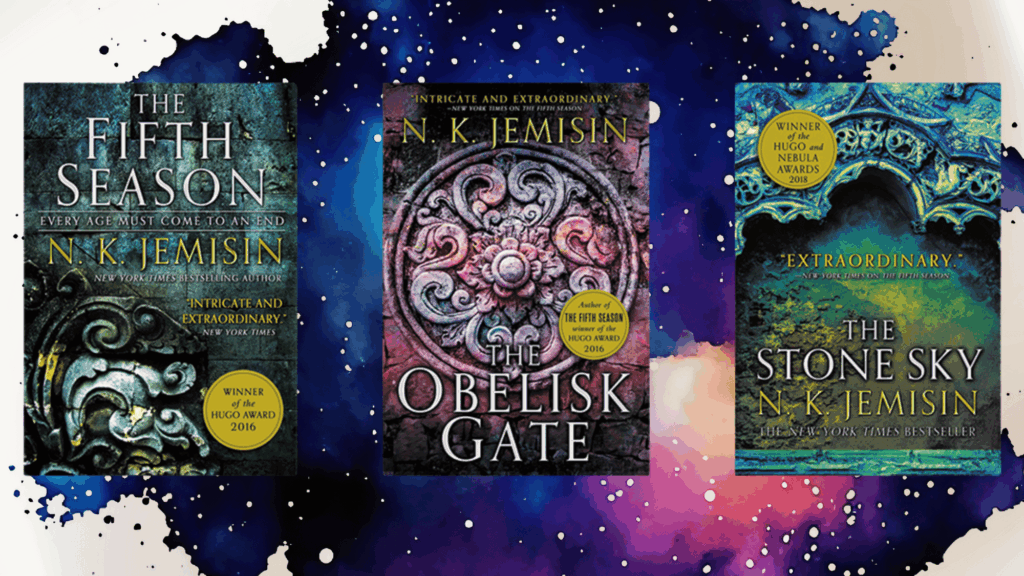
Book 1: The Fifth Season
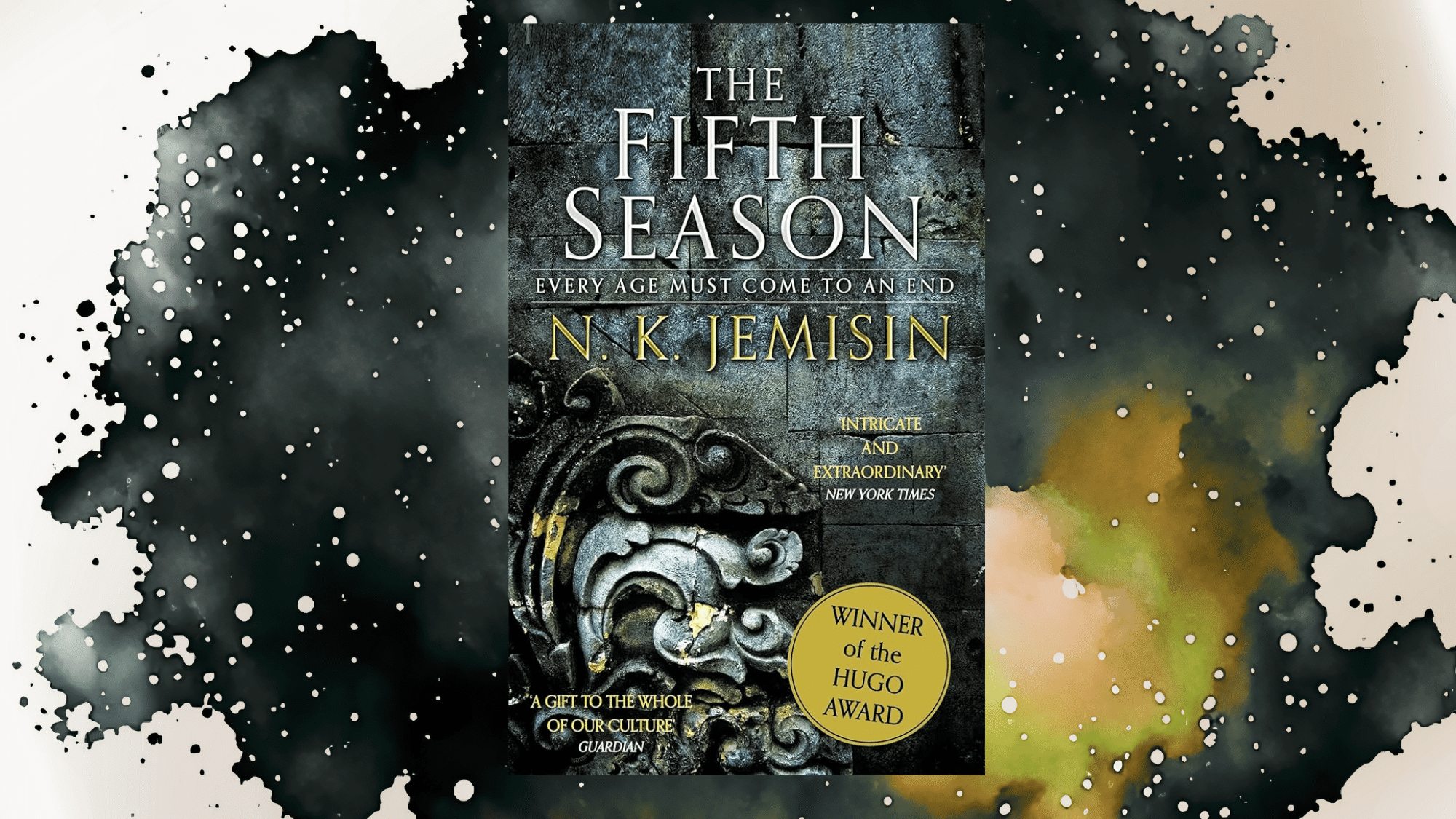
Essun’s world collapses in a single day. Her husband murders their son after discovering he’s an orogene, then kidnaps their daughter Nassun.
As Essun hunts for them, a rogue orogene tears the continent apart, triggering an ash-filled apocalypse.
The story jumps between three timelines: young Damaya entering brutal Fulcrum training, Syenite on deadly missions with her mentor, and Essun fleeing south through collapsing towns.
Strange companions join her: Hoa, a stone boy, and Tonkee, a scientist. The narratives converge with a shocking revelation: all three women are Essun at different life stages.
Book 2: The Obelisk Gate
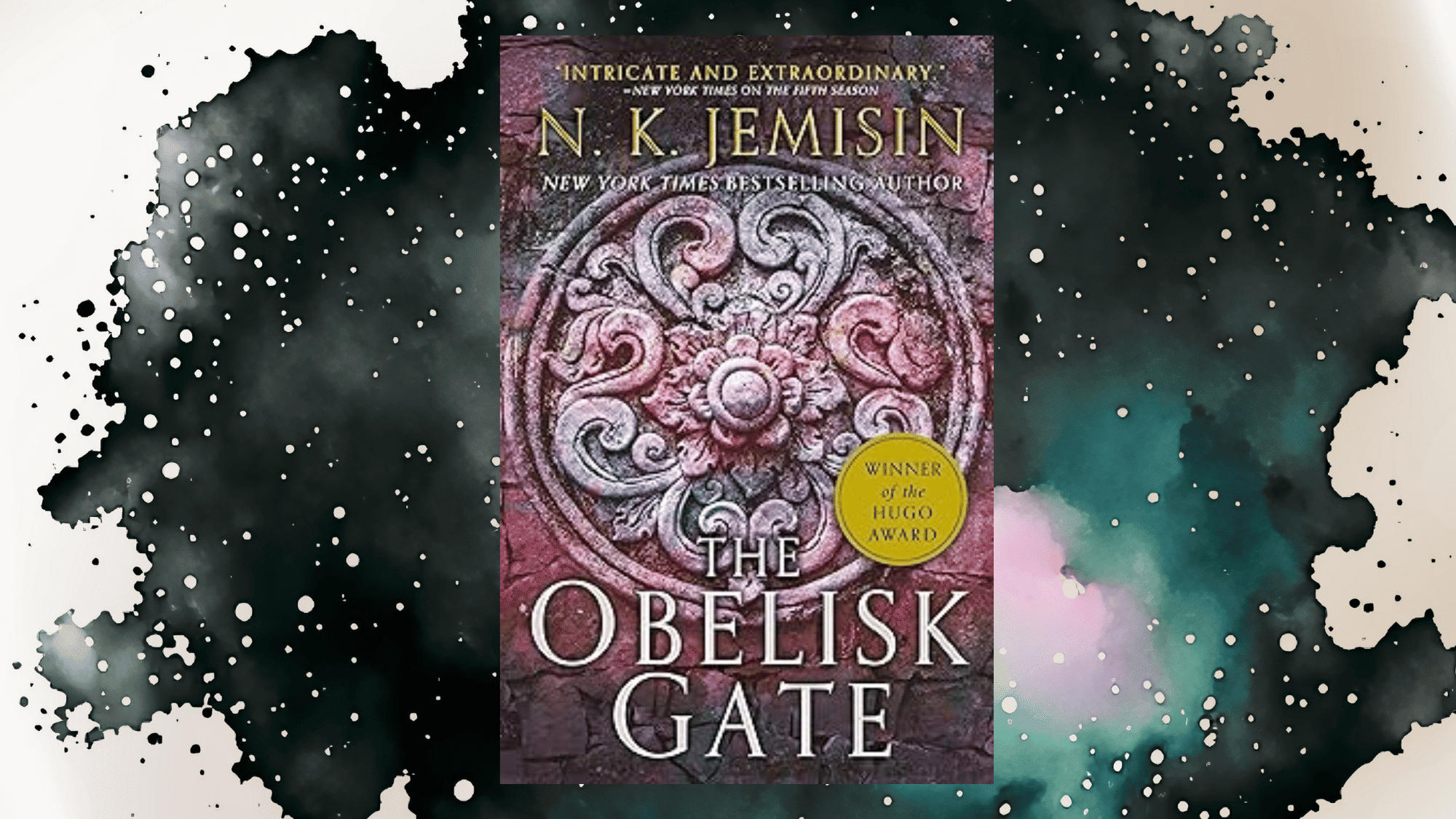
Essun finds refuge in Castrima, an underground comm powered by mysterious obelisk technology. Her former lover, Alabaster, reappears, dying, but teaching her to control the floating crystals before it’s too late.
Meanwhile, Nassun travels north with Schaffa, her Guardian turned father figure, learning her own terrifying powers. Stone eaters manipulate both sides.
Tensions explode when a rival comm attacks Castrima for resources. Essun defends her new home using the obelisks, but the cost is steep.
Mother and daughter inch closer to collision, each growing more powerful and desperate as the Season worsens.
Book 3: The Stone Sky
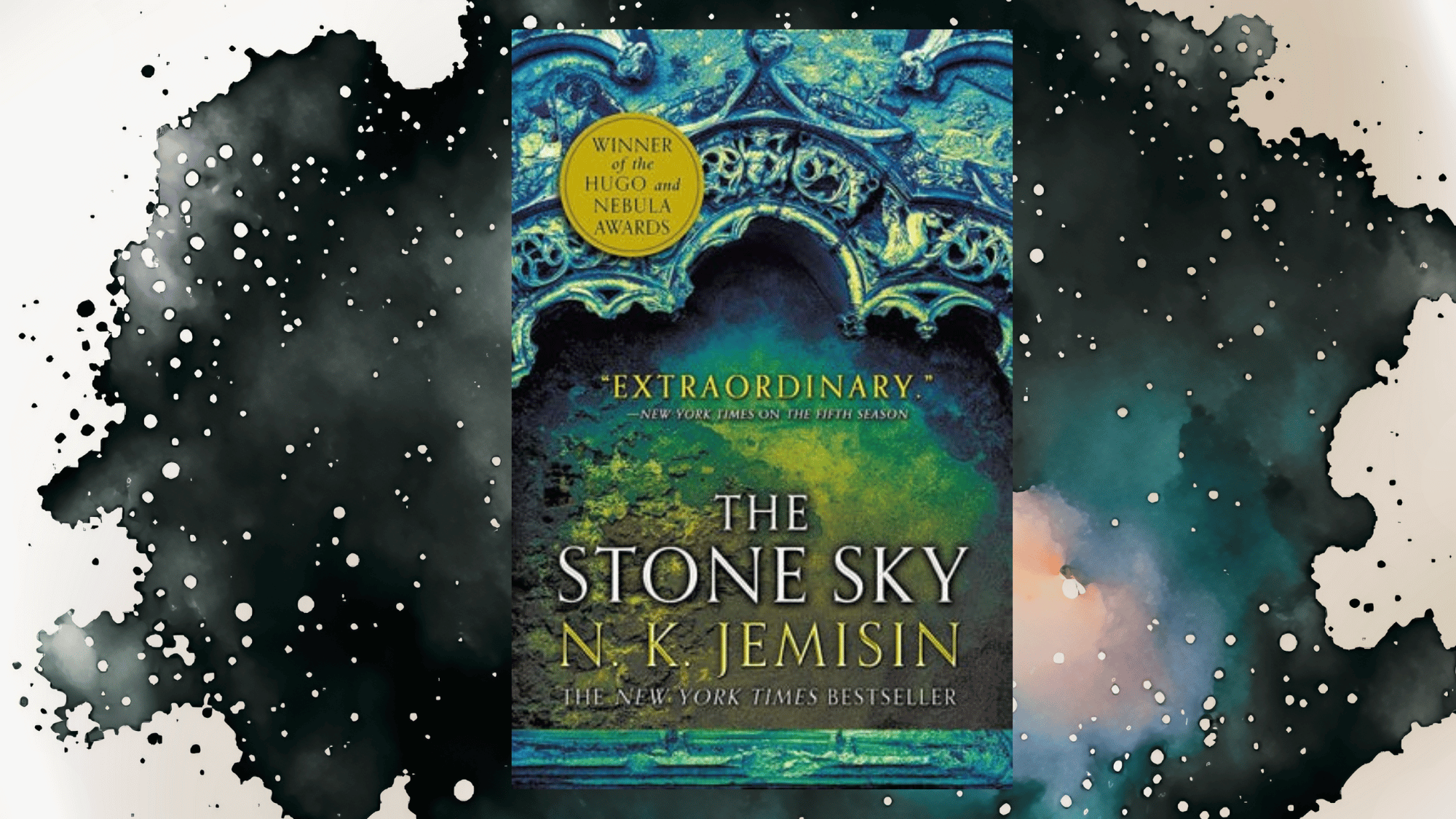
The Moon holds the key to ending Fifth Seasons forever, and Essun inherits the power to retrieve it from orbit.
But doing so could destroy what’s left of humanity. Nassun wants the opposite to use that same power to end the world’s suffering permanently.
Their paths finally cross in a confrontation that reveals everything: Father Earth’s rage against humanity, the true nature of stone eaters, and why orogenes exist.
Essun must choose between saving a broken world or letting her daughter burn it down. The decision reshapes the planet itself.
Major Characters in The Broken Earth Trilogy
Complex characters drive this story: orogenes fighting oppression, Guardians enforcing control, and stone eaters playing games that span millennia and civilizations.
| Character | Role in Story | Personality Traits | Character Evolution |
|---|---|---|---|
| Essun | Protagonist searching for her kidnapped daughter across a dying world | Hardened, protective, grief-stricken, pragmatic | Transforms from a hidden survivor to a powerful orogene willing to reshape reality |
| Damaya | Young Essun during brutal Fulcrum training | Frightened, curious, desperate to belong | Learns to weaponize her gifts while losing innocence |
| Syenite | Mid-career Essun on forced breeding missions | Angry, rebellious, and disillusioned with the Fulcrum | Breaks free from control, chooses motherhood over slavery |
| Alabaster Tenring | Ten-ring orogene who breaks the continent; Essun’s mentor and former lover | Brilliant, traumatized, radical, self-destructive | Shifts from the Fulcrum weapon to a revolutionary willing to end the world |
| Schaffa | Guardian who controls orogenes through fear and conditioning | Cold, brutal, yet capable of twisted affection | Becomes Nassun’s protector after brain damage breaks his conditioning |
| Jija | Essun’s husband, who murders their son | Loving father turned murderer, driven by fear and prejudice | Devolves from a family man to a hateful killer |
| Hoa | A stone eater who guides and loves Essun across timelines | Patient, ancient, devoted, mysterious | Reveals himself as narrator and Essun’s eternal companion |
Main Themes and Significance of The Broken Earth Trilogy
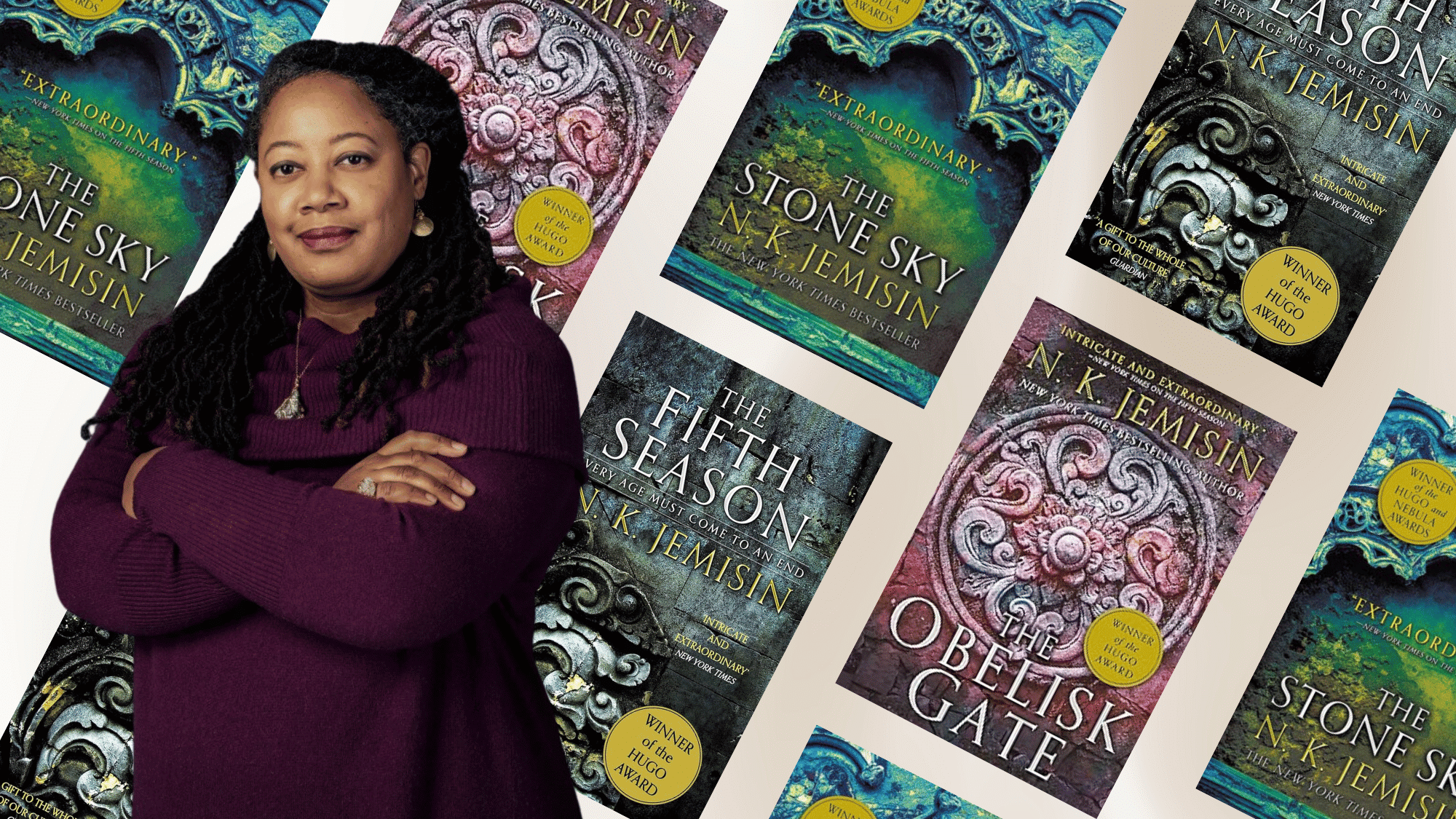
Jemisin weaves climate disaster, oppression, and identity into a story that challenges how we survive, who controls power, and what it costs.
1. Survival in a Broken World
The Stillness teaches a harsh lesson: outlasting disaster isn’t the same as living. Communities like Castrima face starvation and attacks, forcing impossible choices.
Jemisin reminds readers that “survival is not enough”; rebuilding demands more than just breathing through the ash.
2. Oppression and Systemic Control
The Fulcrum turns orogenes into ranked weapons, controlled by Guardians who implant corestones to enforce obedience.
It mirrors slavery and caste systems; the powerful are essential yet treated as less than human. Society needs them to survive, but refuses to see them as people.
2. Motherhood and Grief
Essun’s entire journey starts with unbearable loss: her son murdered, her daughter taken.
The trilogy tracks how grief reshapes her, driving every choice until she finally confronts Nassun. Their collision shows how trauma passes between generations, twisting love into something unrecognizable and dangerous.
4. Identity and Self-Discovery
The second-person narration hides a stunning truth: Damaya, Syenite, and Essun are the same person across time. Orogenes must fragment themselves to survive oppression.
The trilogy’s structure forces readers to piece together these fractured identities, mirroring how systemic control erases who people really are.
Goodreads Ratings & Critical Reception
The Broken Earth Trilogy earned impressive Goodreads scores, with individual books averaging between 4.30 and 4.56 stars from hundreds of thousands of ratings.
The boxed set has a rating of 4.56 based on over 4,000 reviews.
Critics celebrated Jemisin’s historic Hugo sweep, praising her worldbuilding and social commentary as transformative.
But not everyone connected. Some readers found the second-person narration jarring or the tone too bleak. Others dropped the series partway through, confused by the structure or exhausted by the heaviness.
The Fifth Season hooks many immediately, while The Obelisk Gate deepened the mystery for fans. The Stone Sky divided readers; some found the answers underwhelming compared to the questions.
Still, most agree: this trilogy reshaped fantasy.
“Astonishing… complex and doesn’t pull punches.” — Goodreads reviewer
“Epic, heart-rending… unforgettable.” — Goodreads reviewer on the boxed set
“The answers the trilogy provided weren’t as interesting as the mysteries it began with.” — Reddit reader
How The Broken Earth Trilogy Ends
The trilogy closes with no clean victories, just costly compromises.
Essun and Nassun’s final confrontation isn’t about who wins; it’s about what gets lost in the process. Essun turns to stone mid-battle, her body becoming the very thing she fought against.
The Moon returns to orbit, stopping the Seasons, but Father Earth’s wounds don’t fully heal.
Communities begin integrating orogenes, testing whether humans can break old patterns. Nassun walks away with a chance to build something different.
The world survives, scarred but breathing. Jemisin refuses fairy-tale endings, offering the messy, uncertain work of actual change instead.
The Bottom Line
N.K. Jemisin didn’t write a trilogy that wraps up neatly with a bow. She wrote something messier, harder to shake off.
The Broken Earth series asks uncomfortable questions about who deserves safety, who gets sacrificed, and whether broken systems can ever truly change. Three Hugo Awards prove the story works.
For those willing to sit with grief, rage, and complicated characters making impossible choices, this trilogy delivers.
It’s not a comfort reading. It’s the kind of fantasy that refuses to let you look away from what survival actually costs when the world crumbles around you.