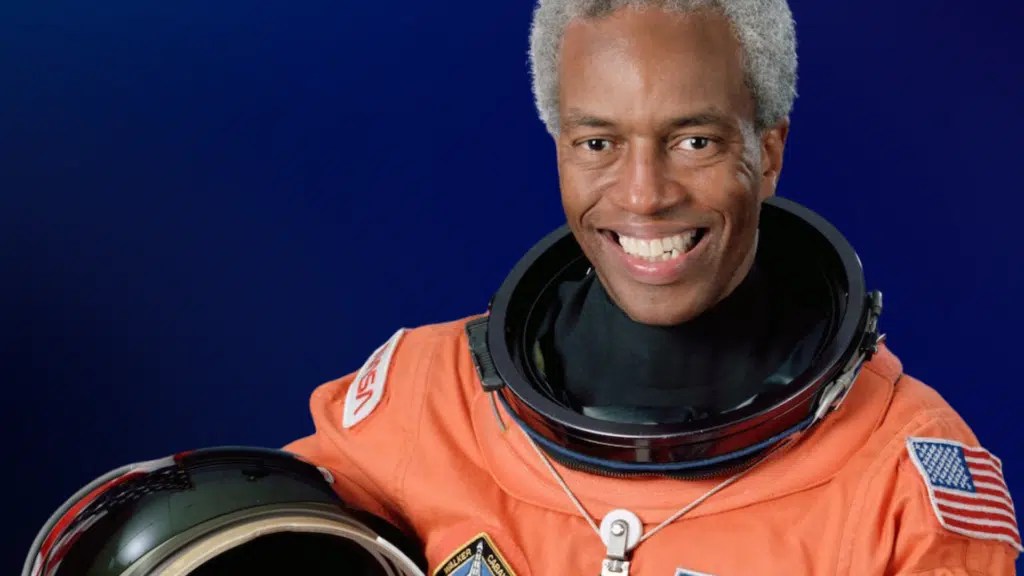
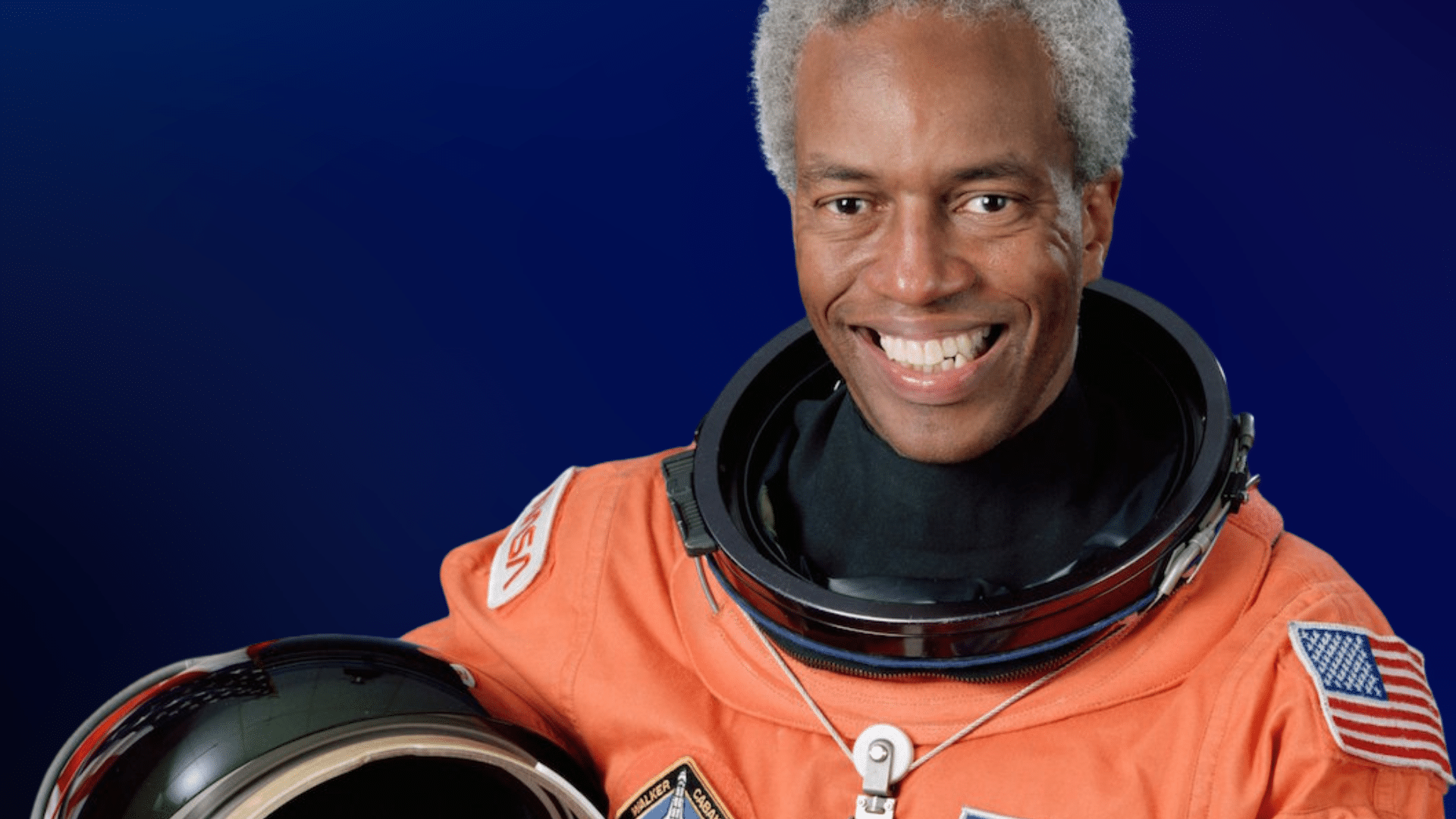



On August 30, 1983, Space Shuttle Challenger lifted off at 2:32 a.m. EDT from Kennedy Space Center. Among the five astronauts onboard was Guion Stewart Bluford Jr., who became the first African American to travel into space.
The moment was historic, but it was also the culmination of decades of preparation, discipline, and technical achievement.
Guion Bluford was not selected for symbolic reasons. He was a combat pilot, aerospace engineer, and mission specialist whose credentials placed him among NASA’s most technically qualified astronauts of the shuttle era.
This article looks at Guion Bluford’s life, career, and lasting influence, offering a clear view of the man behind the historic milestone.
Guion Bluford’s Early Life in Philadelphia
Guion Bluford was born on November 22, 1942, in Philadelphia, Pennsylvania. His father was a mechanical engineer, and his mother was a special education teacher. Engineering discipline and educational rigor were present from childhood.
He graduated from Overbrook High School before enrolling at Pennsylvania State University, where he earned a Bachelor of Science degree in aerospace engineering in 1964.
He later completed:
- M.S. in Aerospace Engineering – Air Force Institute of Technology (1974)
- Ph.D. in Aerospace Engineering (minor in laser physics) – 1978
That doctorate matters. In 1978, when NASA selected him for Astronaut Group 8, relatively few astronauts held doctoral degrees in aerospace engineering. The shuttle program required precisely that level of systems literacy.
Military Career and Vietnam Service
Bluford served as a fighter pilot during the Vietnam War and flew 144 combat missions.
Combat aviation demands rapid decision-making, navigation precision, and calm under pressure. These experiences shaped his professional discipline.
After Vietnam, he trained as a test pilot. Test pilots evaluate aircraft under extreme operational conditions and analyze performance limits.
This background strengthened his systems-level understanding, an essential trait for shuttle-era astronauts.
He ultimately retired from the Air Force with the rank of Colonel in 1993.
NASA Selection and Astronaut Group 8
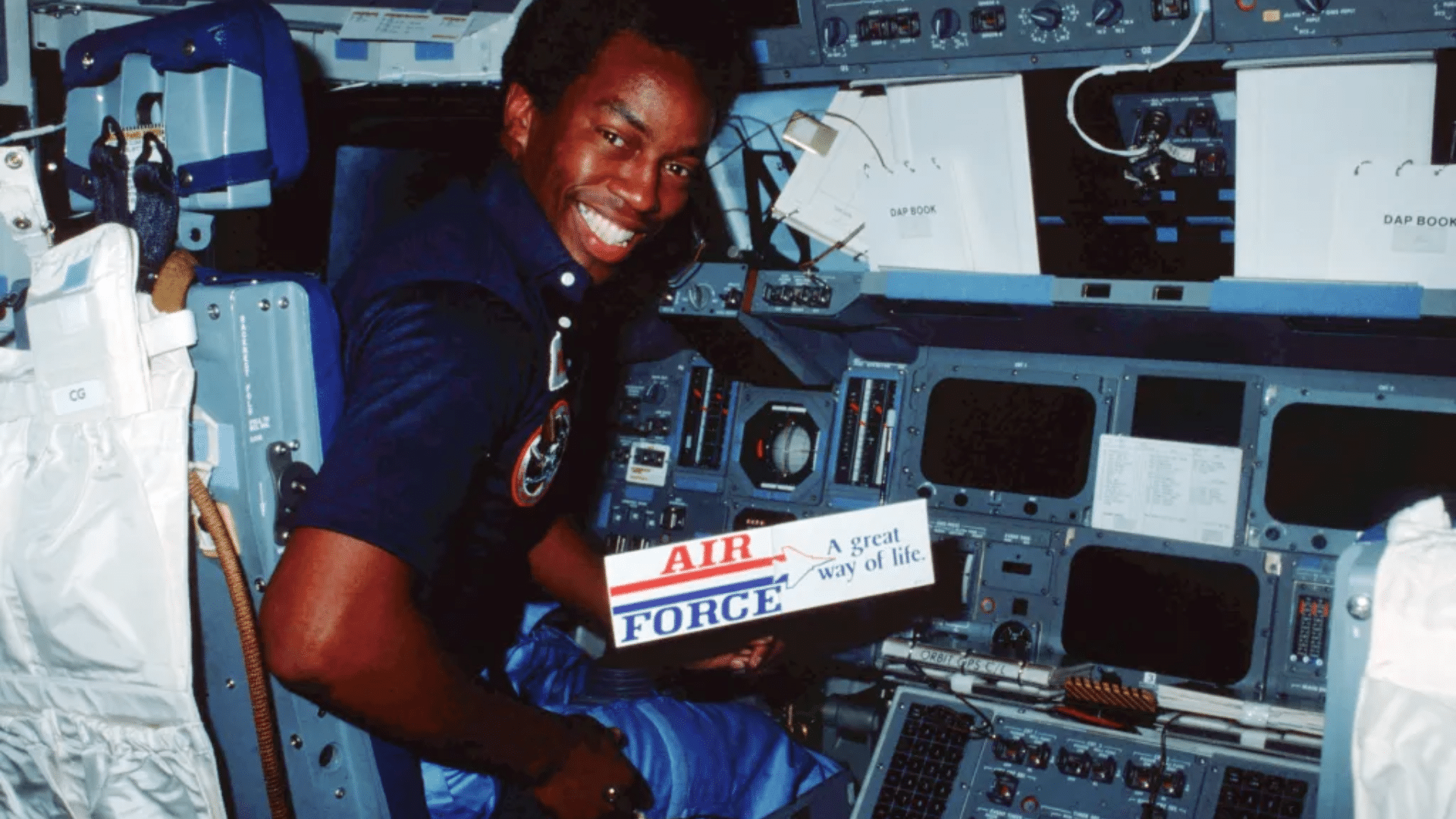
Image Source: NASA
In January 1978, NASA selected Bluford as part of Astronaut Group 8. This class was groundbreaking. (Source: NASA biography) It included:
That shift marked the beginning of a broader pipeline of diverse astronauts, many of whom would later take part in advanced missions such as extravehicular activities (spacewalks). It included:
- The first women astronauts
- The first minority astronauts
- A large number of mission specialists with advanced degrees
The shuttle program required engineers who could manage payload systems, laboratories, and satellite deployments. Bluford’s education and flight experience made him well-suited to this new model of astronaut.
Shuttle Missions and Spaceflight Record
Guion Bluford flew four Space Shuttle missions between 1983 and 1992, logging a total of 688 hours in space. Each mission reflected a different phase of the shuttle program, from satellite deployment to international research and defense operations.
STS-8 (1983) – Space Shuttle Challenger
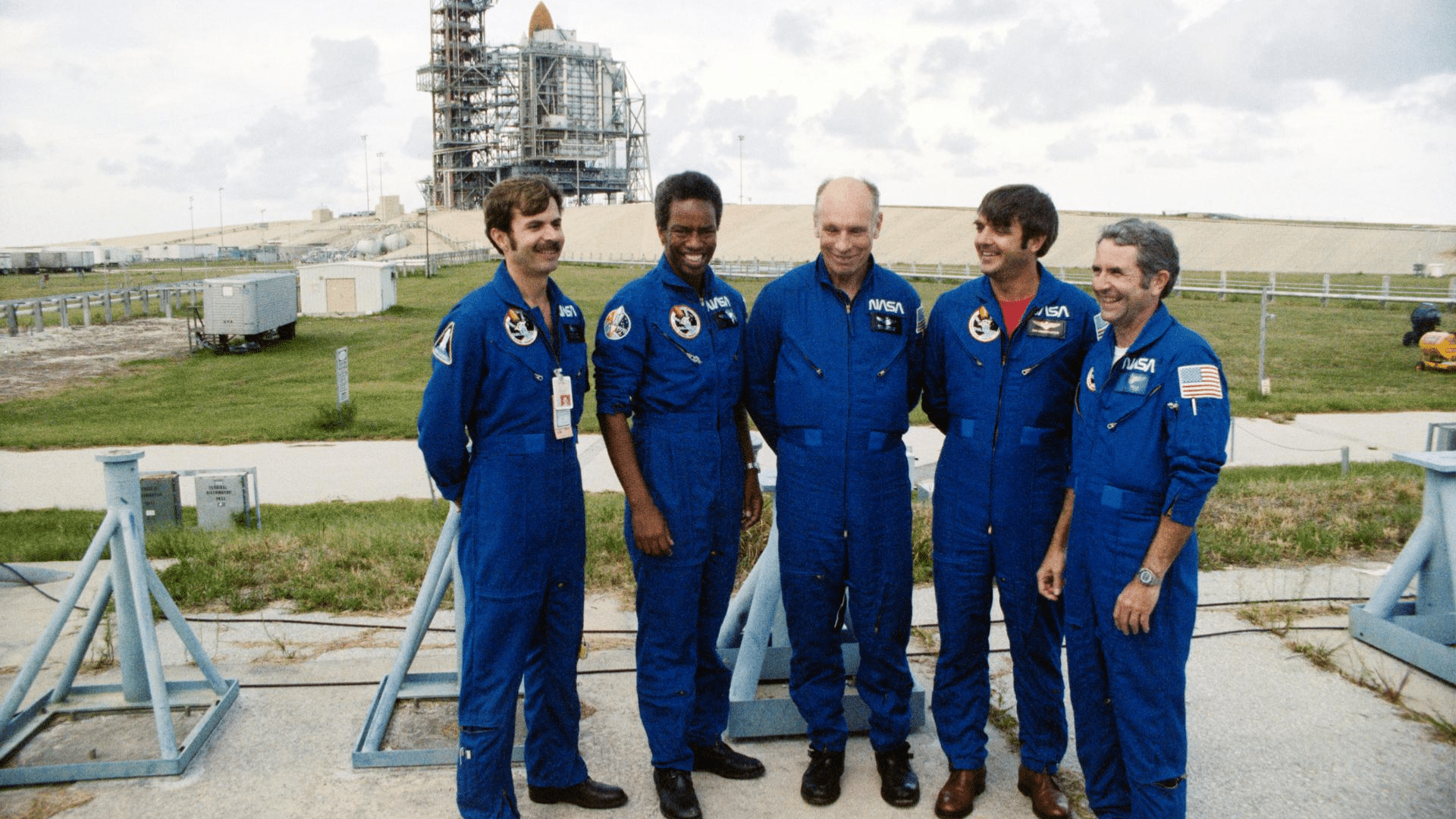
Image Source: NASA
Launch: August 30, 1983
Duration: 6 days, 1 hour, 9 minutes
Orbits: 98
Primary Objective: Deploy INSAT-1B communications satellite
Crew:
- Richard Truly (Commander)
- Daniel Brandenstein (Pilot)
- Dale Gardner (Mission Specialist)
- William Thornton (Mission Specialist)
- Guion Bluford (Mission Specialist)
STS-8 was historic for several reasons. It marked the first night launch and first night landing in shuttle history. Most significantly, Bluford became the first African American in space.
The mission’s central task was the deployment of INSAT-1B, a multipurpose communications satellite for India.
The satellite was released from the shuttle’s payload bay and later ignited its own rocket motor to move toward geostationary orbit. Proper shuttle orientation during deployment was critical to ensure trajectory accuracy.
Bluford did not perform a spacewalk (EVA). As a mission specialist, he managed payload systems, monitored onboard experiments, and supported deployment operations. His role required precise oversight of systems rather than manual vehicle control. (Source: NASA STS-8 mission summary)
STS-61A (1985) – Spacelab D-1 Scientific Mission
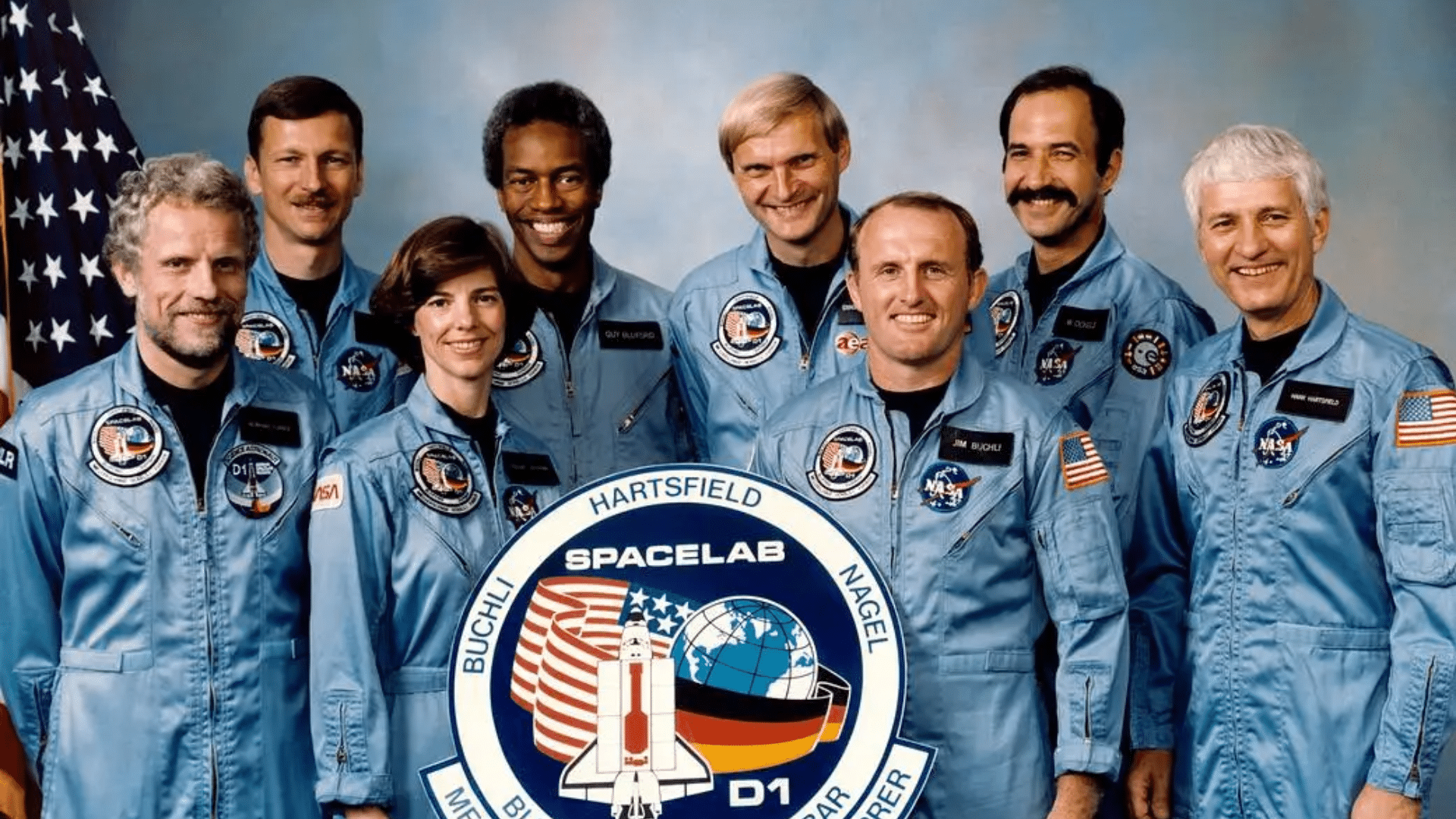
Image Source: NASA
Launch: October 30, 1985
Duration: 7 days
Orbiter: Challenger
Primary Objective: Conduct an international Spacelab D-1 research mission
Total Experiments: 75
STS-61A was one of the most research-intensive shuttle flights of the 1980s. The mission carried the Spacelab D-1 module, largely managed by the German Aerospace Center. At the time, it set a record for the largest crew, eight astronauts on board.
The experiments focused on:
- Materials science
- Fluid physics
- Crystal growth in microgravity
- Human physiology research
In microgravity, fluid behavior changes dramatically. Without gravity-driven convection currents, researchers can observe purer crystal formation and metal solidification processes. These studies had implications for semiconductor modeling and advanced manufacturing.
Bluford helped manage experiment timelines and payload systems. Unlike STS-8, which centered on satellite deployment, STS-61A emphasized sustained laboratory research in orbit.
STS-39 (1991) – Department of Defense Research Mission
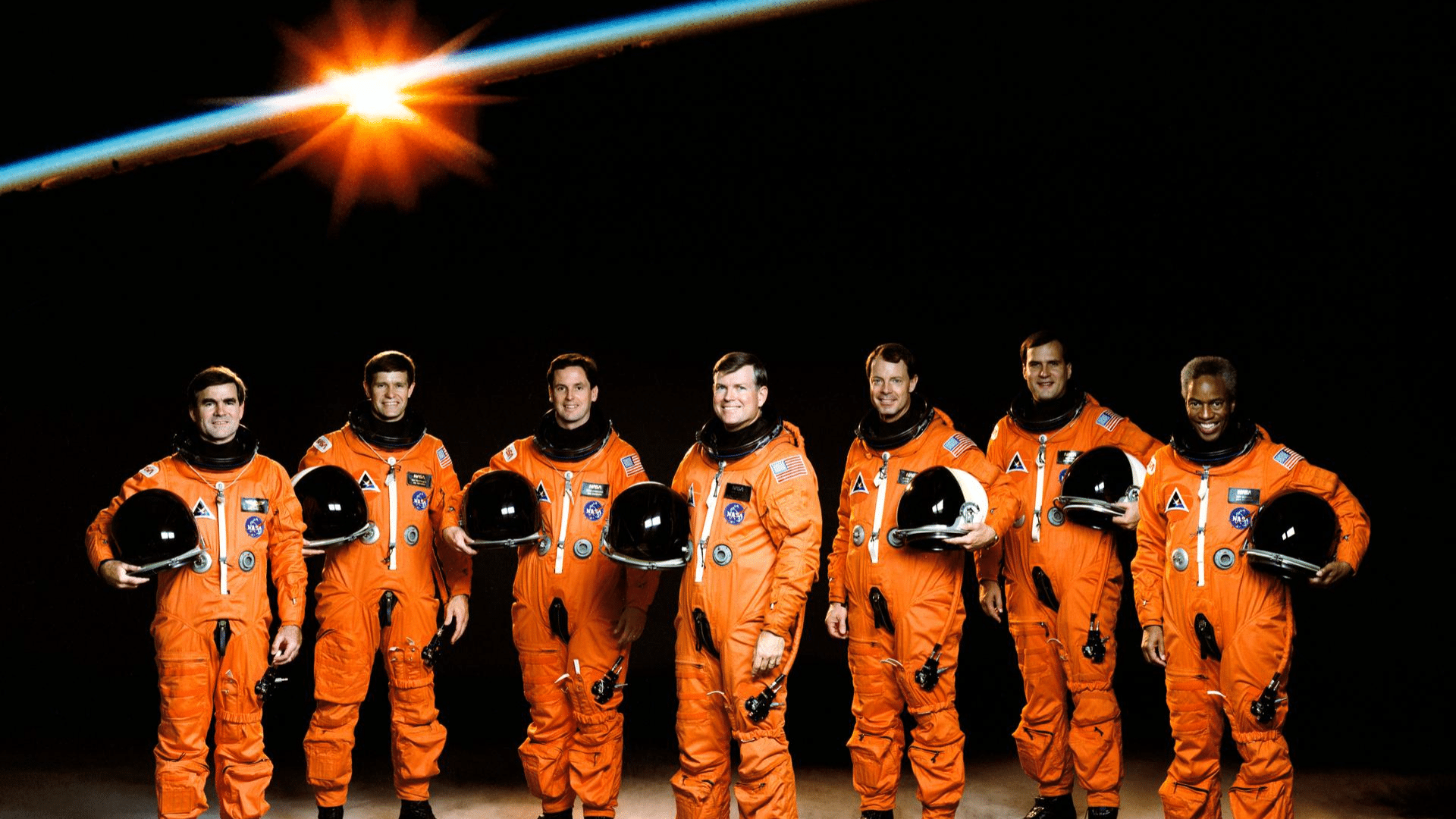
Image Source: NASA
Launch: April 28, 1991
Duration: 8 days
Orbiter: Discovery
Primary Objective: Classified Department of Defense payload operations
STS-39 represented a different side of the shuttle program. While much of the mission remains classified, publicly available information confirms that it supported advanced sensor testing and infrared observation systems.
The mission occurred during the final phase of the Cold War. Shuttle flights during this period supported national security objectives alongside scientific research.
Bluford again served as a mission specialist. His responsibilities included payload monitoring and systems management related to defense experiments. Although not publicly detailed, these missions required strict procedural accuracy and technical discipline.
This flight marked Bluford’s third journey into space, demonstrating NASA’s continued confidence in his operational reliability.
STS-53 (1992) – Final Shuttle Flight
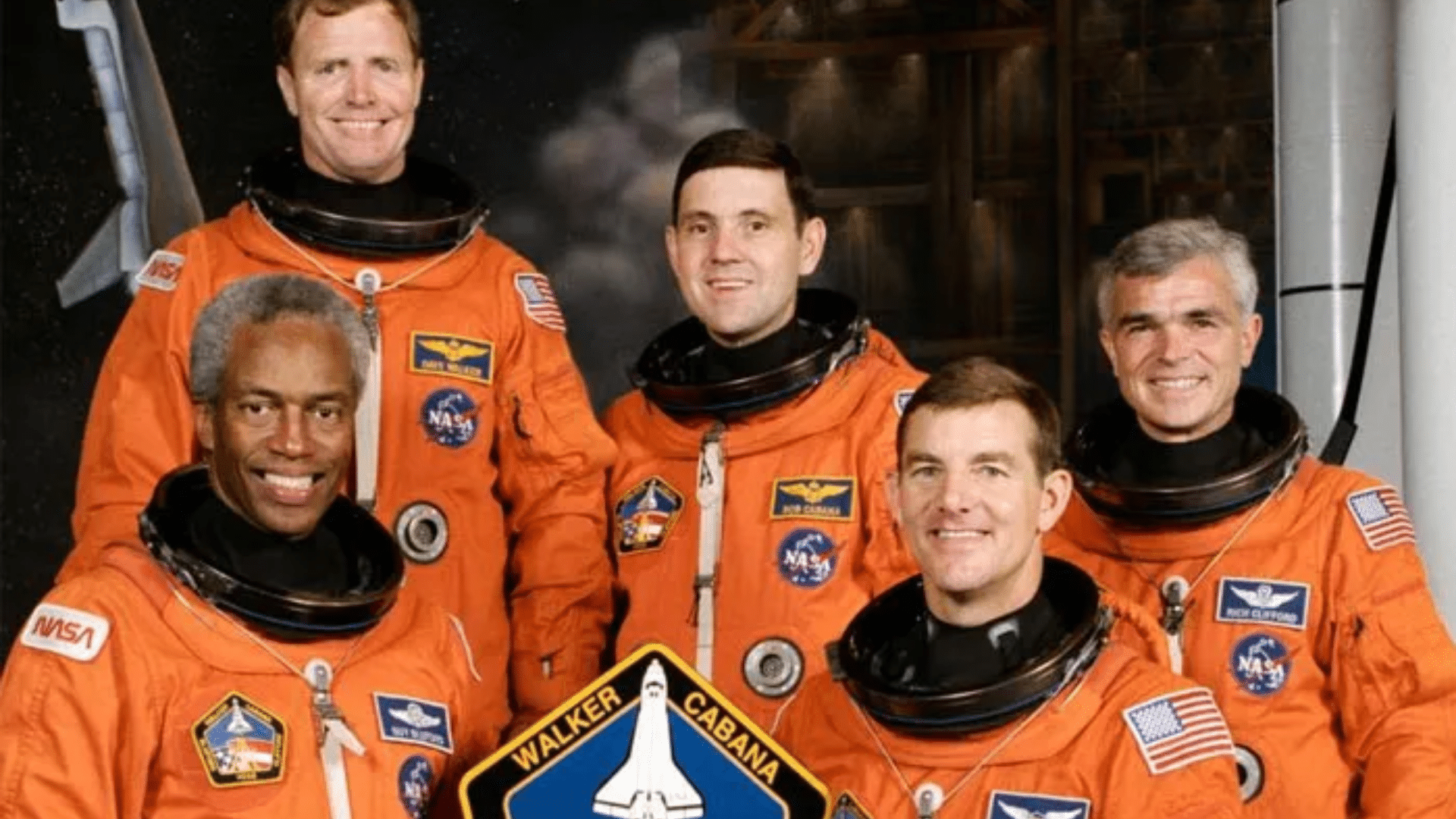
Image Source: NASA
Launch: December 2, 1992
Duration: 7 days
Orbiter: Discovery
Primary Objective: Department of Defense payload deployment and research
STS-53 was Bluford’s fourth and final spaceflight. Like STS-39, it supported defense-related payload operations during a period of strategic transition following the Cold War.
The mission involved deploying classified equipment and conducting military-focused research in orbit. Precision in payload handling and onboard systems monitoring was critical.
As a mission specialist, Bluford continued to focus on technical operations rather than piloting. By this point, he had become one of NASA’s most experienced shuttle mission specialists.
Following STS-53, Bluford’s total time in space reached 688 hours, concluding a career that spanned nearly a decade of shuttle operations.
Awards and Honors
Throughout his military and NASA career, Guion Bluford received numerous honors recognizing both his technical excellence and his historic contributions to spaceflight. The awards below reflect his service as a combat pilot, aerospace engineer, and shuttle mission specialist. (Source: NM Space Museum)
| Award / Honor | Awarding Organization | Significance |
|---|---|---|
| NASA Distinguished Service Medal | National Aeronautics and Space Administration | One of NASA’s highest honors, awarded for distinguished service and exceptional contribution to NASA’s mission |
| NASA Space Flight Medal (multiple) | NASA | Awarded for participation in spaceflight missions |
| Air Force Distinguished Flying Cross | U.S. Air Force | Recognizes heroism or extraordinary achievement during aerial flight |
| Air Medal | U.S. Air Force | Awarded for meritorious achievement while participating in aerial flight |
| Legion of Merit | U.S. Department of Defense | Recognizes exceptionally meritorious conduct and outstanding service |
| National Aviation Hall of Fame Inductee | National Aviation Hall of Fame | Honors significant contributions to aviation and aerospace |
| International Space Hall of Fame Inductee | New Mexico Museum of Space History | Recognizes individuals who have advanced space exploration |
| Pennsylvania State University Distinguished Alumni | Penn State University | Honors outstanding professional achievement and impact |
| Honorary Doctorates (multiple institutions) | Various Universities | Recognition of his influence in aerospace and education |
Guion Bluford Family and Personal Life
Guion Bluford married Linda Tull in 1964. The couple has two children. The strength of Guion Bluford’s family support was essential throughout:
- Combat deployments
- Doctoral research
- Shuttle training cycles
- Historic public recognition
Bluford has consistently emphasized preparation, discipline, and technical excellence when discussing his career.
In interviews and public appearances, he has focused on the importance of education and professional responsibility rather than personal recognition. His approach to spaceflight was grounded in engineering skill and mission execution.
For him, the priority was performing the job well and contributing to the success of the team. That mindset reflects the professionalism that defined his military and NASA career.
Life After NASA
After retiring from NASA and the Air Force in 1993, Bluford entered the private sector. He held executive positions in aerospace and defense companies, including leadership roles at:
- NYMA, Inc. (engineering and technical services firm)
- Federal Data Corporation
He continued contributing to aerospace systems development and national defense technology.
He also became active in STEM advocacy, speaking to students about the importance of math, science, and perseverance.
Cultural and Historical Legacy
Bluford’s 1983 flight helped expand public perception of who could become an astronaut. His achievement preceded later milestones, including:
- Dr. Mae Jemison (first African American woman in space, 1992)
- Frederick D. Gregory (first African American shuttle commander)
His success contributed to the normalization of diversity within NASA’s astronaut corps.
Schools, scholarships, and educational programs have honored his contributions. His name is frequently cited in discussions of representation in STEM fields.
Final Thoughts
Guion Bluford’s path from Philadelphia to space was shaped by education, military discipline, and technical mastery.
His historic 1983 flight made him the first African American in space, but his achievement rested on years of preparation as an engineer and Air Force pilot.
Across four shuttle missions, he supported satellite deployment, scientific research, and defense operations, logging 688 hours in orbit. His career reflects both personal excellence and broader change within NASA.
Bluford’s legacy continues through his leadership, advocacy, and example. If you want to learn more about space history and pioneering astronauts, read more articles on the site today.