


Before telescopes and space missions, people looked up and noticed a small, bright point racing across the sky. It appeared just before sunrise or after sunset, never straying far from the Sun.
Its quick movement sets it apart from the other visible planets. Ancient Roman observers gave this restless world a name that matched its speed and character.
The story of how Mercury got its name begins with myth, but it also reflects careful sky watching. Early astronomers linked what they saw to their beliefs about the gods.
This article explains the origin of Mercury’s name and provides a clear scientific context for the planet itself.
How the Planet Mercury Got its Name
The planet Mercury its named by the Romans. They named it after Mercury, the messenger god of their mythology. This decision was based on observation.
Mercury moves across the sky faster than any other visible planet. It never appears far from the Sun and shifts position quickly from night to night.
The Roman god Mercury was known for speed, travel, trade, and communication. He carried messages between gods and humans.
Because the planet seemed to race across the sky, the name matched its motion. Over time, this Roman name became widely used in astronomy and remained the standard in scientific tradition.
The Greek Influence: Hermes and Early Identification
Long before the Roman name was established, Greek astronomers had already identified the planet.
They associated it with Hermes, their messenger god. Hermes shared many traits with the Roman Mercury, including speed and intelligence.
Early Greek observers sometimes believed the morning and evening appearances were two different objects. Later, they realized both sightings were of the same planet.
As Roman culture absorbed Greek mythology, Hermes was renamed Mercury. The planet’s identity stayed consistent, but the name shifted to the Roman version.
This cultural transition helped shape the name still used in modern astronomy.
Why Speed Shaped the Name Mercury
The name Mercury comes from the Latin word Mercurius, the Roman god of travel, trade, and communication. He was known for his speed and was often shown with winged sandals and a winged helmet.
In Roman belief, Mercury could move quickly between the heavens and Earth. He carried messages for the gods and represented motion and exchange.
But ancient observers did not consider orbital mechanics.
What they clearly saw was this:
- Mercury moved faster than any other visible planet.
- It shifted position quickly from night to night.
- It never strayed far from the Sun.
- It appeared briefly at dawn or dusk.
Today, we know the planet Mercury completes one orbit around the Sun in just 88 Earth days, the shortest year of all the planets.
Even without exact measurements, its rapid motion was obvious. Because speed defined both the god and the planet, the name Mercury felt natural and meaningful.
Mercury in Other Ancient Civilizations
The Romans were not the first to observe Mercury. Other ancient cultures also tracked this planet.
Babylonian Astronomy
The Babylonians recorded Mercury as early as the first millennium BCE. They associated it with a god named Nabu, associated with writing and wisdom. Nabu, like Mercury, was associated with communication.
Egyptian Observations
Ancient Egyptians also observed Mercury. At times, they believed the morning and evening appearances were two separate objects. This confusion happened because Mercury is often visible only briefly.
Chinese Astronomy
In ancient China, Mercury was associated with the element water and the direction north. It was part of the five-element system, which connected planets with natural forces.
Across cultures, Mercury was linked to movement, knowledge, and change. These ideas align closely with the Roman image of the messenger god.
When Was Mercury Officially Named?
The naming of planets after Roman gods became standard during the Roman Empire. However, the practice was not formalized in the modern sense.
Today, the International Astronomical Union (IAU) is responsible for naming planets and celestial objects. Mercury kept its ancient Roman name because it was already widely used in science and history.
There was no single moment when someone officially declared, “This planet is Mercury.” Instead, the name evolved over centuries through cultural tradition.
Key Scientific Facts About the Planet Mercury
Mercury is more than a mythological name. It is a unique and extreme world with physical features that set it apart from every other planet in the solar system. The table below outlines the key scientific facts about the planet Mercury in a clear and simple format.
| Feature | Scientific Fact About Mercury |
|---|---|
| Position in Solar System | Closest planet to the Sun |
| Size | Smallest planet; slightly larger than Earth’s Moon |
| Diameter | About 4,880 km (3,032 miles) |
| Orbital Period (Year) | 88 Earth days |
| Rotation Period (Day) | 59 Earth days (one full rotation) |
| Surface Temperature | Up to 430°C (800°F) during day; down to -180°C (-290°F) at night |
| Atmosphere | Extremely thin exosphere made of oxygen, sodium, hydrogen, helium, and potassium |
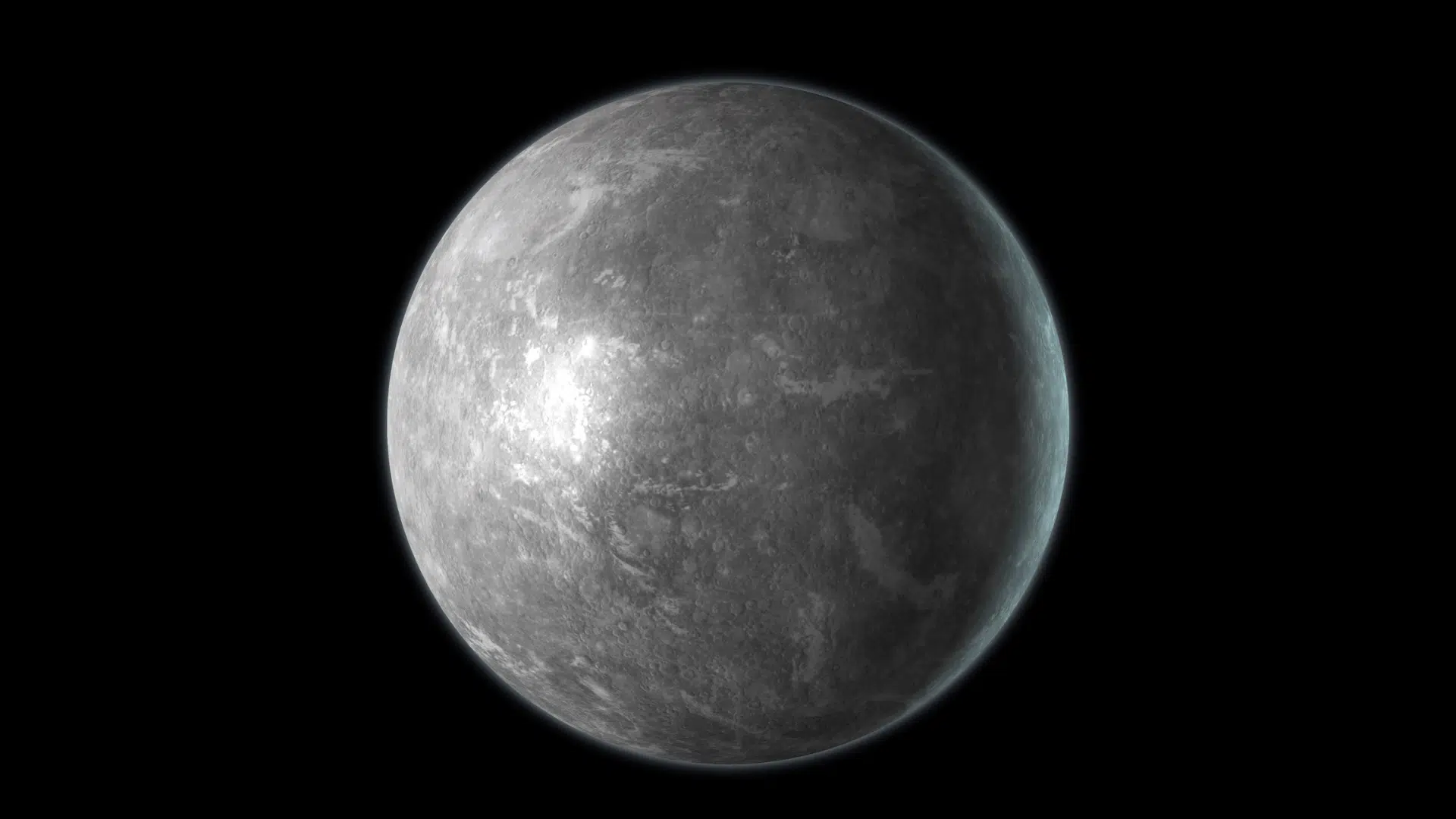
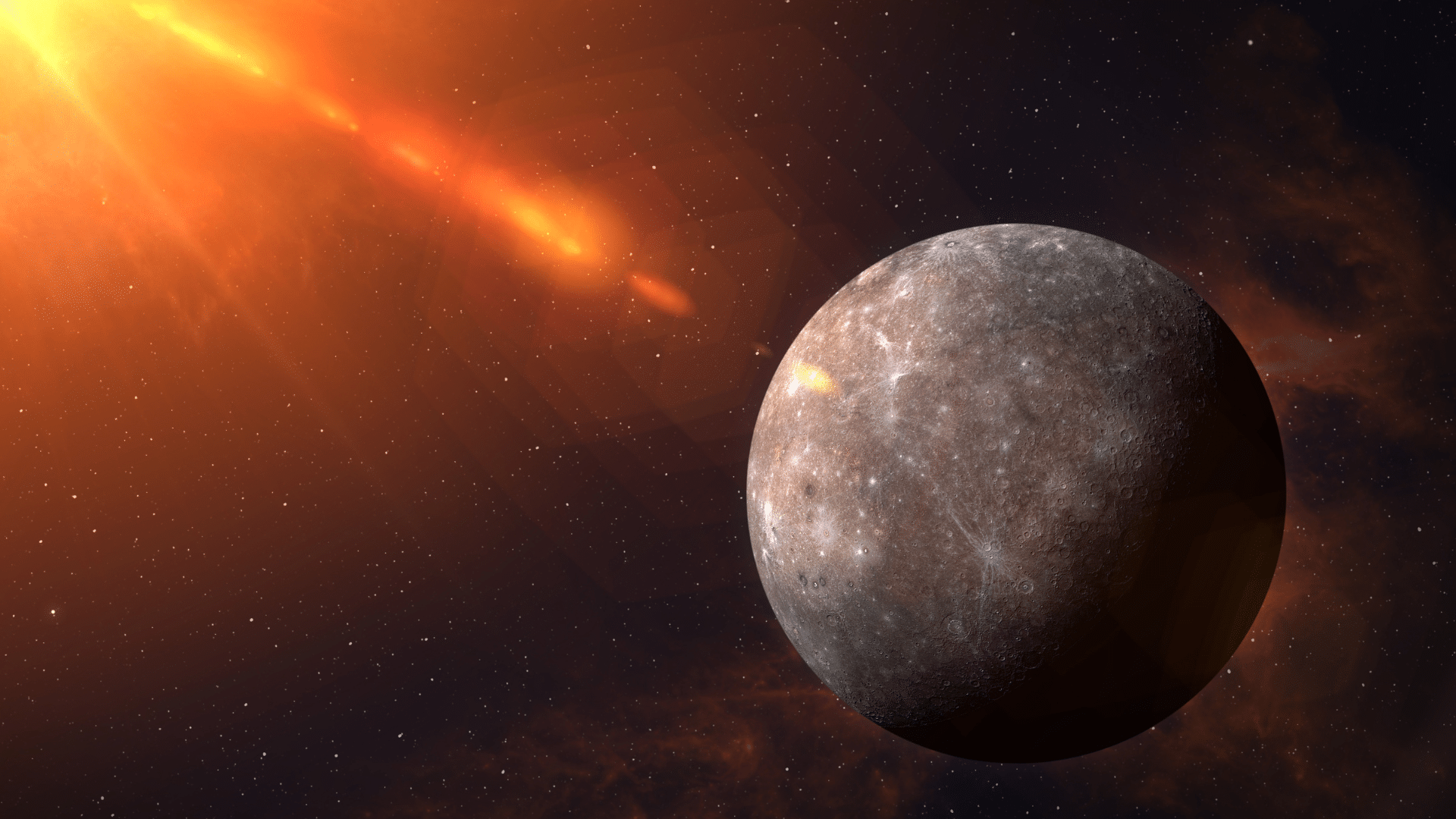
| Surface Features | Heavily cratered, similar to Earth’s Moon |
| Core | A large iron core that makes up most of the planet’s interior |
| Magnetic Field | Has a weak but measurable magnetic field |
| Moons | None |
| Rings | None |
| Gravity | About 38% of Earth’s gravity |
| Notable Missions | Mariner 10 (1974–75), MESSENGER (2011–2015), BepiColombo (ongoing mission) |
The Role of Mercury in Modern Science
Today, Mercury is studied for scientific reasons rather than mythological ones. Scientists are interested in its:
- Unusual rotation pattern
- Large metallic core
- Magnetic field
- Extreme temperature differences
Studying Mercury helps researchers understand how rocky planets form and evolve. Because it is close to the Sun, it also offers clues about the early solar system.
Even though science has advanced, the ancient name remains.
To Conclude
Mercury’s name is not just a label from the past. It reflects how early civilizations tried to make sense of what they saw in the sky. The Romans connected motion with meaning, giving the planet a name that matched its behavior.
Today, we understand Mercury through data, spacecraft missions, and physics. Yet the original name still carries weight.
It reminds us that astronomy began with careful observation long before modern tools existed. The planet Mercury continues to teach scientists about planetary formation and extreme environments.
If this topic interests you, consider reading about how the other planets were named.