

CSAM means two very different things depending on where it shows up. In an IT department, it has nothing to do with the alarming version people might expect online.
It stands for Cybersecurity Asset Management, a behind-the-scenes process that keeps a network running safely.
Security teams use it to track every device, app, and cloud service connected to their systems, because the ones nobody’s watching usually cause problems later.
The section ahead covers what CSAM means, why it matters, and how teams use it in their daily work.
What Does CSAM Stand For?
CSAM stands for Cybersecurity Asset Management, sometimes written as Cyber Security Asset Management.
In this context, it has nothing to do with the more alarming meaning the acronym carries elsewhere online.
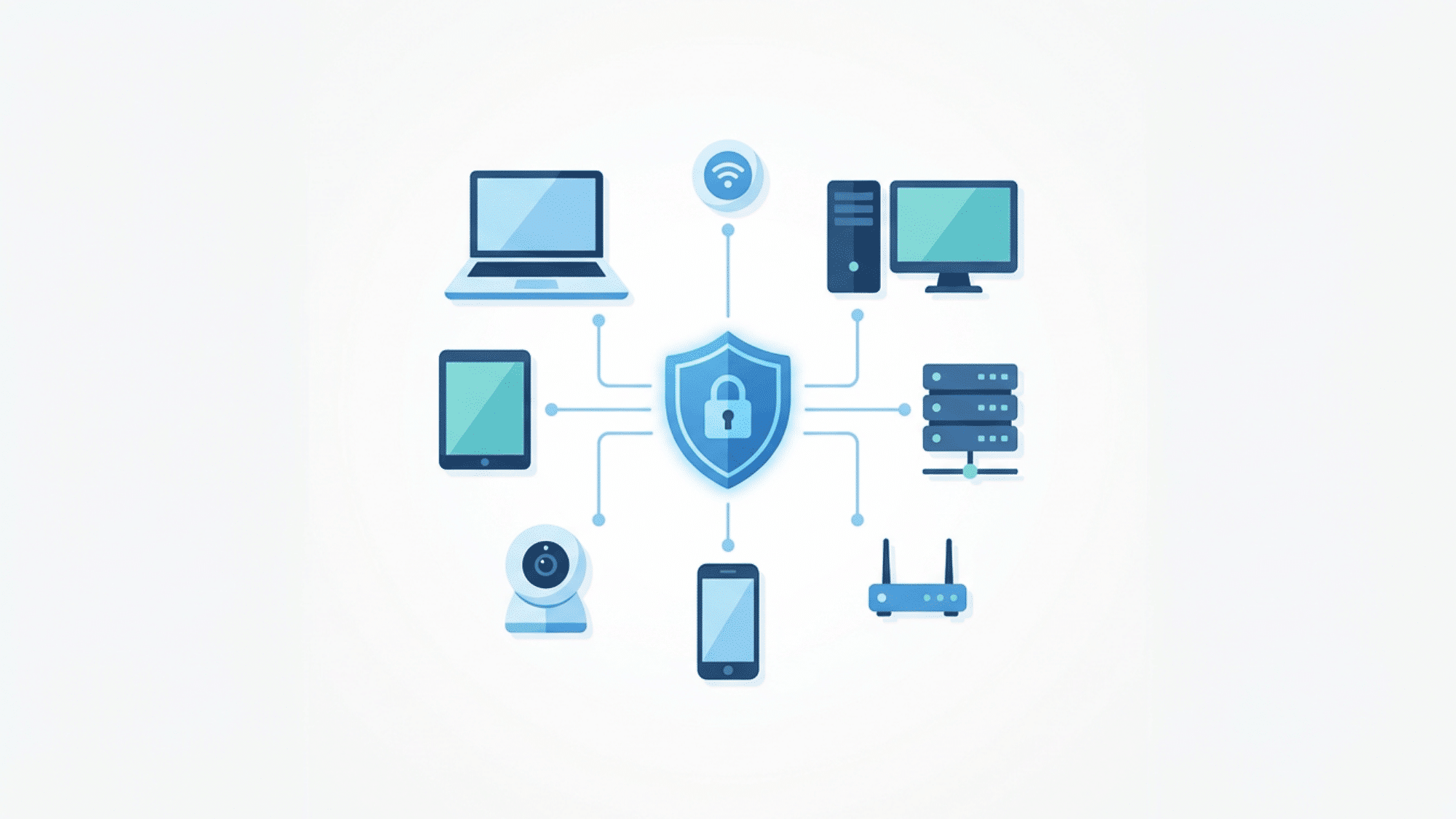
Within IT and security teams, CSAM refers to the practice of identifying, tracking, and managing every asset connected to an organization’s network, including laptops, servers, cloud instances, applications, and IoT devices.
That picture becomes the foundation for everything else. Spotting vulnerabilities. Closing gaps. Reducing the overall attack surface. All before threats find their way in.
Why is CSAM Important?

An organization can only defend what it can actually see. CSAM closes that visibility gap and turns asset data into real security value.
- Reduces Attack Surface: Unknown or unmanaged devices are prime entry points for attackers. CSAM identifies these gaps early, giving teams the chance to secure them before they become active threats.
- Strengthens Compliance: Frameworks like NIST and ISO 27001 require accurate asset records. CSAM keeps that documentation current, making audits smoother and reducing the risk of compliance failures.
- Speeds up Incident Response: When a breach happens, knowing exactly what assets exist and how they connect helps security teams isolate threats faster and limit damage.
- Improves Resource Allocation: With full visibility into assets, teams can focus spending and staffing on the systems that carry the highest risk, rather than guessing.
- Supports Better Decision-Making: Accurate, real-time asset data gives leadership the information needed to make informed choices about upgrades, retirements, and security investments.
How is CSAM Used?
CSAM isn’t a one-time checklist. It’s a continuous process that security teams rely on daily to stay ahead of risk. This is how it plays out in practice.
Tracking Hardware and Software Assets
Security teams use CSAM to maintain a live inventory of every device and application connected to the network, from laptops and servers to SaaS tools and cloud instances.
This inventory updates automatically as new assets join or leave the environment. Instead of relying on outdated spreadsheets, teams get a real-time source of truth.
This visibility becomes the starting point for nearly every other security decision an organization makes.
Identifying Vulnerabilities and Risks
Once assets are cataloged, CSAM tools cross-reference them against known vulnerabilities, outdated software versions, and misconfigurations. This helps teams flag weak points before attackers can exploit them.
Rather than scanning blindly, security staff can focus efforts on high-risk assets first.
The result is a structured, data-backed approach to patching and remediation, rather than reactive firefighting after an incident occurs.
Supporting Compliance and Audits
Regulatory frameworks often require proof that organizations know what’s on their network and how it’s protected.
CSAM generates accurate, up-to-date asset records that auditors can review directly. This reduces the manual effort required to prepare for compliance checks and lowers the risk of failed audits.
Teams can pull reports on demand instead of scrambling to reconstruct asset histories from scattered documentation right before a deadline.
Detecting Shadow IT
Employees often connect unauthorized devices or install unapproved software without informing IT, creating hidden risks known as shadow IT.
CSAM regularly scans the network and flags anything unrecognized or unmanaged. Security teams can then investigate, approve, or remove these assets before they become an entry point for attackers.
This ongoing detection closes gaps that manual audits alone would likely miss entirely.
How Does Cybersecurity Asset Management Work?
CSAM follows a repeatable process that turns scattered network data into clear, actionable security insight. The breakdown below covers how it operates step by step.
1. Asset discovery: Scanning tools, agents, and network mapping techniques identify every connected device, application, and cloud instance, including hidden or forgotten systems across the environment.
2. Inventory and classification: Discovered assets get cataloged into a centralized database, tagged by type, owner, location, and criticality to build a complete, organized picture.
3. Continuous monitoring: The network is monitored in real time for changes, flagging new devices, decommissioned assets, or unexpected configuration changes as they occur.
4. Risk scoring and prioritization: Assets are ranked by exposure and business impact, helping teams focus resources on the highest-risk systems rather than treating everything equally.
5. Integration with security tools: Asset data connects with vulnerability management, SIEM, and patching systems, turning visibility into coordinated, faster action across the organization.
Key Components of a CSAM Program
A CSAM program works only when its core building blocks function together. Below is the breakdown of the essential components and what each one does.
| Component | What It Does |
|---|---|
| Asset Discovery Tools | Automatically scan networks, cloud environments, and endpoints to identify connected hardware, software, and devices. |
| Centralized Inventory Database | Maintains a single, accurate record of all discovered assets in one location. |
| Ownership & Lifecycle Tracking | Assigns asset owners and monitors each asset from deployment to retirement. |
| Risk Classification | Prioritizes assets based on criticality, business value, and security exposure. |
| Automated Alerts | Detects unauthorized, unknown, or misconfigured assets and notifies teams immediately. |
| Security Tool Integrations | Connects with vulnerability management, SIEM, and patch management platforms for aligned security. |
Common Challenges in Cybersecurity Asset Management
Even well-designed CSAM programs run into obstacles. Understanding these challenges helps teams build stronger, more reliable asset management strategies from the start.
- Shadow IT: Employees often connect unapproved devices or install unauthorized software, creating blind spots that security teams don’t discover until something goes wrong.
- Cloud Sprawl: As organizations adopt more cloud services, tracking every instance, container, and subscription across multiple providers becomes increasingly difficult to manage consistently.
- Siloed Data: Asset information often resides across disconnected systems and departments, making it hard to obtain a single, accurate, unified view of the environment.
- Keeping Inventory Current: Assets are added, changed, and retired constantly. Manual tracking methods quickly fall behind, leaving gaps in visibility and outdated records.
- Limited Resources: Many security teams lack the staffing or budget to monitor assets regularly, leaving some environments only partially covered at any given time.
Conclusion
Every unmanaged device is an open door. Every unknown asset is a risk waiting to be found, either by a security team or by an attacker first.
Most breaches start small: a forgotten laptop, an unpatched server, a cloud instance nobody tracked.
CSAM puts organizations back in control, turning invisible gaps into visible, manageable data. Security isn’t about eliminating every risk. It’s about knowing where they hide.
Start treating asset visibility as a priority, not an afterthought, and the rest of a security strategy gets stronger from the ground up.
Frequently Asked Questions
Is CSAM the Same as Caasm?
No. CAASM (Cyber Asset Attack Surface Management) focuses specifically on attack surface visibility, while CSAM covers broader asset management.
How Often Should Asset Inventories Be Updated?
Regularly. Most modern CSAM tools update inventories in real time rather than on a fixed schedule.
Can Small Businesses Benefit from CSAM?
Yes. Even small networks have blind spots, and CSAM helps catch unmanaged devices early, regardless of company size.