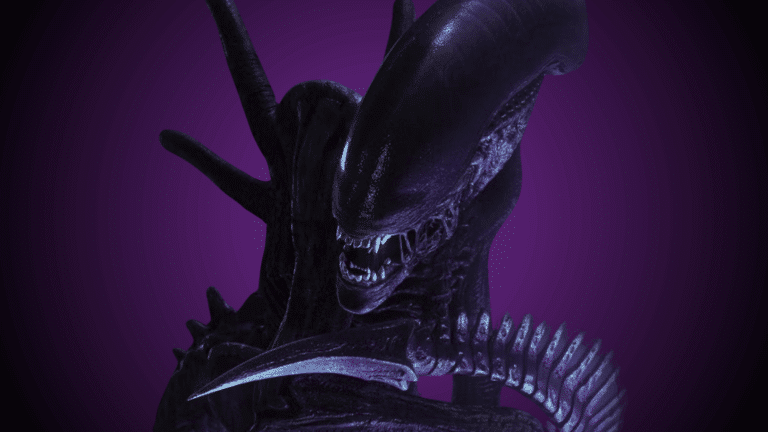

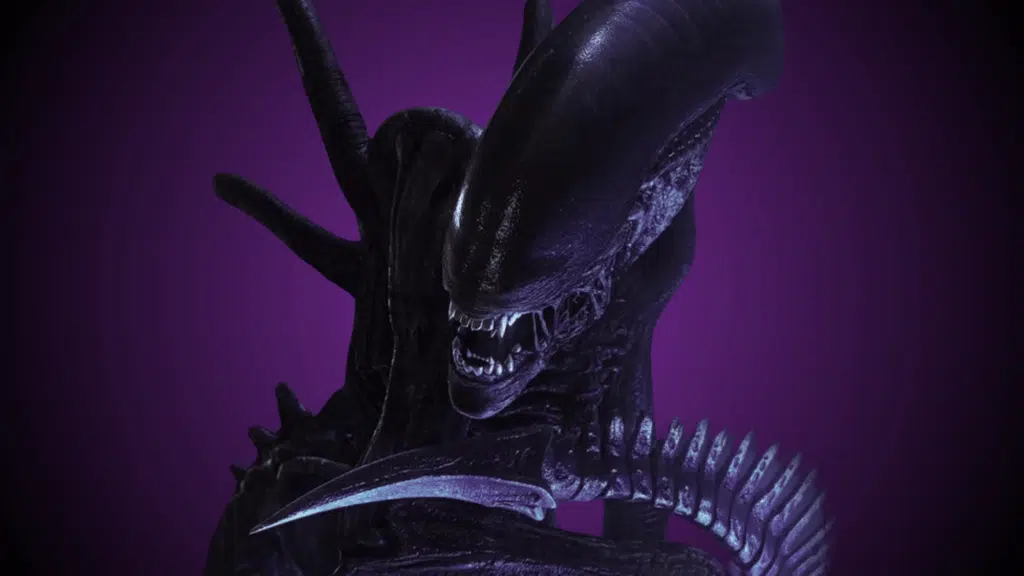
Most people think there’s only one kind of Xenomorph. A big black creature. Teeth inside teeth. Acid for blood. But that’s not all.
The Alien franchise has quietly built one of the most varied creature rosters in all of sci-fi horror. And yet, most fans couldn’t name more than two or three types off the top of their head.
That gap between what people know and what actually exists in this universe? It’s bigger than expected.
Every Xenomorph variant has its own origin, its own set of abilities, and honestly, its own nightmare fuel. Time to get into all of them.
How Many Xenomorph Types Exist?
The number is bigger than most people expect. The main Alien films introduced about a dozen core Xenomorph types.
That list covers familiar faces like Drones, Warriors, Runners, Praetorians, Crushers, and Queens. But the franchise doesn’t stop there.
Step into the expanded universe: comics, novels, and video games like Aliens: Colonial Marines and Fireteam Elite, and that number jumps past 50 distinct variants.
Creatures like Boilers, Prowlers, White Hybrids, and even aquatic forms all exist within this universe. Each one carries its own traits, strengths, and origin story. It’s a much bigger roster than the films let on.
Xenomorph Lifecycle Types
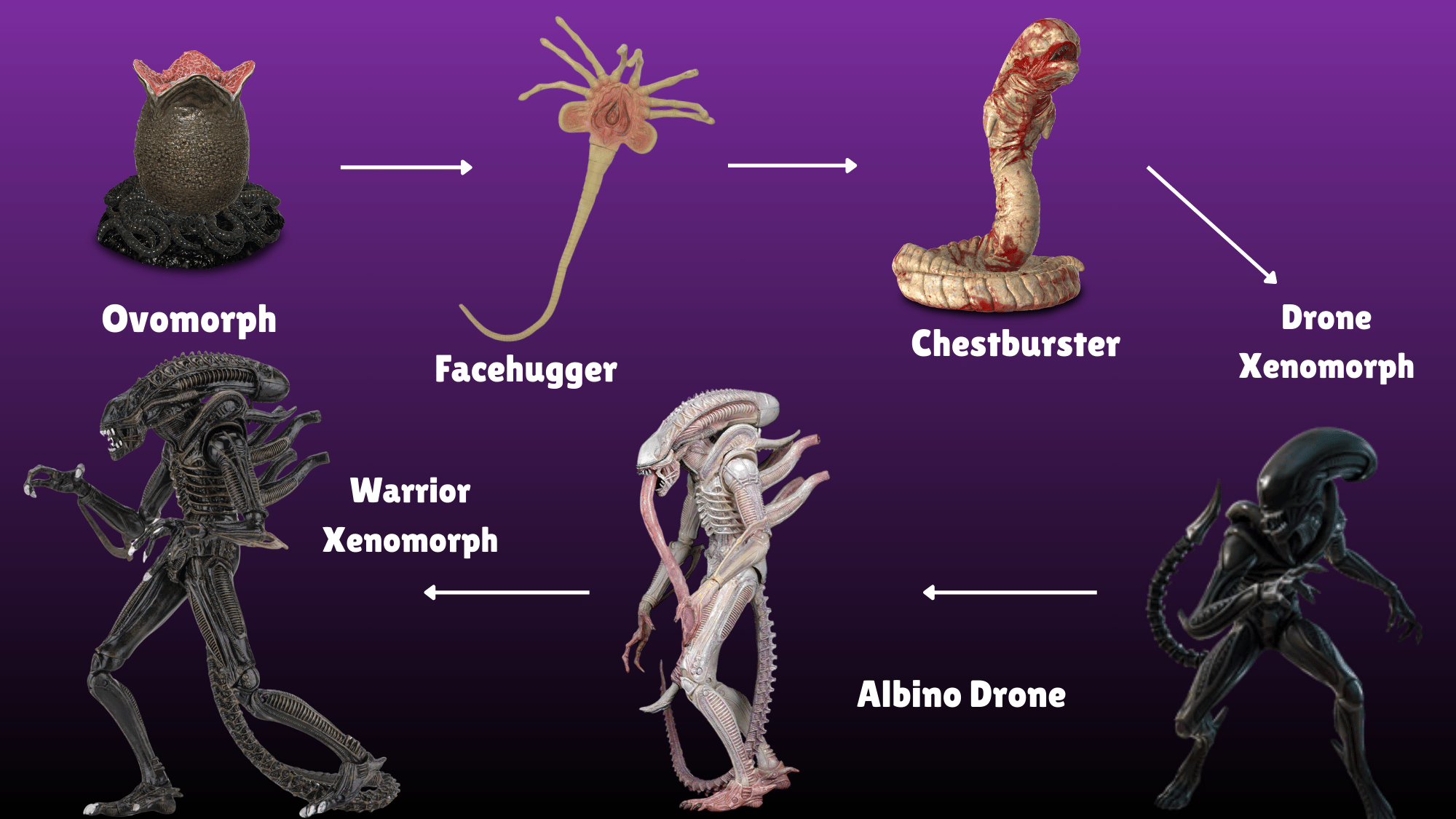
Every Xenomorph starts somewhere. The lifecycle moves through distinct stages, each more dangerous than the last.
1. Ovomorph (Xenomorph Egg): The lifecycle begins here. These leathery, pod-like eggs sit dormant until a warm-bodied host walks nearby.
2. Facehugger: This spider-like parasite hatches from the egg. It latches onto a host’s face and implants a Xenomorph embryo deep inside.
3. Royal Facehugger: A rare, specialized version of the Facehugger. Its sole purpose is to implant a Queen embryo rather than a standard Xenomorph.
4. Super Facehugger: An aquatic variant of the Royal Facehugger equipped with fin-like flippers for underwater movement. It carries a royal embryo and operates in environments standard Facehuggers simply cannot reach.
5. Chestburster: The embryo grows fast and erupts violently from the host’s chest. Small at birth, it reaches full size within hours.
6. Drone Xenomorph: The classic adult form first seen in 1979. Drones are stealthy, calculating hunters that often work alone to capture hosts.
7. Albino Drone: A script-only variant described as white in coloring. It reportedly secretes resin through a specialized tongue, playing a key role in constructing and maintaining hive structures.
8. Warrior Xenomorph: Built for combat and seen in large numbers in Aliens. Warriors are faster and more aggressive than Drones in battle.
Hive Caste Xenomorph Types
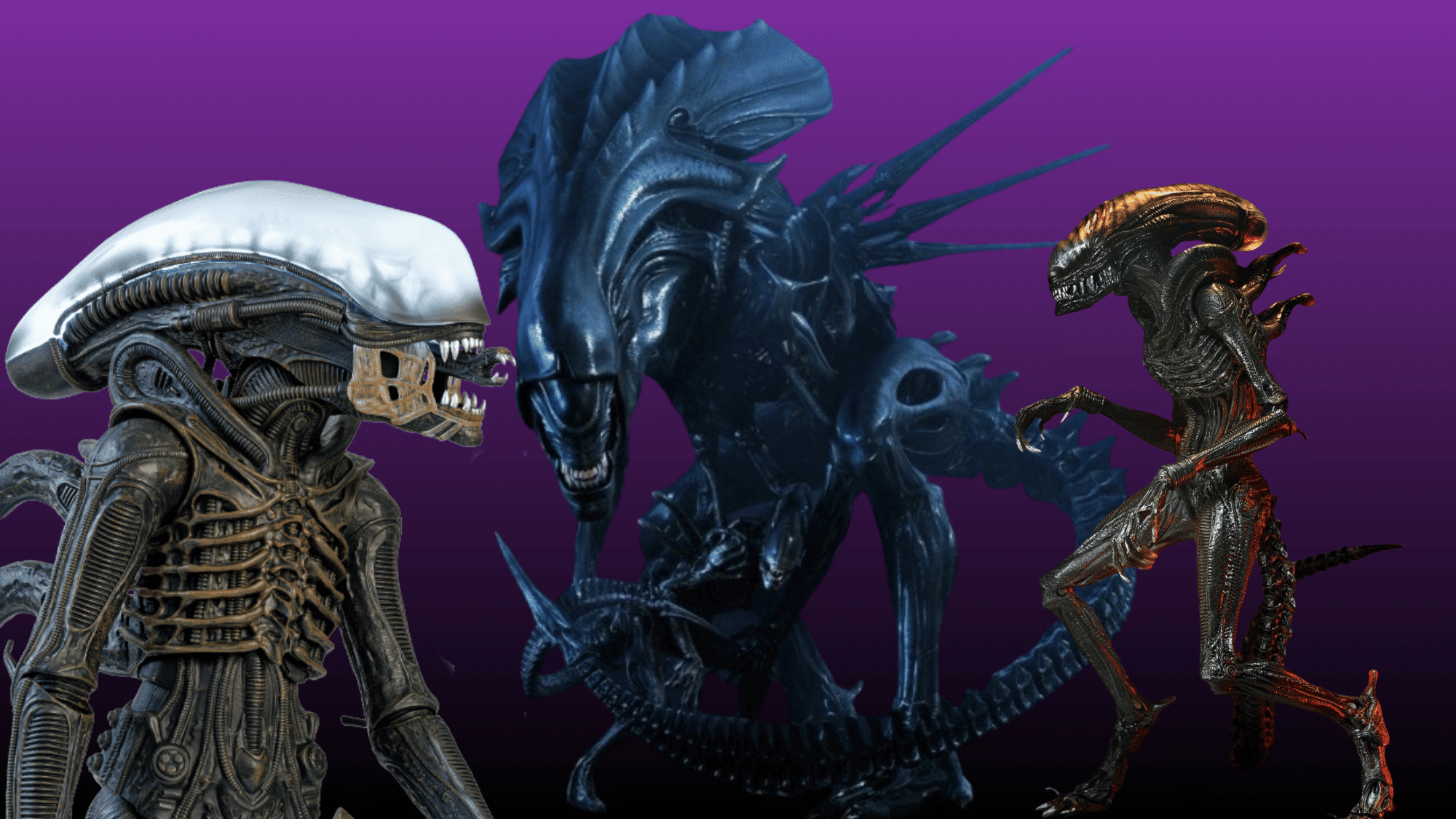
Inside every hive, there’s a strict order. Each caste plays a specific role in keeping the colony running and protected.
9. Xenomorph Queen
The Queen sits at the top of the hive hierarchy. She’s massive, highly intelligent, and responsible for laying all the eggs that keep the colony growing. Without her, the hive collapses.
10. Praetorian Xenomorph
Praetorians are the Queen’s personal bodyguards. Bigger and stronger than standard Warriors, these elite fighters stand between the Queen and any threat. Some Praetorians eventually evolve into Queens themselves.
11. Carrier Xenomorph
Carriers don’t fight. Their job is logistics. They carry multiple Facehuggers on their bodies and deploy them onto nearby hosts, making them one of the most tactically useful members of any hive.
12. Worker Xenomorph
Workers are the builders and maintainers of the hive. These non-combatant Xenomorphs focus entirely on weaving resin structures that form walls, chambers, and egg rooms. They rarely engage in direct combat but keep the entire colony functioning.
13. King Alien / Rogue
The King is a rare male counterpart to the Queen, first introduced in comic material. Larger than a Queen and built for direct combat, the King challenges the hive hierarchy rather than supporting it. The most famous example is the Rogue, a lab-engineered King from the Aliens: Rogue comic series.
14. Hybrid King
A particularly unusual variant from the expanded universe. The Hybrid King commands a group known as White Hybrids and reportedly possesses enough intelligence to communicate in English. It represents one of the most human-adjacent Xenomorph forms ever depicted in comic lore.
15. Empress / Matriarch
Rarer than a standard Queen, the Empress and Matriarch represent higher evolutionary forms of Xenomorph royalty. They’re larger, more powerful, and typically command authority over multiple hives at once.
Host-Based Xenomorph Variants
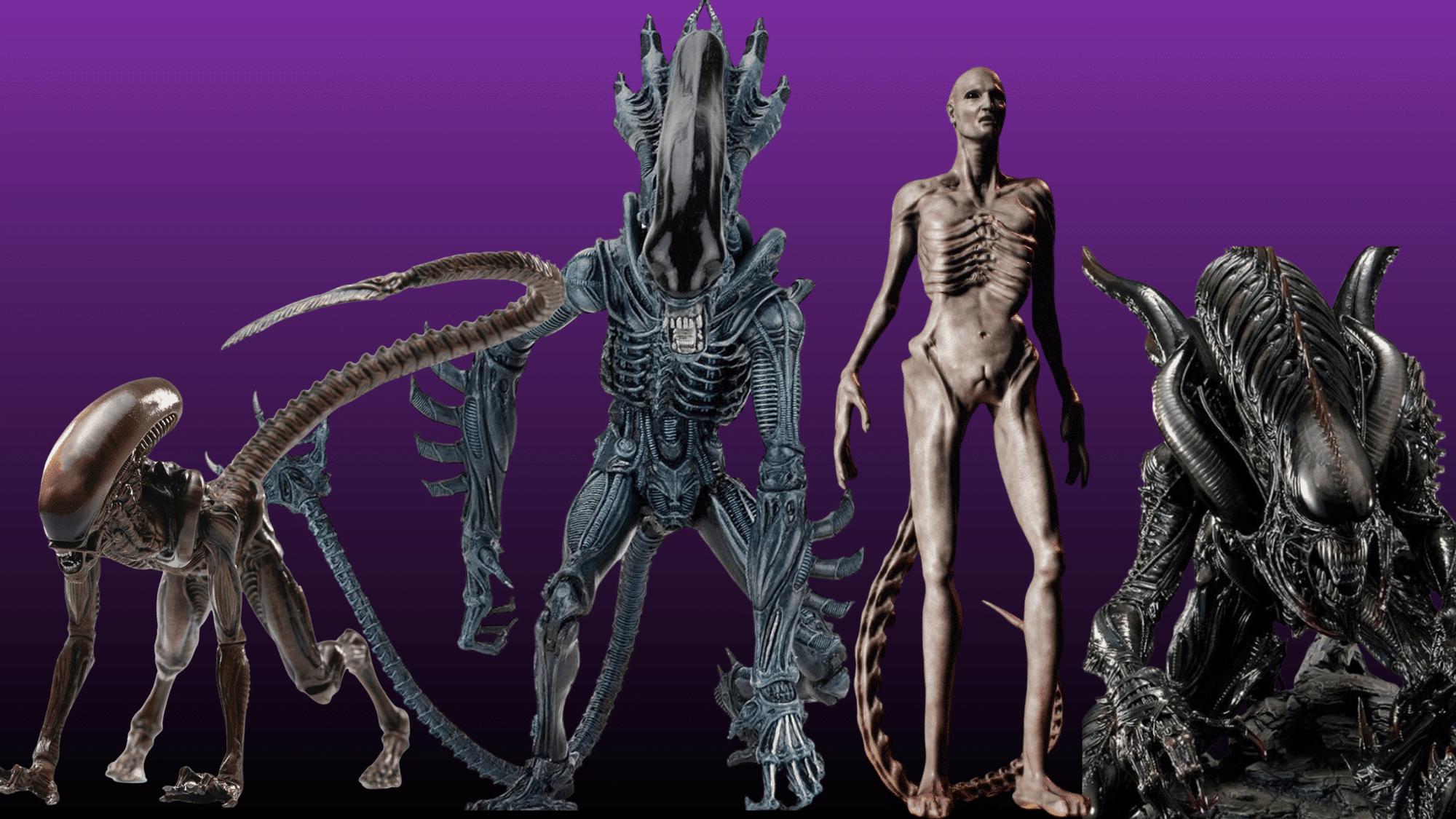
Xenomorphs don’t always look the same. Their final form depends heavily on the host they’re born from.
16. Dog Alien (Runner Xenomorph): The Runner comes from a quadruped host, most notably seen in Alien 3. It moves on all fours, making it faster and lower to the ground than human-born variants. That speed makes it especially hard to outrun.
17. Human-Born Xenomorph: This is the classic form most people recognize. Born from a human host, these bipedal Xenomorphs walk upright and make up the bulk of any hive’s population. They’re the standard against which all other variants get compared.
18. Bull Xenomorph: Born from a bovine host, the Bull Xenomorph inherits horn-like structures and a powerful charging stance. It functions as a battering force in combat situations, using its mass and head-down charge to break through resistance rather than relying on stealth.
19. Gorilla Xenomorph: A muscular, heavily built variant that gestates inside an ape host. The Gorilla Xenomorph inherits exceptional upper body strength and climbing ability. It’s more physically imposing than a standard human-born Xenomorph and far more capable in vertical terrain.
20. Predalien: The Predalien hatches from a Predator host. It inherits physical traits from both species, resulting in a larger, stronger, and more aggressive creature. Dreadlock-like appendages and mandibles set it apart from any standard Xenomorph form.
21. Space Jockey Xenomorph: When a standard Facehugger implants inside an Engineer, the result is a massive, trunk-bearing variant that dwarfs most known Xenomorph types. Its sheer size reflects the enormous physical build of the Engineer host, making it a miniboss-level threat in any encounter.
22. Engineer-Based Xenomorph: When a Xenomorph embryo gestates inside an Engineer, the result is enormous. These variants tower over human-born Xenomorphs. Their size and strength reflect the physical power of the Engineer host, making them significantly more dangerous in direct confrontation.
23. K-Series Xenomorphs: These lab-engineered variants, including designations like K6T, are gold and silver-toned Predalien hybrids created under controlled conditions. They represent deliberate genetic experimentation rather than natural host absorption, and their metallic coloring makes them visually distinct from anything found in the wild.
24. Tusked Xenomorph: A variant bred specifically as a combat animal for Killer Predators. The Tusked Xenomorph features jaw-mounted tusks and functions more like a trained attack creature than an independent hive member. It sits at an unusual intersection between weapon and organism.
25. Tarkatan Xenomorph: This variant appears in crossover comic territory. Born from a Tarkatan host, it inherits the signature blade-like arm appendages of that species. It’s one of the more unusual hybrids in the expanded universe crossover material.
Hybrid and Engineered Xenomorph Types
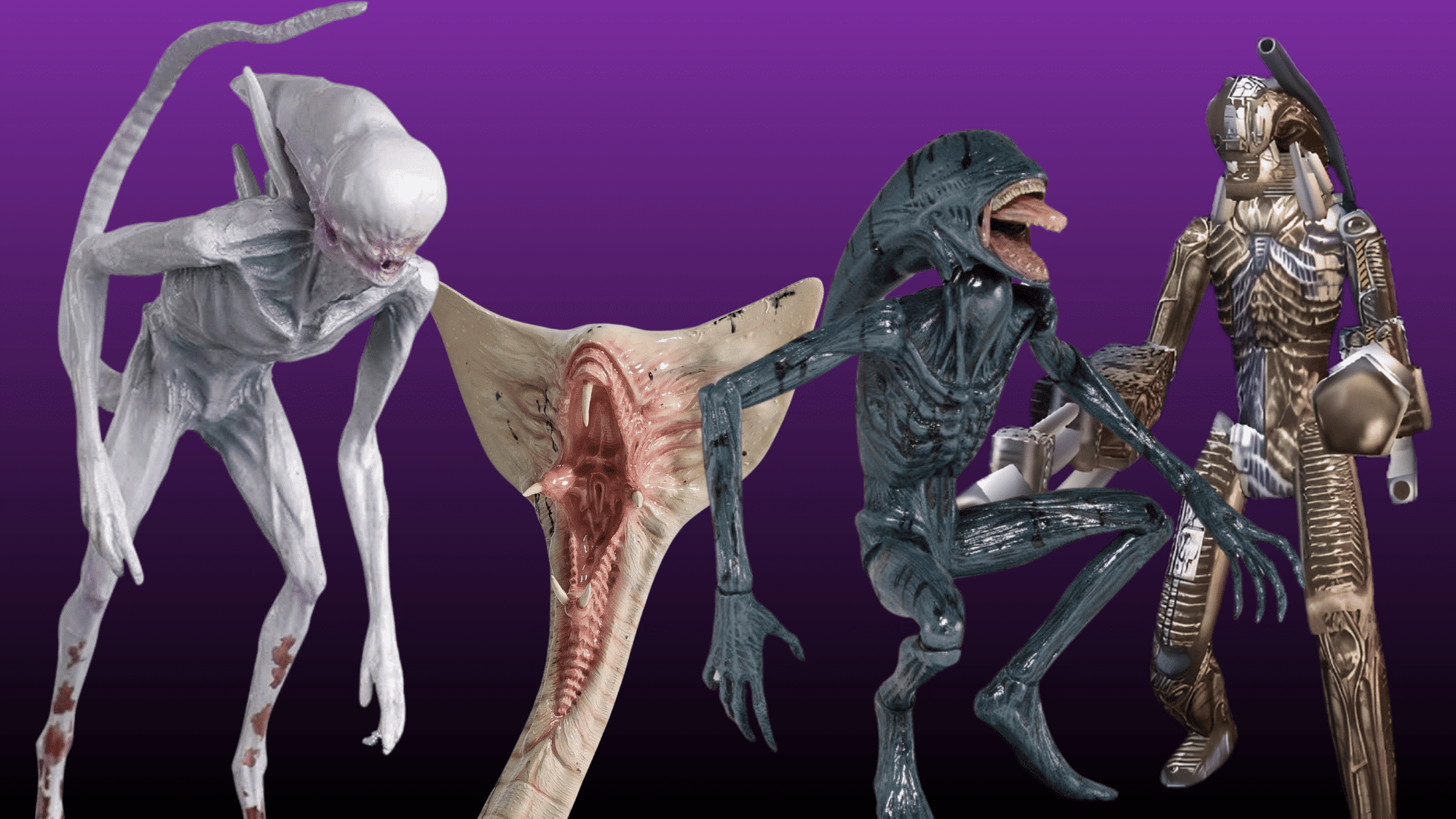
Not every Xenomorph came from a natural host. Some were created through genetic tampering, mutation, or the black liquid pathogen introduced in the prequel films.
26. Newborn Xenomorph (Alien Resurrection)
The Newborn is the result of repeated human-Xenomorph cloning experiments.
Unlike traditional Xenomorphs, it has a more humanoid face, no exoskeleton, and pale skin. It also displays something unexpected: emotional attachment. That alone makes it one of the strangest creatures in the entire franchise.
27. Neomorph
Neomorphs appear in Alien: Covenant and come from a mutagen rather than a traditional egg. They grow inside a host through different entry points and emerge as pale, aggressive creatures.
Faster and more feral than classic Xenomorphs, they operate without hive structure or Queen control.
28. Protomorph
Also from Alien: Covenant, the Protomorph resembles a classic Xenomorph but carries subtle differences in build and behavior. Many fans consider it an early evolutionary version of the species, predating the creature seen in the original 1979 film.
29. Deacon
The Deacon appears briefly at the end of Prometheus. It emerges from a Trilobite-infected Engineer and shares visual similarities with later Xenomorphs.
Considered a precursor organism, the Deacon hints at the long history of the black liquid pathogen and its role in creating the species.
30. Hammerpede-Related Mutations
Hammerpedes form when worm-like creatures on LV-223 come into contact with the black liquid.
The result is an aggressive, cobra-like organism with regenerative properties. While not a true Xenomorph, the Hammerpede sits within the same chain of mutations that connects the pathogen to the broader Alien universe.
31. Black Goo Infected Xenomorph
This white-colored variant emerges from exposure to the black liquid pathogen at Pala Station. What sets it apart is intelligence far beyond standard Xenomorphs and a reported telepathic ability.
It operates with an awareness that makes it considerably more unsettling than a creature running purely on instinct.
32. Biodrone
An engineered Xenomorph built for obedience rather than independence.
Biodrones follow commands and function as controlled killers, but they come with a significant limitation: a lifespan of only six days. They’re a disposable weapon, effective in the short term but biologically designed not to last.
33. Xenoborg
The Xenoborg takes the species in a completely different direction. Cybernetic enhancements replace organic combat capability here, turning the creature into a stationary defensive unit armed with laser weaponry.
It guards fixed positions rather than hunting, making it more of an installation than an animal.
34. Anchorpoint Hybrid
This variant originates from an alternate Alien 3 script set aboard Anchorpoint Station. Born from spores rather than a traditional egg-and-Facehugger cycle, it displays distinctive red eyes.
It’s one of the more obscure entries in expanded universe lore, but it represents a genuinely different take on Xenomorph reproduction.
Rare and Expanded Universe Xenomorph Types
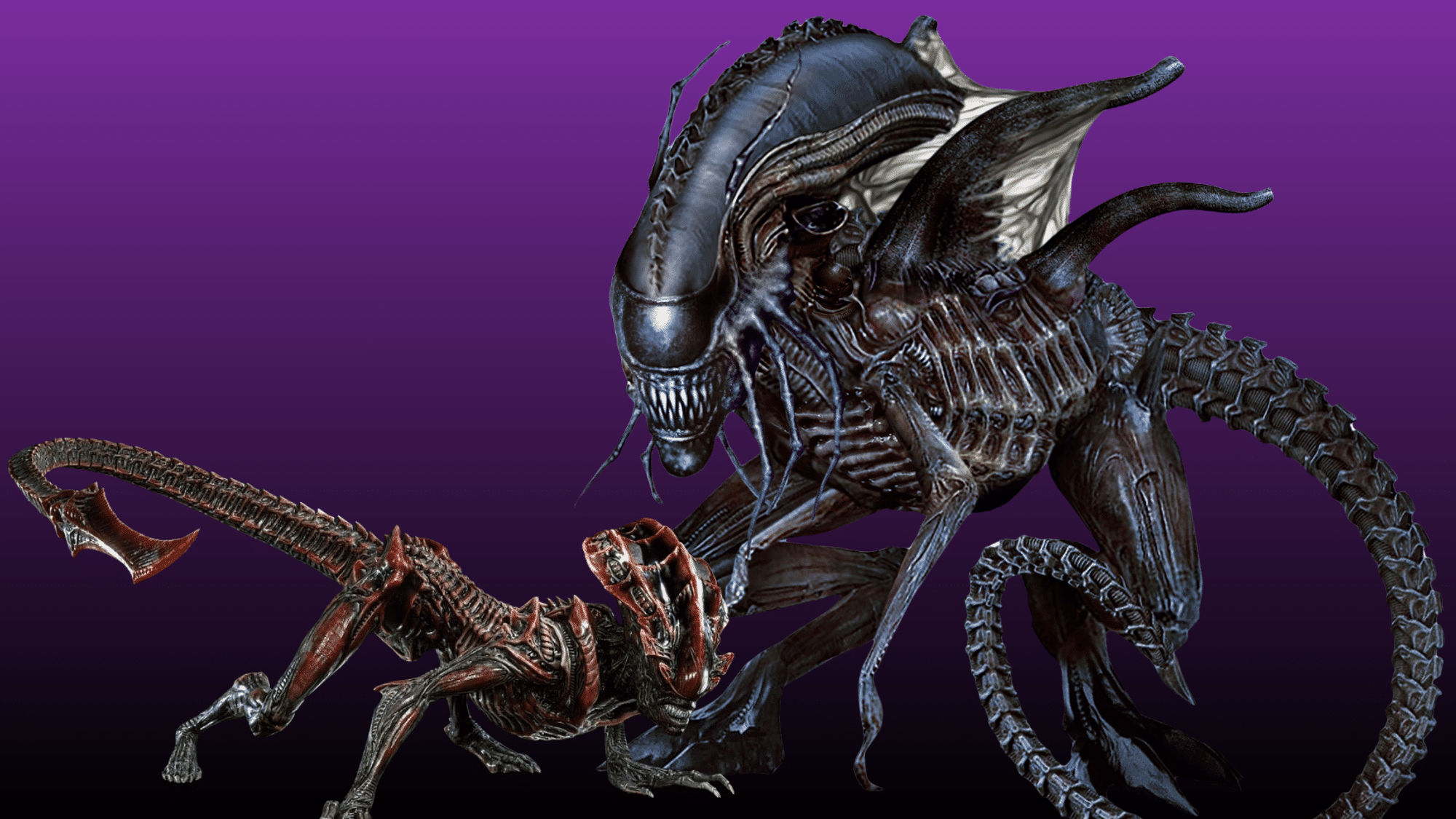
Beyond the films, the expanded universe adds a whole new layer of Xenomorph variety. Games, novels, and comics have built out some genuinely terrifying additions to the roster.
35. Prowler Xenomorph: Built purely for ambush, the Prowler from Aliens: Fireteam Elite moves fast and low, catching soldiers completely off guard.
36. Crusher Xenomorph: This heavily built variant from Aliens: Colonial Marines charges through walls and armor using its reinforced, weapon-like head crest.
37. Ravager Xenomorph: Larger than a Warrior, the Ravager from Aliens vs. Predator: Requiem tears through targets with pure, unrelenting close-range aggression.
38. Boiler Xenomorph: Slow and blind, this living explosive from Aliens: Colonial Marines detonates near targets, releasing devastating acid and pressure on impact.
39. Lurker Xenomorph: The Lurker from Aliens: Colonial Marines stalks vents and ceilings, ambushing targets in tight spaces using stealth over brute strength.
40. Scout Xenomorph: Fast-moving reconnaissance units that locate targets ahead of the hive before larger, combat-ready variants move in for the attack.
41. Red Xenomorph: Visually distinct and behaviorally unpredictable, Red Xenomorphs from various comic runs operate more independently than typical hive-bound variants normally do.
42. Irradiated Xenomorph: Heavy radiation exposure mutates this variant, amplifying its acid-based abilities and making it an extreme hazard in contaminated environments.
43. Pink Xenomorph: This arcade game radiation mutant carries a corrosive melting effect that surpasses even the already dangerous acid of standard Xenomorphs.
44. Spitter Xenomorph: First seen in Aliens: Colonial Marines, the Spitter launches concentrated acid from range, forcing targets out of cover under fire.
45. Aquatic Xenomorph: Fully adapted to underwater environments, this legless-tailed variant from Bracken’s World becomes extremely dangerous in any water-heavy setting.
46. Flying Xenomorph / Alien Dragon: A winged aerial hunter from expanded universe material that removes any ground-level advantage humans typically rely on during encounters.
47. Queen Mother: This telepathic overlord from Xenomorph Prime commands entire planetary hives, with influence reportedly stretching across galactic distances in certain comic depictions.
48. Trophy Hatchling: A rare white Xenomorph that formed an unlikely alliance with a Predator, earning kept status rather than facing the usual hunt.
49. White Hybrid: Blending human, Predator, and Xenomorph genetics, White Hybrids possess genuine reasoning ability, representing a disturbing move toward an intelligent communicating variant.
50. Necromorph: This airborne necrovirus carrier spreads infection without traditional eggs or Facehuggers, turning every standard Xenomorph encounter into a potential large-scale plague event.
51. Alpha Xenomorph: Featuring a horned Praetorian-like build from Bloodlines comics, the Alpha leads combat groups as a dominant threat above standard Warriors.
52. Goddess / Woman in the Dark: A horned deity-like entity from expanded lore that blurs the line between creature and something far more mythological entirely.
53. Romulus Xenomorph: Introduced in Alien: Romulus, this variant skips the traditional Chestburster stage, emerging instead from a 3D-printed cocoon with distinct physical differences.
What Makes Xenomorph Types Different From Each Other?
Three core factors separate one Xenomorph type from another.
- First, the host matters enormously. The creature absorbs genetic traits from whatever organism it gestates inside.
- Second, the environment plays a big role. Radiation, mutation, and direct engineering all push the species in new directions.
- Third, hive function shapes the final form. A Crusher exists to break things. A Carrier exists to spread Facehuggers. A Queen exists to reproduce. Every variant fills a specific biological or tactical purpose.
Nothing about a Xenomorph’s design is accidental. Each type reflects exactly what the species needed at that moment to survive and spread.
To Conclude
The Alien franchise has spent decades proving one thing. There’s always another variant waiting around the corner.
From the humble Ovomorph to the galaxy-commanding Queen Mother, every single type serves a purpose within this universe. Some hunt. Some build. Some explode. And a few think.
What makes this roster genuinely impressive is how much variety exists beyond the films. The expanded universe rewards curious fans with creatures most people never knew existed.
Got a favorite Xenomorph variant? Drop it in the comments below. There’s always room for more discussion about these remarkable creatures.