
Look up at the night sky on a clear night. Hundreds of tiny lights flicker back. Most people assume they know what those lights are. Stars, right? Simple enough. But are all stars actually suns?
It sounds like it should have an obvious answer. And yet, astronomers have spent decades studying this very topic. The science behind it is more layered than most expect.
Some stars behave nothing like our Sun. Others share striking similarities. And the differences between them say a lot about how the universe works.
This blog breaks down the science in a way that’s easy to follow. By the end, the night sky will look a little different
Are All Stars Suns?
The short answer depends on how the word “sun” is defined. In everyday language, people use “sun” to mean our own star, the one that lights up Earth’s sky.
But in science, the sun simply means any star that has planets orbiting around it.
By that definition, not every star qualifies. Some stars float through space completely alone, with no planets in sight. Others host entire planetary systems, just like ours.
So the question isn’t just about size or brightness. It comes down to context. The word means different things in different settings, and that small distinction changes the answer entirely.
What is the Difference Between a Star and a Sun?
Stars and Suns are often used interchangeably, but they carry different meanings depending on the scientific and cultural context.
| Feature | Star | Sun |
|---|---|---|
| Definition | A massive ball of hot gas that produces light and heat through nuclear fusion | A star that has one or more planets orbiting around it |
| Usage | Scientific and general term for all stellar objects | Refers specifically to our star or any star with a planetary system |
| Number | Billions exist across the universe | Far fewer, as not all stars have planets |
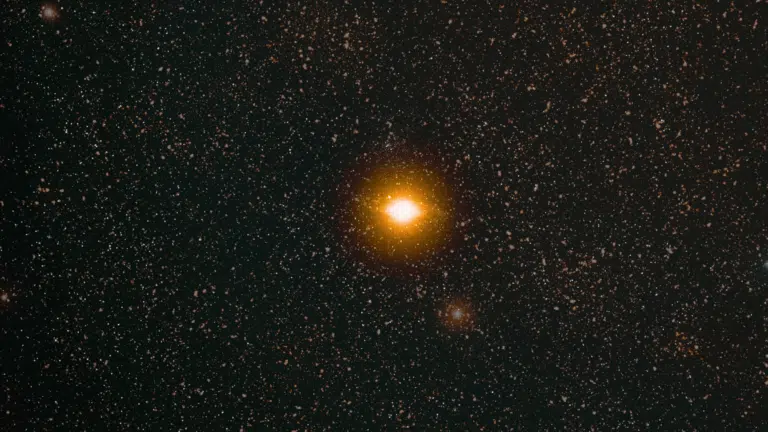
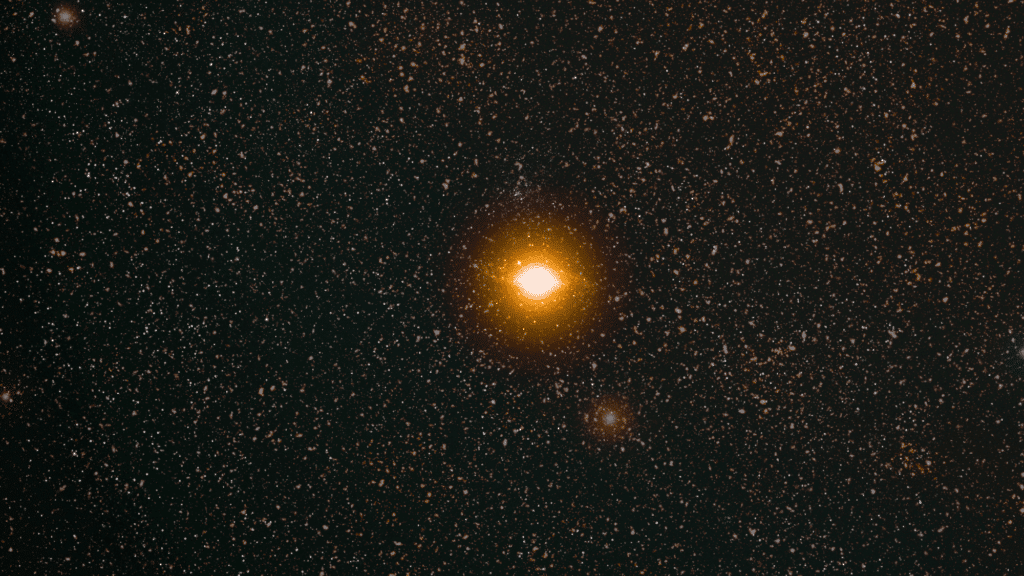
| Example | Betelgeuse, Sirius, Proxima Centauri | Our Sun, and potentially stars like Kepler-452 |
| Planetary System | May or may not have planets | Always associated with at least one orbiting planet |
| Common Context | Used in astronomy to describe any stellar body | Used in everyday language to mean Earth’s star |
What Exactly is a Star?
A star is a massive ball of hot, glowing gas held together by gravity.
It produces energy through a process called nuclear fusion, where hydrogen atoms in the core smash together to form helium. That process releases enormous amounts of light and heat.
Stars come in different sizes, colors, and brightness levels. Some are much bigger than our Sun. Others are far smaller. But they all share the same basic makeup, mostly hydrogen and helium.
They form inside giant clouds of gas and dust called nebulae.
Over millions of years, gravity pulls that material together until the core gets hot enough to trigger fusion. That’s when a star is born.
Why Do We Call Our Star “The Sun”?
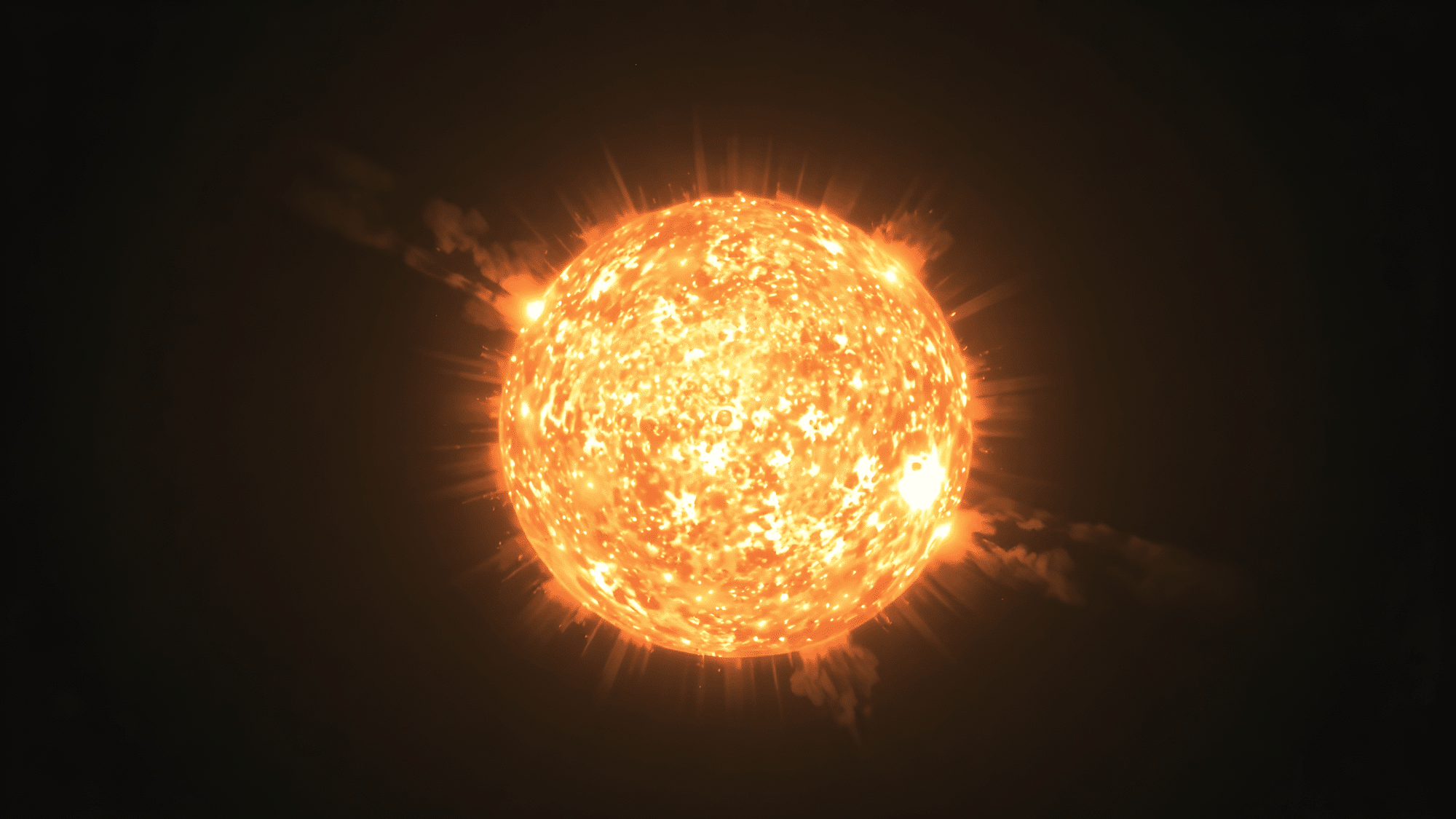
The name “Sun” comes from the Old English word “sunne.” Before modern astronomy, people had no idea other stars even existed.
To them, the Sun was one of a kind; a completely separate object from the tiny lights in the night sky.
When astronomers eventually realized those distant lights were stars just like our own, the name “Sun” had already stuck. It became the default term for Earth’s star.
Today, scientists use “Sun” specifically for our star. Every other star goes by its own name or catalog number. The title simply never changed.
Are There Other Suns in the Universe?
Yes, the universe has countless stars that act as suns. Many host their own planets, making them suns by scientific definition. Here are a few well-known examples.
- Kepler-452: This star sits about 1,400 light-years away. It is close in size and temperature to our Sun and hosts Kepler-452b, a super-Earth sitting in the habitable zone.
- Alpha Centauri A: Part of the nearest star system at 4.37 light-years away, this star matches our Sun closely in both size and temperature. No confirmed planets yet, but it remains a strong sun-like candidate.
- Tau Ceti: Located just 12 light-years away, this star has multiple planets, including candidates that sit in the habitable zone, making it a key target in the search for life.
- 51 Pegasi: Around 50 light-years away, this star made history in 1995 as the first sun-like star confirmed to host an exoplanet, known as 51 Pegasi b.
- HD 40307: Roughly 42 light-years away, this star has six detected planets. One of them, HD 40307 g, sits in the habitable zone and draws significant scientific attention.
Do All Stars Have Planets Like Our Sun?
Not every star has planets. But research shows that planets are actually quite common across the universe.
Studies suggest that most stars host at least one planet. Some have entire systems with multiple planets orbiting them.
That said, the type of star matters. Larger, hotter stars burn through their fuel so fast that planets rarely get a chance to fully form. Smaller, cooler stars tend to hold onto their planetary systems much longer.
Binary stars, systems where two stars orbit each other, can also make planet formation tricky. Gravity from both stars can pull forming planets apart before they stabilize.
Common Misconceptions About Stars and Suns
People grow up with a lot of wrong ideas about stars and suns. Some come from movies, others from outdated textbooks. Here are the most common ones worth clearing up.
- All Stars Are Suns: Not quite. A star only qualifies as a sun if it has planets orbiting it. Countless stars drift through space completely alone, with no planetary system attached to them at all.
- The Sun is a Special Type of Star: The Sun is actually a fairly average star. It falls into the category of a yellow dwarf, and billions of similar stars exist across the Milky Way alone.
- Stars Are on Fire: Stars do not burn like a campfire. They produce light and heat through nuclear fusion, which is a completely different process. No oxygen is needed, and no actual flames are involved.
- All Stars Look the Same: Stars vary greatly in size, color, temperature, and brightness. Some are hundreds of times larger than our Sun. Others are tiny, dim, and barely detectable with standard telescopes.
- Dead Stars Disappear Instantly: Light from distant stars takes thousands of years to reach Earth. So some stars visible in the night sky may no longer exist. Their light is simply still traveling toward us.
- Our Sun Will Last Forever: The Sun has a lifespan of about 10 billion years. It is currently around halfway through that cycle. Eventually, it will expand into a red giant and then fade into a white dwarf.
To Conclude
Stars fill the universe by the billions. But not all of them earn the title of “sun.” That distinction comes down to one thing: planets.
A star becomes a sun when a planetary system forms around it. Without that, it remains just a star.
Every sun out there could potentially support planets. And every planet raises the same exciting question: could something be living there?
Take a moment to look up tonight. Those distant lights are not all the same. And now, the difference is clear