
Most people know the Earth orbits the Sun. And the Sun is just one star inside the Milky Way galaxy.
But does the Milky Way itself orbit something? That question sounds simple. Yet the answer takes things to a whole different scale.
The Milky Way is enormous. It holds hundreds of billions of stars. So the idea that something could hold gravitational control over it seems hard to picture. But space works in ways that often surprise people.
Read on to find out what’s really going on up there.
Understanding the Orbit of The Milky Way
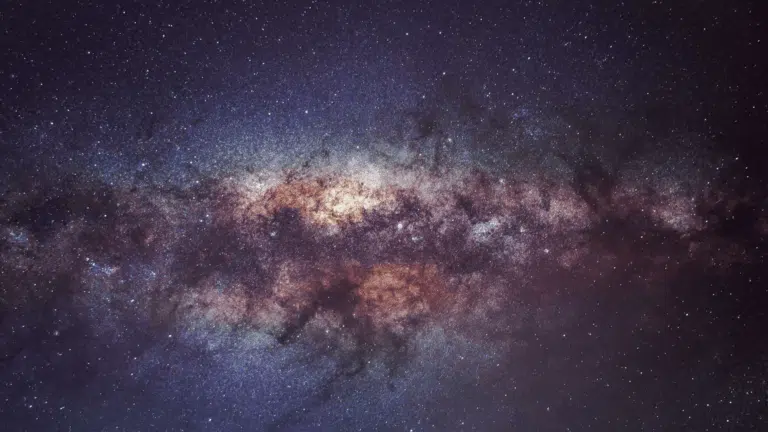
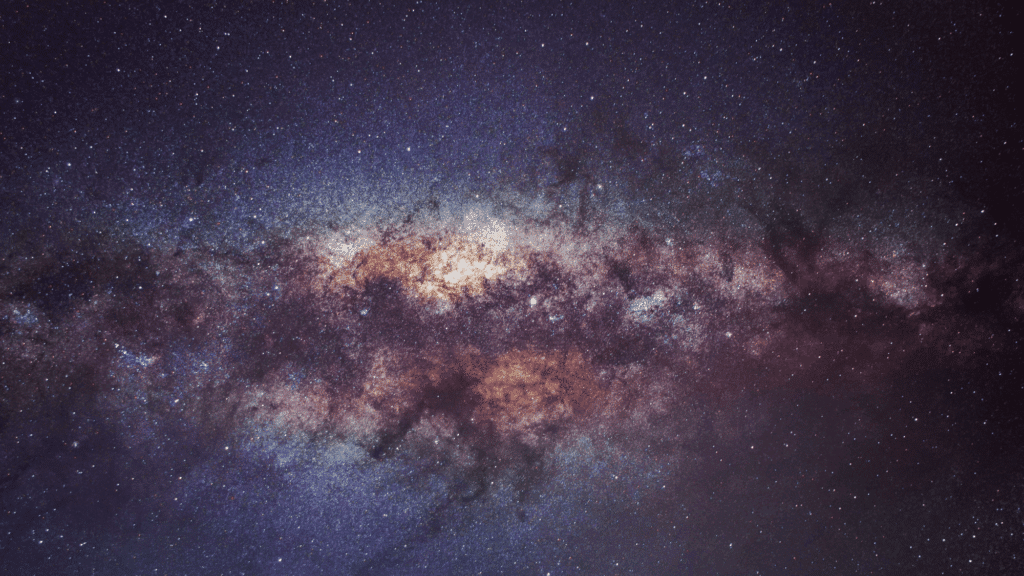
The Milky Way is the galaxy that holds the solar system. It is a massive, spinning collection of stars, gas, and dust.
From the outside, it looks like a flat spiral with a bright center. But from the inside, it is hard to picture just how big it really is.
The galaxy does not sit still in space. It moves. And that movement follows rules set by gravity. Every object in space feels the pull of gravity from other objects around it. The Milky Way is no different.
Understanding how it moves starts with understanding what surrounds it.
How Does the Milky Way Move?
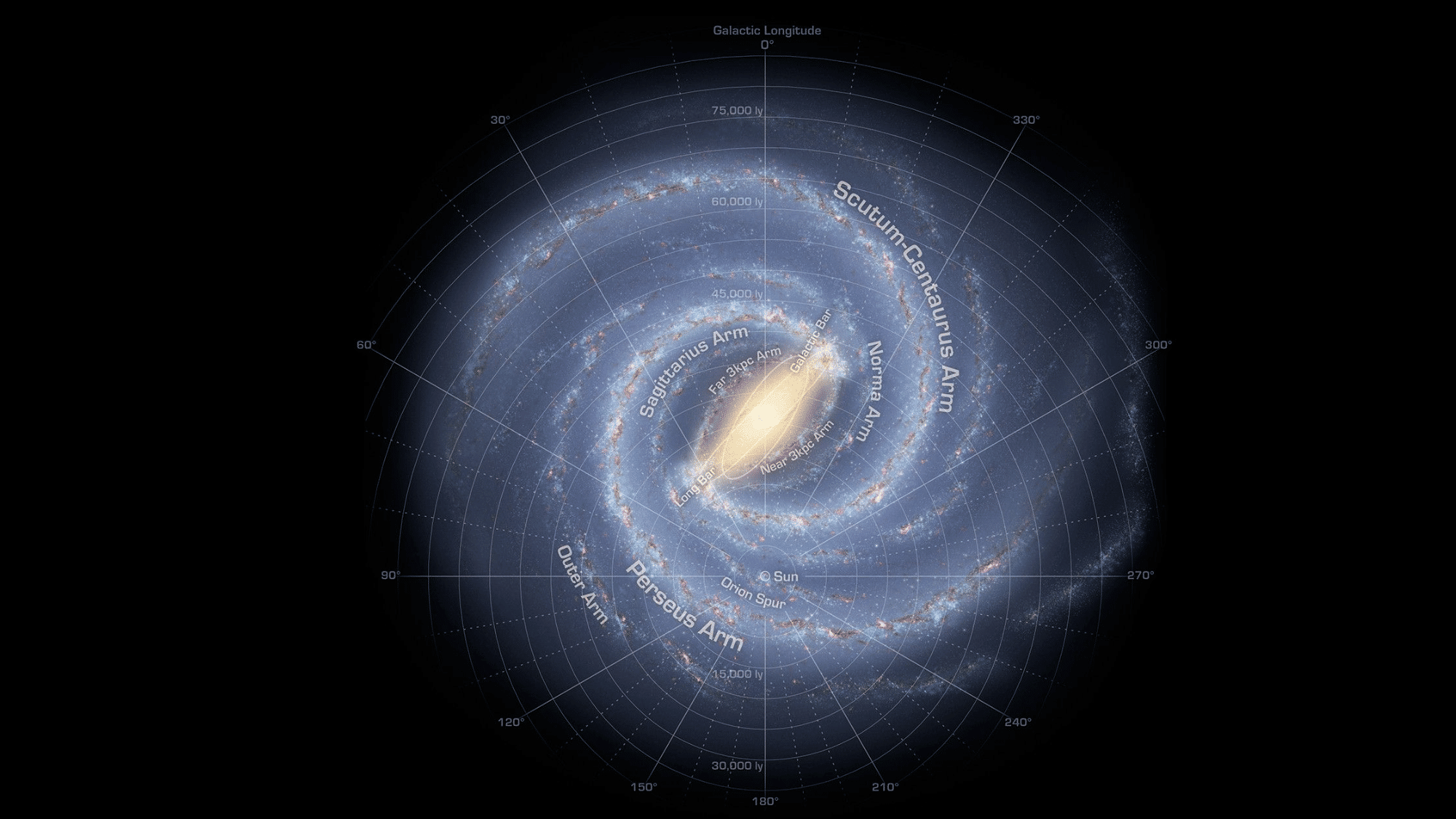
Image Source: NASA
The Milky Way does not sit in one place. It rotates, shifts, and moves through space in more ways than one.
The Milky Way’s Rotation Around Its Galactic Center
At the heart of the Milky Way sits a supermassive black hole called Sagittarius A*.
Everything in the galaxy rotates around it. The Sun takes about 225 million years to complete just one full trip around its center. That stretch of time is called a cosmic year. So yes, the whole galaxy spins.
Does the Milky Way Orbit Another Galaxy?
The Milky Way does not orbit a single larger galaxy. But it does share space with a group of galaxies called the Local Group. Gravity connects all of them.
The Milky Way and the Andromeda Galaxy are the two largest members. They pull on each other constantly, and that pull shapes how both galaxies move.
The Milky Way’s Motion Within the Local Group
Inside the Local Group, the Milky Way moves through space at roughly 600 kilometers per second. It does not follow a neat circular path.
Instead, it moves in response to gravity from nearby galaxies. The Andromeda Galaxy pulls on it. Smaller galaxies tug at it, too. All of that adds up to one complex motion.
So, is the Milky Way Orbiting the Universe?
This is a question that sounds completely reasonable. If planets orbit stars, and stars orbit galactic centers, then surely the Milky Way orbits something bigger, right?
Not exactly. The universe does not work like a solar system.
There is no central point that everything spins around. The universe has no edge and no fixed center. It expands in all directions at once.
So the Milky Way does not orbit the universe. Instead, it moves through space as the universe stretches around it. Gravity from nearby galaxies and massive structures pulls it in different directions.
That makes its motion far more complex than a simple orbit.
The Milky Way’s Movement Within the Virgo Supercluster
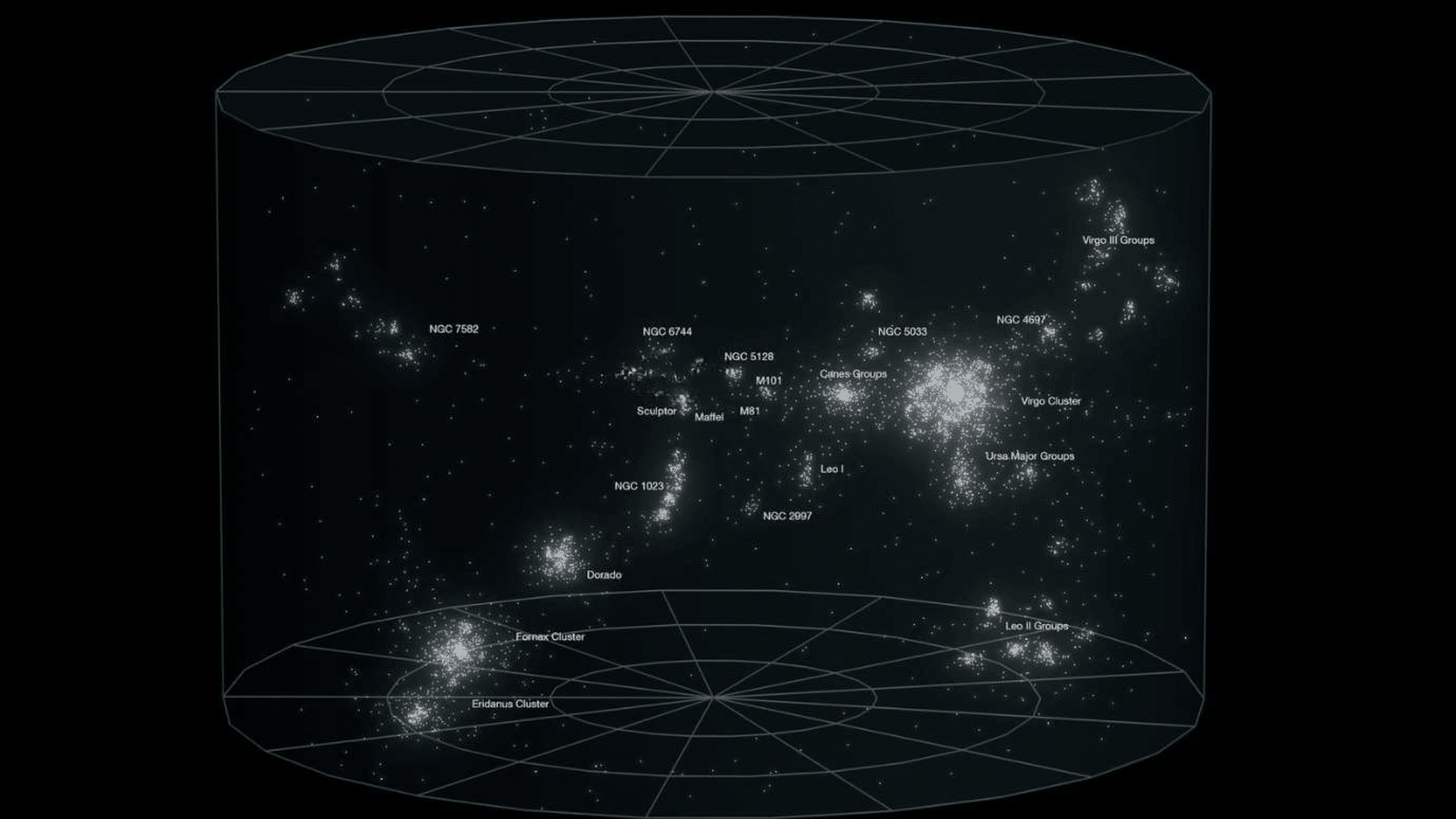
Image Source: Universe Map
The Local Group is just one small part of a much larger structure. That structure is called the Virgo Supercluster. It stretches across roughly 110 million light-years of space and holds hundreds of galaxy groups inside it.
The Milky Way sits near the outer edge of this supercluster.
At the center lies the Virgo Cluster, a dense collection of galaxies. Its gravity pulls on the Local Group and, by extension, the Milky Way itself.
But the Milky Way does not orbit the Virgo Cluster in a clean, circular path.
The pull is there, but the universe keeps expanding. That expansion works against gravity, pushing everything apart at the same time.
So the Milky Way moves toward the Virgo Cluster in some ways. But it also gets carried along by the expanding universe. Both forces act on it at once.
How Fast is the Milky Way Traveling Through Space?
Speed in space is not simple to measure. There is no fixed point to measure from.
But scientists use the cosmic microwave background radiation as a reference point. It is the leftover energy from the early universe, and it fills all of space evenly.
Compared to that, the Milky Way moves at around 600 kilometers per second. That is over 2 million kilometers per hour. It sounds unbelievably fast. And it is.
But that speed comes from multiple forces acting together. The rotation of the galaxy, the pull of the Andromeda Galaxy, and the tug of the Great Attractor all play a role.
Conclusion
The Milky Way does not orbit the universe. It does not have one single gravitational master pulling it along a neat path. Instead, it responds to multiple forces at once.
The galactic center, the Local Group, the Virgo Supercluster, and the Great Attractor all play a part in shaping its motion.
Space works on a scale that is hard to picture. But understanding how the Milky Way moves helps put the solar system’s place in the universe into perspective.
Got thoughts on this? Drop them in the comments below. And check out more space content to keep learning about the universe around us.