
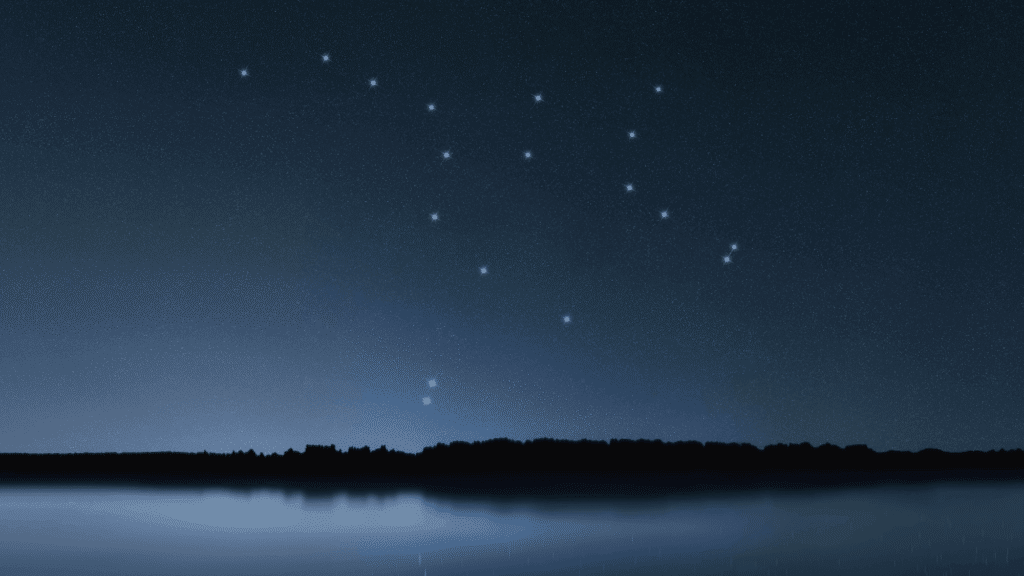
Looking up at the night sky can feel overwhelming at first. There are so many stars twinkling above, and it’s hard to know where to start.
Some star patterns are easier to spot than others. The Great Bear constellation is one of them. Many people already recognize part of it without even realizing.
This star group has guided travelers for centuries. It’s helped people find their way home when everything else seemed lost. Once someone learns to spot it, they’ll never forget where it is.
Let’s talk about why this constellation matters and what makes it so special in the night sky.
What is the Great Bear Constellation and Where is It Located?
The Great Bear constellation goes by another name, too: Ursa Major.
It’s one of the largest star patterns visible in the northern sky, and it never sets below the horizon for most people living in the Northern Hemisphere.
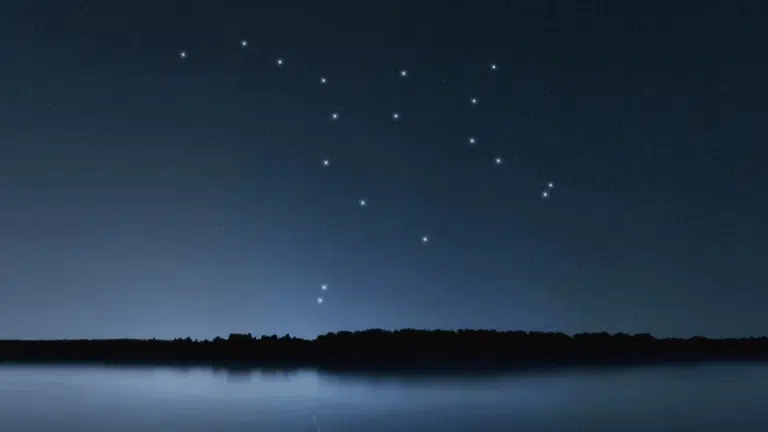
This constellation covers a massive area of space. It contains the famous Big Dipper, which is actually just a small part of the entire bear shape.
Seven bright stars form that recognizable dipper pattern, but the full constellation has many more stars creating the bear’s body, legs, and head.
Ursa Major sits in the third quadrant of the northern hemisphere.
Stargazers can find it easily throughout the year, though it appears in different positions depending on the season. Its stars have been watching over Earth for thousands of years, unchanging and reliable.
The Big Dipper and Its Connection to the Great Bear
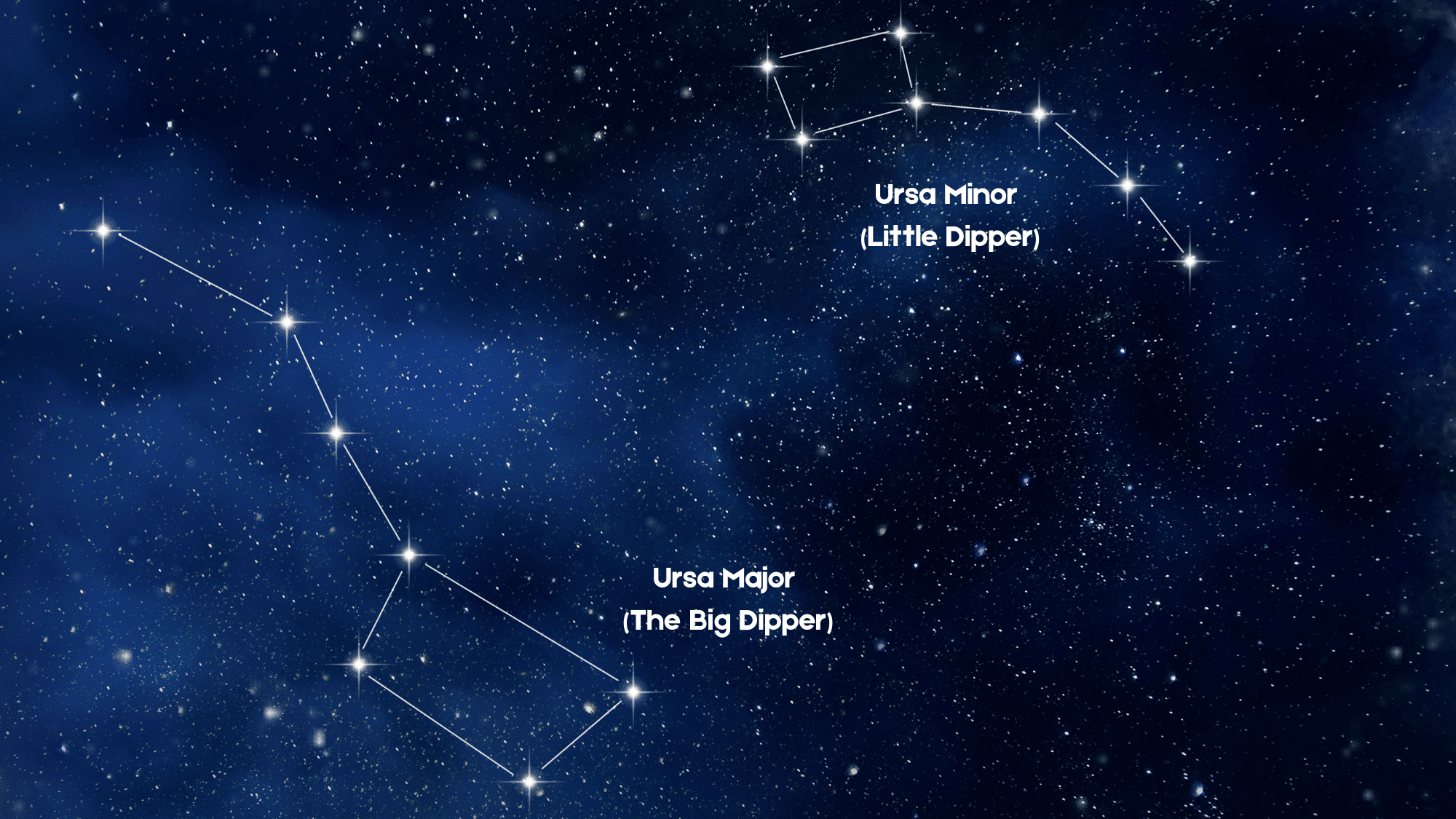
The Big Dipper isn’t actually a constellation at all. It’s what astronomers call an asterism: a recognizable star pattern within a larger constellation.
These seven bright stars form just the rear end and tail of the Great Bear.
The dipper’s bowl creates the bear’s hindquarters, while the handle extends out as its long tail. Most people spot the dipper first because its stars shine brighter than the rest.
The Big Dipper serves as a starting point for finding other celestial objects. Its pointer stars help locate the North Star, making it useful for navigation even today.
Major Stars in the Great Bear Constellation
The Great Bear contains dozens of stars, but a few stand out because of their brightness, unique characteristics, and importance to astronomers.
1. Dubhe (Alpha Ursae Majoris): This orange giant marks the front edge of the Big Dipper’s bowl. It’s the second brightest star in Ursa Major and sits about 123 light-years away. Dubhe actually consists of multiple stars orbiting together, making it a complex stellar system.
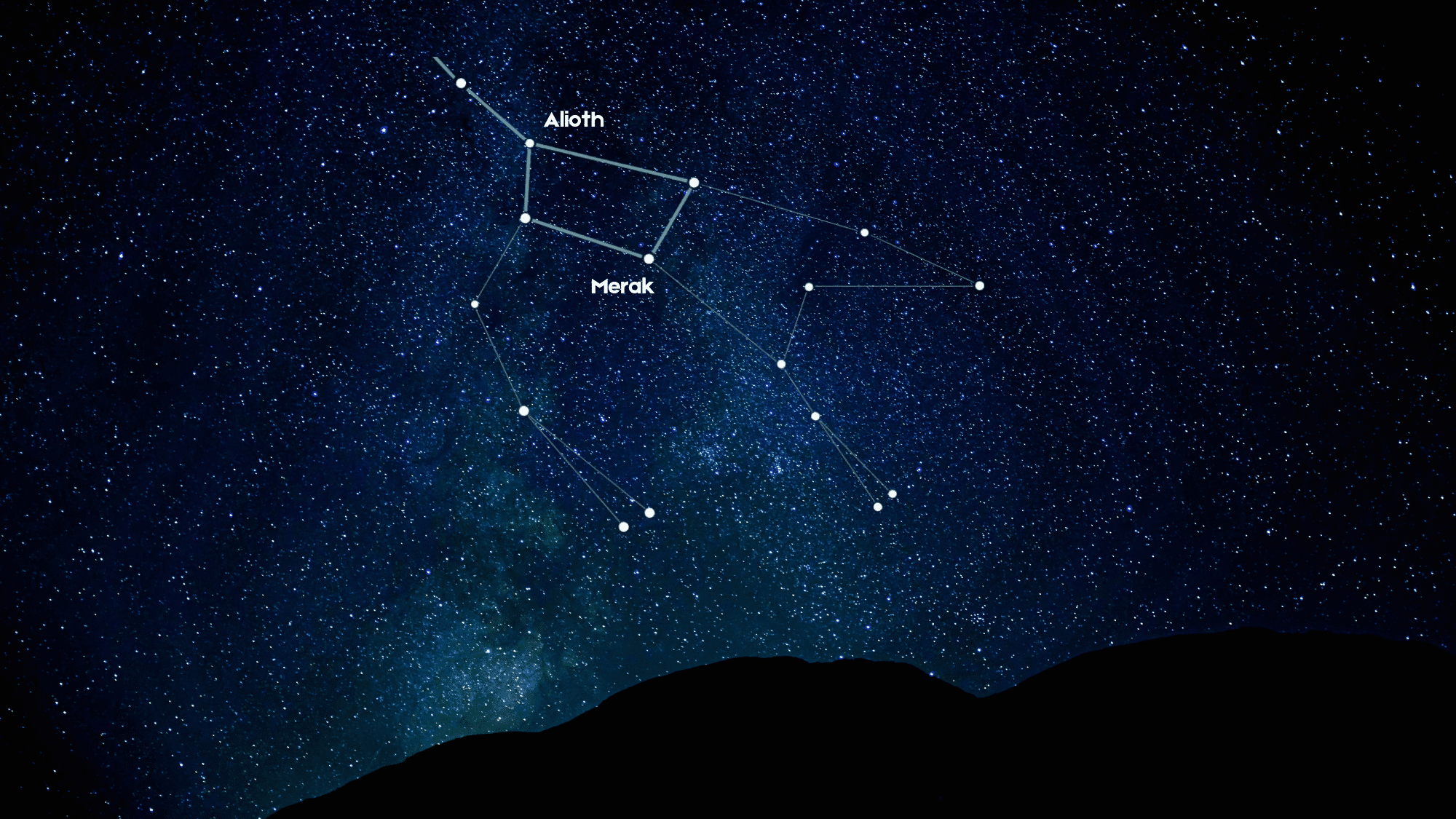
2. Merak (Beta Ursae Majoris): Working together with Dubhe, Merak forms the pointer stars that lead to Polaris. This white star shines steadily at magnitude 2.4 and lies roughly 79 light-years from Earth. Ancient navigators relied on these two stars more than any others.
3. Alioth (Epsilon Ursae Majoris): The brightest star in the entire constellation, Alioth marks the first star in the dipper’s handle. It’s a peculiar star with unusual chemical abundances in its atmosphere. Scientists still study it to understand stellar evolution better.
4. Mizar (Zeta Ursae Majoris): This famous double star sits in the middle of the handle. People with sharp eyesight can spot its companion, Alcor, right next to it. Mizar was actually the first binary star system ever photographed through a telescope.
5. Alkaid (Eta Ursae Majoris): Marking the tip of the bear’s tail and the end of the dipper’s handle, Alkaid is a young, hot blue star. Unlike most stars in Ursa Major, it doesn’t belong to the same stellar family as the others.
Deep-Sky Objects Found in the Great Bear Constellation
Beyond its stars, the Great Bear holds fascinating galaxies and nebulae that amateur astronomers love to observe through telescopes on clear nights.
- M81 (Bode’s Galaxy): This stunning spiral galaxy sits about 12 million light-years away. It’s one of the brightest galaxies visible from Earth, making it a favorite target for backyard astronomers. M81 interacts gravitationally with its neighbor, M82, creating beautiful tidal streams between them.
- M82 (Cigar Galaxy): Named for its elongated shape, this starburst galaxy undergoes intense star formation. It appears edge-on from our perspective, showing dramatic dust lanes across its core. M82 is five times more luminous than our Milky Way despite being smaller.
- M101 (Pinwheel Galaxy): This face-on spiral galaxy showcases perfect spiral arms dotted with pink star-forming regions. It’s massive; about 70 percent larger than the Milky Way. The Pinwheel contains over a trillion stars and lies roughly 21 million light-years distant.
- M97 (Owl Nebula): This planetary nebula gets its name from two dark patches that resemble owl eyes. It formed when a dying star expelled its outer layers into space. The nebula glows with an eerie blue-green color visible through medium-sized telescopes.
- M108 and M109: These two spiral galaxies offer additional viewing opportunities. M108 appears nearly edge-on, while M109 is a barred spiral galaxy. Both require darker skies and decent equipment to observe properly.
History and Mythology of the Great Bear Constellation
The Great Bear has captured human imagination for thousands of years. Different cultures across the world created their own stories to explain this prominent star pattern.
Greek mythology tells the story of Callisto, a beautiful nymph who caught Zeus’s attention. Hera, Zeus’s jealous wife, transformed Callisto into a bear as punishment. Years later, Zeus placed her in the sky to protect her, creating Ursa Major.
Native American tribes saw these stars differently. Many viewed them as a bear being chased by hunters across the seasons. The changing position of the constellation throughout the year matched their hunting stories perfectly.
Ancient civilizations used the Great Bear for navigation and timekeeping.
Chinese astronomers called it the Northern Dipper and considered it sacred. Romans, Arabs, and Egyptians all gave it special significance in their star charts and calendars.
Astronomical Importance of the Great Bear Constellation
The Great Bear serves purposes far beyond looking pretty in the night sky. Astronomers rely on it for several practical and scientific reasons that matter even today.
Navigation stands as its most famous use. The pointer stars lead directly to Polaris, the North Star, helping travelers find true north.
Sailors crossed oceans using this reliable celestial compass for centuries before modern GPS existed.
Scientists study Ursa Major to understand stellar evolution and galactic structures. The constellation contains stars at different life stages, from young hot giants to older cooling stars. This variety makes it a natural laboratory in space.
The Ursa Major Moving Group contains many of the Big Dipper’s stars. These stars share similar motion through space, suggesting they formed together billions of years ago.
Studying this group helps astronomers understand how star clusters evolve and disperse over time.
How to Observe the Great Bear Constellation Today
Finding and observing the Great Bear doesn’t require fancy equipment. Anyone can spot it with these simple steps and a clear night.
Step 1: Find a Dark Location: Head away from city lights if possible. Light pollution makes fainter stars harder to see, though the Big Dipper remains visible even from urban areas. Parks or open fields work well for beginners starting out.
Step 2: Look North After Sunset: Face the northern direction once darkness falls. The Great Bear circles around the North Star, so its position changes throughout the night and across seasons. Spring evenings offer the best viewing when it sits high overhead.
Step 3: Start with the Big Dipper: Locate the seven bright stars forming the dipper shape first. This familiar pattern serves as your anchor point. From there, trace outward to find the bear’s legs, head, and nose using a star chart or astronomy app.
Step 4: Use Binoculars or a Telescope: While naked-eye viewing works fine for stars, optical aids reveal more details. Binoculars show fainter stars completing the bear’s outline. Telescopes bring galaxies like M81 and M82 into view, adding depth to the experience.
Step 5: Track It Throughout the Year: Observe how the constellation rotates around Polaris over months. Its changing position helped ancient people mark seasons and time. This movement demonstrates Earth’s rotation and orbit in a visible, tangible way.
The Bottom Line
The Great Bear constellation has earned its place in the night sky. From ancient mariners finding their way home to modern astronomers studying distant galaxies, it continues serving humanity well.
What makes this constellation truly special isn’t just its size or brightness. It’s the connection between past and present. The same stars that guided explorers centuries ago still shine overhead tonight.
Spotting Ursa Major for the first time feels like joining an ancient club. Millions of people throughout history have looked up at these exact stars, finding comfort in their steady presence.
Next time the sky clears up, take a moment to find the Great Bear. It’s been waiting up there, patient as ever.