



Space seemed like the final frontier back in 1985. The Cold War was still going strong, and tensions between superpowers played out not just on Earth but above it, too.
That’s when the U.S. military pulled off something straight out of a science fiction movie. An F-15 Eagle fighter jet took off from Edwards Air Force Base with a single, unusual mission.
It wasn’t chasing enemy aircraft or running drills. Instead, it was hunting a satellite orbiting high above Earth.
What happened next made history and changed how nations thought about warfare in space. This mission proved something important. And it raised questions that are relevant to date.
F-15 Solwind Mission: Key Details Table
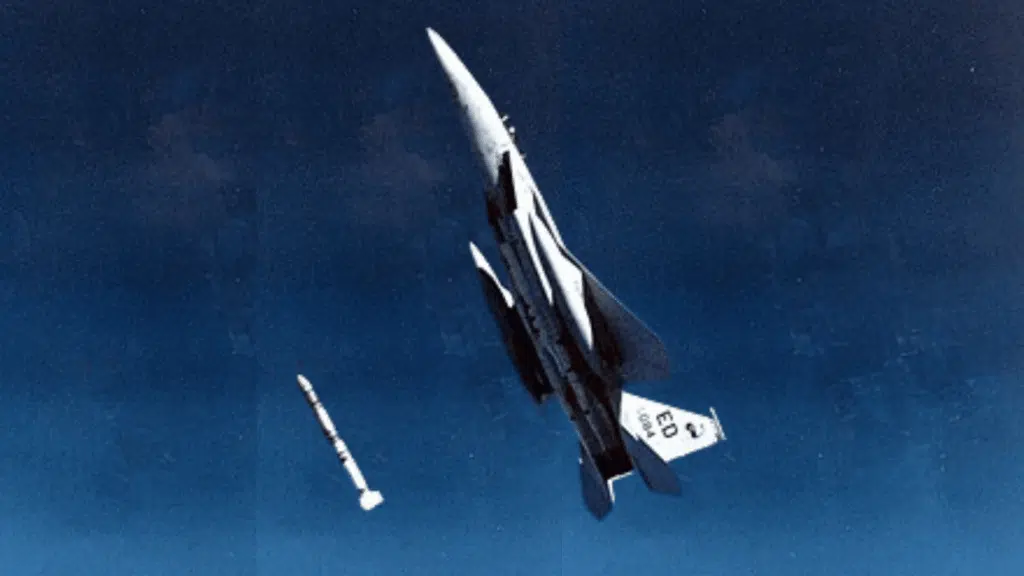
On September 13, 1985, Major Wilbert “Doug” Pearson flew the “Celestial Eagle” F-15A from Edwards Air Force Base. His mission was clear: destroy a satellite orbiting hundreds of miles above Earth.
| Event | Date/Time | Details |
|---|---|---|
| Takeoff | Sept 13, 1985 | F-15A 76-0084 departed Edwards AFB |
| Launch | ~12:42 p.m. PDT | ASM-135 fired at 38,100 ft during a 65° climb at Mach 0.93 |
| Impact | Sept 13, 1985 | Hit at 525 km altitude, closing speed 15,000 mph |
| Confirmation | Immediate | Ground control verified complete satellite destruction |
Why Target Solwind P78-1?
Solwind P78-1 wasn’t just any satellite floating in space. It was a research satellite launched back in 1979 to study the sun and solar wind.
By 1985, though, its useful days were behind it. The satellite had already completed its scientific mission and was essentially space junk. But that made it perfect for testing.
The military needed a real target orbiting Earth, not just a simulation. Solwind was dead weight up there anyway.
So why not use it? The choice solved two problems at once: testing a new weapon system and clearing out old orbital debris.
Cold War Context: US vs Soviet ASAT Race
The 1985 mission didn’t happen in a vacuum. Both superpowers were racing to control space. Satellites meant intelligence, communication, and strategic advantage. Nobody wanted to fall behind.
The Soviets tested their first anti-satellite weapon back in the 1960s. Their system used co-orbital interceptors that matched satellite orbits before detonating.
By the 1970s, Moscow had conducted multiple successful ASAT tests.
The U.S. felt pressure to develop a faster, more efficient response. American planners wanted a direct-ascent weapon that could strike quickly.
Unlike Soviet systems, the ASM-135 didn’t need to orbit first. It could launch from an aircraft and hit targets within minutes.
The F-15 platform offered flexibility; it could operate from multiple bases. Both nations worried about losing their satellite networks during the conflict. Space had become the ultimate high ground in military strategy.
The 1985 test sent a clear message: American satellites weren’t the only vulnerable ones.
Why F-15 Chosen as Satellite Killer Platform?
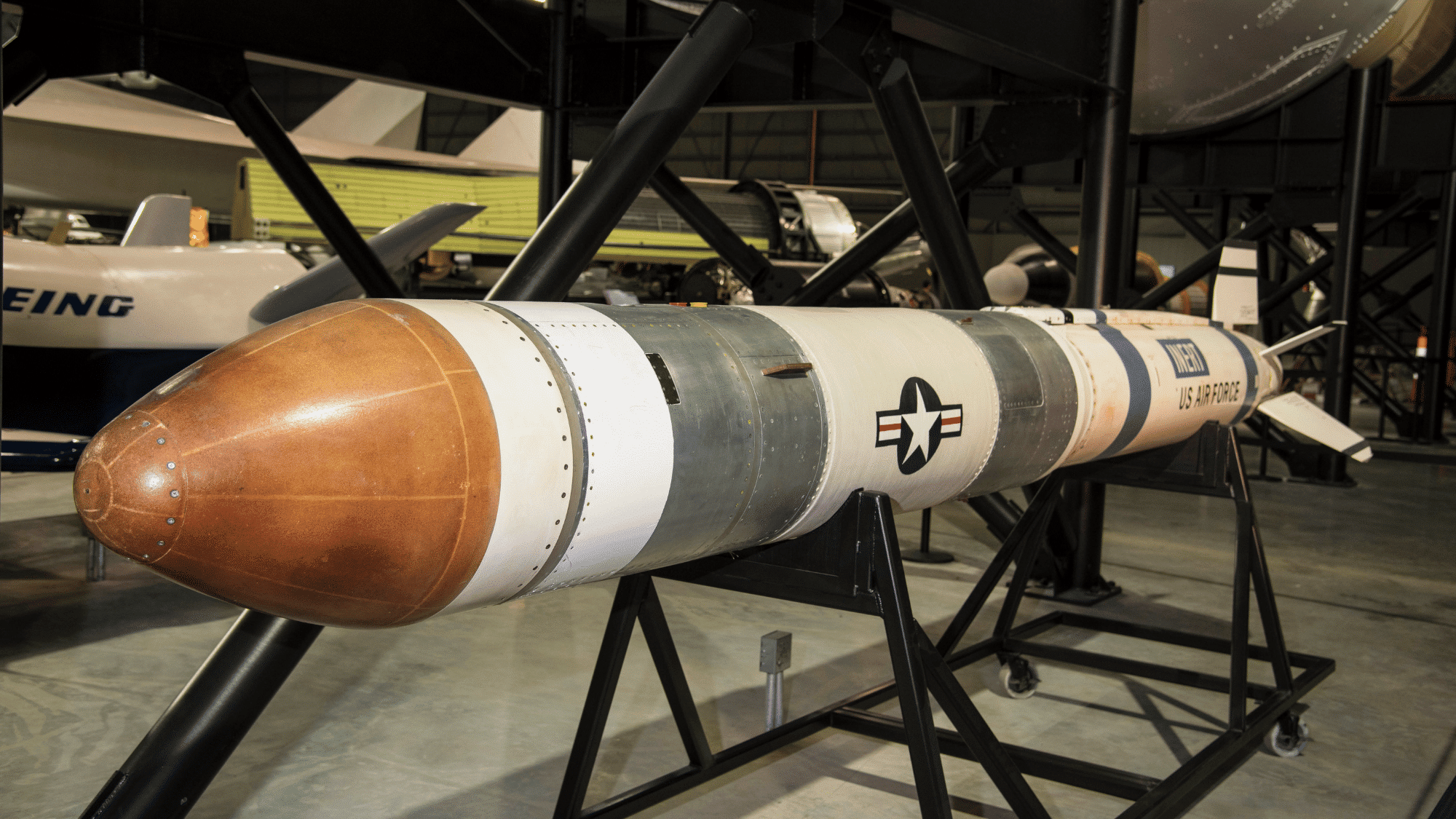
Image Source: The National Museum of The United States Air Force
The Air Force needed an aircraft that could fly high, fast, and carry a heavy missile. Not every fighter jet could handle that job. The F-15 Eagle checked all the boxes perfectly.
F-15 Modifications for ASAT Role
The standard F-15 was already powerful, but this mission needed special tweaks. Engineers modified the aircraft to handle the ASM-135’s weight and size.
| Modification | Purpose |
|---|---|
| Reinforced centerline hardpoint | Support the ASM-135 missile weight and launch forces |
| Upgraded avionics systems | Calculate precise launch angle and timing |
| Modified flight computer | Process real-time targeting data during zoom climb |
| Enhanced structural supports | Handle the stress of high-altitude missile release |
The modifications weren’t extreme; that was the beauty of it. The F-15 could switch back to regular fighter duties after the mission.
Celestial Eagle Aircraft Story
F-15A 76-0084 earned the nickname “Celestial Eagle” after its historic flight. This particular aircraft was chosen for its reliability and performance record.
Major Pearson had trained extensively in this exact jet. The name fit perfectly; a man eagle reaching up to touch the stars.
After September 1985, the aircraft became a piece of aviation history. It proved that existing military hardware could be adapted for space missions without starting from scratch.
How Did F-15 Launch the ASM-135 ASAT Missile?
The launch wasn’t like firing a standard air-to-air missile. Major Pearson had to execute a precise zoom climb maneuver.
He accelerated the F-15 to Mach 0.93, then pulled up hard into a steep 65-degree climb. At exactly 38,100 feet, he released the ASM-135.
The missile’s rocket motor ignited immediately, pushing it higher. Gravity tried pulling everything back down, but the missile had enough speed.
It kept climbing, breaking through the atmosphere. The miniature homing vehicle separated as planned. Then it was just physics and precision targeting. One shot, one chance.
Modern ASAT Lessons from F-15 Mission
The 1985 test taught military planners lessons that still matter today. Space warfare isn’t science fiction anymore. Those insights shaped how nations think about satellite defense and orbital security.
Key Lessons Learned:
- Kinetic kills work: Pure speed and impact can destroy satellites without explosives or complex warheads.
- Debris is a problem: The mission created thousands of trackable fragments that stayed in orbit for years.
- Flexibility matters: Air-launched systems offer more operational options than ground-based interceptors.
- Training is critical: Success depended on precise pilot execution during a single brief window.
- Space is contested: Any nation’s satellites can become targets during conflict, changing military strategy forever.
To Conclude
Major Pearson’s flight proved something that changed military thinking forever. Space wasn’t untouchable anymore.
A fighter jet with the right missile could reach up and hit targets orbiting hundreds of miles overhead. The mission worked, but it also created problems.
Today, multiple nations have ASAT capabilities. The technology improved, but the risks grew too. That single test flight opened doors nobody can close now.
Space remains a battlefield, and the lessons from that F-15 mission still guide how militaries prepare for conflicts beyond Earth’s atmosphere.