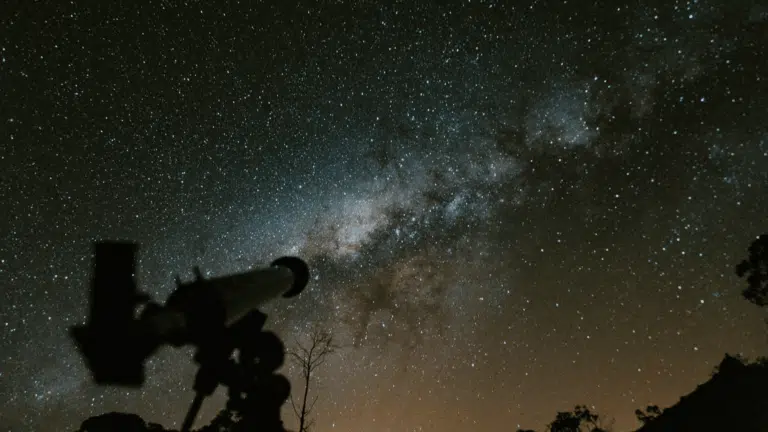

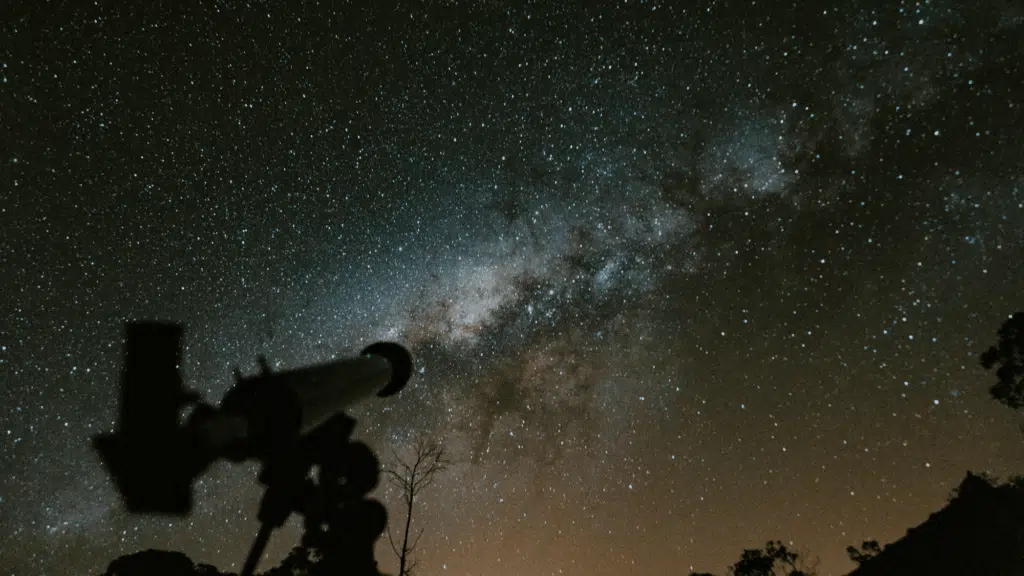
Looking up at the night sky feels like staring at something impossibly far away.
Stars, planets, galaxies; all of them sitting millions of miles from Earth. And yet, with the right tool, people can see them up close. That tool is the telescope.
Telescopes have changed the way humans understand space. They helped spot distant planets. They confirmed things scientists once only guessed at. And today, they keep pushing the limits of what’s visible from Earth.
But how exactly does a telescope take something so far away and make it look close? What happens inside that long tube that makes such a big difference? The answers are simpler than most people think.
What is a Telescope and Why is It Used?
A telescope is an optical instrument that collects and focuses light to make distant objects appear closer and clearer.
It gathers far more light than the human eye can on its own. This makes faraway things like stars, moons, and planets much easier to see.
Telescopes are used by astronomers, researchers, and space agencies to study the universe. They help track planetary movement, study star formation, and spot objects billions of light-years away.
Even amateur stargazers use smaller telescopes to get a better look at the night sky. Simply put, telescopes act as windows into the wider universe.
How Do Telescopes Work Step by Step
Understanding how a telescope works is easier than it sounds. This is a simple breakdown of the whole process.
1. Light Enters the Telescope: The telescope’s opening, called the aperture, collects light from a distant object. A larger aperture means more light gets captured, giving a brighter and clearer image.
2. Light Gets Focused: The collected light travels to the primary lens or mirror. This part bends or reflects the light, directing it toward a single central point called the focal point.
3. The Eyepiece Magnifies the Image: The eyepiece lens picks up the focused light and magnifies it. This is the part that makes distant objects appear much larger and closer to the eye.
4. The Image Becomes Visible: The magnified light finally reaches the eye or a camera sensor. At this point, the distant object appears sharp, clear, and significantly closer than it actually is.
The Key Parts of a Telescope Explained
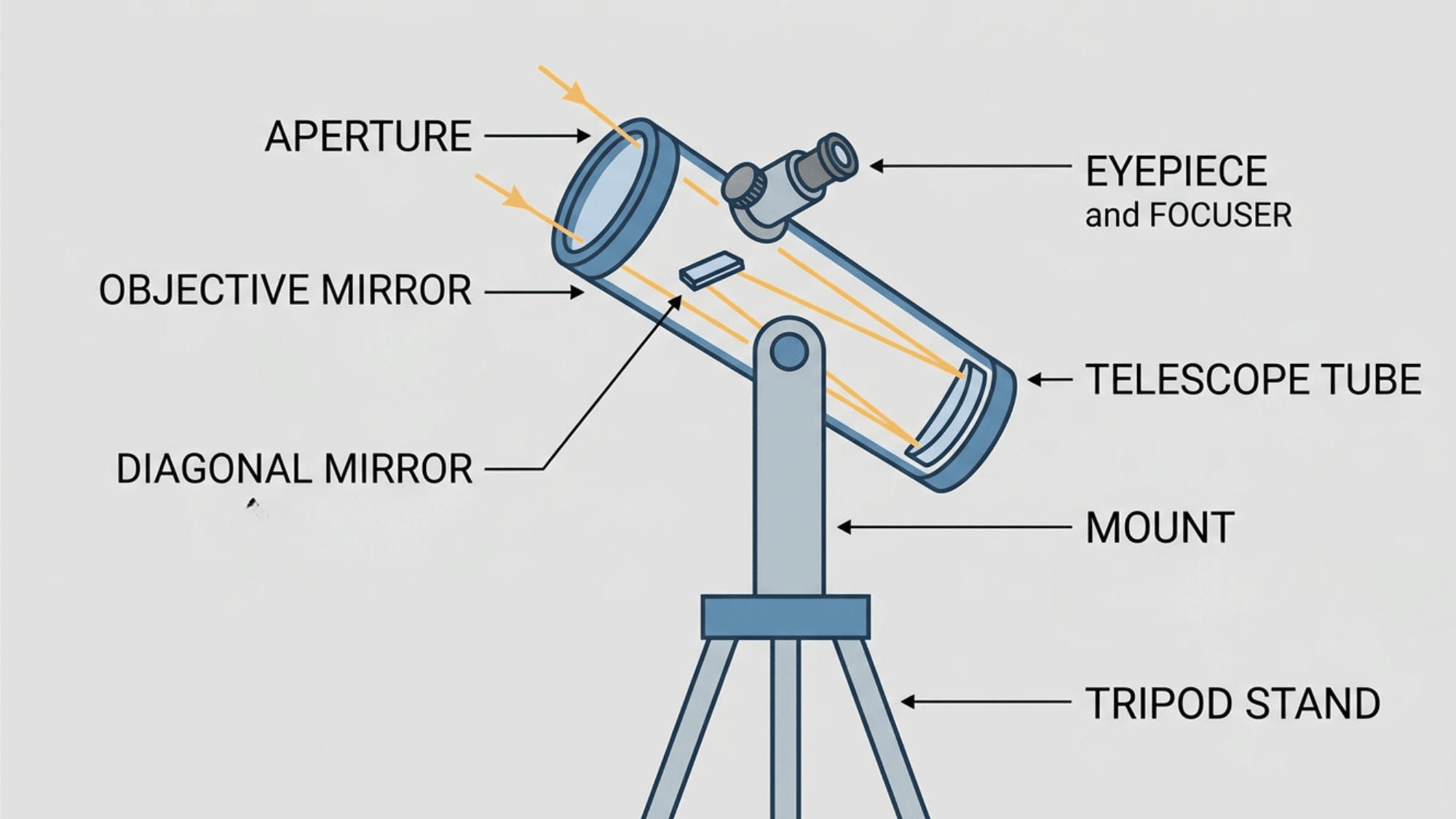
Every telescope has a few core parts that work together. Knowing what each part does makes the whole thing easier to understand.
1. Aperture
The aperture is the opening at the front of the telescope. It controls how much light enters the tube.
A wider aperture collects more light, which directly affects how bright and detailed the final image looks. This is why larger telescopes tend to produce sharper and more detailed views of distant objects in the sky.
2. Objective Lens or Primary Mirror
This is the main light-gathering part of the telescope. In refracting telescopes, it’s a lens. In reflecting telescopes, it’s a curved mirror.
Either way, its job is to collect incoming light and direct it toward a focused point inside the telescope tube.
3. Focal Point
The focal point is where all the collected light comes together inside the telescope. Think of it as the meeting spot for light rays.
The distance between the objective lens or mirror and this point is called the focal length. A longer focal length generally means higher magnification.
4. Eyepiece
The eyepiece is the small lens at the end of the telescope that the eye looks through. It takes the focused image formed at the focal point and magnifies it further.
Different eyepieces offer different levels of magnification, so they can be swapped out depending on what’s being observed.
5. Telescope Tube
The tube holds all the optical parts in proper alignment. It keeps dust and outside light from interfering with the image.
The length of the tube also plays a role in determining the telescope’s focal length, which affects how much the telescope can magnify distant objects.
6. Mount
The mount is the support structure that holds the telescope steady. A good mount is just as important as the optics. Shaky or unstable mounts make it hard to focus on an object.
There are two main types: altitude-azimuth mounts for casual use and equatorial mounts for tracking celestial objects.
How Light, Lenses, and Mirrors Work in Telescopes
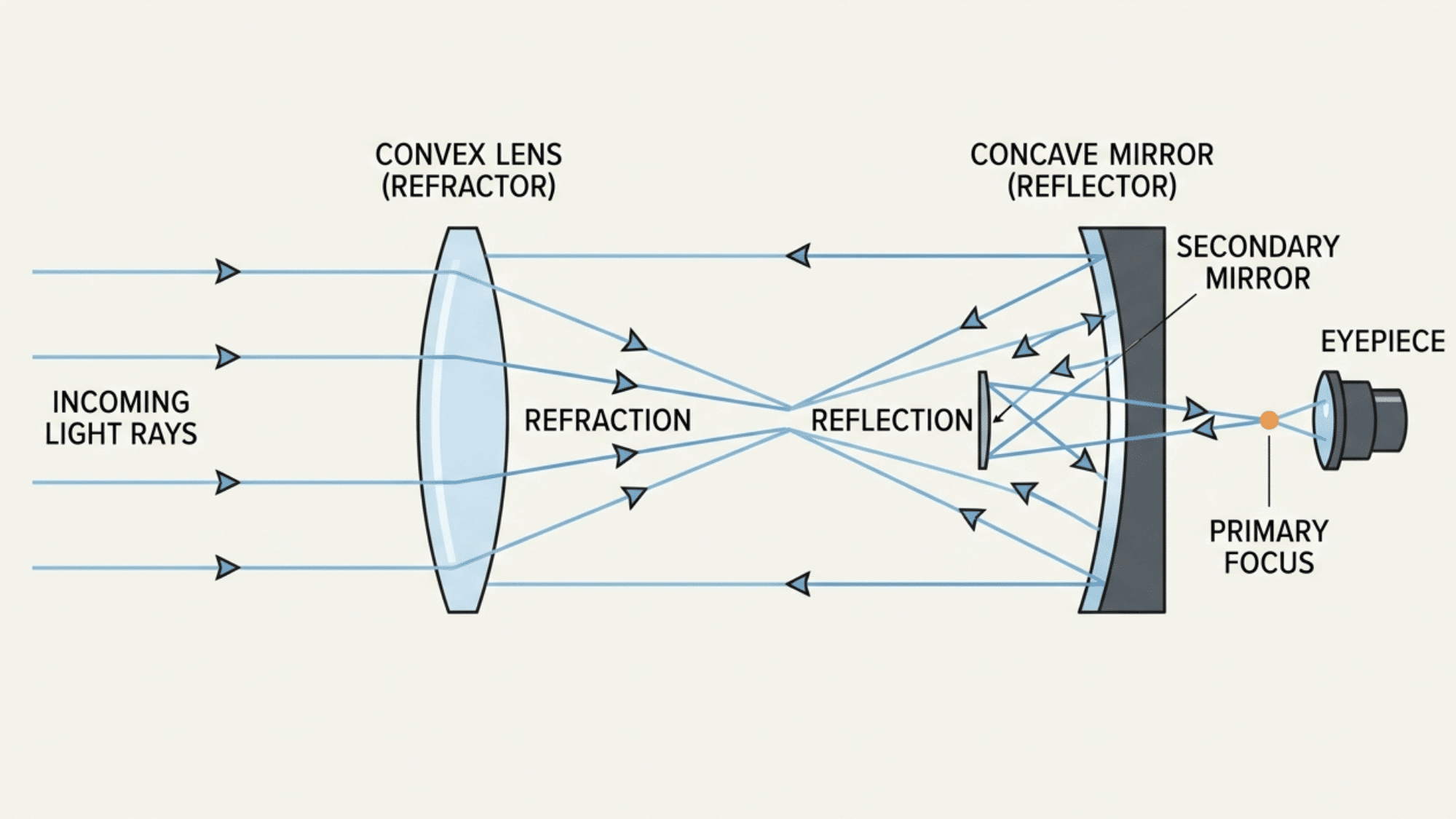
Light, lenses, and mirrors are the real driving force behind every telescope. This is how each one plays its part.
1. How Light Behaves
Light travels in straight lines, but it bends when it passes through certain materials. This bending is called refraction.
Telescopes take advantage of this natural behavior to collect and direct light toward a focused point, making distant objects visible to the human eye.
2. How Lenses Work
Lenses are curved pieces of glass that bend light as it passes through them.
In a telescope, the objective lens at the front collects incoming light and bends it inward. This brings the light rays together at a single focal point, forming a clear image of the distant object.
3. How Mirrors Work
Mirrors reflect light instead of bending it.
In reflecting telescopes, a large curved primary mirror captures incoming light and bounces it toward a secondary mirror.
That secondary mirror then redirects the light toward the eyepiece. This design allows telescopes to be compact while still gathering large amounts of light.
4. How Lenses and Mirrors Work Together
Some telescopes combine both lenses and mirrors in a single design. These are called catadioptric telescopes.
The mirror handles the bulk of light collection, while the lens helps correct any distortions in the image. Together, they produce sharp, clear views that neither could achieve as effectively on their own.
5. How Magnification Works
Magnification happens when the eyepiece lens enlarges the image formed by the objective lens or mirror.
The level of magnification depends on the focal lengths of both the objective and the eyepiece. A shorter eyepiece focal length produces higher magnification, making objects appear much closer than they really are.
What Determines Telescope Power?
Telescope power is not just about how much something is magnified. It covers several factors that work together to produce a clear, detailed image.
Aperture size plays the biggest role: a wider opening collects more light, directly improving image quality.
Focal length affects how much the telescope can magnify an object. The eyepiece used also changes the magnification level.
On top of that, the quality of the lenses or mirrors matters just as much as the size. Even the steadiness of the mount affects the final view. All these elements combined determine how powerful a telescope truly is.
How to Use a Telescope
Using a telescope for the first time can feel overwhelming. These simple steps make the whole process much more manageable.
- Set Up the Mount First: Start by assembling the mount on a flat, stable surface. A steady base prevents vibrations and keeps the telescope from shifting while observing objects in the sky.
- Attach the Telescope Tube: Once the mount is secure, carefully attach the telescope tube to it. Make sure all the connections are tight and properly aligned before moving on to any further setup steps.
- Insert the Lowest Magnification Eyepiece: Always start with the lowest available magnification. This gives a wider field of view, making it much easier to locate and center objects before switching to higher magnification.
- Point the Telescope at the Target: Aim the telescope toward the chosen object in the sky. Use the finder scope attached to the side to help locate and position the target more accurately.
- Focus the Image: Look through the eyepiece and slowly turn the focuser knob. Keep adjusting until the object appears sharp and clear. Small, gradual movements work better than large, quick turns.
- Switch to Higher Magnification if Needed: Once the object is centered and in focus, a higher magnification eyepiece can be swapped in. This brings finer details into view without losing the overall image quality
What Can You See with a Telescope?
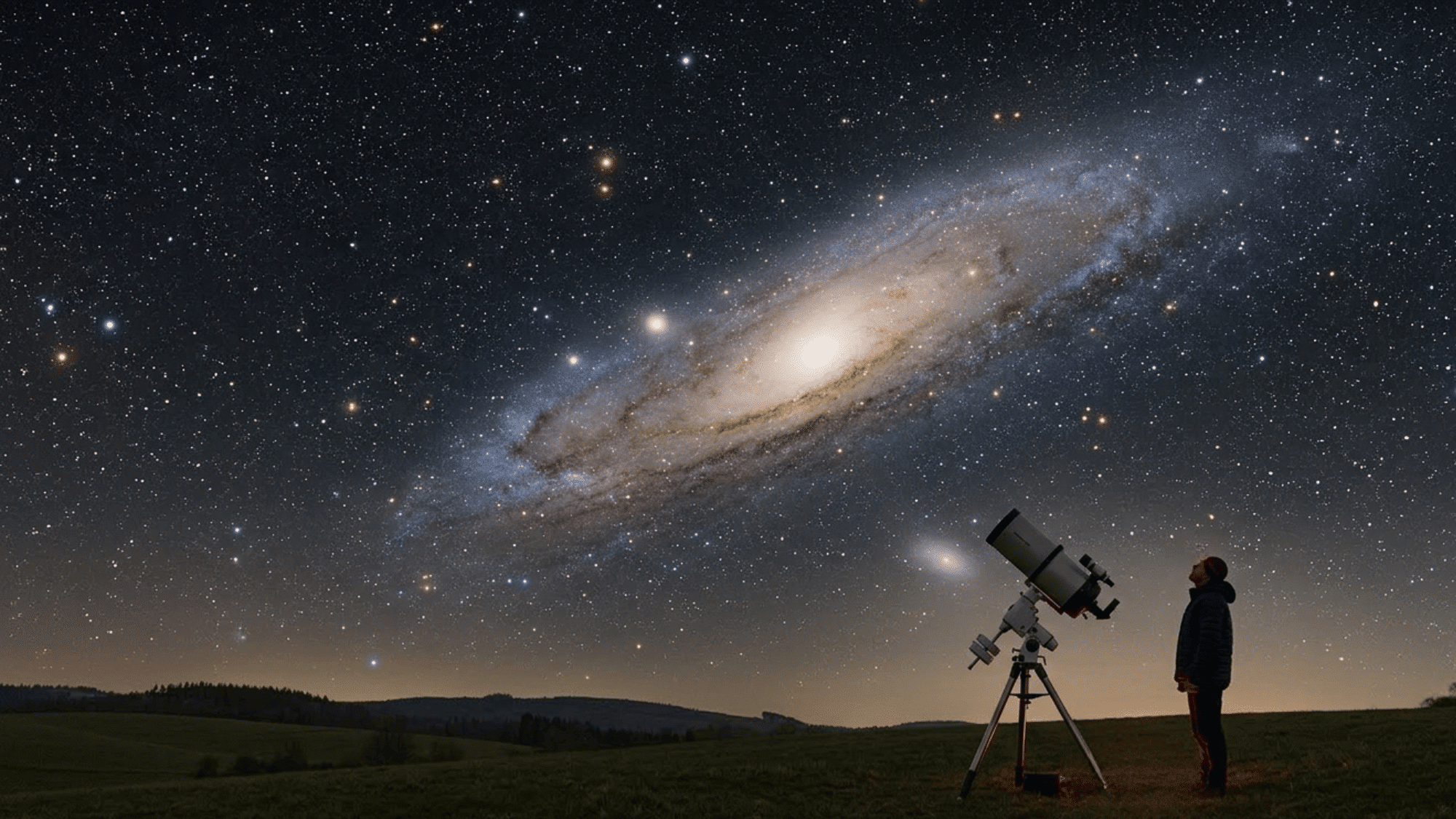
A telescope opens up a whole new level of sky watching. Even a basic beginner telescope reveals objects that are completely invisible to the naked eye.
The Moon is usually the first target for most people: craters, ridges, and valleys all become clearly visible.
Planets like Saturn and Jupiter are also popular choices, with Saturn’s rings and Jupiter’s moons visible through modest equipment.
Star clusters, nebulae, and distant galaxies become accessible with larger telescopes. Even double stars and asteroid belts can be spotted under the right conditions.
A Brief History of Telescopes and Their Evolution
Telescopes have come a long way since their earliest days. The first known telescope was built in the Netherlands in 1608 by Dutch spectacle-maker Hans Lippershey.
It was a simple refracting device that offered around 3x magnification.
Galileo refined the design shortly after, pushing magnification up to 20x. That improvement helped him spot Jupiter’s four largest moons in 1610 and study the Moon’s cratered surface in detail.
Isaac Newton took things further in 1668 by inventing the reflecting telescope, which solved the color distortion problems that earlier designs had.
Centuries later, the Hubble Space Telescope was launched in 1990 and revolutionized astronomy.
Today, instruments like the James Webb Space Telescope and the Extremely Large Telescope detect light from the universe’s very first stars and galaxies.
Conclusion
Telescopes have reshaped the way people look at the universe.
From a simple Dutch invention in 1608 to space-based giants like the James Webb Space Telescope, the core idea has always stayed the same: collect light, focus it, and bring the distant world closer.
Every part of a telescope, from the aperture to the eyepiece, works toward that one goal. And the results speak for themselves.
So next time the stars are out, point a telescope upward; the universe has plenty to show.