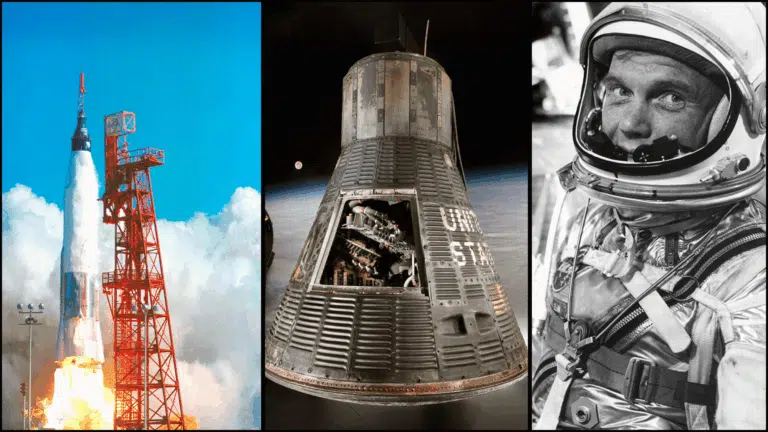
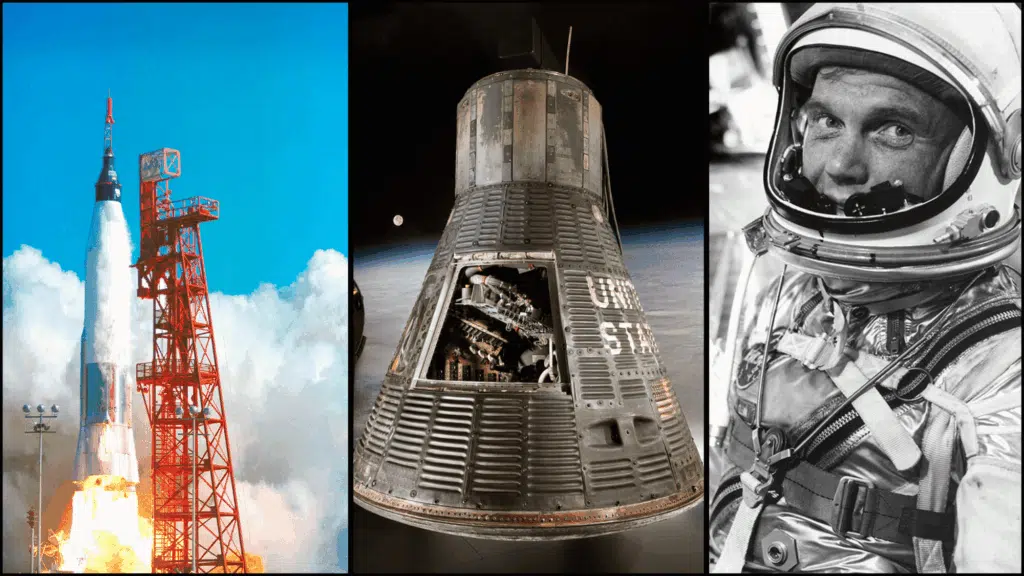
In 1962, John Glenn climbed into a tiny capsule called Friendship 7, ready to do what no American had done before.
The stakes? Higher than anyone could imagine. The Soviet Union was winning the space race, and the United States needed a win badly.
But this wasn’t just about national pride. This was about proving that humans could survive in space, orbit the Earth, and return home safely. Three times around the planet in less than five hours. It sounds simple now, but back then? It was nothing short of revolutionary.
What made Friendship 7 so special? And how did one mission reshape the entire future of space exploration? Let’s find out.
What was the Friendship 7 Mission?
Friendship 7 was NASA’s first successful orbital spaceflight with an astronaut on board. The mission launched from Cape Canaveral on a chilly morning in February 1962.
John Glenn, a Marine Corps pilot and one of the original Mercury Seven astronauts, sat inside a cramped Mercury capsule barely bigger than a phone booth.
The goal was straightforward but risky. Circle the Earth three times, test how the human body handles extended time in orbit, and splash down safely in the Atlantic Ocean.
Glenn completed those three orbits in just 4 hours and 55 minutes, traveling at speeds over 17,000 miles per hour. America finally had its orbital hero.
Friendship 7 Timeline: Launch, 3 Orbits, and Splashdown Highlights

Image Source: NASA
Glenn’s mission was packed with drama and precision. From liftoff to ocean recovery, every minute mattered. Here’s how the historic day unfolded.
| Time (EST) | Event | Details |
|---|---|---|
| 9:47 AM | Launch | Atlas rocket lifts off from Cape Canaveral |
| 9:52 AM | Orbit achieved | Friendship 7 reaches orbital altitude |
| 10:00 AM | First orbit begins | Glenn reports, “Oh, that view is tremendous!” |
| 11:33 AM | Heat shield concern | Mission control discovers a potential problem |
| 12:20 PM | Third orbit complete | Retrofire sequence initiated |
| 2:43 PM | Splashdown | Capsule lands in the Atlantic Ocean near the Bahamas |
| 3:04 PM | Recovery | USS Noa retrieves Glenn and the capsule |
Role of John Glenn in Friendship 7
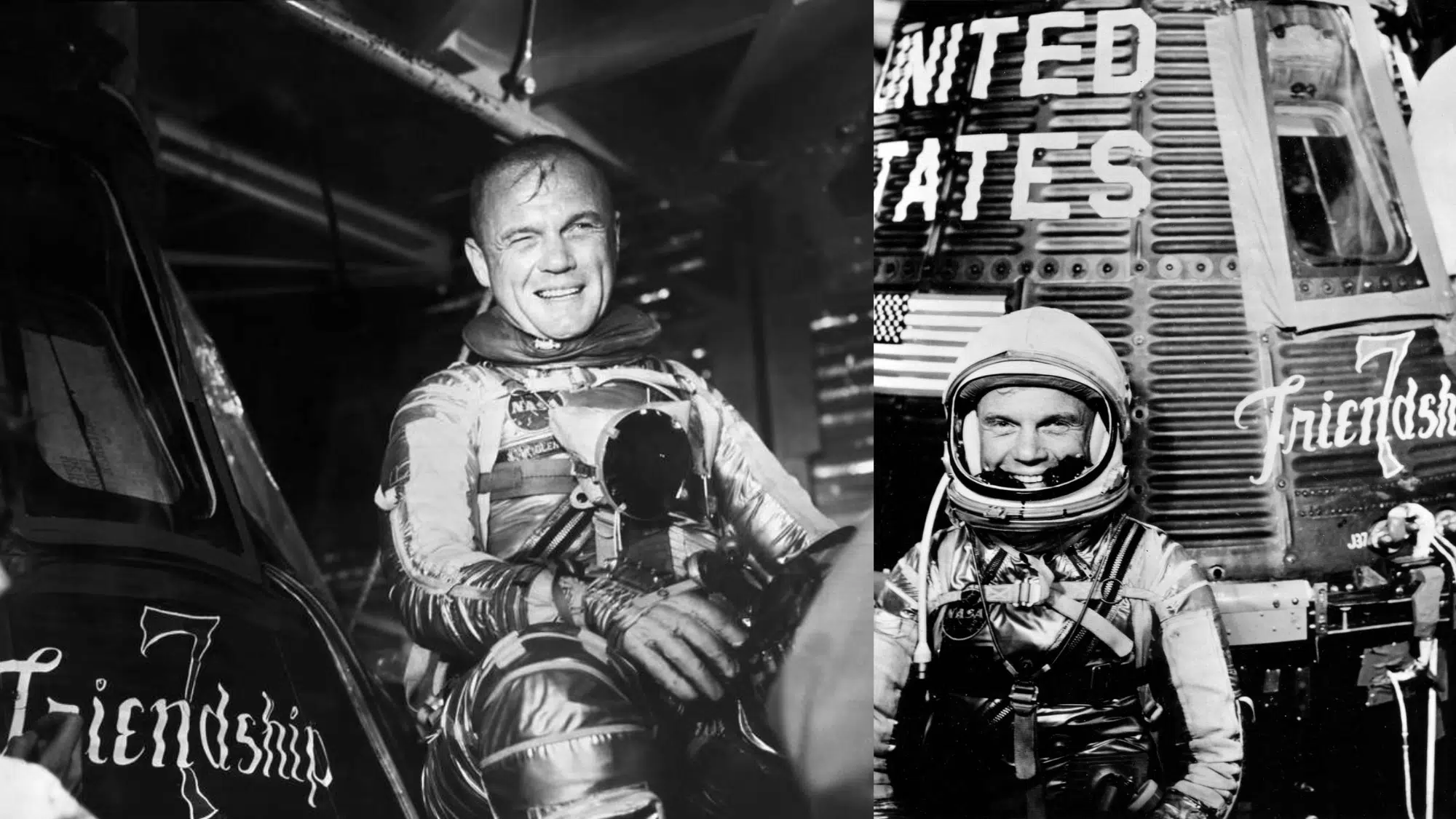
John Glenn wasn’t just a passenger. He was a pilot, an engineer, and a problem-solver all rolled into one. His experience and calm nerves proved essential.
Training
Glenn trained for nearly two years before launch day.
He endured centrifuge tests that pushed his body to extreme G-forces, practiced in spacecraft simulators for countless hours, and studied flight systems until he knew every switch and dial.
The training was brutal and exhausting. But it prepared him for the unexpected. Glenn also worked closely with engineers, offering pilot feedback that improved the Mercury capsule’s design and controls.
In-Flight Challenges
Things went wrong fast. A faulty sensor indicated Glenn’s heat shield might be loose.
If true, he’d burn up during reentry. Mission control asked him to keep his retrorocket pack attached during descent, breaking normal procedure.
Glenn stayed cool under pressure, manually controlled the spacecraft when the automatic system failed, and talked through every decision with ground control. His piloting skills and quick thinking saved the mission and his life.
Friendship 7 Spacecraft Specs: Mercury Capsule Design Breakdown
The Mercury capsule was small, cramped, and brilliantly engineered. Every component served a purpose. Here’s what made this spacecraft tick.
| Component | Specification | Purpose |
|---|---|---|
| Height | 9.5 feet | Compact design for a single astronaut |
| Diameter | 6.2 feet | Just enough room for controls and the pilot |
| Weight | 2,987 pounds | Lightweight for the Atlas rocket launch |
| Heat shield | Ablative material | Protected capsule during reentry temperatures |
| Retrorockets | Three solid-fuel rockets | Slowed the spacecraft to exit orbit |
| Periscope | Optical viewing system | Allowed Glenn to see Earth below |
| Life support | 100% oxygen atmosphere | Maintained breathable air for 18 hours |
| Parachutes | Main and reserve chutes | Slowed descent for ocean splashdown |
Friendship 7 Legacy: From Mercury to Apollo and Beyond
Friendship 7 didn’t just make history. It paved the road for everything that came after. The lessons learned shaped decades of space exploration.
1. Proved Human Spaceflight Was Viable
Glenn’s safe return showed that humans could survive an extended time in orbit. This gave NASA the confidence to pursue longer missions. Without Friendship 7’s success, the ambitious Apollo moon program might never have received funding or public support.
2. Advanced Spacecraft Technology
Engineers learned critical lessons about heat shields, reentry procedures, and life support systems. These improvements fed directly into Gemini and Apollo spacecraft designs. Every technical challenge Glenn faced led to better, safer equipment for future astronauts.
3. Boosted American Morale
The mission restored America’s confidence during the Cold War space race. Glenn became a national hero overnight. His success rallied public support for NASA’s budget and inspired a generation of scientists, engineers, and astronauts to pursue careers in space exploration.
4. Established Orbital Flight Standards
Friendship 7 set protocols for orbital missions that NASA still references today. Communication procedures, mission control operations, and astronaut training methods all trace back to lessons from this flight. It became the blueprint for human spaceflight operations.
Conclusion
Friendship 7 wasn’t just about one man circling Earth three times. It was about pushing boundaries and refusing to accept second place.
Glenn’s mission gave NASA the momentum it desperately needed, proving that American ingenuity could match any challenge thrown its way.
The technology developed, the procedures established, and the confidence gained all became building blocks for future missions.
Space exploration continues today because pioneers like Glenn showed us what’s possible. Sometimes all it takes is one successful mission to change everything. Friendship 7 was that mission.