
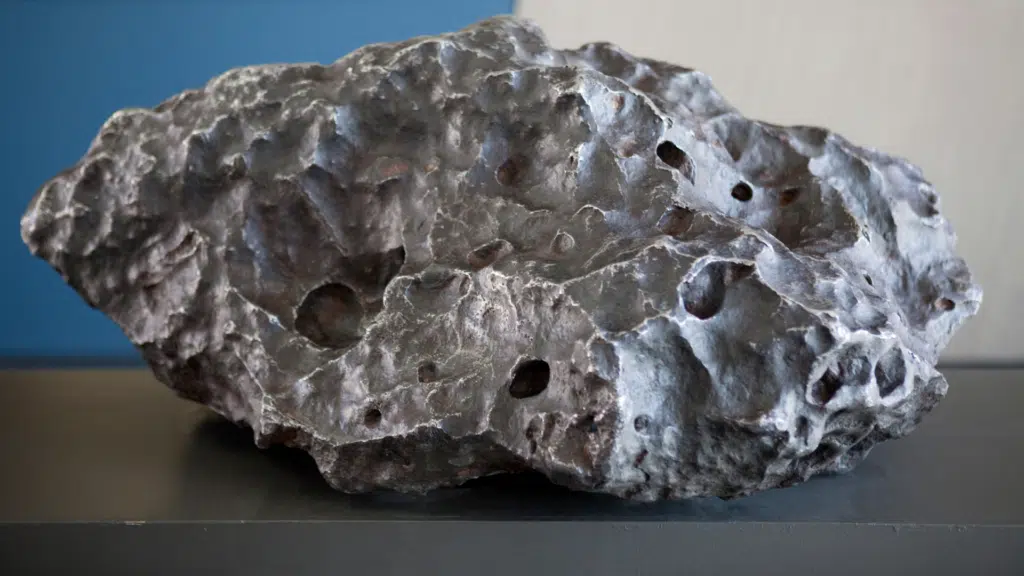
A strange rock on the ground can make people stop and look twice. It might be dark, smooth, or feel heavier than it looks.
Some start to wonder, could it be a piece of space? Meteorites do land on Earth, and people have found them in parks, fields, and even backyards.
But not every odd rock is from the sky. Telling the difference takes a bit of careful looking. This guide walks through signs that can help.
It doesn’t need fancy tools or science words. Just simple checks anyone can do to figure out if that rock might really be a meteorite.
What is a Meteorite?
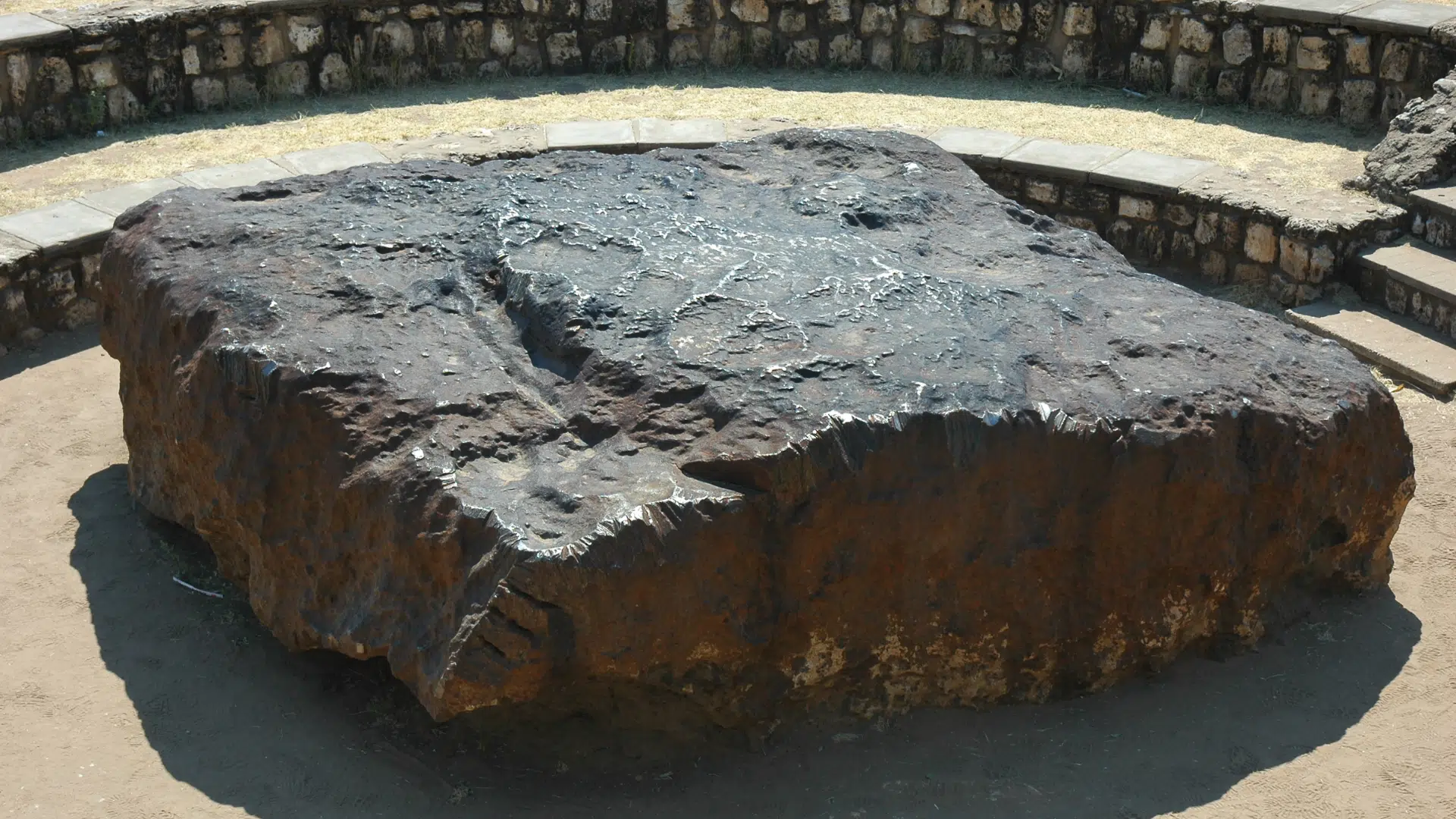
Image Source: Wikipedia
A meteorite is a rock or metal object that has fallen from space and landed on Earth. It starts as a meteoroid, moving through space.
When it enters Earth’s air, it becomes a meteor. As it falls, it heats up and may burn on the outside, forming a dark crust.
If it survives the trip and lands on the ground, it’s called a meteorite. Most meteorites come from asteroids, but some may come from the Moon or Mars.
They can be large or small and often look different from regular rocks. People sometimes find them in deserts, open fields, or snowy areas.
Why People Think They Found One
People may believe they found a meteorite because:
- The rock is heavy for its size
- It has a dark or burned crust
- It looks shiny or metallic
- It attracts a magnet
- It was found alone in a strange place
While these are possible signs, not all heavy or dark rocks are meteorites. Many Earth rocks can look the same. That’s why this guide walks you through clear steps on how to tell if a rock is a meteorite.
Types of Meteorites
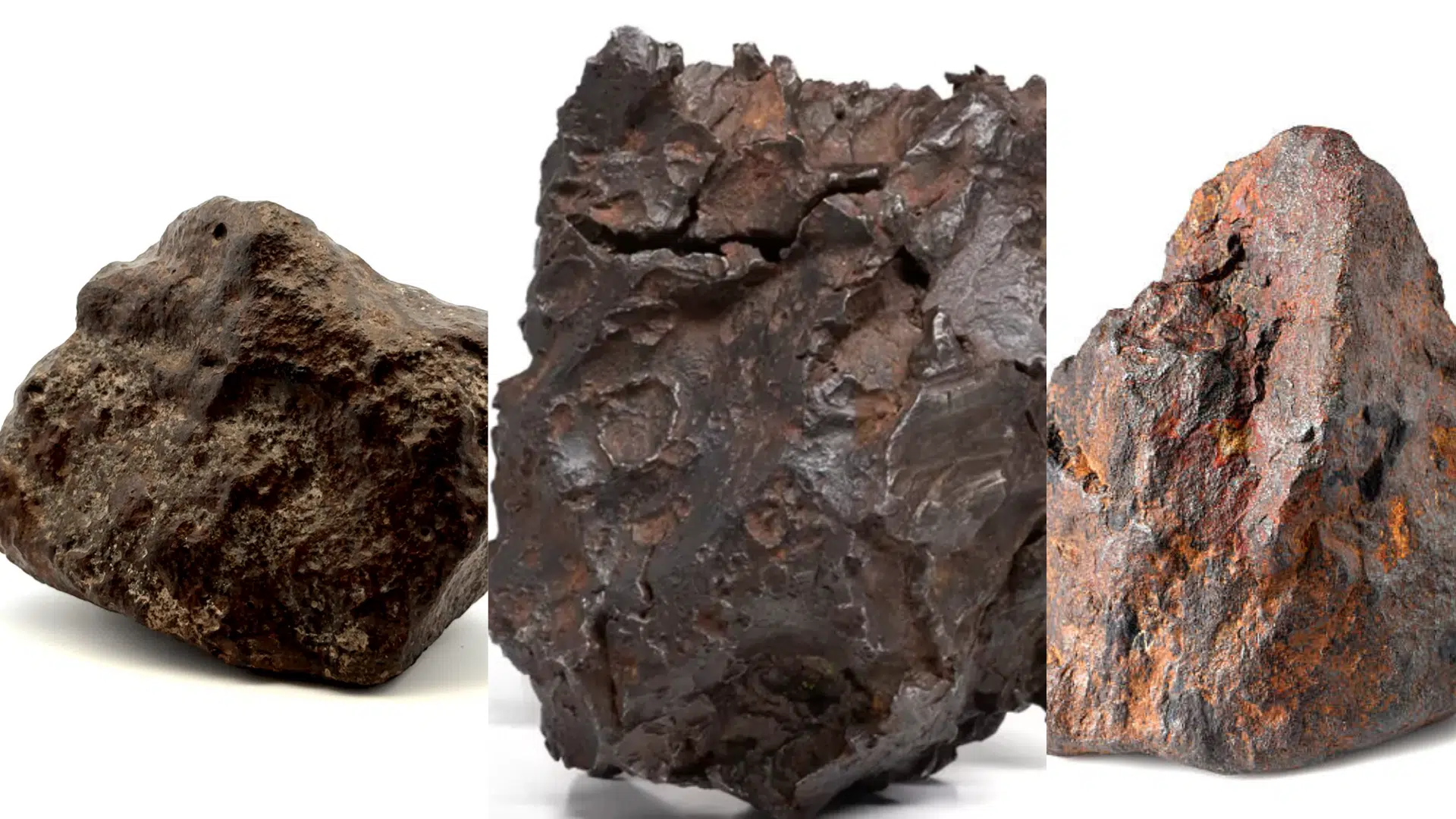
There are three main types of meteorites. Each one looks and feels different. Knowing the type can help you understand what to look for when checking a rock.
Stony Meteorites
- Made mostly of rock
- Often have small bits of metal inside
- Usually, the most common type found
- May contain tiny round shapes called chondrules
- May attract a magnet, but not always strongly
These meteorites can look like regular rocks, but often feel heavier.
Iron Meteorites
- Made mostly of iron and nickel
- Very heavy for their size
- Shiny and metallic on the inside
- May show rust if left outside
- Strong and do not break easily
Iron meteorites are easier to identify because of their weight and metal content.
Stony-Iron Meteorites
- A mix of rock and metal
- Rare and not found as often
- May show bright metal mixed with lighter rock
- Often look very different from Earth’s rocks
These meteorites are special and often look like something man-made due to the mix of shiny and dull parts.
Signs to Help Tell if a Rock is a Meteorite
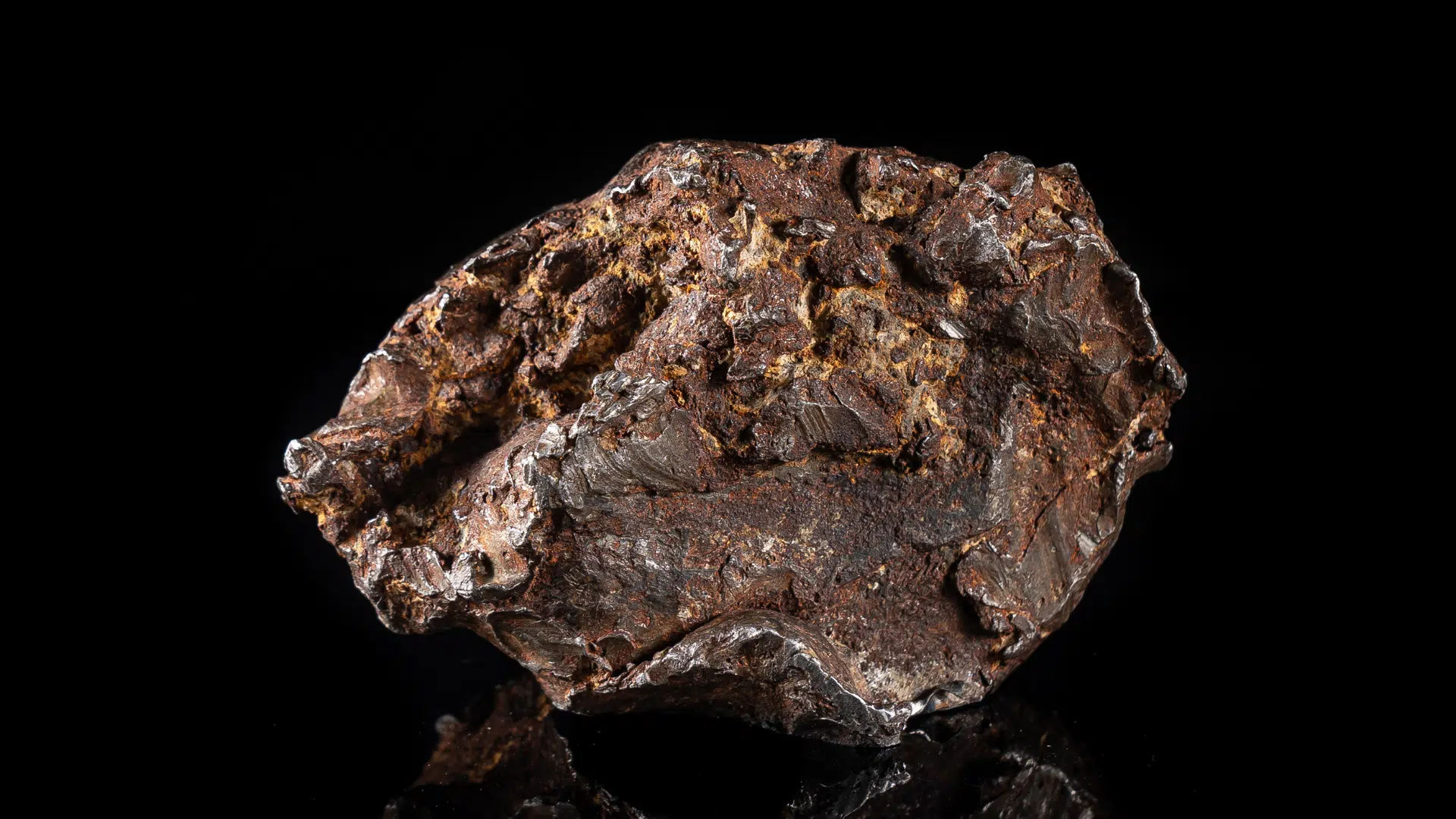
There are many simple ways to check if a rock might be a meteorite. Most tests can be done at home with basic tools. Try more than one test to make sure. Below are the main signs to look for.
Check the Weight: Is It Heavy for Its Size?
Meteorites are often heavier than regular rocks. That’s because they contain metals like iron and nickel.
Pick up the rock and hold it in your hand. Does it feel heavier than it looks? Compare it to a normal rock of the same size. If it feels much heavier, that’s a possible sign it could be a meteorite.
Look at the Outside: Is There a Fusion Crust?
When a meteorite falls through Earth’s atmosphere, the outer surface burns from the heat. This creates a thin, dark shell called a fusion crust.
Signs of a fusion crust:
- Thin, dark, and smooth surface
- Black or brown color
- Often shiny when new, dull over time
- May have small cracks or flaking
If your rock has this kind of dark coating, it could be a meteorite. But some Earth rocks also look dark, so don’t rely on this sign alone.
Check for Magnetism: Does It Stick to a Magnet?
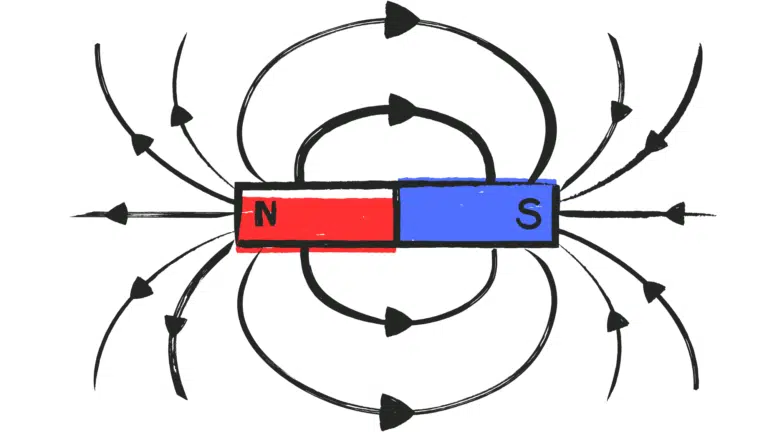
Most meteorites contain metal and are magnetic. You can use a regular or strong magnet to test.
How to check:
- Hold a magnet near the rock
- See if it sticks or pulls the magnet
- Use a neodymium magnet for stronger results
If the rock pulls the magnet, it likely contains iron or nickel. This is a good sign, but some Earth rocks are magnetic too.
Use a Magnet and String Test
This is another easy way to test for metal:
- Tie a magnet to a piece of string
- Let the magnet hang still
- Bring the rock close to it
- Watch if the magnet swings or moves
If the magnet reacts, the rock may contain metal. This is a fun and safe way to test without touching the rock directly.
Scratch Test: What’s Inside?
Scratch the surface of the rock gently with sandpaper or a metal file. Look closely at what’s underneath.
Things to look for:
- Bright silver or gray metal
- Small shiny specks (nickel or iron)
- No clear or glittery grains like quartz
If you see metal under the surface, it could be a meteorite. Be gentle and only scratch a small area.
No Bubbles or Holes
Meteorites are solid. They do not form with bubbles or air pockets like lava rocks.
If your rock has many small holes, it is probably volcanic or man-made, such as slag. Meteorites do not have bubble marks.
Check for Chondrules in Stony Meteorites
Chondrules are small, round shapes found inside some stony meteorites. They look like little balls or circles.
You may need to break off a piece or use a magnifying glass to see them. Earth rocks do not have chondrules. If you find them, that is a strong sign the rock may be a meteorite.
No Quartz or Clear Crystals
Quartz is a shiny mineral often found in Earth’s rocks. It can look clear, white, or sparkly. Meteorites do not have quartz. If your rock has shiny crystals or clear grains, it is not a meteorite.
Quartz forms in water-rich environments on Earth, not in space. Its bright sparkle is a clear sign the rock is not from space.
No Layers Like Sedimentary Rocks
Sedimentary rocks form in layers, often from water. These layers look like stripes or lines across the rock. Meteorites do not form this way. If your rock has bands or layers, it is likely an Earth rock.
Layered rocks often break apart easily and may contain fossils or shell pieces. Meteorites are solid and have no signs of life.
Do a Streak Test
This test checks which minerals are in the rock.
How to do it:
- Rub the rock on the bottom of a ceramic tile or concrete
- Look at the color of the streak it leaves
Meteorites usually do not leave a streak. If the rock leaves a red, yellow, or green mark, it is likely an Earth mineral such as hematite or magnetite.
How to Tell if a Rock is a Meteorite: Quick Checklist
Use this simple checklist to test your rock at home. These signs can help you figure out if it might be a real meteorite:
- Is the rock heavier than normal?
- Does it attract a magnet?
- Does it have a black or dark fusion crust?
- Is it smooth on the outside, not bubbly?
- Does it have metal inside when scratched?
- Does it lack quartz or crystals?
- Does it have no layers or lines?
- Does it pass the streak test with no colorful marks?
If you answered “yes” to many of these, your rock could be a meteorite. Further testing or expert help can confirm it.
Can You Find Meteorites Anywhere?
Meteorites can fall anywhere on Earth, but some places make them easier to spot. The table below shows where people have the best chances of finding them and why.
| Location Type | Why It’s Good for Finding Meteorites |
|---|---|
| Deserts | Light-colored sand makes dark meteorites easier to see |
| Snowy or icy regions | Dark rocks stand out clearly against white snow or ice |
| Flat open land | Fewer trees and plants make it easier to spot unusual rocks |
| Dry lake beds | Hard, flat ground helps preserve and show meteorites |
| Farmlands or fields | Freshly plowed soil may reveal buried meteorites |
| Rooftops or gutters | Small space rocks may land on buildings in cities or towns |
| Areas with past reports | Places where meteorites have fallen before are good search spots |
You don’t need to travel far; meteorites have been found in backyards, parks, and even on sidewalks. But wide, open, and clean areas make the search much easier.
Still Not Sure? Ask an Expert
If you’ve done all the tests and still aren’t sure, it’s okay to ask for help. You can contact:
- Local science museums
- College geology departments
- Online meteorite groups or forums
- NASA’s meteorite collection website
Take clear photos of the rock. Show close-ups of the surface and any broken pieces. Note where you found it. Experts can help you figure it out.
To Conclude
Finding a rock that looks different can be exciting. It might be heavy, dark, or shiny. But not every strange rock is a meteorite.
This blog shared simple ways to check if your rock could be from space. You can look at its weight, surface, metal content, and more.
Each small test helps you get closer to the answer. If your rock shows many signs, you can ask an expert to take a closer look. Keep your notes and photos ready.
Meteorites are rare, but with the right tools and care, you might just find one. Want help making a checklist or guide? Reach out, we’re happy to assist.