Space has always held mysteries that pull us closer to answers we didn’t know we needed.
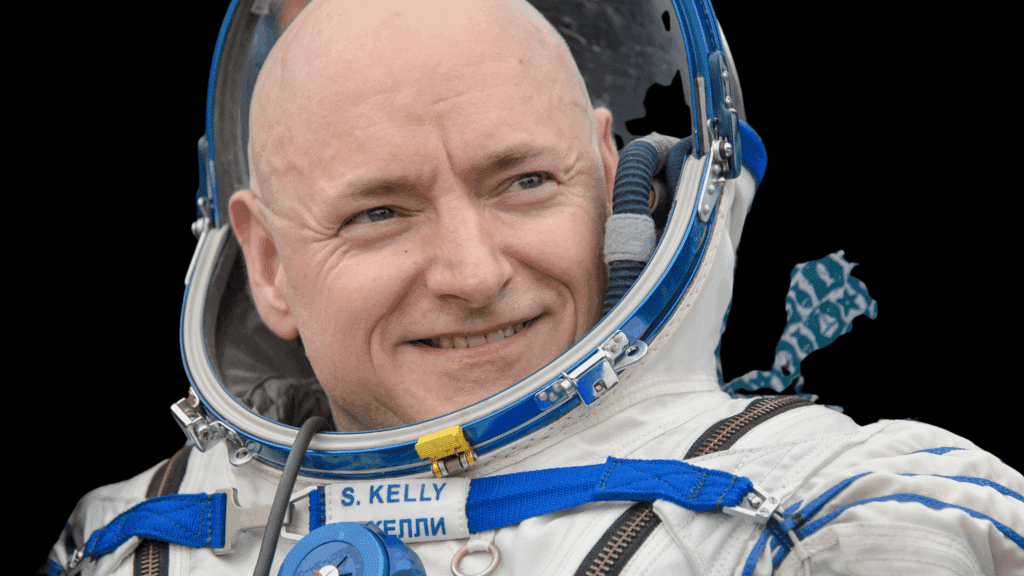
In 2015, NASA astronaut Scott Kelly spent 340 days aboard the International Space Station. His twin brother, Mark, stayed on Earth.
This wasn’t just another space mission. It was a chance to study something remarkable: what happens to the human body when one identical twin goes to space while the other remains grounded.
The Twins Study became a scientific breakthrough, offering insights into how space affects us at the cellular level. What researchers found changed how we think about long-term space travel and opened doors to discoveries that reach far beyond the stars.
Who is Astronaut Scott Kelly?
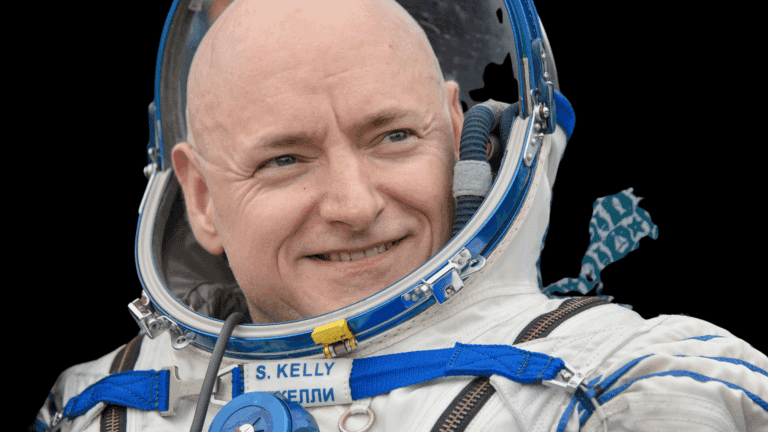
Scott Kelly is a retired NASA astronaut who made history through his time in space. He flew four missions and logged 520 days off Earth. His journey wasn’t easy.
Kelly grew up struggling in school and never imagined becoming an astronaut. But reading “The Right Stuff” changed everything for him.
He joined the Navy, became a test pilot, and eventually earned his spot at NASA. Scott’s twin brother, Mark, also became an astronaut. This unique situation gave scientists a rare opportunity.
They could study two people with identical DNA, one in space and one on Earth, to understand how the human body adapts to life beyond our planet.
Scott’s Biography and His Twin Brother, Sen Mark Kelly
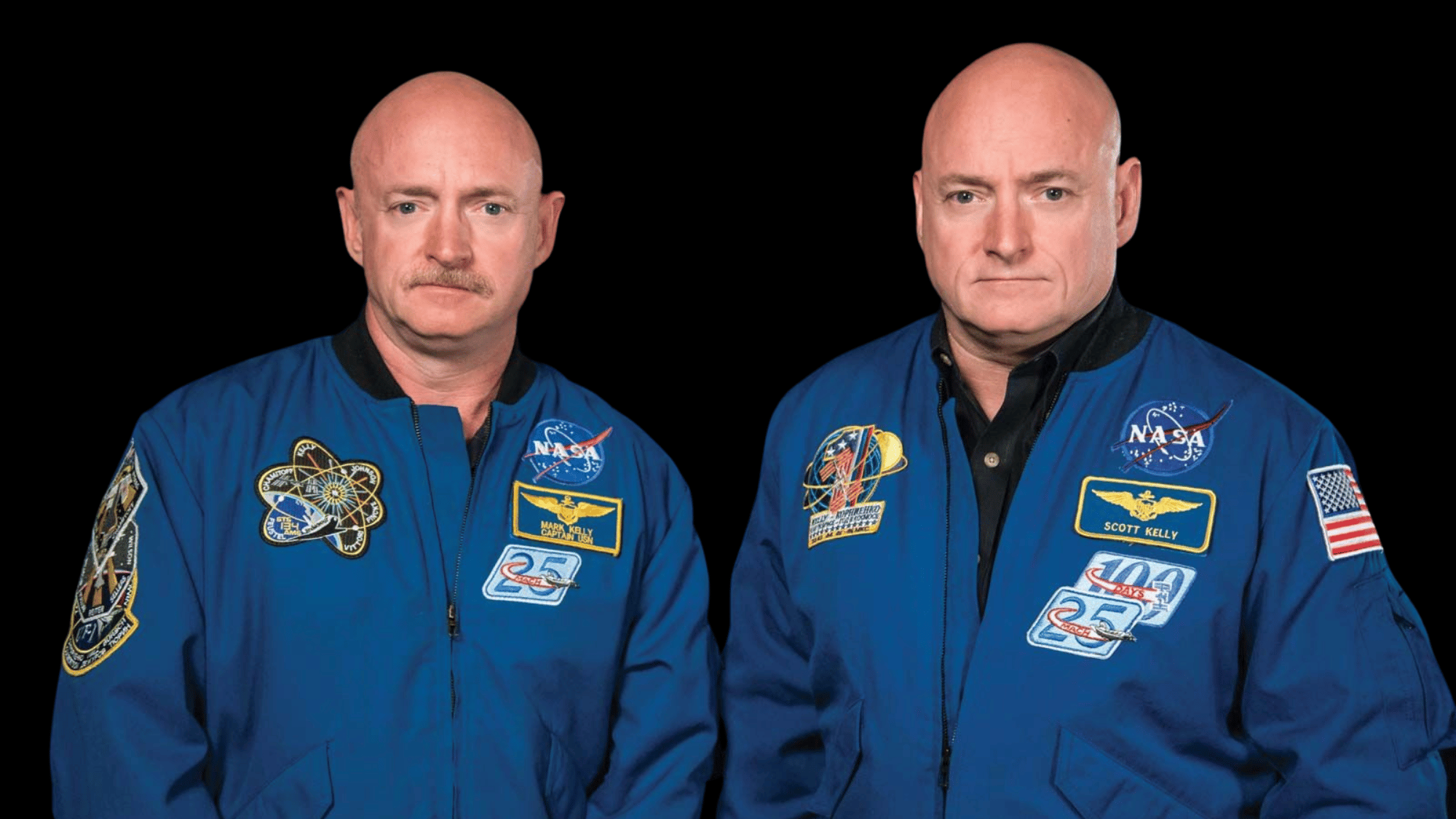
Scott and Mark Kelly were born in New Jersey in 1964. Their paths mirrored each other in remarkable ways, both reaching for the stars.
Early Life
The Kelly twins grew up in West Orange, New Jersey. School wasn’t their strong suit early on. Scott admits he barely got through high school.
But they were determined kids who found their calling later. The brothers shared a competitive spirit that pushed them forward.
Navy Career
Both twins joined the U.S. Navy and became accomplished pilots. Scott flew combat missions during Desert Storm.
He tested aircraft and honed skills that would later serve him in space. His Navy years built the foundation for everything that came next. Flying became second nature to him.
NASA Selection
NASA selected Scott in 1996 as part of the astronaut class. His brother Mark joined the same year. Having identical twins in the astronaut program was unprecedented.
This opened unique research possibilities. Scott’s first space mission came in 1999 aboard Space Shuttle Discovery, beginning his extraordinary career beyond Earth.
Mark’s Political Career
While Scott continued flying missions, Mark eventually shifted paths.
After retiring from NASA, Mark entered politics. He now serves as a U.S. Senator from Arizona. His wife, former Congresswoman Gabby Giffords, survived a 2011 assassination attempt.
Mark’s journey from space to the Senate shows how astronauts bring unique perspectives to public service.
Scott Kelly NASA Missions: Key Spaceflights Breakdown
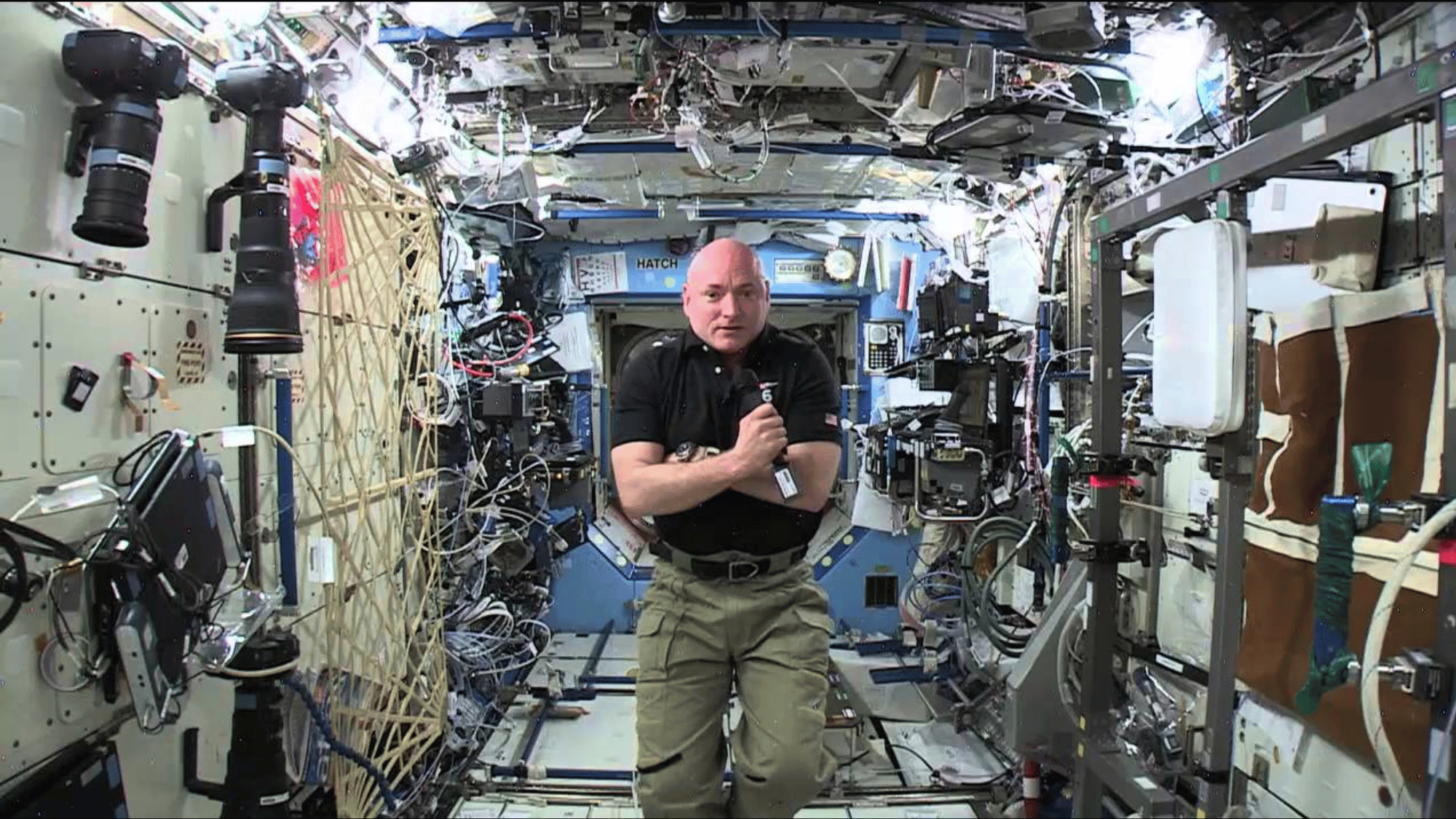
Image Source: NASA+
Scott Kelly’s career at NASA spanned four spaceflights over 16 years. Each mission was built on the last, preparing him for his longest stay.
1. STS-103 (1999)
Scott’s first trip to space came aboard Space Shuttle Discovery in December 1999. The crew’s job was to fix the Hubble Space Telescope.
They installed new equipment and made critical repairs. Scott performed his first spacewalk during this mission.
It lasted eight days and showed him what working in space really meant. This flight proved he could handle the challenges ahead.
2. STS-118 (2007)
In August 2007, Scott commanded Space Shuttle Endeavour to the International Space Station. His crew delivered supplies and new equipment.
They added a truss segment and installed external components. Scott led his team through complex assembly work. The mission included four spacewalks by crew members.
This 13-day flight marked Scott’s first time as commander, testing his leadership skills in the most demanding environment.
3. Expedition 25/26 (2010-2011)
Scott spent 159 days on the ISS during this expedition. He served as a flight engineer and later as a commander.
The crew conducted scientific experiments and maintained the station. Scott performed three spacewalks during his stay. This long-duration mission prepared him physically and mentally.
He learned what months in space did to the body and mind.
4. Expedition 43/44/45/46 (2015-2016)
Scott’s final mission became his most famous. He launched in March 2015 and stayed until March 2016, spending 340 days in orbit.
Nearly a year in space set an American record. Russian cosmonaut Mikhail Kornienko joined him for the year-long stay.
They tested how humans handle extended time in microgravity. This mission collected data that would prove invaluable for future Mars journeys and deep space exploration plans.
Breaking Records: Scott Kelly’s 340‑Day Mission in Space
Scott Kelly’s 520 cumulative days in space stand as a testament to human endurance. But his year-long mission from 2015 to 2016 offered something more valuable than records.
With Mark on Earth, scientists had a built-in control subject. They could compare identical DNA in two different environments. Researchers tracked everything from gene expression to cognitive function.
They watched how Scott’s body changed while Mark’s stayed the same. The data revealed how space affects telomeres, the immune system, and even the shape of eyeballs.
This wasn’t just about one astronaut’s achievement. It was about understanding whether humans can survive the journey to Mars and beyond.
Future of Space Exploration: Scott Kelly’s Mars Insights
Scott’s year in space taught NASA crucial lessons about sending humans to Mars. His experience shaped future mission planning.
- A Mars trip would take at least two years round-trip, and Scott’s data shows the human body can handle extended periods in space with proper countermeasures.
- Bone density loss remains a serious concern, as astronauts lose about 1-2% of bone mass per month in microgravity despite daily exercise routines.
- Vision changes affected Scott significantly, with fluid shifts in the head causing eyeball flattening that persisted after returning to Earth.
- Psychological resilience matters as much as physical health, and isolation studies help prepare crews for the mental challenges of deep space travel.
- Radiation exposure increases cancer risk on longer missions, and better shielding technology needs development before attempting Mars journeys.
Conclusion
Scott Kelly’s time in space gave us more than headlines and records. It gave us a roadmap.
The Twins Study revealed how resilient humans can be when pushed beyond Earth’s boundaries. Scientists now have baseline data for planning missions that seemed impossible a decade ago.
Mars isn’t just a dream anymore; it’s a destination with challenges we’re learning to solve. Scott’s sacrifice, spending a year away from family and Earth, wasn’t just for science. It was for everyone who looks up and wonders what’s next.
His legacy lives on in every future astronaut who’ll venture farther than he did, armed with knowledge he helped gather.