
Ever glanced up at the night sky and spotted a delicate sliver of moon hanging there like a cosmic fingernail? That’s the waning crescent, and it’s one of the moon’s most understated yet intriguing phases.
Most people know about full moons and new moons, but this quieter phase often gets overlooked.
Yet it holds its own special place in the lunar cycle. Understanding what happens during this time can deepen anyone’s connection to the rhythms of the night sky.
So what exactly makes this phase unique, and when does it show up?
Understanding the Full Sequence of The Lunar Phases
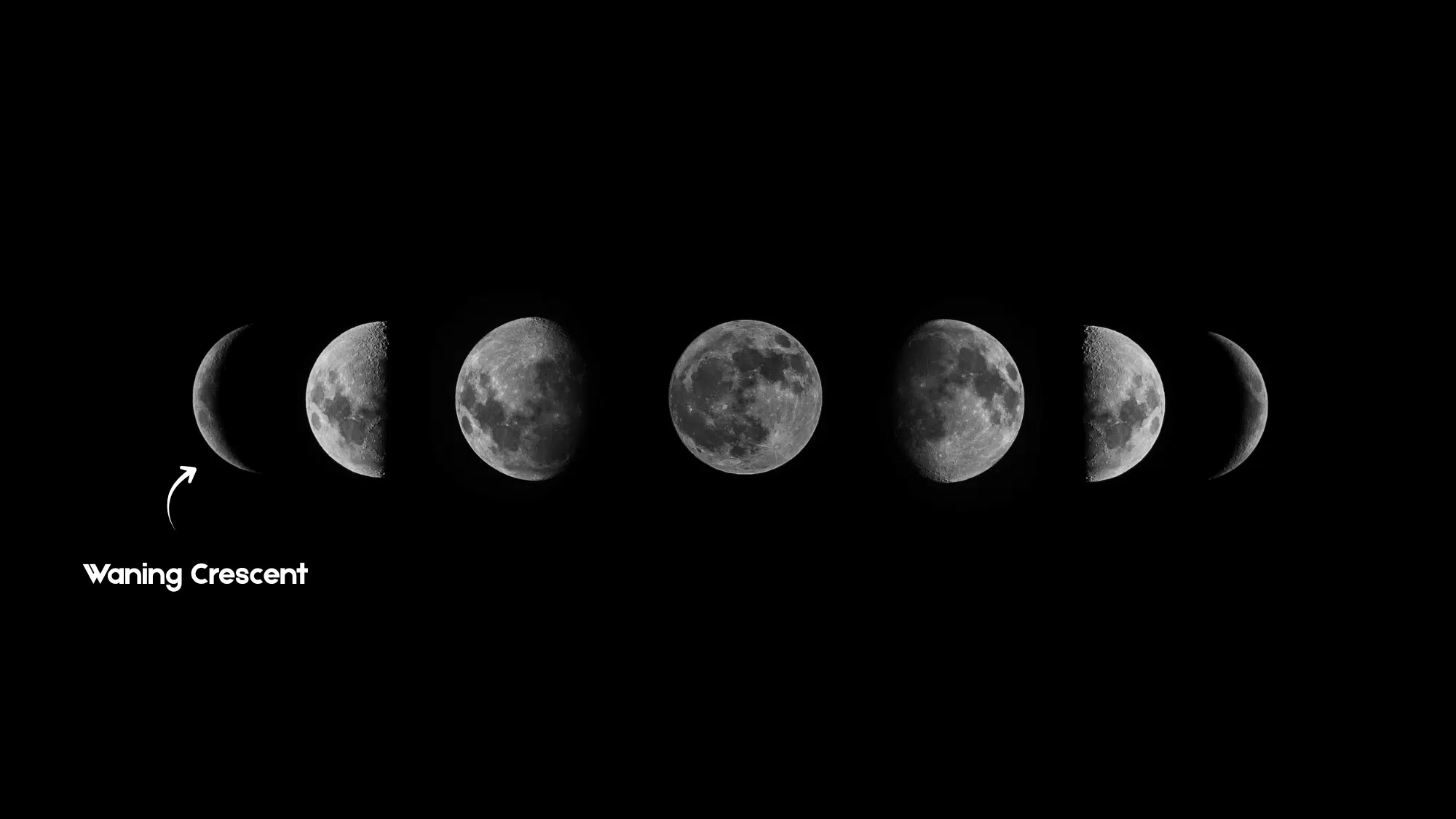
The moon cycles through eight distinct phases each month, creating a predictable pattern that’s been observed for thousands of years.
- New Moon: The moon sits between Earth and the sun, making it invisible from our view since its illuminated side faces away.
- Waxing Crescent: A thin sliver appears on the right side as the moon begins its journey away from the sun’s glare.
- First Quarter: Half the moon’s face lights up, looking like a perfect semicircle in the evening sky.
- Waxing Gibbous: More than half the moon shines now, swelling toward fullness with each passing night.
- Full Moon: The entire face glows bright as Earth positions itself between the moon and sun, creating that iconic luminous circle.
- Waning Gibbous: The glow starts shrinking from the right side, though most of the moon still stays visible and bright.
- Last Quarter: Another half-moon appears, but this time the left side illuminates while the right fades into shadow.
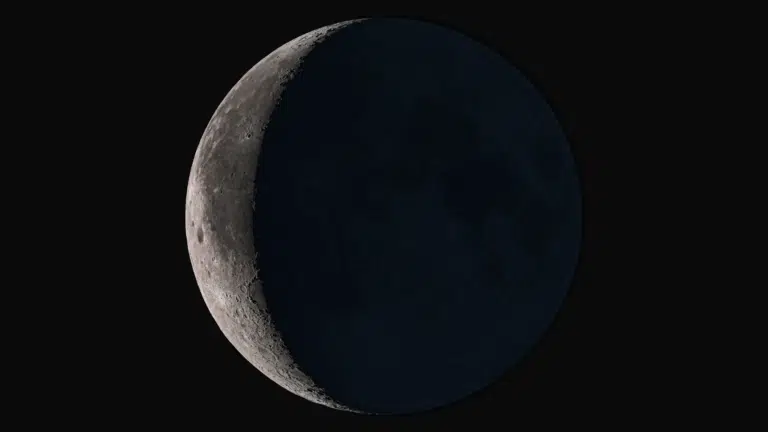
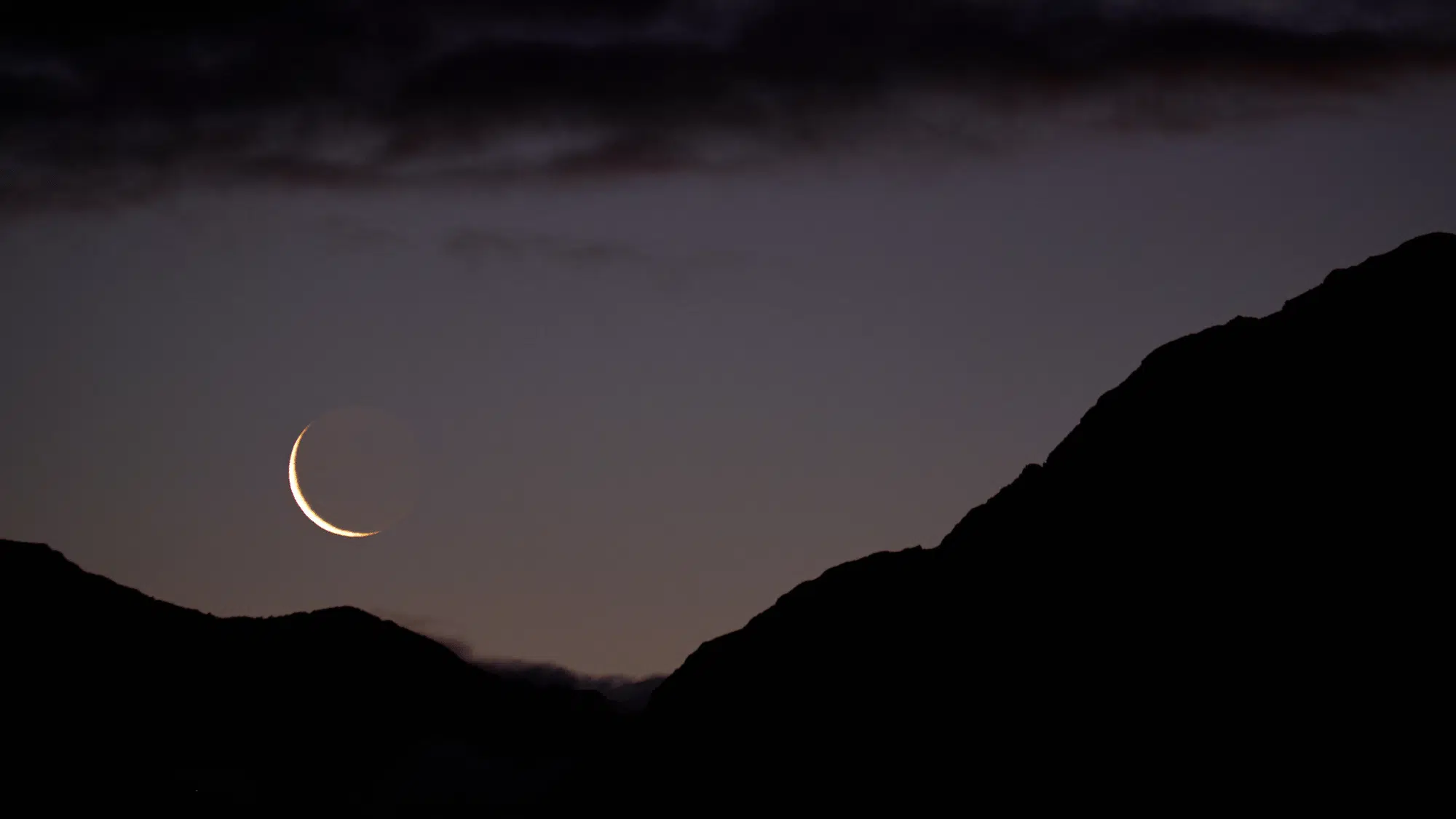
- Waning Crescent: The final phase before the cycle resets; just a thin, delicate sliver remains on the left side, gradually disappearing until the new moon arrives again.
What is the Waning Crescent Moon Phase?
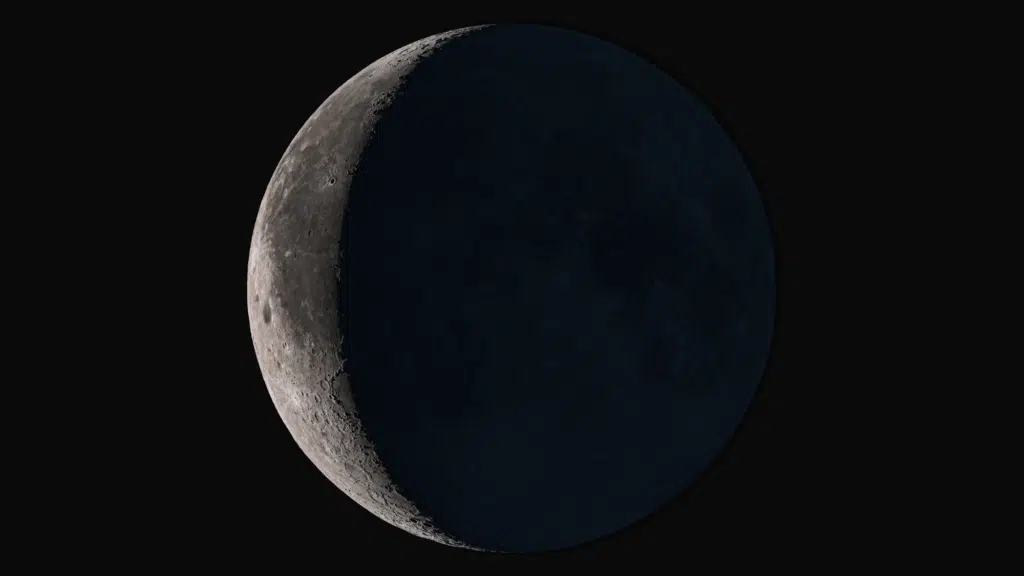
The waning crescent represents the moon’s final act before it disappears completely from view. It’s that thin, curved sliver visible in the early morning sky, hanging low on the eastern horizon just before sunrise. “
Waning” means decreasing, so this phase shows the moon’s light shrinking day by day.
The crescent shape curves like a C, with only the left edge catching sunlight while the rest stays dark. This phase typically lasts about a week, bridging the gap between the last quarter and the new moon.
It’s the lunar cycle’s quiet conclusion, a gentle fade-out before everything begins fresh again.
Effect of Waning Crescent Moon on the Earth
Though less visually dramatic than full moons, the waning crescent still exerts measurable influences on Earth’s natural systems and rhythms.
- Reduced Tidal Pull: The gravitational force weakens during this phase, creating smaller neap tides with minimal difference between high and low water levels.
- Darker Night Skies: With minimal moonlight present, nocturnal animals become more active and predators gain hunting advantages in the increased darkness.
- Lower Ocean Currents: The decreased lunar gravitational pull results in calmer ocean currents and less turbulent coastal waters compared to full moon periods.
- Plant Growth Patterns: Some gardening traditions suggest reduced sap flow during this phase, making it ideal for pruning and harvesting rather than planting.
- Animal Behavior Shifts: Certain species use the diminishing light as a cue for breeding cycles, migration timing, or changes in feeding patterns.
- Sleep Quality Changes: Studies indicate some people experience deeper sleep during low-light lunar phases, though the evidence remains debated among scientists.
How to Identify the Waning Crescent Phase in the Night Sky
Spotting this elusive phase takes timing and knowing where to look, but these simple markers make identification straightforward and reliable.
1. Check the Time: Look during the pre-dawn hours, typically between 3 AM and sunrise. This phase rarely appears in the evening sky.
2. Look East: The waning crescent always rises in the eastern sky, positioning itself relatively close to where the sun will soon appear.
3. Note the Shape: The crescent curves like a backwards C or a closing parenthesis, with the illuminated portion on the left side.
4. Observe the Thinness: The visible sliver gets progressively thinner each morning as it approaches the new moon phase, sometimes appearing almost thread-like.
5. Watch the Position: It sits low on the horizon rather than high overhead, and the crescent’s points aim upward and to the right.
6. Track the Progression: If the crescent shrinks each morning and moves closer to the sun’s position, that confirms it’s waning rather than waxing.
Waning Crescent Phase vs. Other Lunar Stages: Key Differences
Each lunar phase has distinct characteristics that set it apart, from visibility timing to shape orientation and the amount of illumination present.
| Lunar Phase | Illumination | Shape/Appearance | Best Viewing Time | Sky Position |
|---|---|---|---|---|
| Waning Crescent | 0-49% (decreasing) | Thin left-side crescent, backward C shape | Early morning before sunrise | Eastern horizon |
| Waxing Crescent | 1-49% (increasing) | Thin right-side crescent, forward C shape | Evening after sunset | Western horizon |
| First Quarter | 50% (increasing) | Right half illuminated, flat edge on left | Evening and night | Southern sky |
| Last Quarter | 50% (decreasing) | Left half illuminated, flat edge on right | Late night and morning | Southern sky |
| Full Moon | 100% | Complete circle, fully illuminated | All night long | Rises at sunset, sets at sunrise |
| New Moon | 0% | Invisible, no illumination | Not visible | Between Earth and Sun |
Waning Crescent Phase Significance in Astronomy and Culture
The waning crescent holds a special place in both scientific observation and cultural traditions worldwide.
Astronomers value this phase because the dark sky conditions make it ideal for viewing distant celestial objects like galaxies and nebulae.
The minimal moonlight creates perfect conditions for deep-sky observation and astrophotography.
Culturally, many societies have attached profound meaning to this final lunar phase. Ancient civilizations saw it as a time for reflection, release, and letting go of what no longer serves.
Some spiritual practices still use this phase for meditation and introspection. Farmers in various cultures considered it a poor time for planting but excellent for harvesting root crops.
The Islamic calendar relies heavily on crescent moon sightings to mark the beginning and end of months, making this phase religiously significant for over a billion people worldwide.
Astrophotography Tips for Capturing Waning Crescent Phase
Photographing this delicate phase requires specific techniques and timing, but these practical tips help capture that ethereal sliver beautifully and clearly.
- Wake Up Early: Set your alarm for at least an hour before sunrise to catch the crescent at its highest and brightest point above the horizon.
- Use a Telephoto Lens: A 200mm lens or longer helps magnify the thin crescent and capture surface details that wide-angle lenses miss.
- Shoot in Manual Mode: Control your exposure settings directly; start with ISO 400, f/5.6 aperture, and 1/250 shutter speed, then adjust as needed.
- Include Foreground Elements: Add trees, buildings, or landscape features to create context and scale, making your composition more visually interesting.
- Bracket Your Exposures: Take multiple shots at different exposure levels to capture both the bright crescent and the faint earthshine glow on the dark portion.
- Focus Carefully: Switch to manual focus and use live view mode to zoom in and ensure the moon’s edge appears sharp and crisp before shooting.
Conclusion
The waning crescent might be the moon’s quietest phase, but it’s far from insignificant.
From its role in astronomical observations to its deep cultural meanings across civilizations, this delicate sliver carries weight beyond its size.
Armed with knowledge about timing, positioning, and identification markers, anyone can track this phase through its weekly phases.
And for photography enthusiasts, it offers unique creative opportunities. Next time the lunar cycle winds down, set that alarm. The predawn sky has something special waiting.