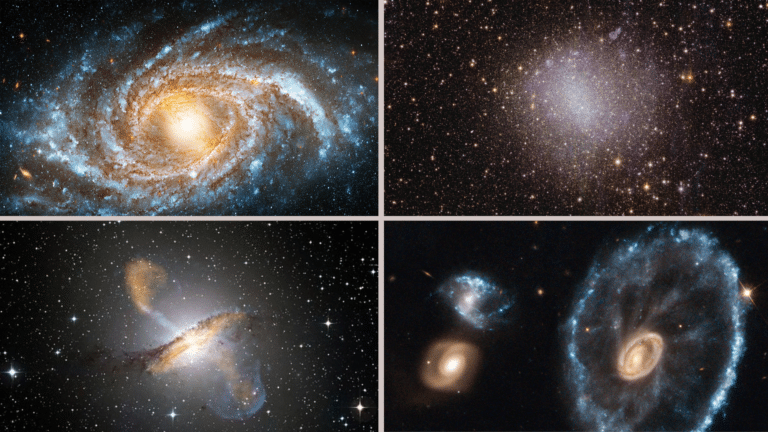

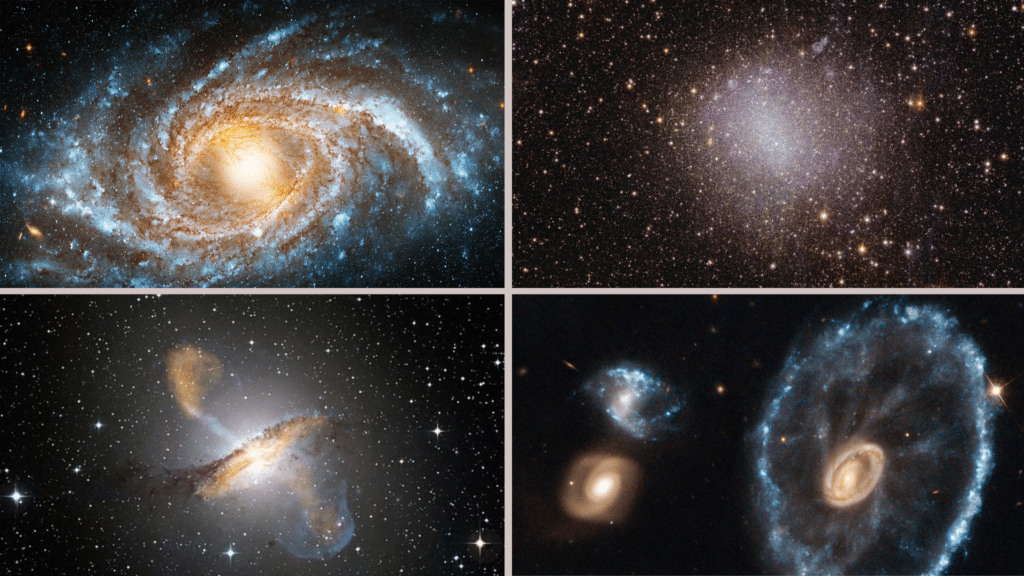
Galaxies are giant groups of stars, dust, and gas in space. They come in different shapes and sizes.
Some look like flat discs, while others have no clear shape at all. Scientists sort galaxies into groups to help study them better.
There are three main types. Each type has its own features and structure.
This blog gives a simple and clear look at how these galaxy types are grouped and what sets them apart.
It’s a useful guide for anyone learning about space, especially students, teachers, or curious readers who want to know more.
What is a Galaxy?
A galaxy is a huge group of stars, gas, dust, and dark matter. All of these parts are held together by gravity. Galaxies are found all over the universe.
They come in many shapes and sizes. Some galaxies are bright and full of stars. Others are faint and hard to see.
Our solar system is part of a galaxy called the Milky Way. It’s a spiral galaxy, and it holds billions of stars just like the Sun. But the Milky Way is just one of many galaxies in space.
There are billions of galaxies in the universe. Scientists group them by shape. The three main types of galaxies are:
- Spiral galaxies
- Elliptical galaxies
- Irregular galaxies
Why Do Scientists Classify Galaxies?
It would be hard to study billions of galaxies without a system. So, scientists sort them into types.
The types of galaxies help us understand how they form and how they change over time. Shapes give clues about what’s happening inside each galaxy, like how stars are born or how old they are.
In 1926, a scientist named Edwin Hubble developed a system to classify galaxies by shape. It’s called the Hubble Tuning Fork, and it’s still used today.
How Do Scientists Study Galaxies?

Image Source: Wikipedia
Astronomers use powerful telescopes to study galaxies. These telescopes can be found on the ground or sent into space. One well-known space telescope is the Hubble Space Telescope. With these tools, scientists can:
- Take pictures of galaxies
- Measure their size and brightness
- Study what they’re made of
- Learn how fast they are moving
- Understand how galaxies form and change
These observations help scientists learn more about the universe and how it has changed over time.
Main Types of Galaxies
There are three main types of galaxies based on their shape and structure. Each one has unique features that help scientists group and study them.
1. Spiral Galaxies
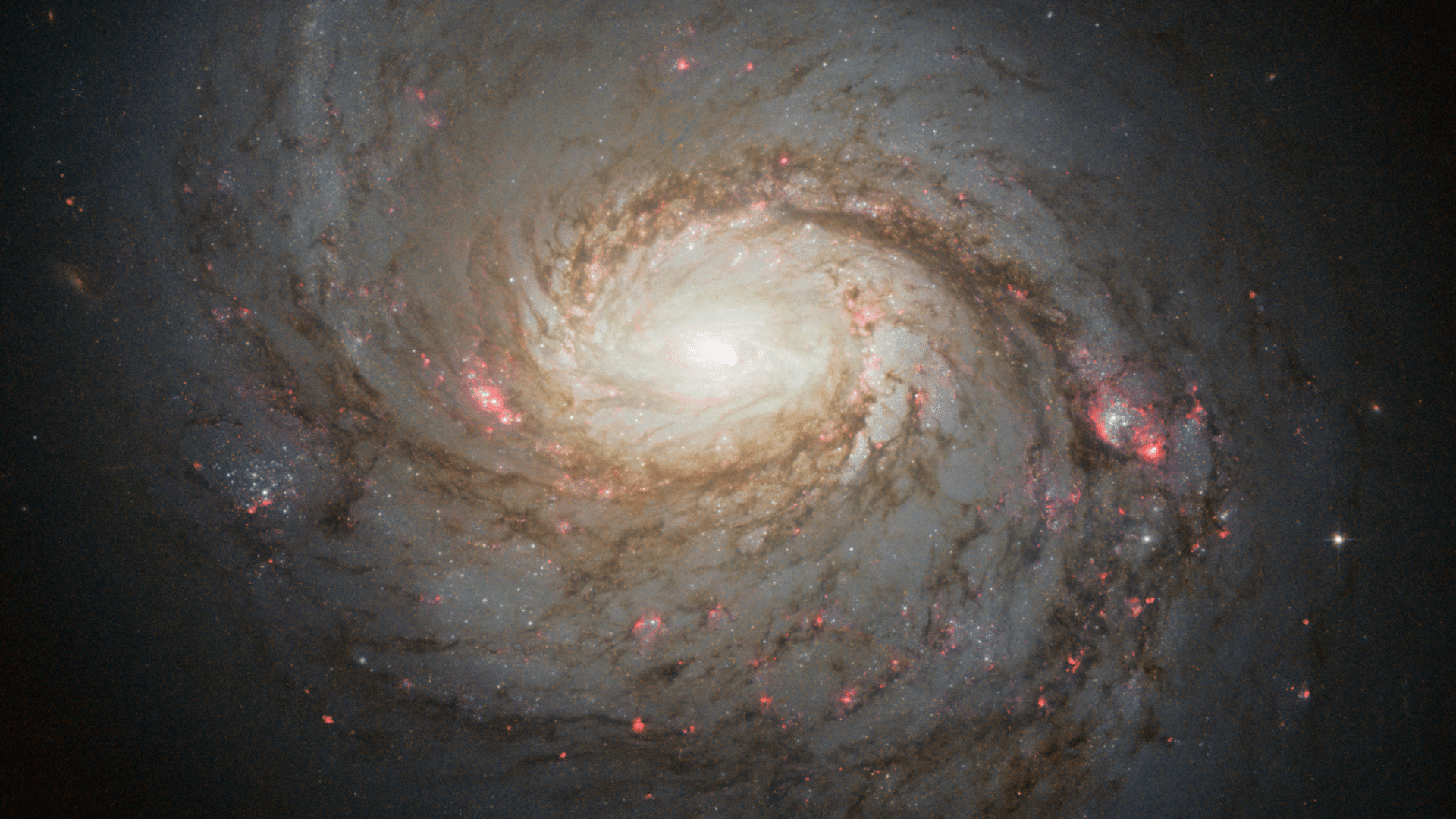
Image Source: Wikipedia
Spiral galaxies look like flat discs with arms that swirl out from the center. These arms often have bright, young stars. The middle part, called the bulge, is packed with older stars.
Main Features:
- Spiral arms that stretch out from the center
- A round central bulge
- A flat, thin disk
- Often has a halo of older stars and globular clusters
- Usually filled with gas and dust, which helps make new stars
Size: Spiral galaxies can be very large. The Milky Way, for example, is over 100,000 light-years across. They often hold 100 to 400 billion stars.
Subtypes:
- Normal spirals (S), smooth arms coming out of the center
- Barred spirals (SB), a bar-shaped center with arms at the ends.
- The Milky Way is a barred spiral galaxy.
How Common? About 60% of visible galaxies are spiral or barred spiral galaxies.
2. Elliptical Galaxies
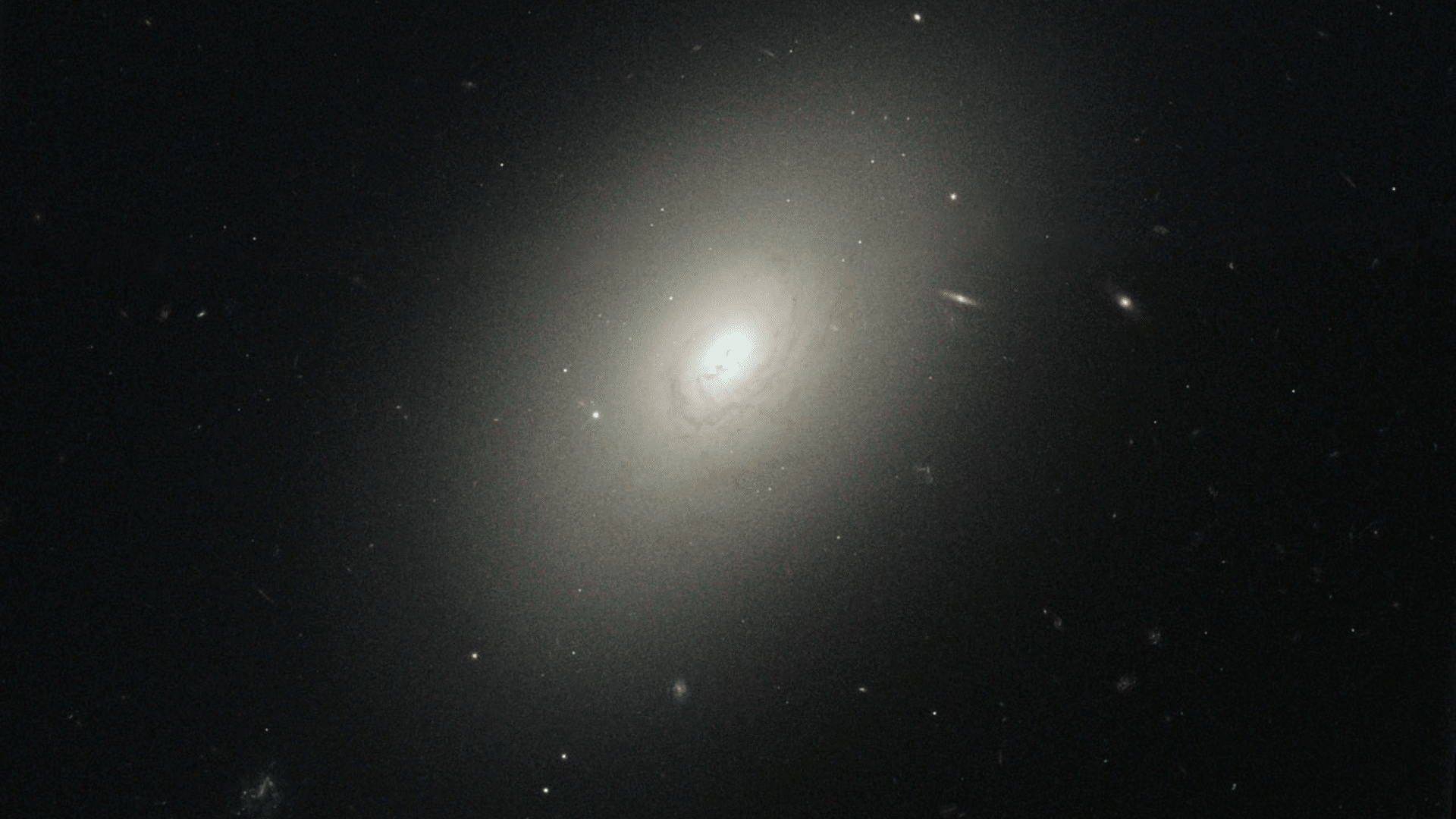
Image Source: ESA/Hubble
Elliptical galaxies are shaped like stretched-out balls or ovals. They don’t have arms like spirals. Instead, they look smooth and rounded. They don’t have much gas or dust, so new stars don’t form often.
Main Features:
- Shaped like a sphere or oval
- Made mostly of older stars
- Very little gas or dust
- A few new stars
- Stars move in many directions
Size: Some are small, called dwarf ellipticals, with just a few million stars. Others are giant ellipticals, holding trillions of stars.
Subtypes: Labeled E0 to E7 based on how stretched they are
- E0 = nearly round
- E7 = most flat
How Common? Very common in dense galaxy clusters and in the early universe.
3. Irregular Galaxies
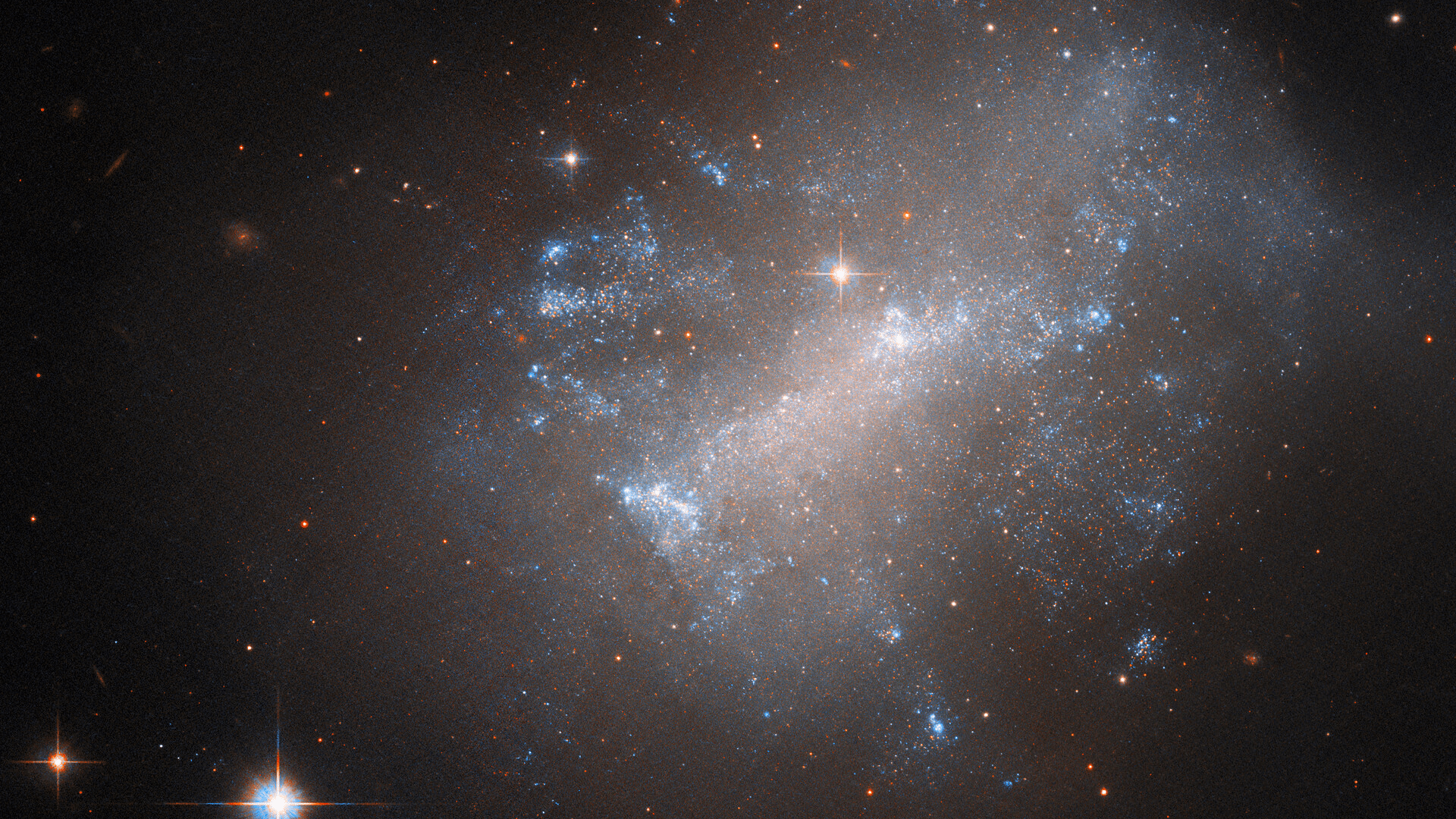
Image Source: ESA/Hubble
Irregular galaxies have no set shape. They look messy or uneven. Some are full of gas and dust and are busy making new stars. Others are shaped by gravity from nearby galaxies.
Main Features:
- No clear shape
- Often smaller than other types
- Lots of gas and dust
- Can have young and old stars
- May look broken or stretched
Size: Usually smaller than spirals or ellipticals, but some can still be bright due to star formation.
Subtypes:
- Irr I: have some structure but no clear form
- Irr II: more chaotic, with no structure at all
Why Important? They give clues about how galaxies grow, change, and form stars. The Large Magellanic Cloud is a famous nearby irregular galaxy.
What are Dwarf Galaxies?
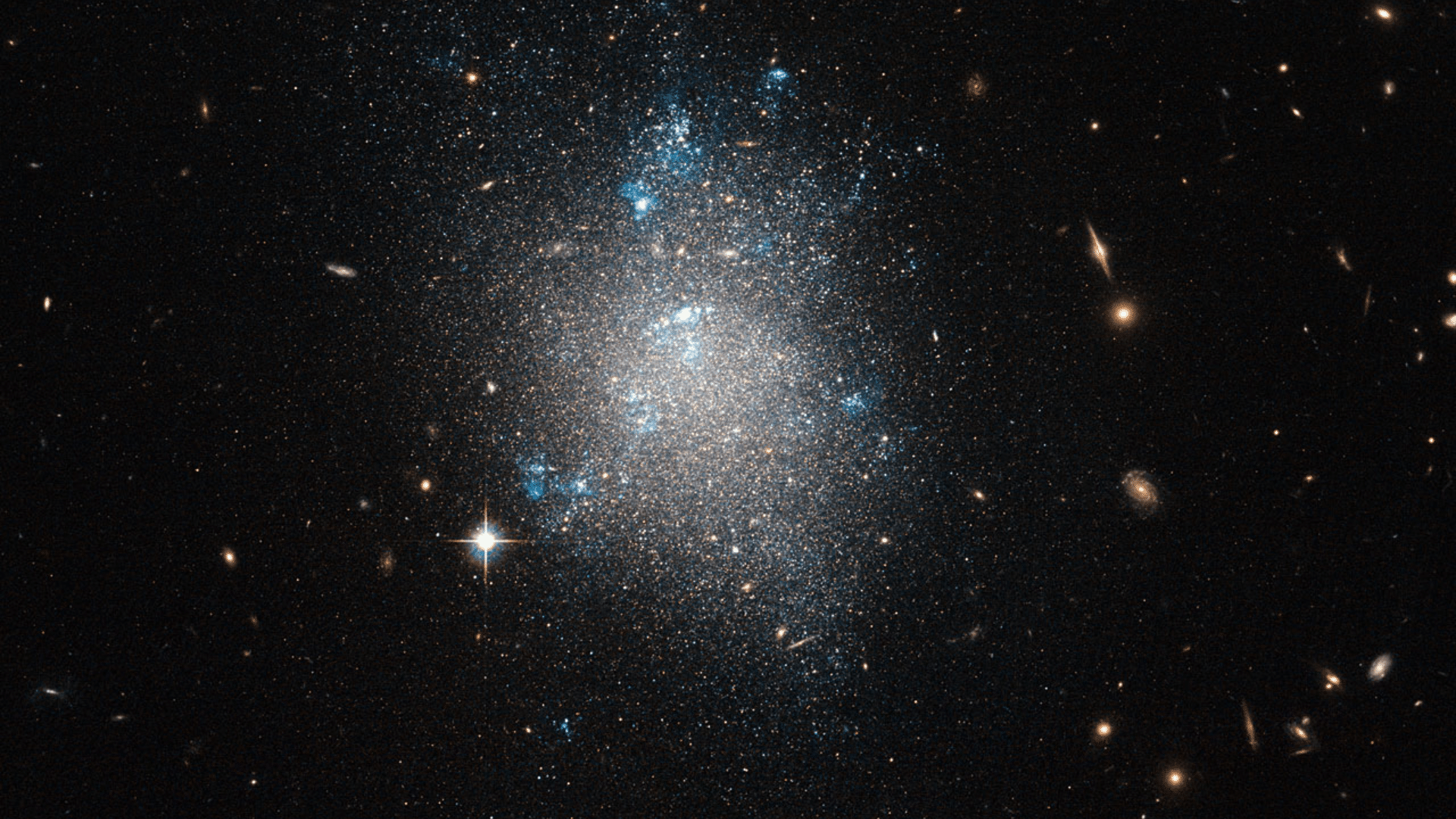
Image Source: ESA/Hubble
A dwarf galaxy is much smaller than other types. It may be a spiral, elliptical, or irregular galaxy, but it holds fewer stars, often fewer than a billion.
Even though they are small, dwarf galaxies are very important. They help scientists learn how galaxies grow. Larger galaxies may form when many dwarf galaxies come together.
The Small Magellanic Cloud and Large Magellanic Cloud are two well-known dwarf irregular galaxies near the Milky Way.
Other Galaxy Types and Special Cases
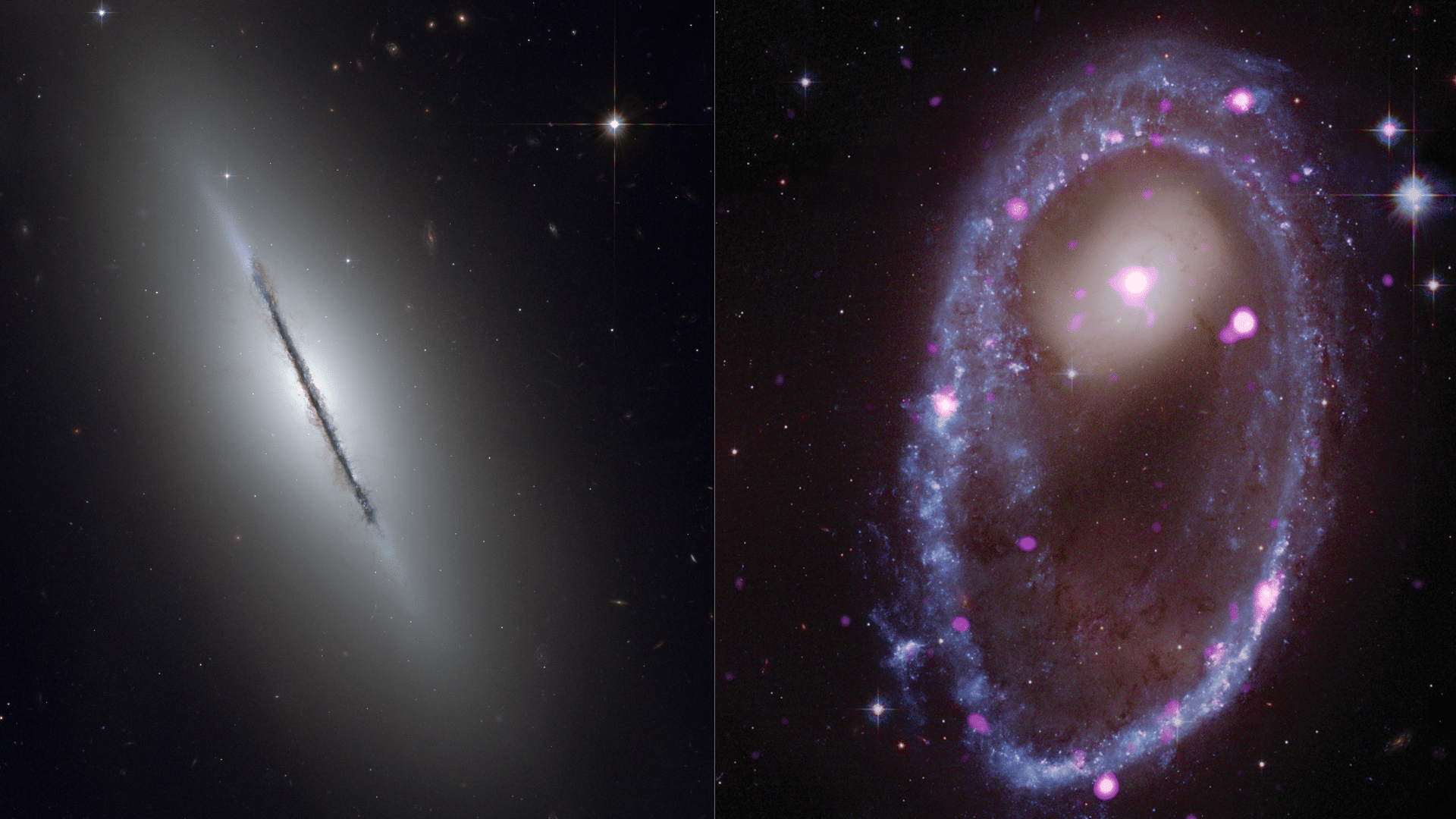
While most galaxies fall into the main types, some have special shapes or mix features from more than one group. These types are rare, but they help scientists understand how galaxies form and change.
Lenticular Galaxies (S0)
Lenticular galaxies are a mix of spiral and elliptical shapes. They have a large central bulge and a flat disk, but they do not have spiral arms.
- Shape: Like a flat oval
- Stars: Mostly older stars
- Gas and Dust: Very little
- Star Formation: Almost none
In the Hubble system, these are called S0 galaxies. They often appear in galaxy clusters and may be older spiral galaxies that lost their gas.
Ring Galaxies
Some galaxies form a ring of stars around their center. These are called ring galaxies. They may form when one galaxy passes through another, causing gas and stars to move outward into a ring shape.
Ring galaxies are rare but can be very bright and beautiful. The ring often contains young, hot stars, which makes it glow.
Galaxy Types at a Glance
| Galaxy Type | Shape | Star Age | Star Formation | Gas & Dust |
|---|---|---|---|---|
| Spiral | Disk with arms | Young and old | Active | A lot |
| Elliptical | Oval or round | Mostly old | Low or none | Very little |
| Irregular | No set shape | Mix of stars | Active | A lot |
| Lenticular (S0) | Disc, no arms | Older | Very low | Very little |
| Dwarf | Varies | Varies | Varies | Varies |
How Do Galaxies Change Over Time?
Galaxies do not stay the same forever. Over time, they can change in many ways. They might collide with other galaxies or grow by pulling in smaller ones.
As galaxies age, they may stop making new stars. Their shapes can also change because of gravity or outside forces.
For example, two spiral galaxies might crash into each other and turn into a large elliptical galaxy.
These changes help scientists understand how the universe grows and evolves.
Where are These Galaxies Found?
Galaxies are spread across the universe, but they are not alone. Many are part of larger groups:
- Groups: small collections of galaxies (like the Local Group, where the Milky Way is)
- Clusters: large collections with hundreds or thousands of galaxies
- Superclusters: huge regions made of many clusters
In dense clusters, elliptical galaxies are common. In less crowded areas, spiral galaxies are more common.
Fun Facts About Galaxies
- The Milky Way is just one galaxy. It’s part of a group with over 50 galaxies.
- The Andromeda Galaxy is the closest spiral galaxy to us and will collide with the Milky Way in about 4 billion years.
- Some galaxies are so far away that their light takes billions of years to reach us.
- Galaxies can spin at speeds of hundreds of kilometers per second.
- Scientists believe galaxies are held together by something called dark matter, which we can’t see but know is there because of its effects.
To Conclude
Galaxies remind us how much there is to learn about space. Even with powerful tools, scientists are still finding new ones and asking new questions.
Some galaxies are close enough to study in detail, while others are so far that their light takes billions of years to reach us. This shows how big and old the universe really is.
If you’re curious about what lies beyond our world, check out our next guide on stars and space science topics!