
Twilight is the brief period between day and night when the sky shifts in color and light. It does not happen all at once. Instead, it progresses through distinct stages that scientists define with precision.
These stages are based on the sun’s position below the horizon and the amount of light that still reaches the atmosphere.
Many people notice the changing sky at sunset or before sunrise, but few understand how it is classified. Twilight is more than a visual effect. It plays a role in navigation, astronomy, photography, and daily routines.
To understand it fully, it helps to look at how experts divide and define its different types.
Why Twilight Happens?
Twilight occurs because Earth has an atmosphere. When the sun dips below the horizon, its light does not instantly disappear. Instead, sunlight continues to scatter through air molecules, dust, and water vapor.
This scattering bends and spreads light across the sky, creating the soft glow seen after sunset and before sunrise.
If Earth had no atmosphere, daylight would end abruptly the moment the sun crossed the horizon. There would be no gradual fade, and night would begin almost instantly.
The presence of gases and particles in the atmosphere allows sunlight to linger, creating the gradual transitions that define the types of twilight.
The changing color of the sky during twilight is also caused by scattering. Shorter blue wavelengths scatter more easily, while longer red and orange wavelengths travel farther.
As the sun lowers, more of the blue light is scattered out of direct sight, leaving warmer tones visible near the horizon.
The Scientific Definition of Twilight
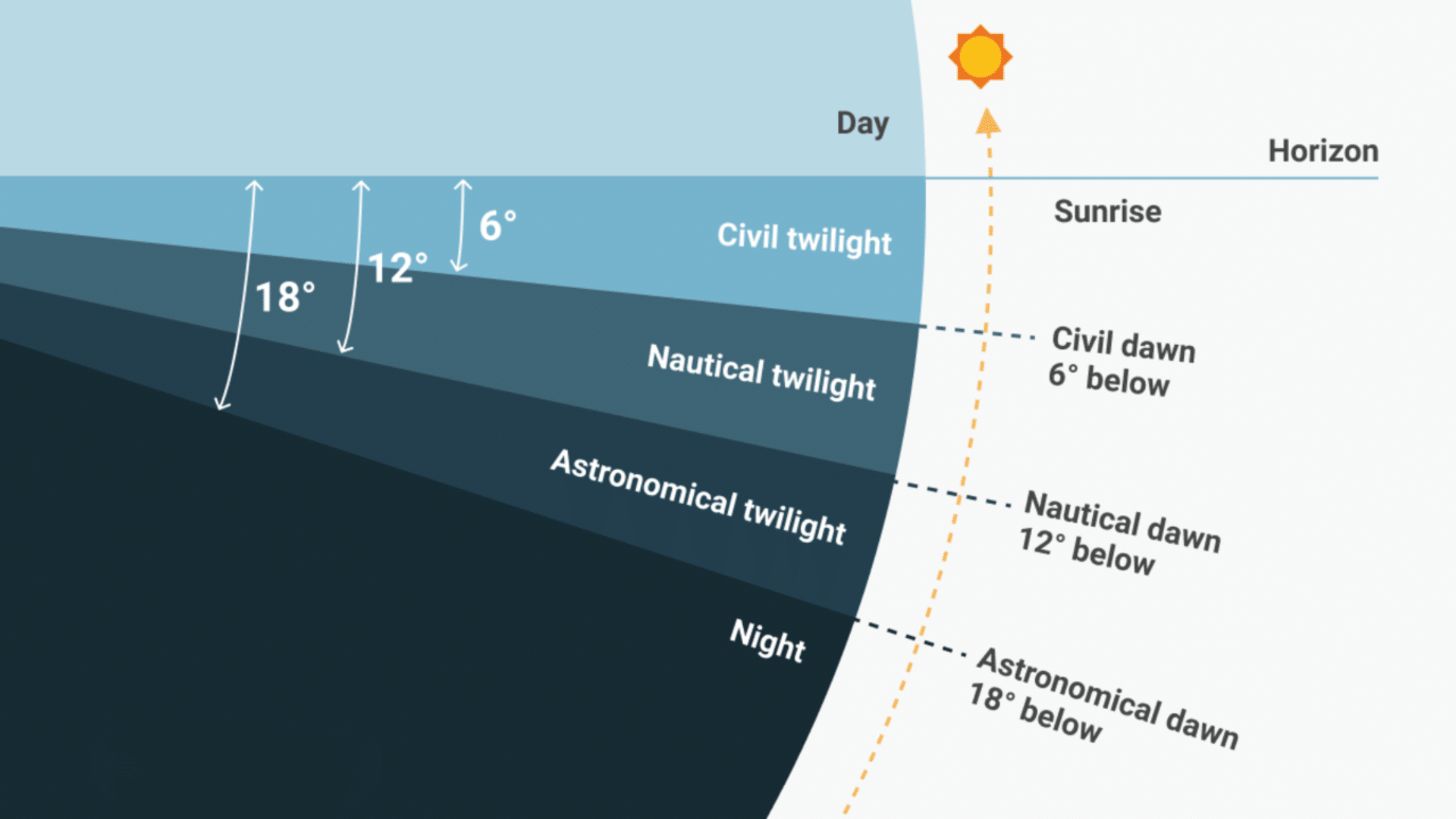
Image Source: Time and Date
Astronomers define twilight using the sun’s angle below the horizon. The horizon marks zero degrees. Once the sun drops below that line, twilight begins. The three types of twilight are measured by how many degrees the sun is below the horizon:
- Civil twilight: 0 to 6 degrees
- Nautical twilight: 6 to 12 degrees
- Astronomical twilight: 12 to 18 degrees
After the sun moves more than 18 degrees below the horizon, true night begins from an astronomical standpoint. At that point, sunlight no longer brightens the sky.
This system provides a precise and consistent way to classify the types of twilight across the world.
The Three Main Types of Twilight
Twilight is divided into three clearly defined stages based on how far the sun has moved below the horizon. Each phase serves a different purpose in science, navigation, and daily life.
1. Civil Twilight

Civil twilight is the first stage after sunset and the last stage before sunrise. It occurs when the sun is between 0 and 6 degrees below the horizon.
During this time, there is still enough natural light for most outdoor activities without the need for artificial lighting.
The sky remains relatively bright, and the horizon is clearly visible. Large objects, buildings, and landscape features can still be identified with little difficulty.
Although the sun is no longer visible, its light continues to scatter through the atmosphere, keeping the surroundings illuminated.
How the Sky Looks During Civil Twilight
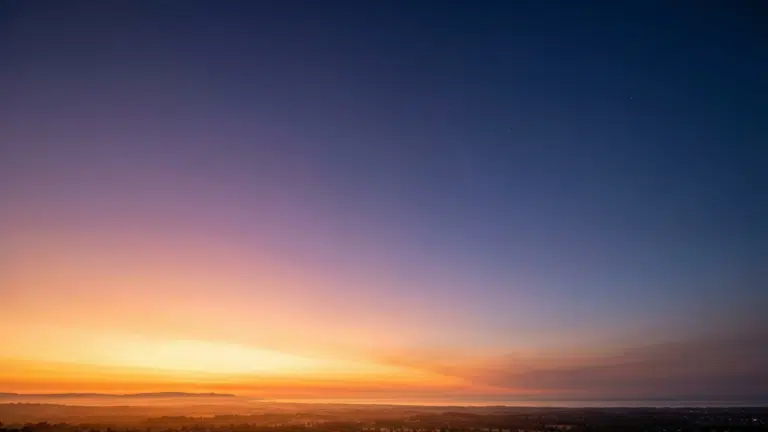
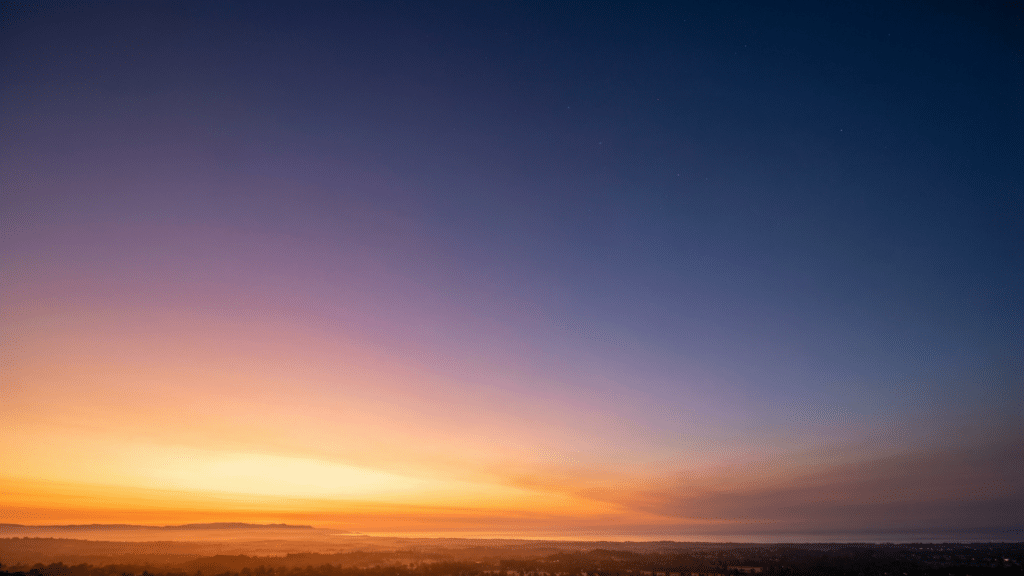
During civil twilight, the sky often shows warm colors near the horizon. Shades of orange, pink, and gold blend into deeper blue overhead as the sun sinks farther below the view. The brightness fades steadily, but visibility remains strong.
Clouds can reflect vivid colors during this stage because sunlight still reaches them at low angles. This is why sunsets and sunrises are often most striking during civil twilight.
The contrast between warm tones near the horizon and cooler blues higher in the sky creates a layered appearance.
Practical Uses of Civil Twilight
- Legal timekeeping: Many countries use civil twilight to define official sunrise and sunset for legal and regulatory purposes.
- Transportation safety: Road traffic, aviation, and maritime operations benefit from the remaining natural light.
- Outdoor work: Construction, farming, and maintenance crews often use this time to extend work hours.
- Recreation: Jogging, hiking, and other outdoor sports often occur during civil twilight because of good visibility.
- Photography: Softer light reduces glare and harsh shadows, creating balanced exposure and richer textures.
2. Nautical Twilight
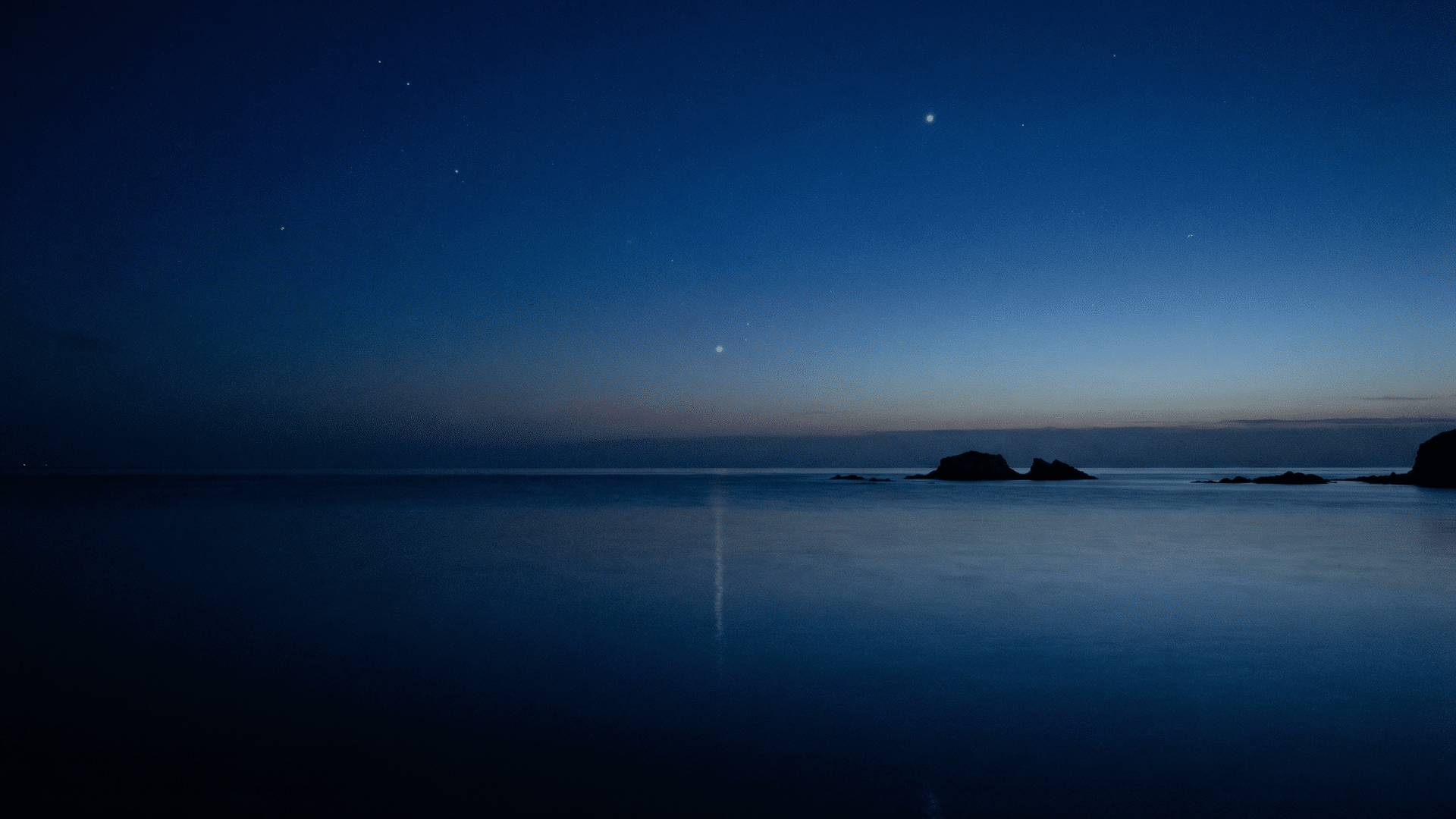
Nautical twilight occurs when the sun is between 6 and 12 degrees below the horizon. During this stage, the sky becomes noticeably darker, though some natural light remains.
The term “nautical” comes from its historical connection to sea navigation. Sailors relied on this period because they could see both the horizon and the brighter stars at the same time.
This combination allowed them to measure star positions accurately while still maintaining a clear reference line.
How the Sky Changes in Nautical Twilight
As nautical twilight begins, the warm colors of sunset fade. The sky deepens into richer shades of blue, and cloud reflections become less vivid. The horizon remains visible, but fine details grow harder to distinguish.
Brighter stars and planets start to stand out against the darkening sky. Constellations gradually become recognizable, although the sky is not yet completely dark.
The shift from day to night becomes more noticeable at this stage, as artificial lighting begins to dominate urban areas.
Key Reasons it Matters:
- Celestial navigation: Sailors could see the horizon and bright stars at the same time, allowing accurate measurements with a sextant.
- Position calculation: Star angles taken during this stage helped determine latitude and longitude at sea.
- Maritime safety: The visible horizon improved orientation during evening and early morning travel.
- Astronomy preparation: It signals the transition toward darker skies for serious sky observation.
- Planet visibility: Bright planets and major constellations become clearly visible.
3. Astronomical Twilight
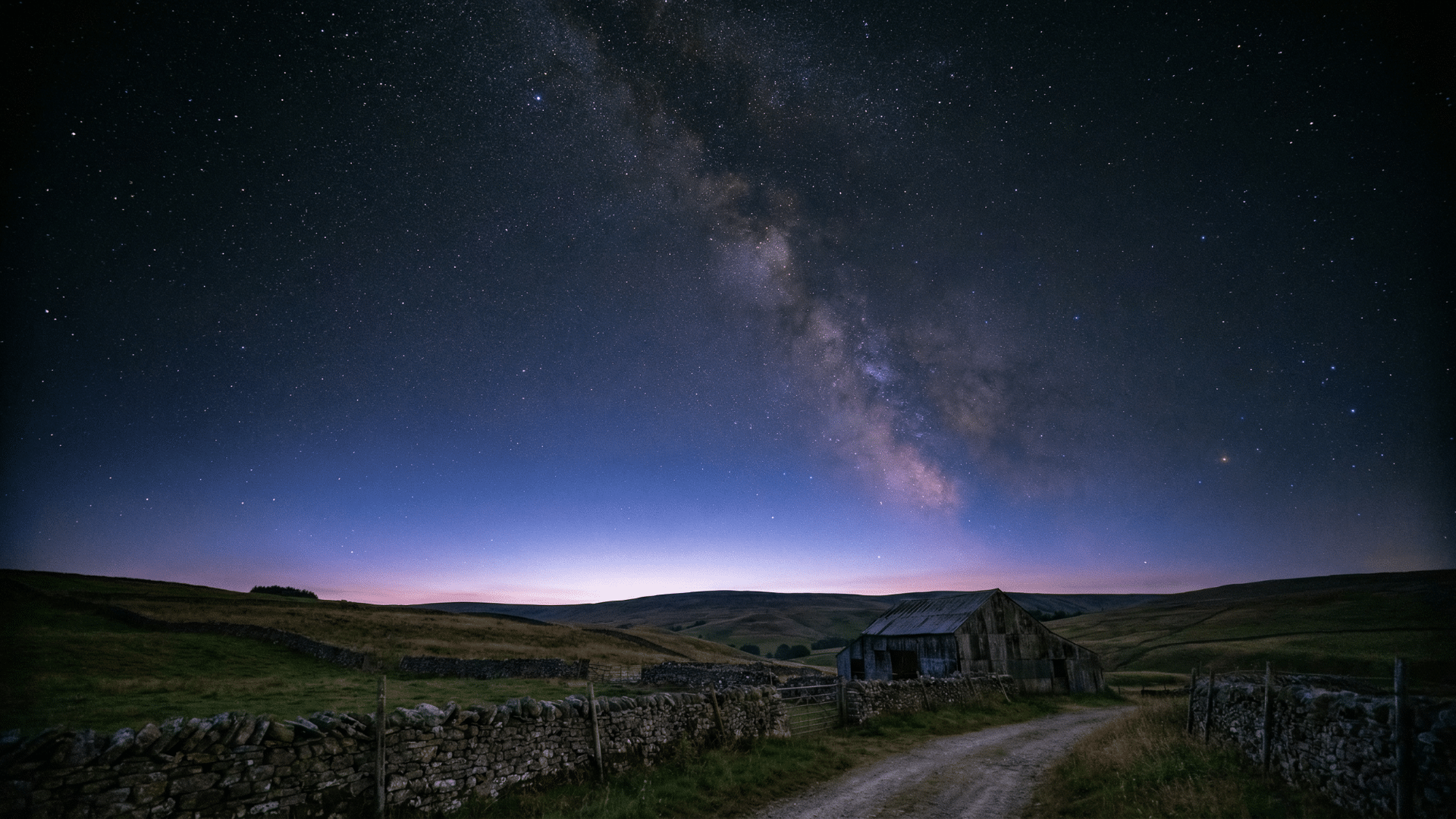
Astronomical twilight occurs when the sun is between 12 and 18 degrees below the horizon. This is the final stage of twilight before true night begins.
At this point, only a small amount of scattered sunlight remains in the upper atmosphere. To the human eye, the sky appears almost completely dark, especially in areas free from light pollution.
However, sensitive instruments can still detect faint background light until the sun is 18 degrees below the horizon.
Sky Conditions During Astronomical Twilight
During astronomical twilight, the horizon may still show a faint residual glow, but most of the sky appears dark.
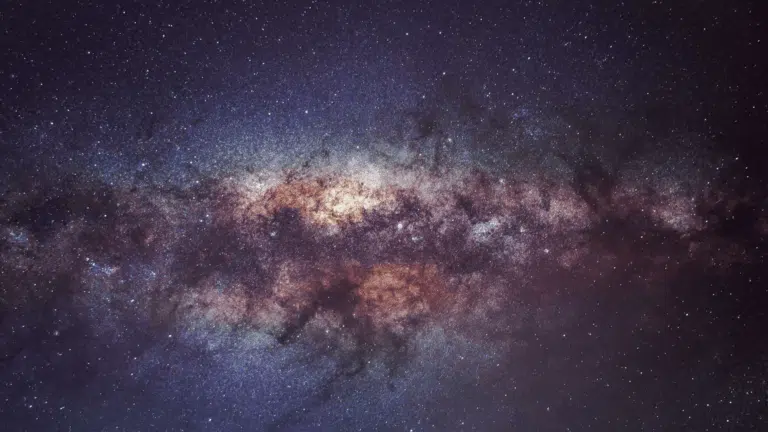
In rural or remote areas, the Milky Way becomes visible, and many more stars can be seen than during earlier stages of twilight.
Deep-sky objects such as galaxies, nebulae, and star clusters become easier to observe as the sun moves farther below the horizon.
The Importance for Astronomers
- True night definition: Night is considered fully established once the sun moves more than 18 degrees below the horizon.
- Deep-sky imaging: Observing distant galaxies, nebulae, and faint star clusters requires complete darkness.
- Reduced light interference: Even minimal scattered sunlight can affect telescope sensitivity and image clarity.
- Accurate data collection: Scientific measurements depend on stable, low-light conditions.
- Observatory scheduling: Research facilities plan observations carefully based on the type of twilight to maximize accuracy.
Twilight Before Sunrise vs After Sunset
The types of twilight occur both in the evening and in the morning. Evening twilight begins with civil twilight immediately after sunset. Morning twilight starts with astronomical twilight before sunrise.
Although the definitions are the same, the experience can feel different. Morning twilight often appears cooler in color, while evening twilight may display stronger warm tones due to atmospheric conditions.
The sequence, however, remains consistent:
- Evening: civil → nautical → astronomical
- Morning: astronomical → nautical → civil
How Long Does Twilight Last?
The length of twilight depends mainly on latitude, season, and the angle at which the sun moves below the horizon. In some regions, twilight passes quickly, while in others it can stretch for hours.
| Location / Condition | Typical Twilight Duration | Reason |
|---|---|---|
| Near the Equator | 20–30 minutes per stage | The sun moves almost straight up and down, crossing the horizon at a steep angle. |
| Mid-Latitudes (e.g., U.S., Europe) | 30–45 minutes per stage | The sun follows a slightly angled path, making twilight moderately longer. |
| High Latitudes (near Arctic/Antarctic Circles) | 1 hour or more per stage | The sun moves at a shallow angle, taking longer to reach deeper twilight stages. |
| Summer in Polar Regions | Several hours or continuous twilight | The sun may not drop 18° below the horizon, preventing full darkness. |
| Winter in High Latitudes | Shorter twilight periods | The sun’s path is steeper, causing faster transitions between stages. |
| During Equinox (Worldwide) | Balanced duration | The sun crosses the horizon at a more uniform angle across regions. |
In general, the closer a location is to the poles, the longer the types of twilight tend to last, especially during the summer months.
How to Observe the Different Types of Twilight?
Observing the types of twilight does not require special equipment, but it does require attention to timing and sky conditions. Watching the gradual change in light after sunset or before sunrise makes it easier to recognize each stage. The following steps can help guide a careful observation.
- Check the official sunset or sunrise time for your location using a reliable weather or astronomy app.
- Note when the sun drops below the horizon; this marks the beginning of evening civil twilight.
- Observe how bright the sky remains and how clearly you can see the horizon and nearby objects.
- Watch for the fading of warm colors and the deepening blue tone as civil twilight shifts into nautical twilight.
- Look for the first visible stars and planets, which signal the start of nautical twilight.
- Pay attention to when the horizon becomes harder to distinguish from the sky.
- Notice when the majority of stars become visible, and the sky appears nearly fully dark; this indicates astronomical twilight.
- If possible, observe from a location with minimal light pollution to see clearer transitions between the stages.
Final Thoughts
Twilight is a clear and measurable transition between day and night. It follows a defined pattern based on how far the sun moves below the horizon.
These stages are not just labels; they are based on careful scientific measurements. The types of twilight affect daily schedules, navigation, photography, and serious astronomical work.
They also show Earth’s rotation in action, happening right above us each day. When understood properly, twilight becomes more than a simple fading of light.
Take time to watch the next sunset or sunrise and identify each stage for yourself.