
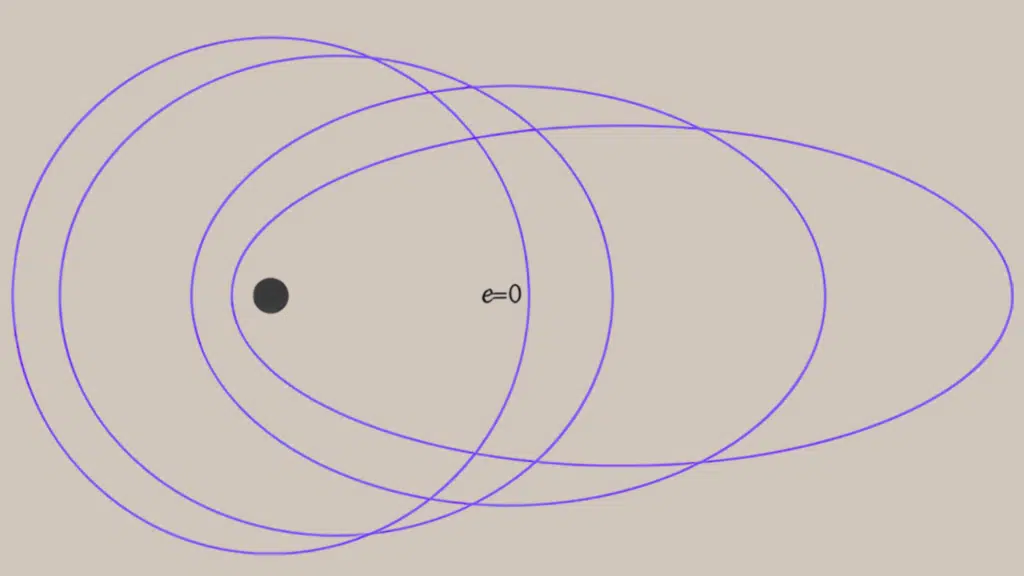
Most people think space is just a bunch of planets going in perfect circles. But that’s not quite right.
The truth is, planets don’t move in neat, round paths. Their orbits are stretched, uneven, and sometimes wildly off-center. And that changes everything from how long seasons last to how close a planet gets to the Sun.
So what actually controls the shape of a planet’s orbit? That’s where orbital eccentricity comes in.
It’s a concept that sounds complex but makes a lot of sense once it’s broken down. This post covers what orbital eccentricity means, the formula behind it, and some real examples that put it all into perspective.
What is Orbital Eccentricity?
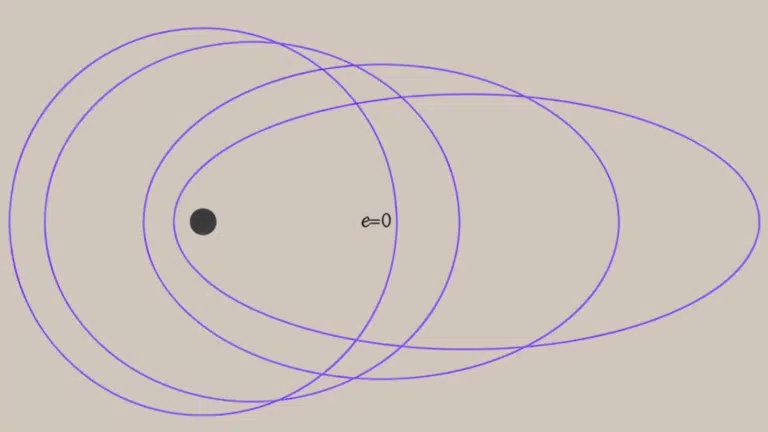
Orbital eccentricity is a number that describes the shape of an object’s orbit in space.
It shows how much an orbit deviates from a perfect circle. Every planet, moon, and comet has its own eccentricity value.
That value always falls between 0 and 1 for closed orbits. A value of 0 means a perfect circle.
The closer the value gets to 1, the more stretched the orbit becomes. It’s one of the key numbers astronomers use to study how objects move through space.
What Does Orbital Eccentricity Measure?
Orbital eccentricity measures how much an orbit differs from a perfect circle. Think of it like this: a circle is the most “balanced” shape an orbit can take.
But most orbits in space aren’t perfectly round. They’re slightly squashed or stretched into an oval shape, called an ellipse.
Eccentricity quantifies that stretch. The higher the number, the more elongated the orbit.
The lower the number, the closer it is to circular. It gives scientists a clear, simple way to compare orbits across different planets, moons, and other celestial bodies without any guesswork.
Orbital Eccentricity Formula With Explanation
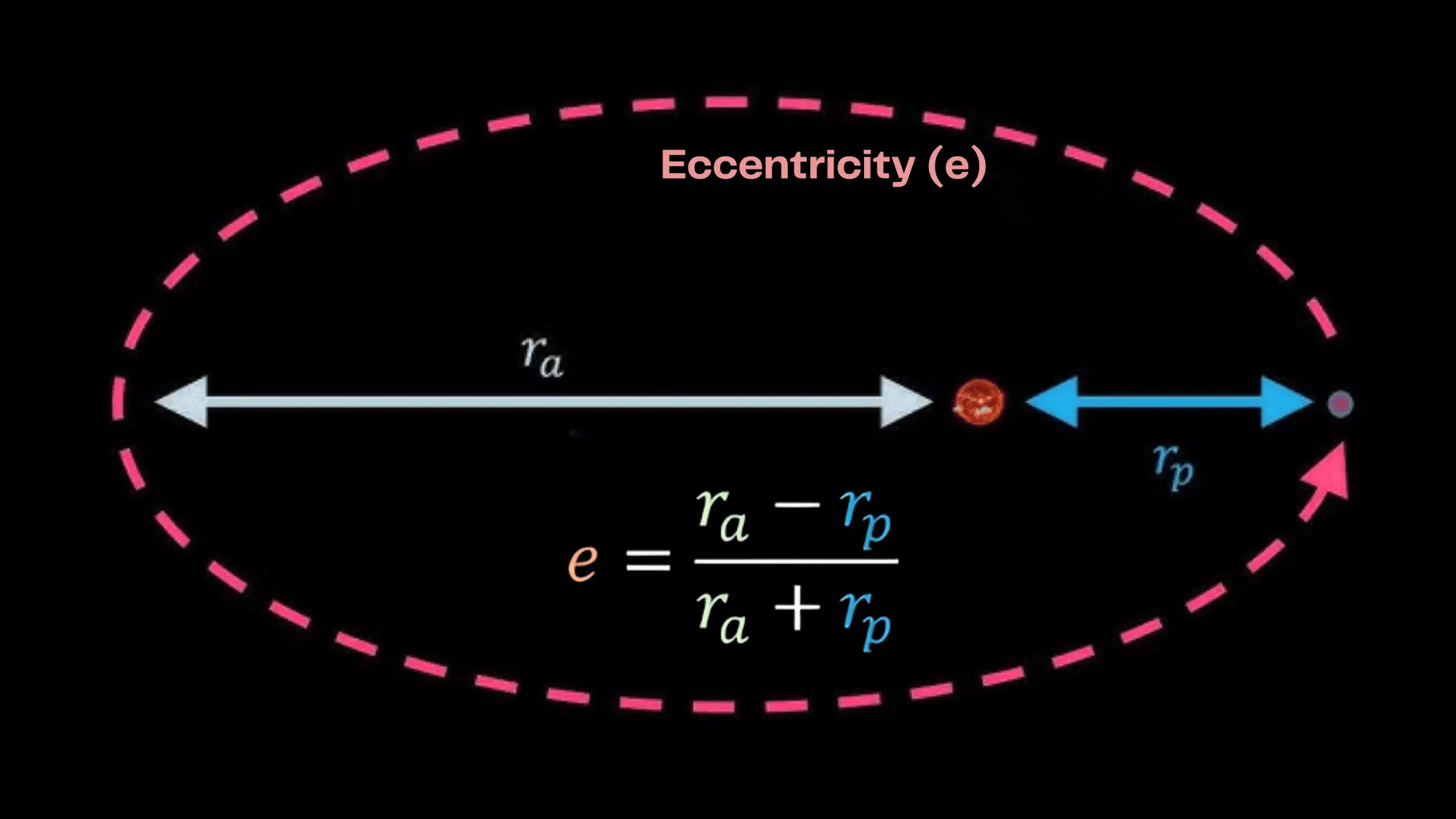
The orbital eccentricity formula uses two key distance values: the closest point of an orbit to the central body, called periapsis (rp), and the farthest point, called apoapsis (ra).
The formula looks like this:
e = (ra − rp) / (ra + rp)
When both distances are equal, the result is 0; a perfect circle. As the gap between the two distances grows, the value of e moves closer to 1, meaning a more stretched orbit.
This formula comes straight from the geometry of ellipses. The semi-major axis (a) ties it all together, where
rp = a(1−e) and ra = a(1+e).
It’s a clean, straightforward way to measure exactly how oval-shaped any orbit really is.
Types of Orbits Based on Orbital Eccentricity
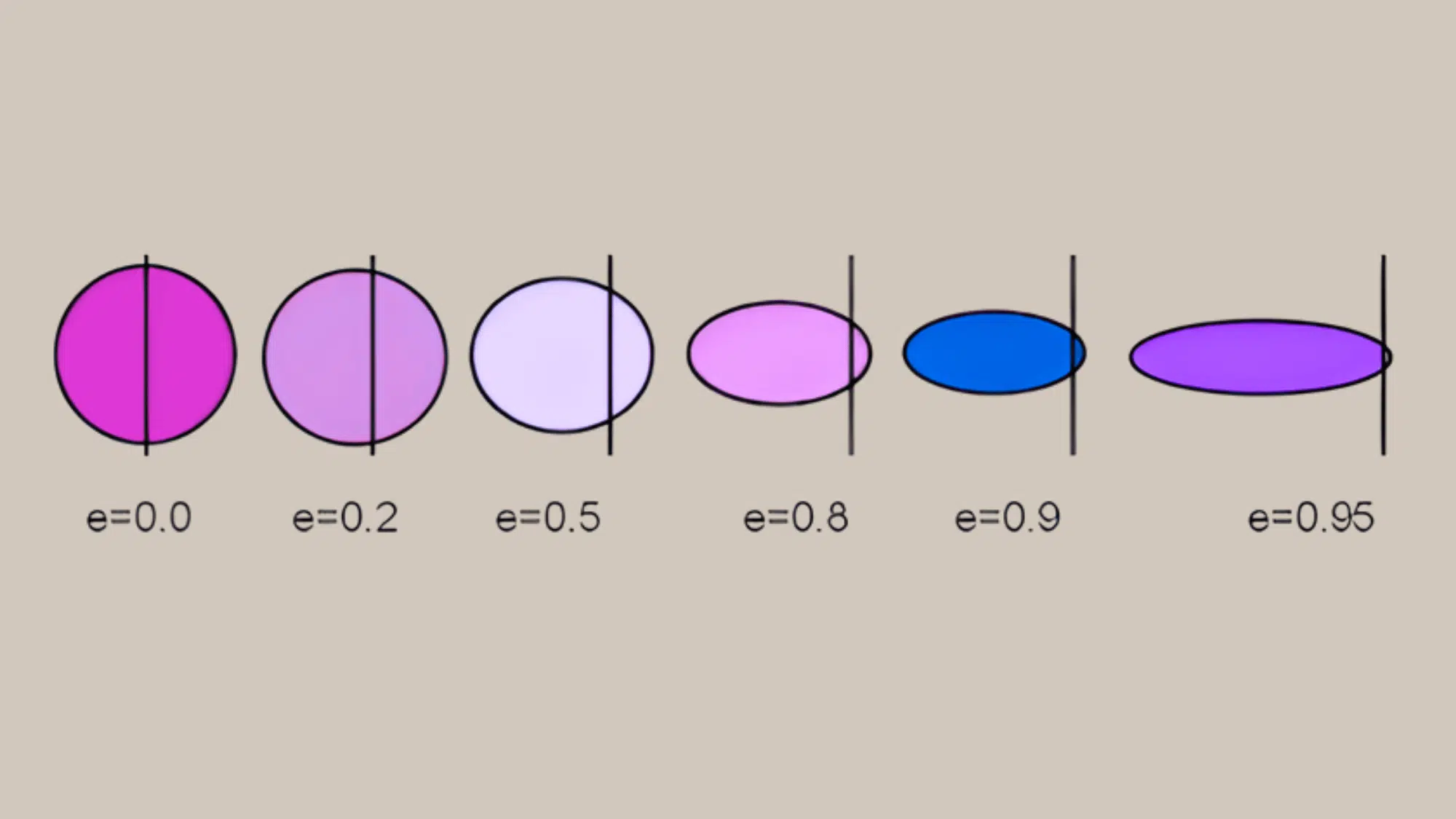
Orbital eccentricity places every orbit into one of four categories. Each type has distinct characteristics that shape how objects move through space.
Circular Orbit (e = 0)
A circular orbit happens when an object moves around another at a perfectly constant distance.
The eccentricity value is exactly 0. This means the orbit has no stretch at all. In reality, truly circular orbits are extremely rare in nature.
Most objects have at least a slight oval shape to their path, even if it looks circular at first glance.
Elliptical Orbit (0
An elliptical orbit is the most common type found in space. The object moves in an oval-shaped path around the central body.
Earth’s orbit around the Sun is a good example, with an eccentricity of about 0.017. The closer the value is to 1, the more stretched and elongated the ellipse becomes.
Parabolic Orbit (e = 1)
A parabolic orbit sits right at the boundary between bound and unbound motion.
An object in this type of orbit has just enough speed to escape the gravitational pull of the central body. It will never return once it leaves.
Some comets passing through the solar system follow paths that are close to parabolic.
Hyperbolic Orbit (e > 1)
A hyperbolic orbit means the object moves faster than the escape velocity of the central body. It follows a curved but open path and never comes back. The eccentricity value exceeds 1 in this case.
The interstellar object Oumuamua is a well-known example, passing through the solar system on a hyperbolic trajectory before heading back into deep space
Examples of Orbital Eccentricity in Our Solar System
Orbital eccentricity shows up differently across the solar system. Here are some real examples that put the numbers into perspective.
- Mercury has the highest eccentricity among planets at 0.2056, giving it a noticeably stretched orbit around the Sun.
- Earth’s orbit is nearly circular with an eccentricity of 0.0167, which helps maintain relatively stable seasonal patterns.
- Mars has an eccentricity of 0.0934, causing noticeable changes in its distance from the Sun throughout the year.
- Pluto has a highly elongated orbit with an eccentricity of 0.2488, sometimes bringing it closer to the Sun than Neptune.
- Halley’s Comet has an eccentricity of 0.9671, giving it one of the most stretched orbits seen in the solar system.
Orbital Eccentricity vs Other Orbital Elements
Orbital eccentricity is just one piece of the puzzle. Several other orbital elements work alongside it to describe motion in space.
| Orbital Element | What It Measures | Role in Orbit Description |
|---|---|---|
| Eccentricity (e) | Shape of the orbit | Tells how circular or elongated the orbit is |
| Semi-Major Axis (a) | Size of the orbit | Defines the average distance from the central body |
| Inclination (i) | Tilt of the orbit | Measures the angle of the orbit relative to a reference plane |
| Longitude of Ascending Node | Orientation in space | Shows where the orbit crosses the reference plane going upward |
| Argument of Periapsis | Direction of the orbit | Points toward the closest approach to the central body |
| True Anomaly | Position in the orbit | Tracks where the object is at any given point in time |
Why is Orbital Eccentricity Important in Astronomy?
Orbital eccentricity plays a big role in how astronomers study and understand space. It helps explain why some planets experience extreme temperature changes while others stay relatively stable.
It also helps scientists predict the long-term behavior of planets, moons, and comets over time.
Beyond that, eccentricity is a key factor in studying exoplanets; planets outside the solar system. Knowing the shape of an exoplanet’s orbit helps researchers figure out whether liquid water could exist on its surface.
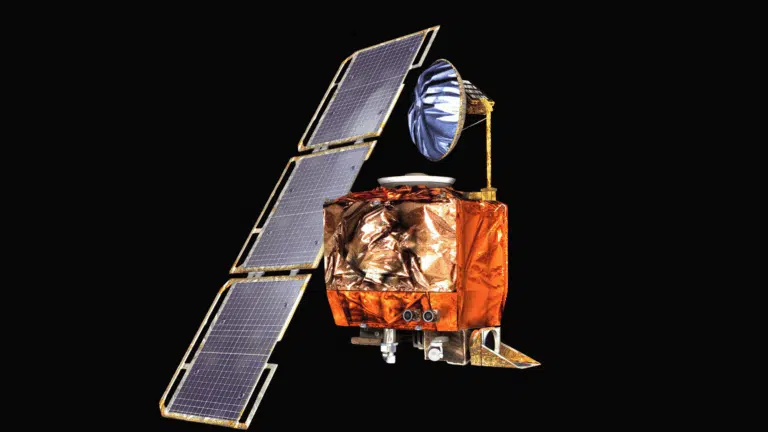
It also helps space agencies plan satellite paths and spacecraft missions with greater accuracy, making it a genuinely useful measurement in real-world astronomy.
Conclusion
Orbital eccentricity is more than just a number. It shapes how planets move, how seasons shift, and how comets cut through the solar system on their long paths.
Understanding it helps make sense of why space behaves the way it does.
From nearly circular orbits like Earth’s to the wild stretch of Halley’s Comet, eccentricity tells a bigger story about motion and gravity.
For those curious about diving deeper into space science, checking out related topics like Kepler’s Laws or orbital mechanics is a great next step worth taking.