
Humans have always looked up at the stars and wondered. The night sky holds countless mysteries. But one question keeps popping up in curious minds everywhere.
What lies beyond everything we know? The universe seems impossibly vast. Galaxies stretch across billions of light-years. Yet something feels incomplete about calling it “everything.”
If the universe has boundaries, what’s on the other side? And if it doesn’t have edges, how can that even make sense?
This isn’t just philosophical rambling. Scientists have been wrestling with this mind-bending puzzle for decades. The answers might surprise you or leave you with even more questions than before.
What Does “Outside the Universe” Actually Mean?
The phrase “outside the universe” sounds simple, but it is really tricky. It doesn’t mean there’s a giant wall marking the end of space.
Instead, it refers to what lies beyond our ability to see or measure. Scientists define boundaries based on observation limits, not physical edges.
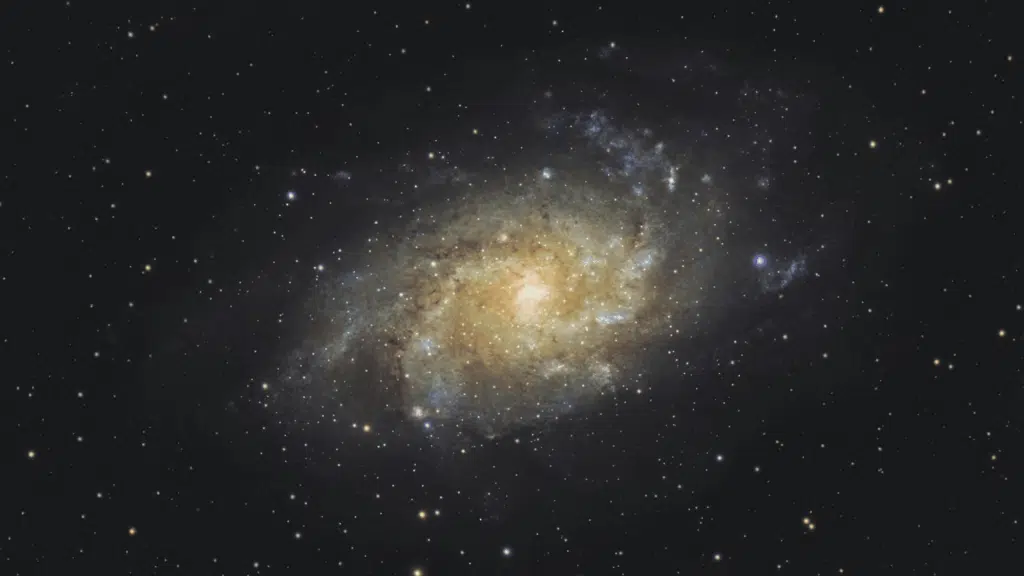
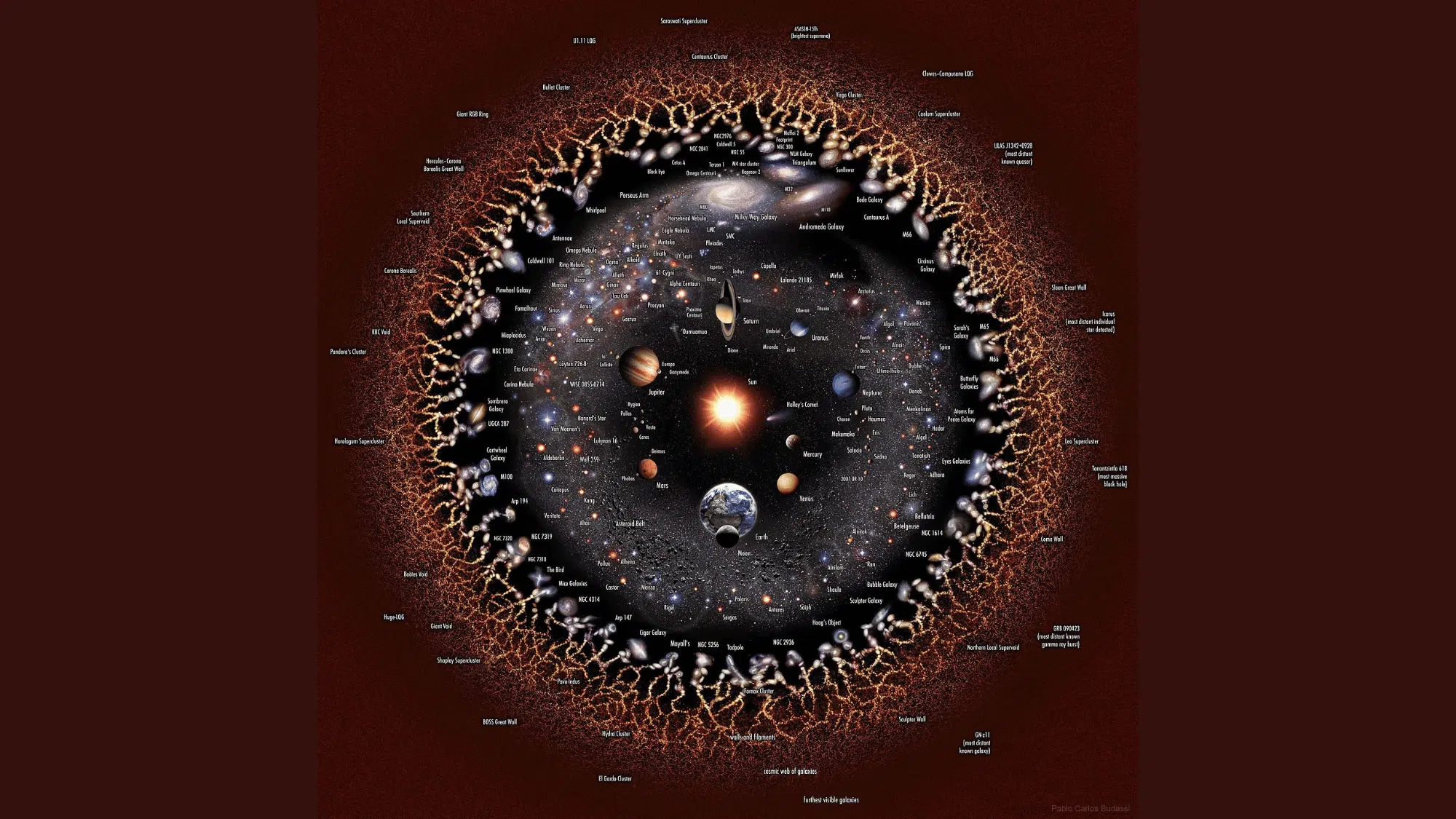
The observable universe has a horizon, a cosmic cutoff point where light hasn’t reached us yet. Beyond that? More universe probably exists, but it’s hidden from view.
Some theories even suggest separate realms or dimensions. But if we can’t observe it, calling it “outside” might not make sense at all. The concept challenges our everyday understanding of space itself.
Is There an Edge to the Universe?
Most people imagine the universe like a giant bubble with walls at the edges.
But cosmology tells a different story. Current evidence suggests the universe has no border; no place where space suddenly stops.
If you traveled far enough in one direction, you wouldn’t hit a barrier. Depending on the universe’s shape, you might keep going forever through infinite space, or loop back to your starting point like walking around a sphere.
The expansion of space itself complicates things further. There’s no edge to bump into, which makes the whole concept beautifully strange.
What is Beyond the Universe According to Cosmology?
Cosmology doesn’t offer hard answers, but it presents bold theories about what might exist beyond our observable reach.
1. The Multiverse Theory
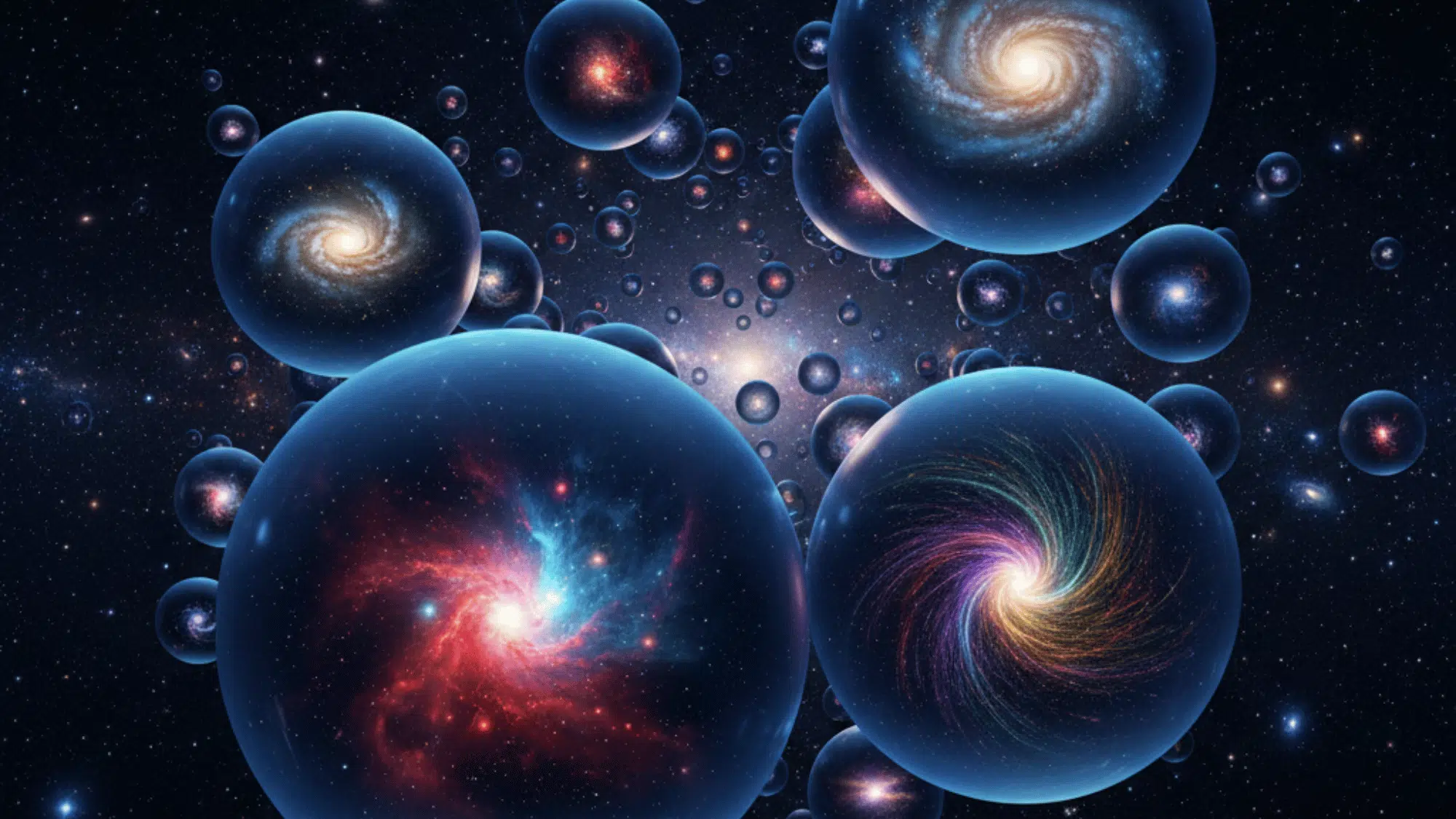
This idea suggests our universe isn’t alone. Eternal inflation proposes that rapid expansion after the Big Bang never fully stopped everywhere, creating countless “bubble” universes.
Each bubble becomes its own separate cosmos with potentially different physical laws.
String theory adds another layer, predicting 10^500 possible configurations of universes across a vast “landscape.”
While cosmic microwave background data hints at possible bubble collisions, no concrete proof exists yet. Critics argue the multiverse can’t be tested, pushing it toward philosophy rather than science.
2. Higher Dimensions
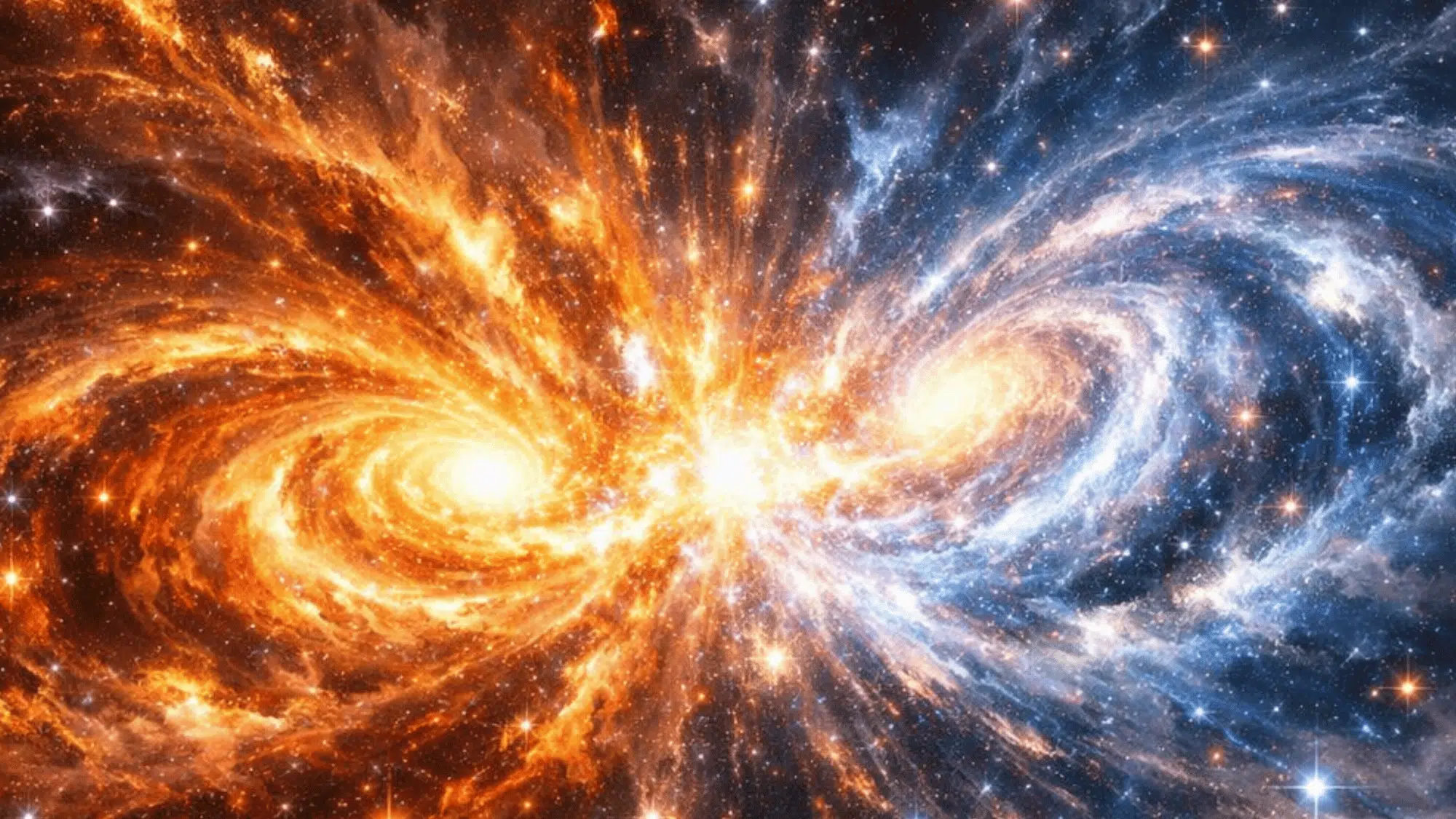
String theory requires 10 or 11 dimensions, though we only experience four.
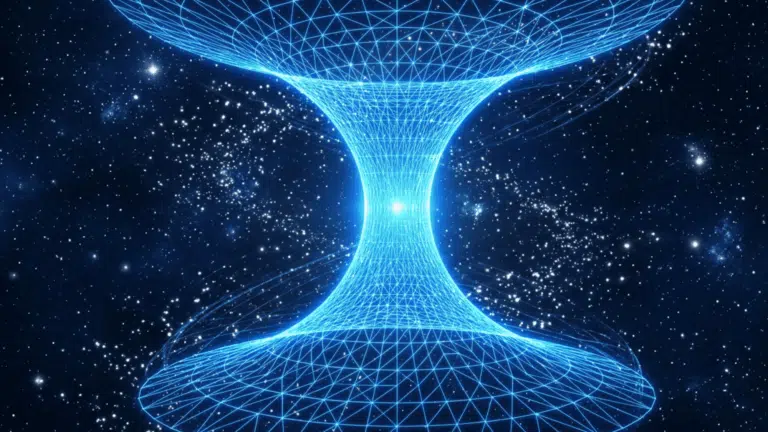
The extra dimensions are compactified; curled up so small they’re invisible. In this framework, our universe exists as a three-dimensional “brane” floating in higher-dimensional “bulk” space.
Gravity might leak across this bulk, explaining why it’s weaker than other forces. Some models suggest the Big Bang happened when branes collided in this higher realm.
These dimensions aren’t “outside” in a spatial sense but represent hidden layers of reality we can’t directly access.
3. The Big Bang and Pre-Big Bang Models
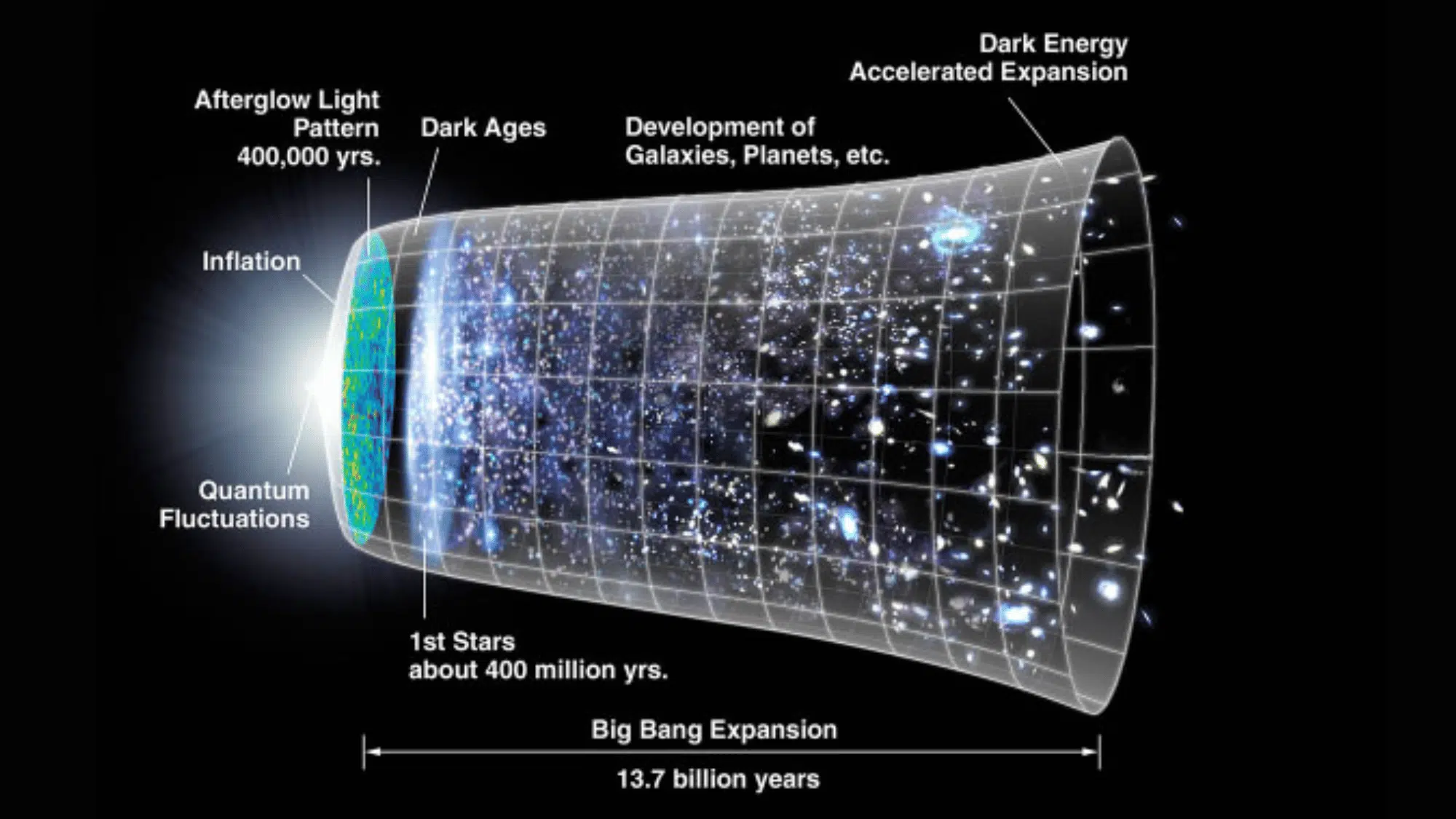
The Big Bang describes our universe expanding from a hot, dense state 13.8 billion years ago, but it doesn’t explain what came before or if “before” even makes sense.
Quantum gravity theories suggest time itself emerged at that moment, making “before” meaningless.
Cyclic universe models propose endless cycles of expansion and contraction, with the Big Bang as just one bounce in an eternal loop.
Loop quantum gravity predicts that quantum effects prevent a true singularity, creating a “Big Bounce” instead of an absolute beginning.
4. The Concept of Nothingness
In physics, “nothing” isn’t empty. Quantum mechanics reveals that even a vacuum buzzes with energy due to the uncertainty principle.
Virtual particles constantly pop into and out of existence. This vacuum energy might drive cosmic expansion as dark energy.
During eternal inflation, quantum fluctuations in this “nothing” can spawn new bubble universes.
So the void beyond our universe isn’t a blank slate; it’s a dynamic quantum foam. True nothingness, lacking even physical laws or fields, may be impossible or meaningless.
Can the Universe Exist Inside Something Else?
The idea sounds like science fiction, but some cosmologists take it seriously. Our universe might be just one bubble floating inside a much larger structure, a kind of cosmic container we can’t see or measure.
Eternal inflation theories suggest our cosmos formed as a pocket within endlessly expanding “meta-space.”
Other bubbles could exist nearby, separated by expansion moving faster than light. String theory’s brane cosmology goes further, proposing our three-dimensional universe sits on a membrane floating through higher-dimensional bulk space, alongside other membrane universes.
The catch? We can’t observe beyond our cosmic horizon, about 93 billion light-years across.
Some scientists search for hints in cosmic microwave background anomalies, but evidence remains elusive. Critics argue this veers into untestable philosophy rather than science.
Limitations in Answering What is Beyond the Universe
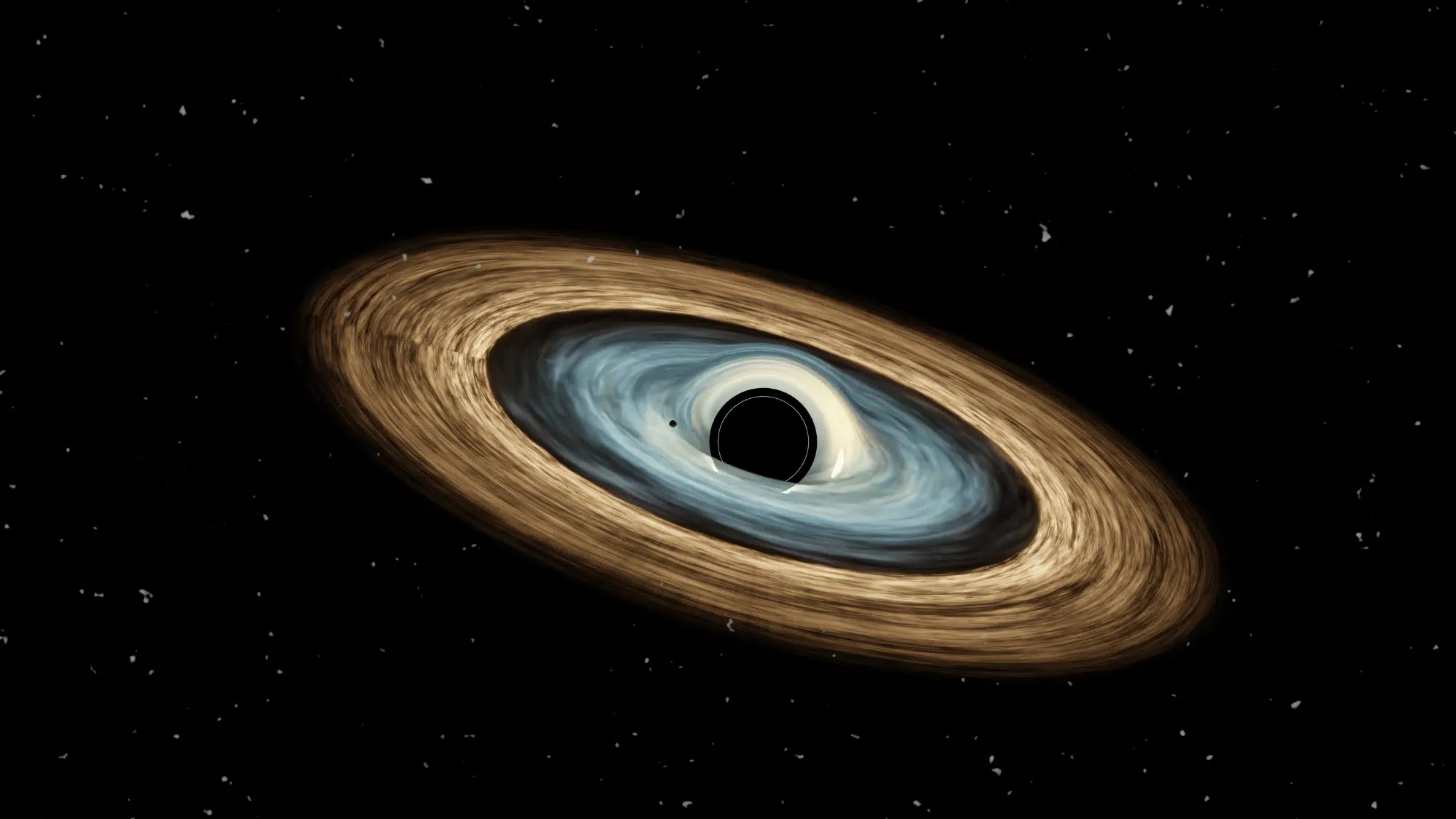
Science hits hard walls when exploring what lies beyond: observational, theoretical, and philosophical barriers block definitive answers about the cosmos.
- Light speed caps how far back in time we can observe, hiding the universe’s earliest moments.
- Mathematical models offer multiple valid solutions with no way to choose between them experimentally.
- Instruments can only measure within our causal patch, leaving external regions forever inaccessible.
- Energy scales needed to test quantum gravity or extra dimensions far exceed current technology.
- The universe’s fundamental nature, finite or infinite, remains undetermined from inside it.
- Human cognition struggles with concepts lacking spatial or temporal reference frames that we instinctively understand.
Will We Ever Know What is Outside the Universe?
Probably not in any complete way. Physics itself seems designed to keep certain secrets locked away forever.
Even as technology advances, fundamental laws prevent us from breaking through cosmic barriers. Future telescopes might push our view slightly farther or reveal subtle patterns hinting at larger structures.
Gravitational wave observatories could detect ripples from the universe’s edge. But these tools only refine our understanding of boundaries; they can’t cross them.
The “outside” remains inherently unobservable, leaving us with educated guesses rather than confirmed facts. Some mysteries might be permanent.
Key Takeaways
The universe keeps its deepest secrets well hidden. Science has mapped billions of light-years, yet the question of what’s “outside” remains tantalizingly out of reach. Maybe that’s okay.
These unanswered questions push researchers to build better instruments and craft bolder theories.
Each discovery reveals how much we still don’t understand. The cosmic horizon isn’t just a limit; it’s an invitation to keep wondering.
So next time you look up at the night sky, remember: the mystery itself drives human curiosity forward. Some answers might stay forever beyond our grasp, and that makes the search worthwhile.