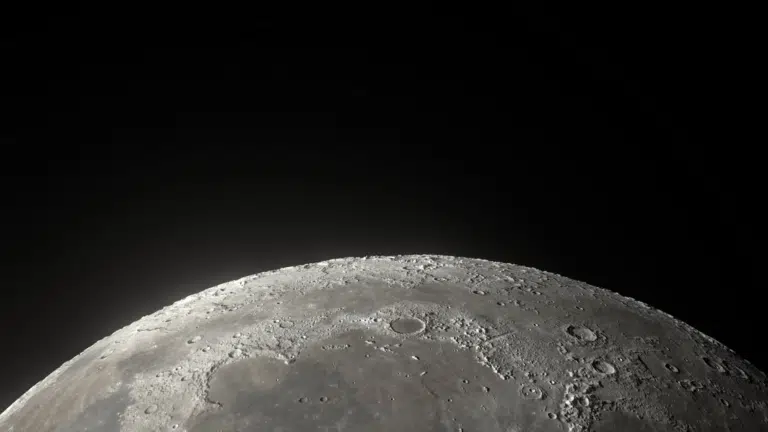

The Moon has been a part of human stories for a long time, and it still brings a sense of wonder.
People look at it and think about space, science, and even jokes. A simple fact about the Moon can make learning feel fun, and one funny fact can make it even better.
This blog offers a light, easy look at the Moon that anyone can enjoy. The topic stays simple, but it still gives room for curiosity.
The goal is to make readers smile while learning something new. The Moon may seem serious, but it also has small details that can bring a laugh.
One Funny Fact About the Moon
Here is a funny fact that surprises many people:
Astronauts said the Moon dust smelled like burned gunpowder when they came back inside the lander.
They could not smell the Moon outside because there is no air on the Moon. But dust stuck to their suits.
When they went back inside the lander and took off their helmets, they noticed a smell like burned fireworks or metal sparks.
Why the Moon Has This Strange Smell
Moon dust is made of tiny, sharp grains. These grains form when meteors hit the Moon and break its rocks into powder.
When astronauts brought this dust into the lander, it reacted with oxygen. This reaction made the burned gunpowder smell.
The smell was short-lived but very noticeable. This small moment has become one of the most famous odd details about the Moon.
What is the Moon Made Of?
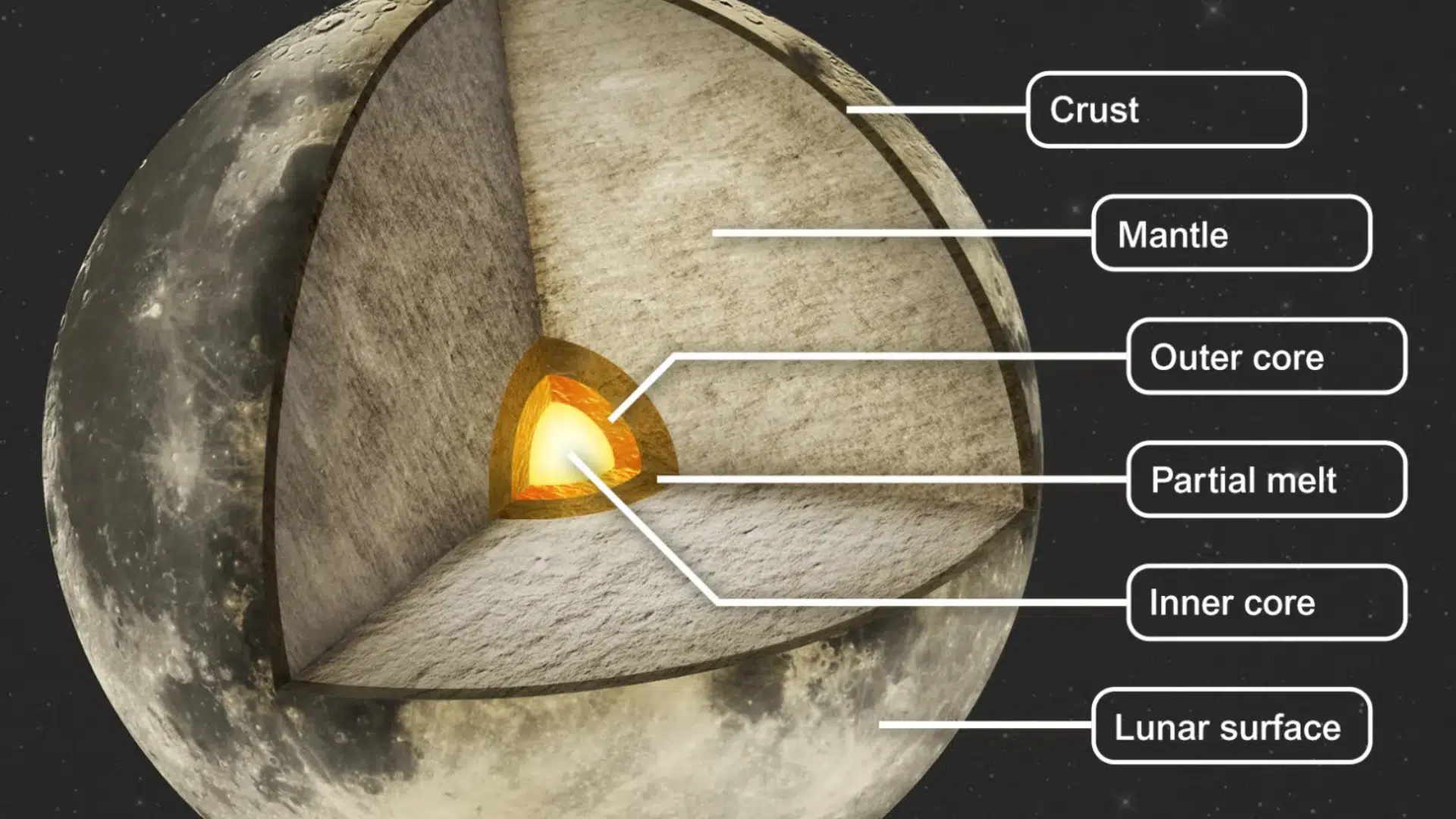
Image Source: Geology In
The Moon is made of several layers, from the surface all the way to the center. Each layer has different types of rock and metal. These layers formed when the Moon was young and very hot, and they cooled over time.
Lunar Surface
This is the top layer that we can see. It is covered with regolith, a dry dust and tiny rock particles. Under the dust are solid rock plains, craters, and mountains.
Crust
The crust is the Moon’s outer shell. It is made of hard, rocky material, mostly silicates. The crust is thicker on the far side of the Moon and thinner on the side facing Earth.
Mantle
Below the crust is the mantle. It is made of dense rock that formed when the Moon cooled. This rock is rich in magnesium and iron. The mantle is where ancient lava formed, which later cooled to form the dark maria on the surface.
Partial Melt Layer
Just under the mantle is a thin layer that is not fully solid. It is partly melted rock. This soft layer may help explain small moonquakes and slow movements within the Moon.
Outer Core
The outer core is made of liquid metal, mainly iron mixed with sulfur. It is much smaller than Earth’s core but still important because it affects the Moon’s inner heat.
Inner Core
The inner core is solid metal. It is made mainly of iron. It is small compared to Earth’s core, which is one reason the Moon has a very weak magnetic field.
What Does the Moon’s Surface Look Like?
The surface of the Moon has many features that show its long and active past. Each part of the surface helps tell the story of how the Moon formed and changed over billions of years.
Craters
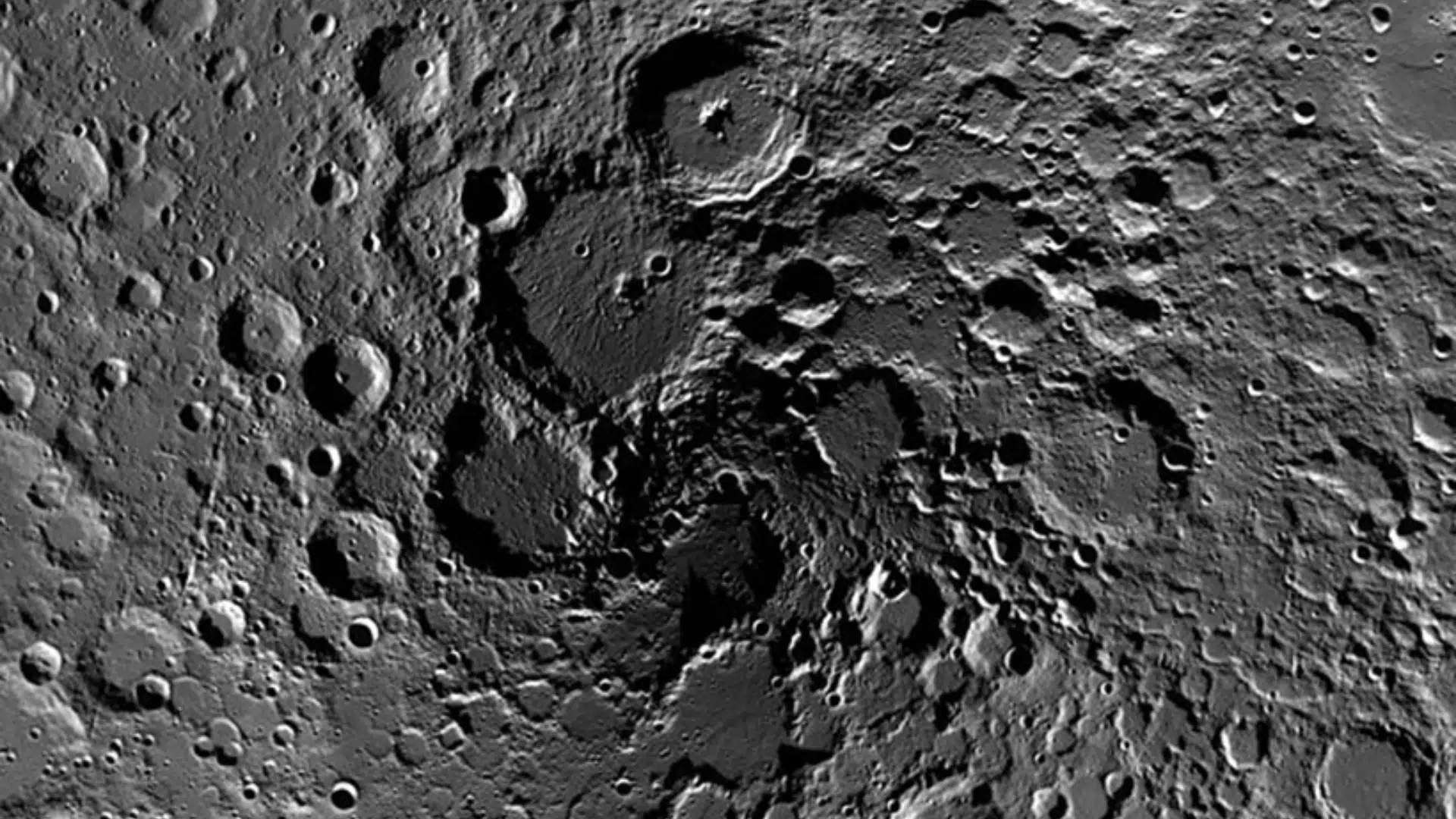
Image Source: Eos.org
Craters are round holes made when meteors hit the Moon’s surface. Since the Moon has no air and no weather, these craters stay in place for millions of years.
Some are small, while others stretch for many miles. Each crater shows a moment when a rock from space struck the Moon with great force.
Maria (Dark Plains)
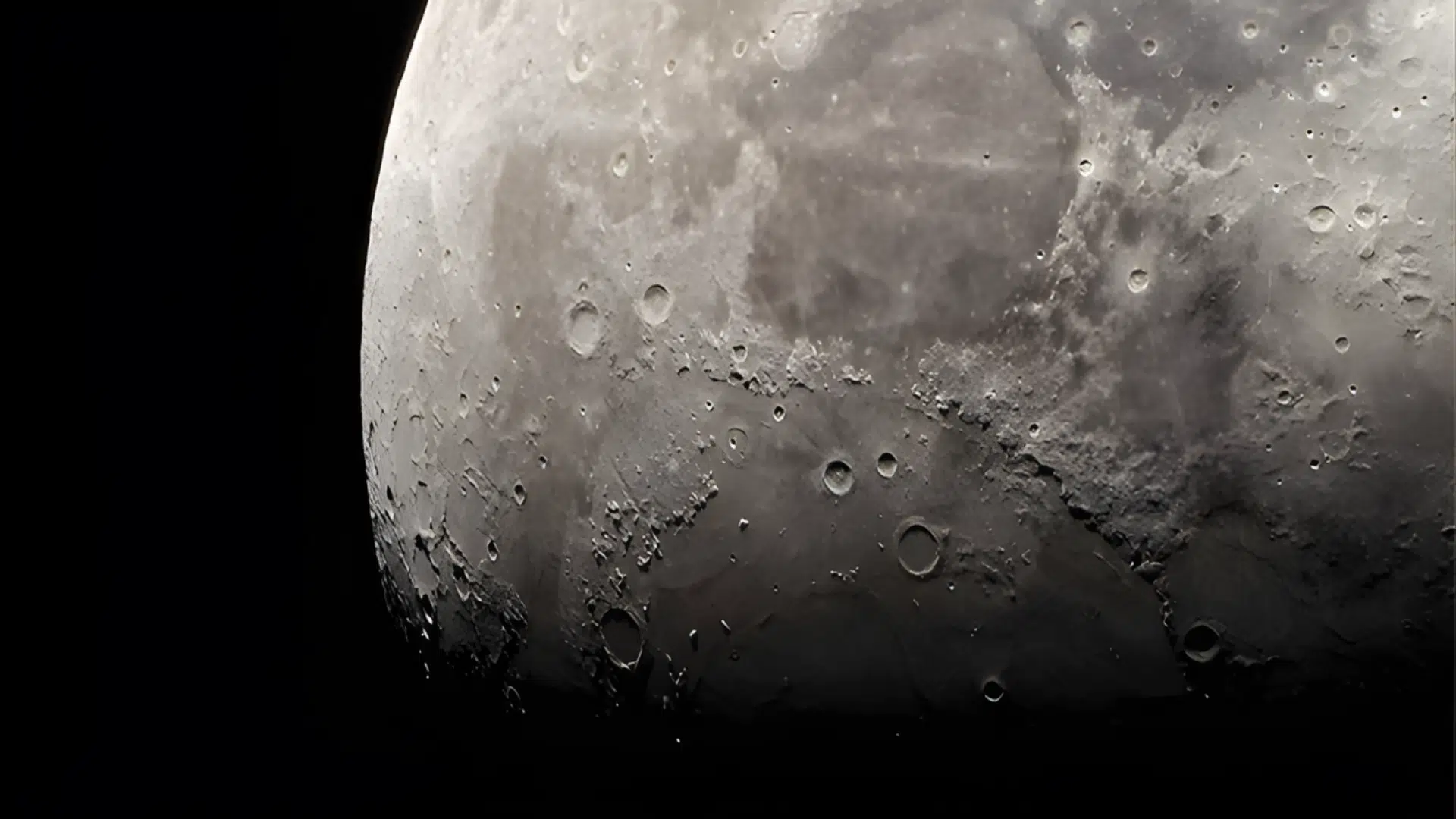
Image Source: Serious Science
Maria is the smooth, dark areas that can be seen from Earth. Long ago, hot lava rose from inside the Moon and spread across the surface.
When the lava cooled, it hardened into dark, flat plains. These areas look almost like seas, which is why early astronomers named them “maria,” the Latin word for seas.
Highlands
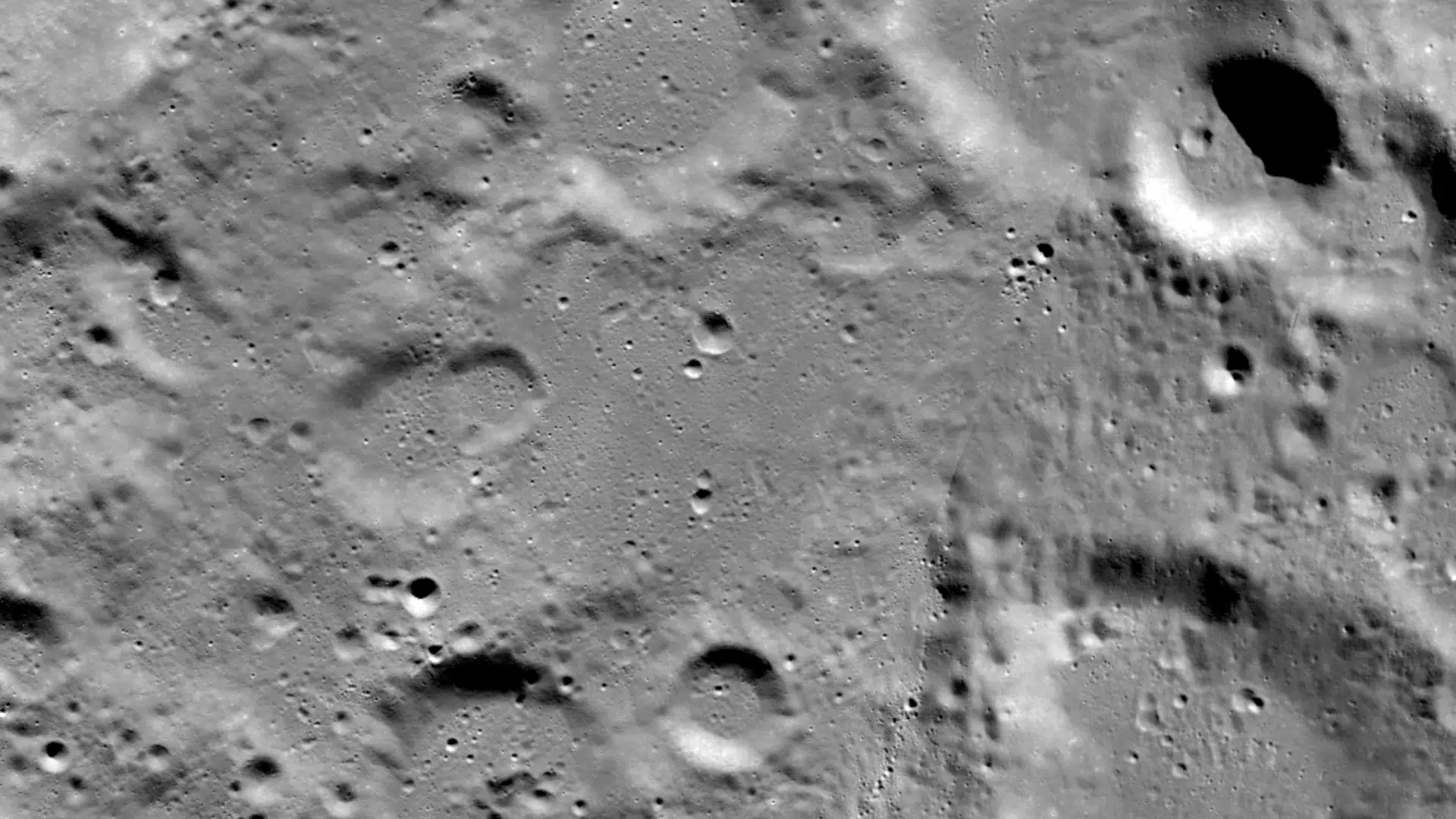
Image Source: NASA
The highlands are bright, high areas made of older rock. They are rough, full of small hills, and covered in many craters.
The highlands formed early in the Moon’s history, so they hold clues about its oldest layers. They reflect more sunlight, which is why they look brighter than the maria.
Regolith (Moon Dust)
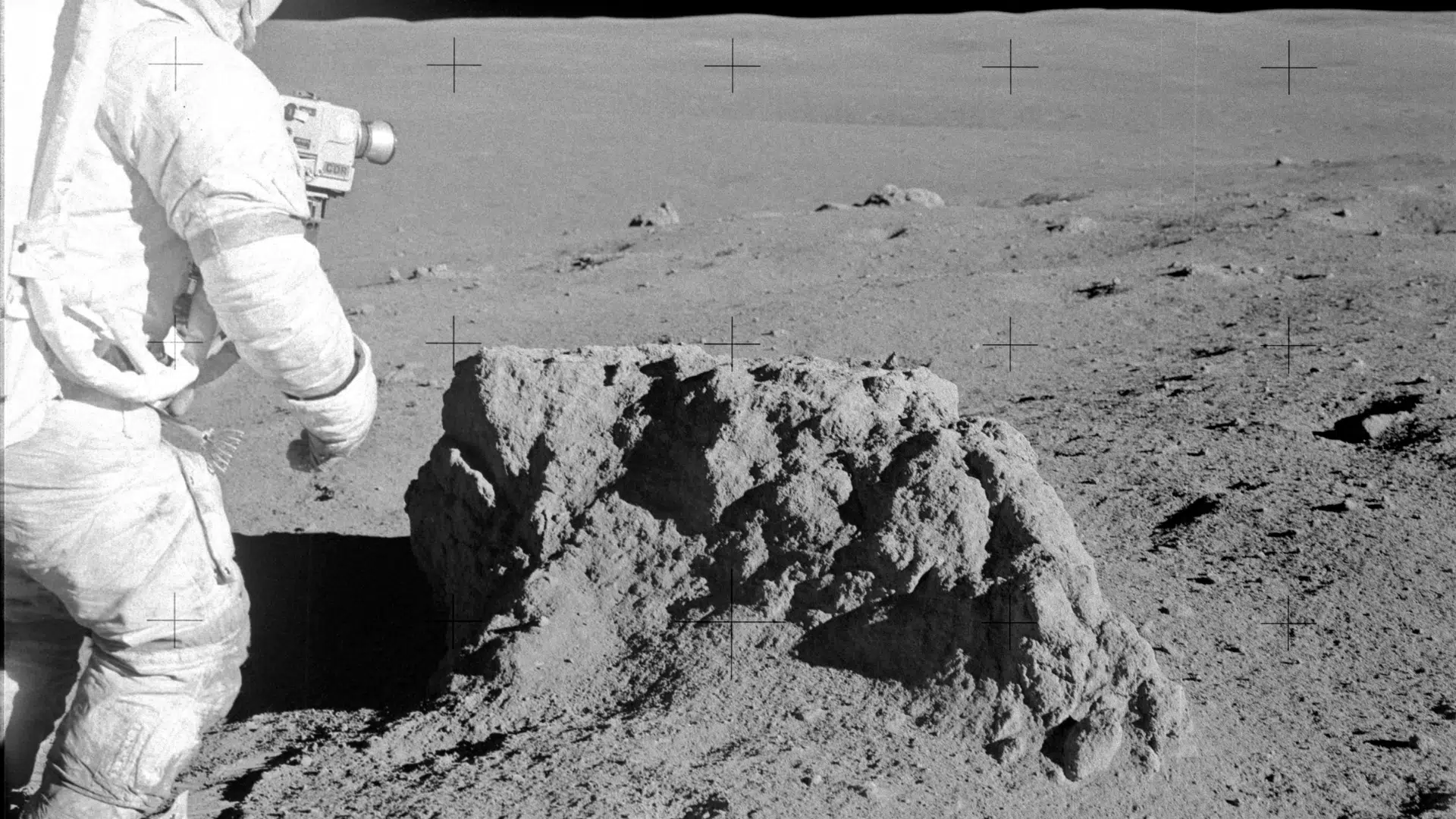
Image Source: Live Science
Regolith is the layer of dry dust and tiny rock pieces that covers most of the Moon’s surface. It formed after billions of years of impacts breaking larger rocks into smaller particles.
This dust is sharp and clingy. It can be several feet deep in some places. Regolith makes footprints stay in place because nothing on the Moon moves it.
Impact Basins
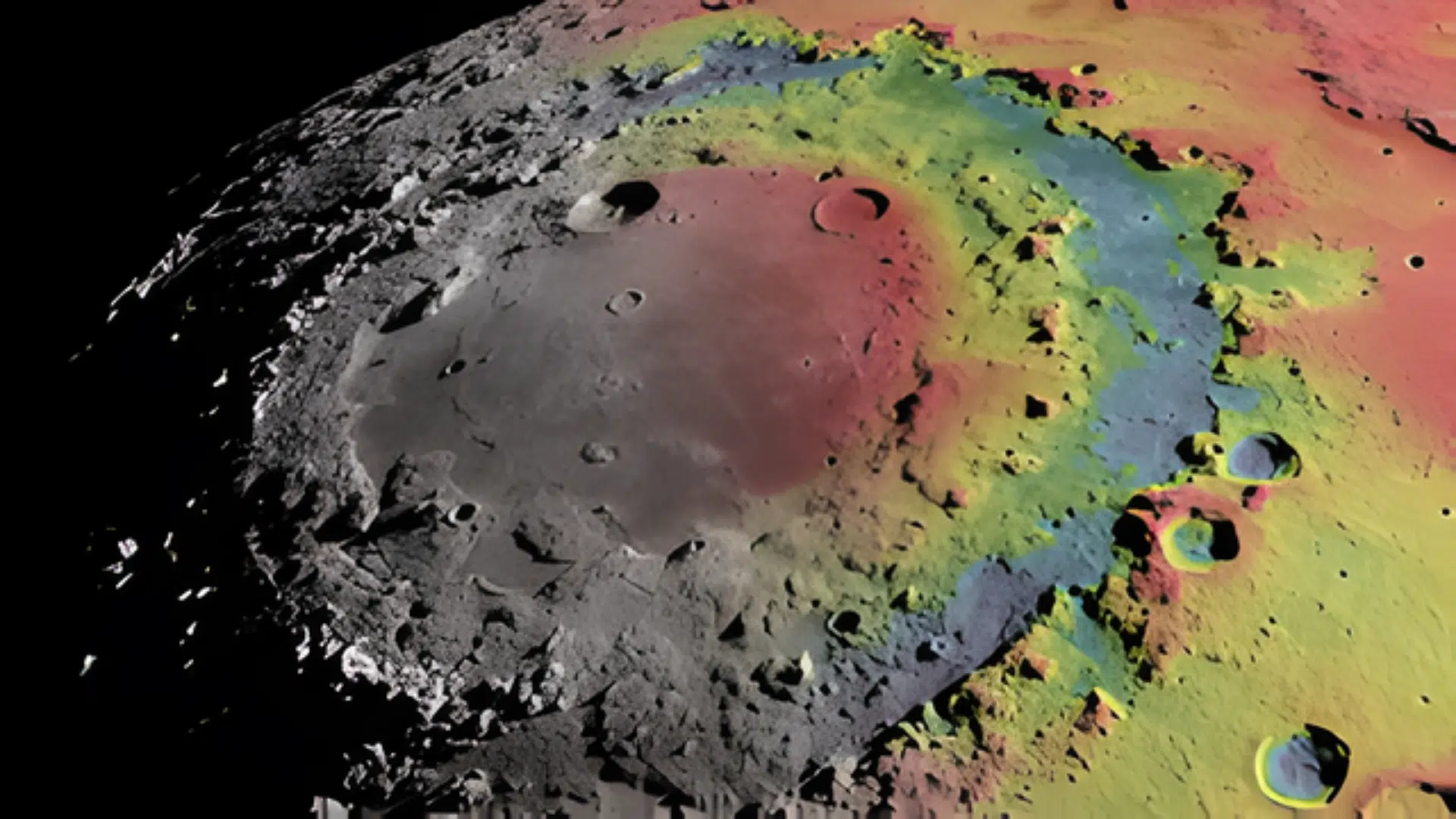
Image Source: NASA Scientific Visualization Studio
Impact basins are enormous craters created by massive objects hitting the Moon long ago. These are much bigger than regular craters.
Some basins are hundreds of miles wide. They formed during the early and violent years of the solar system. Many maria sit inside old impact basins because lava later filled the giant holes.
Rilles
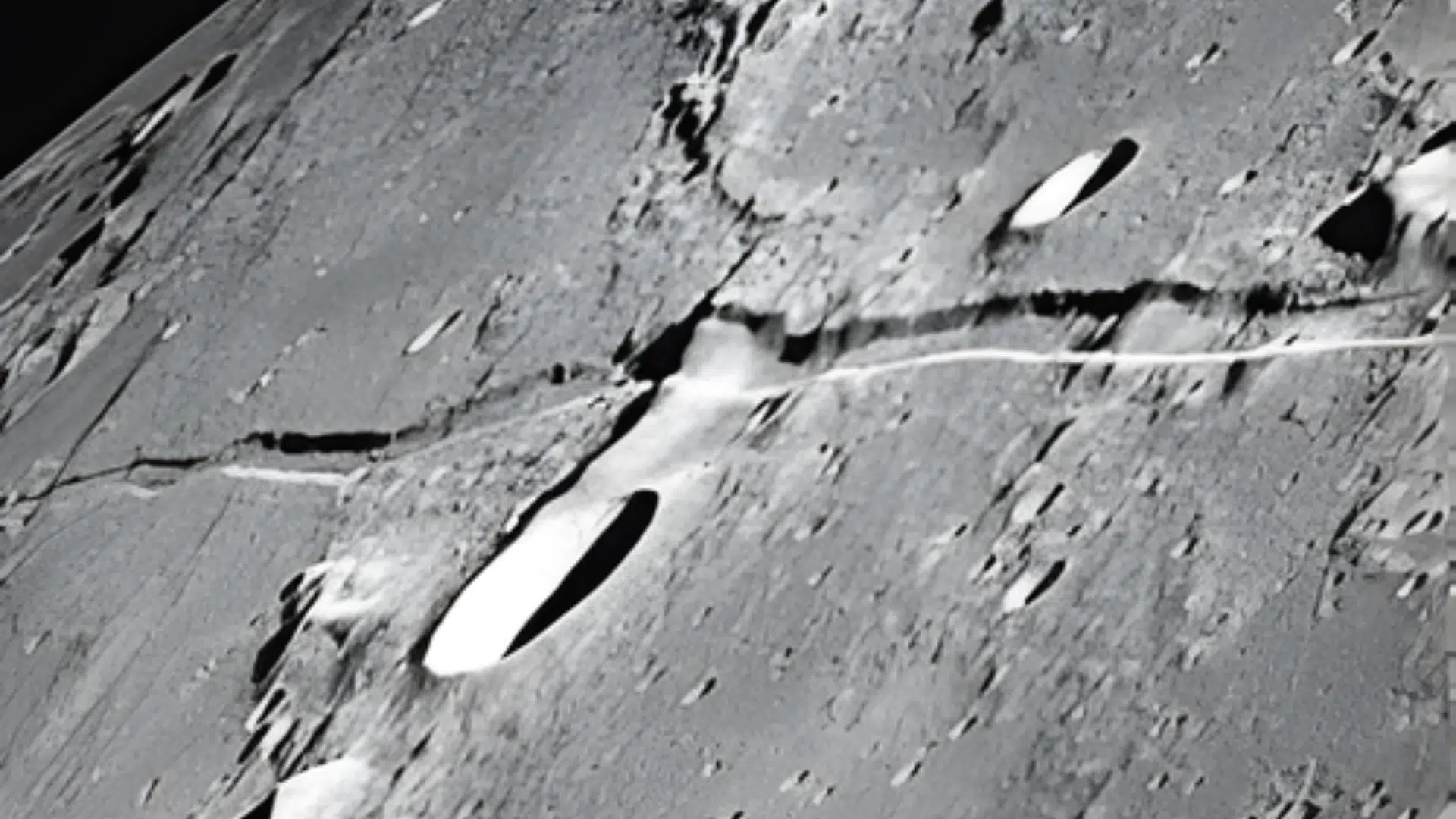
Image Source: Wikipedia
Rilles are long, curving channels on the Moon’s surface. Some look like dried riverbeds, but they were not made by water.
Many rilles formed from flowing lava, while others formed when the ground cracked and sank. They show that the Moon was once active on the inside.
Boulders
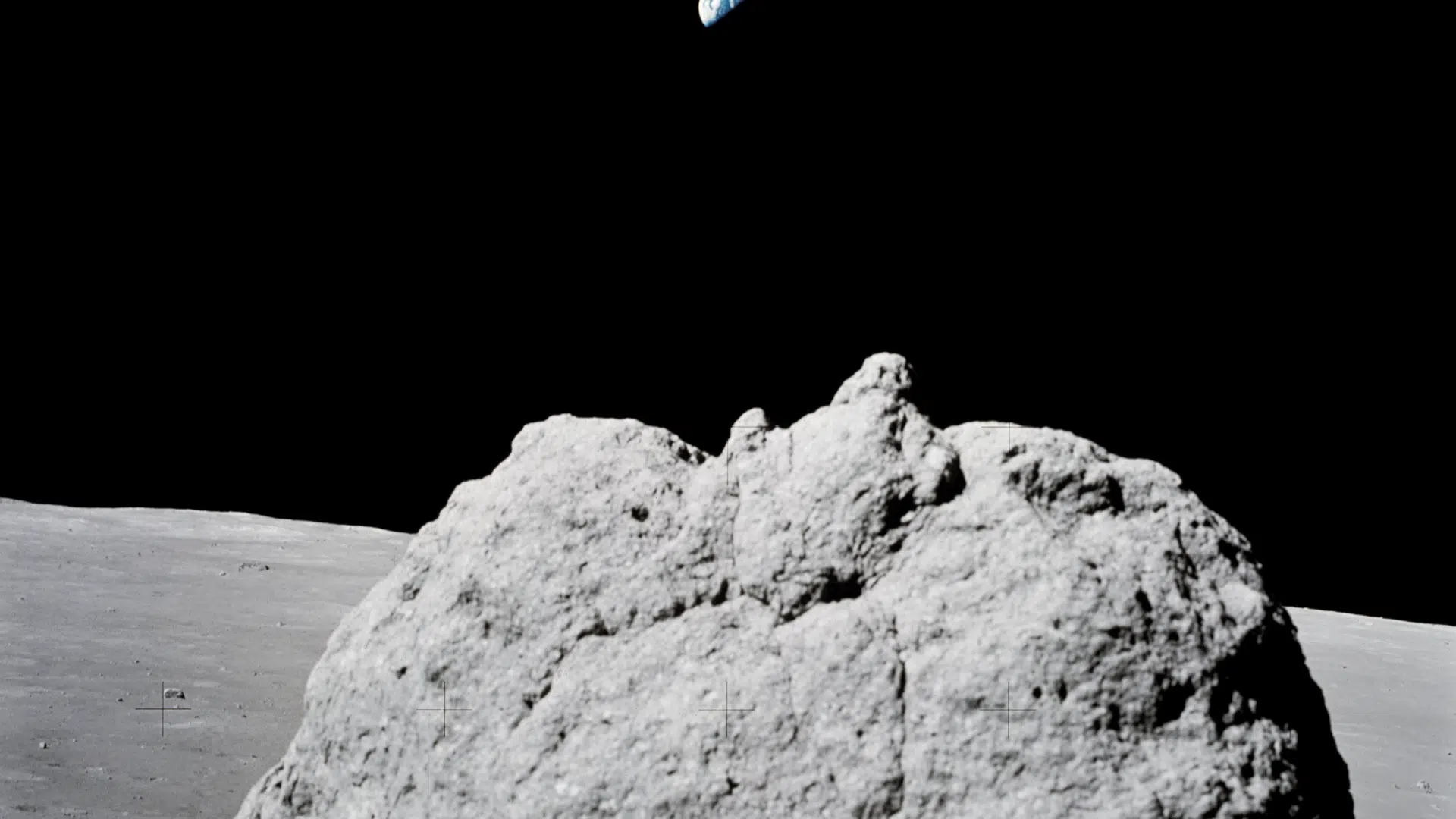
Image Source: Reddit
Boulders on the Moon are large rocks sitting on the surface. Many of them were thrown out of craters during meteor impacts.
These rocks can be tiny or many feet wide. Because the Moon has no weather, boulders do not break down as they do on Earth. They stay sharp and rough for a very long time.
Mountain Ranges
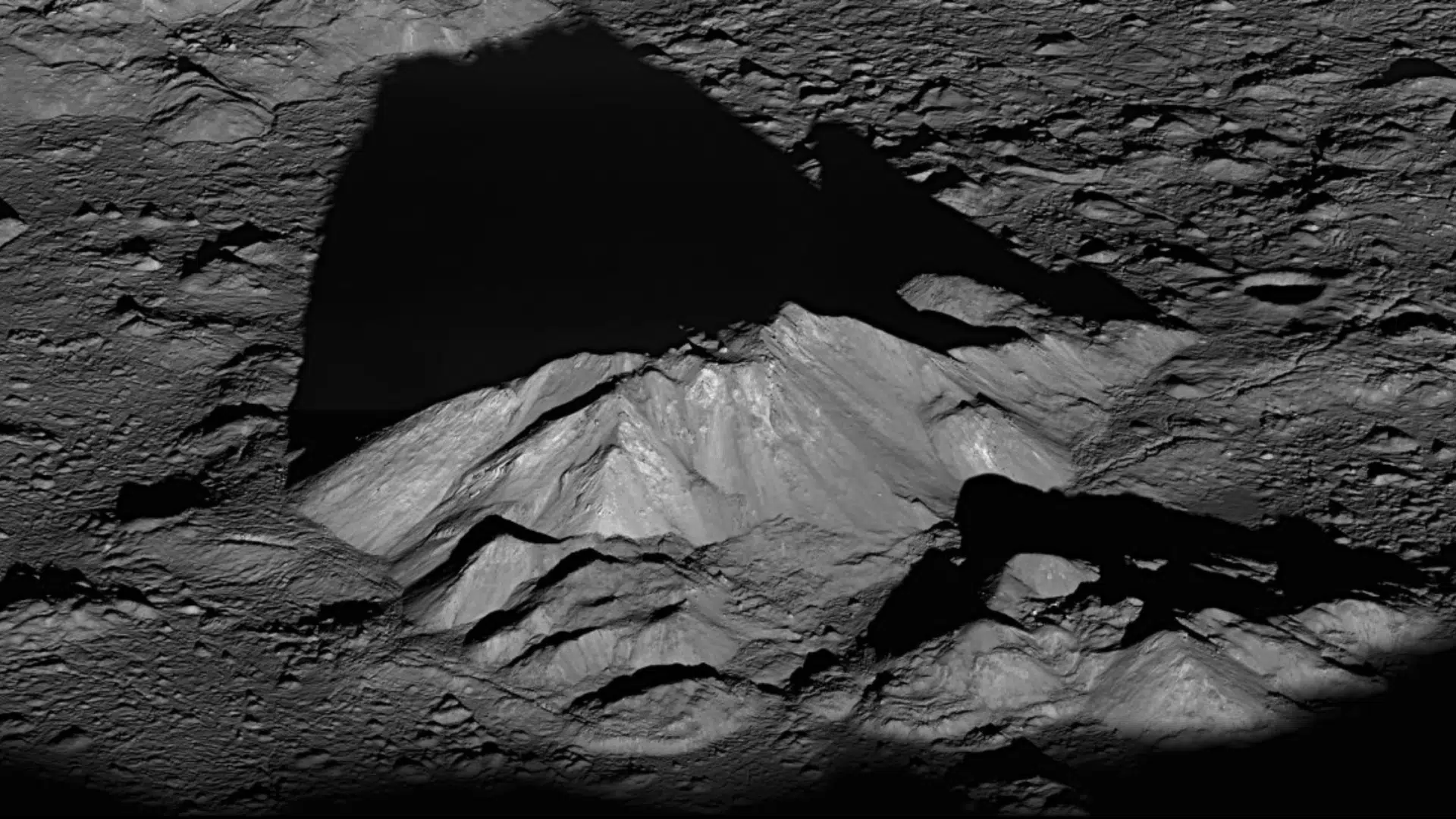
Image Source: The Wire Science
Mountain ranges on the Moon formed from the force of massive impacts. When a huge object hit the surface, it pushed rock upward, creating tall ridges.
These mountains do not form from shifting plates like on Earth. They are steep, rocky, and stand as reminders of past collisions.
Shadowed Craters
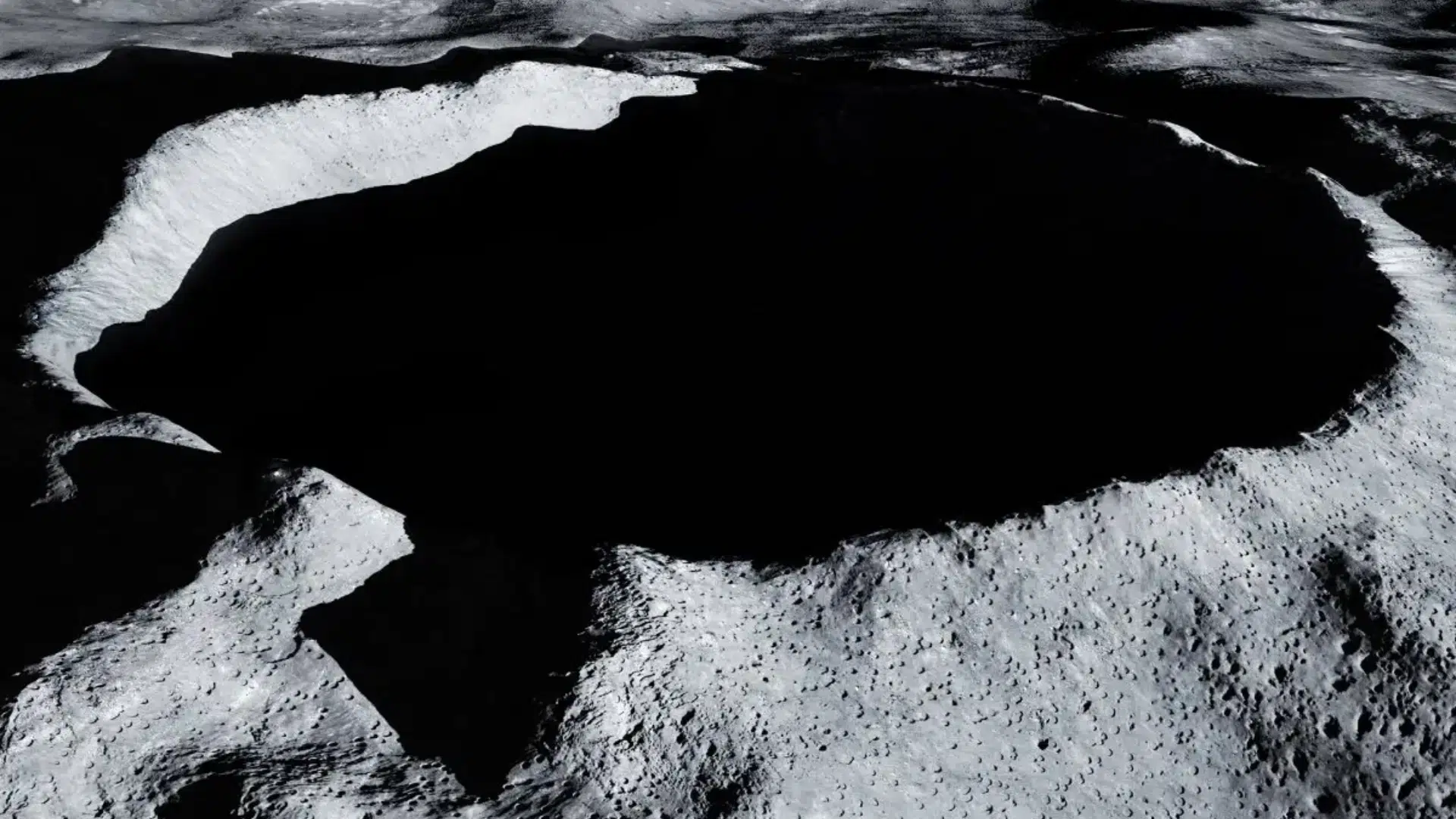
Image Source: New Scientist
Shadowed craters are areas near the Moon’s poles that never get sunlight. The Sun’s light hits the
Moon at an angle, leaving these deep spots in permanent darkness. Because they are so cold, these craters can hold frozen water. This ice may help future space missions by providing water and fuel.
More Interesting Facts About the Moon
These simple facts explain why the Moon looks and behaves the way it does. Each point shows something unique about the Moon that makes it different from Earth.
1. Why the Moon Has No Weather: The Moon has no air, so it cannot have wind, rain, clouds, or storms. Without weather, its surface stays almost the same for millions of years.
2. Why the Moon Has No Sound: Sound needs air to travel. Since the Moon has no air, sound cannot move from place to place. Even falling rocks make no noise.
3. The Light and Far Sides of the Moon: The Moon keeps the same side facing Earth because it rotates at the same speed it orbits. The far side still gets sunlight, even though we cannot see it from Earth.
4. Why the Moon Looks Gray: The Moon is covered in dust and rock that reflect light in a pale way. From far away, this makes the Moon look gray or white.
5. Why the Moon Seems to Change Shape: The Moon’s shape does not change. It only looks different because of how sunlight hits it. These repeating changes are called phases.
6. Why Footprints Stay on the Moon: Footprints last because nothing moves them. With no wind or rain, the dust stays in place, keeping prints clear for millions of years.
7. How Astronauts Moved on the Moon: Gravity on the Moon is weak, so astronauts bounced or hopped to walk. This made moving easier, but sometimes tricky.
8. Why the Moon Has a Black Sky: With no air to scatter sunlight, the sky always looks black, even when the Sun is shining.
9. Why the Moon Looks Bigger at the Horizon: This is a trick of the mind called the Moon illusion. The Moon appears larger when seen near trees or buildings, but its size does not change.
10. Why the Moon Has Phases, but the Sun Does Not: The Sun makes its own light, so it stays bright and round. The Moon only reflects light, so the lit part changes as it orbits Earth.
Conclusion
The Moon is full of small details that make it easy to enjoy and easy to learn about. A single funny fact, like the smell of Moon dust, can lead to many new questions.
It shows that the Moon is not just a bright spot in the sky but a real place with history and personality.
Each part of its surface tells a story, and each strange feature adds to its appeal. Learning about the Moon can feel light and fun, even when the topic is science.
There is always something new to notice. If you enjoyed this simple guide, keep reading our space posts for more easy facts and friendly explanations.