
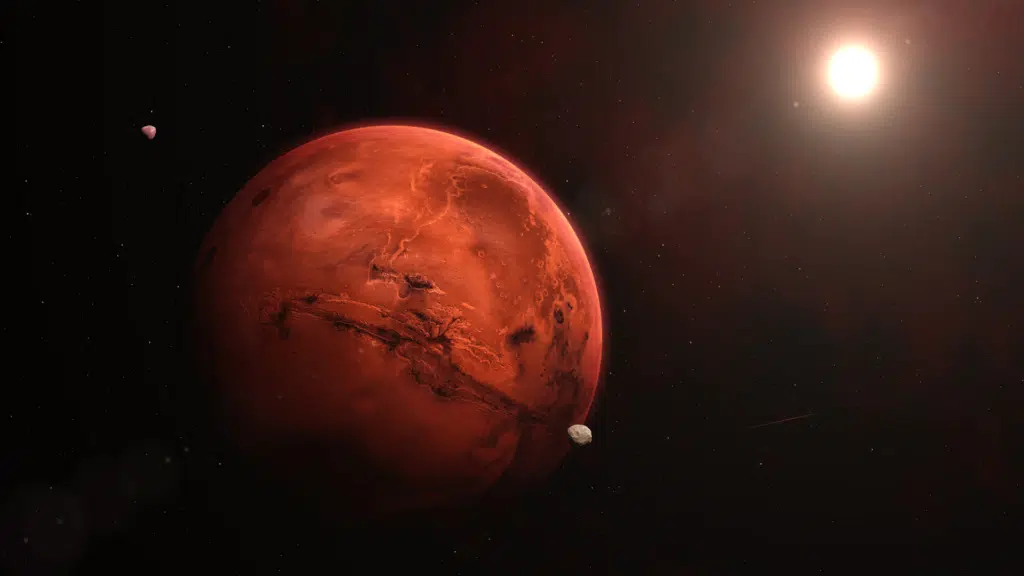
Mars has long been known as the Red Planet. Its bold color stands out in the night sky and has shaped how people imagine it.
From early stargazers to modern space missions, many have asked the same simple question: What is the real color of Mars? Photos show shades of red, orange, and brown, yet the planet does not look the same in every image.
Light, distance, and surface conditions all affect how it appears. Scientists continue to study Mars to better understand its surface and its true appearance.
This article explains what gives Mars its color and why it looks the way it does from Earth and space.
What Color is Mars, Really?
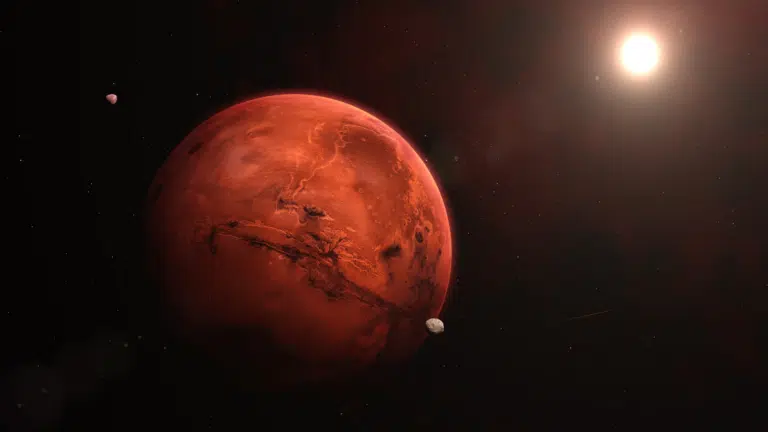
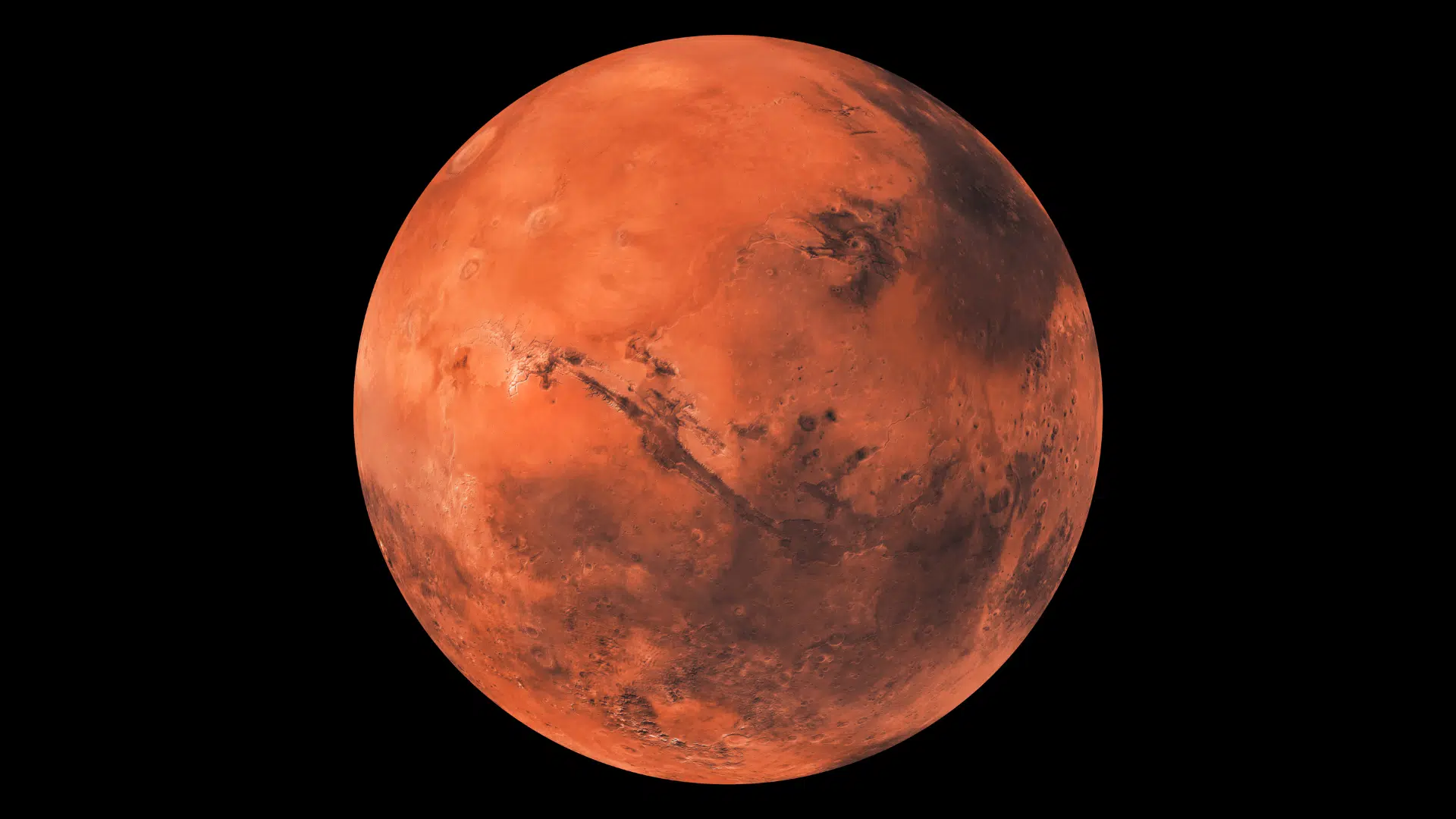
Mars is commonly described as red, but that description is incomplete. The real color of Mars is better described as a rusty orange-brown planet with darker volcanic regions and bright white polar caps. It is not a solid, bright red sphere.
From Earth, Mars appears reddish because sunlight reflects off iron-rich dust covering much of the surface. At that distance, all reflected light blends together, giving the planet its familiar glow.
But if someone were standing on Mars, the landscape would resemble a desert stained with rust, muted, dusty, and layered with variation rather than brightly red.
The color of the Martian surface is shaped by three interacting factors: mineral chemistry, dust redistribution, and lighting conditions.
Understanding those factors provides a clearer and more accurate picture of what Mars actually looks like.
Why is Mars Red, and What That Actually Means?
Mars appears red because of iron oxides, the same compounds that form rust on Earth. But that statement only explains part of the story. To understand the real color of Mars, we need to look at both the chemistry and what that chemistry looks like on the ground:
Iron Oxidation at Planetary Scale
Mars’ crust contains abundant iron-bearing minerals. Over billions of years, that iron reacted with oxygen, forming oxidized compounds that now exist as extremely fine dust across much of the planet.
This oxidation likely began early in Mars’ history and may have been enhanced during periods when liquid water was present. Water accelerates chemical reactions, including the formation of iron oxides.
Iron oxide reflects:
- Red wavelengths strongly
- Orange wavelengths strongly
- Blue wavelengths are less efficient
When sunlight strikes the Martian surface, the reflected light is dominated by those red and orange wavelengths. That selective reflection is why Mars appears red from space and from Earth.
However, the planet is not made of solid red rock. The reddish appearance mostly comes from a thin layer of oxidized dust resting on darker volcanic bedrock underneath.
How Oxidized Dust Controls Surface Color
Rover missions provide a clearer picture of how this plays out visually.
When Spirit and Opportunity landed in 2004, their cameras showed landscapes that resembled rust-colored deserts rather than bright red plains. The soil appeared orange-brown. Rocks frequently displayed darker gray interiors beneath lighter dust coatings.
Later missions, Curiosity and Perseverance, confirmed this pattern with more advanced calibration systems.
When images are processed to approximate what a human observer would see under Martian daylight, the surface typically looks muted and earthy.
At ground level, the Mars surface color appears:
- Rusty but subdued
- Mixed with browns and tans
- Layered over darker gray rock
- Textured by wind and small-scale topography
The red tone is real but subtle. It does not glow. It does not dominate uniformly. Instead, it sits as a dust veneer over a darker volcanic world.
Is the Color Uniform Across the Planet?
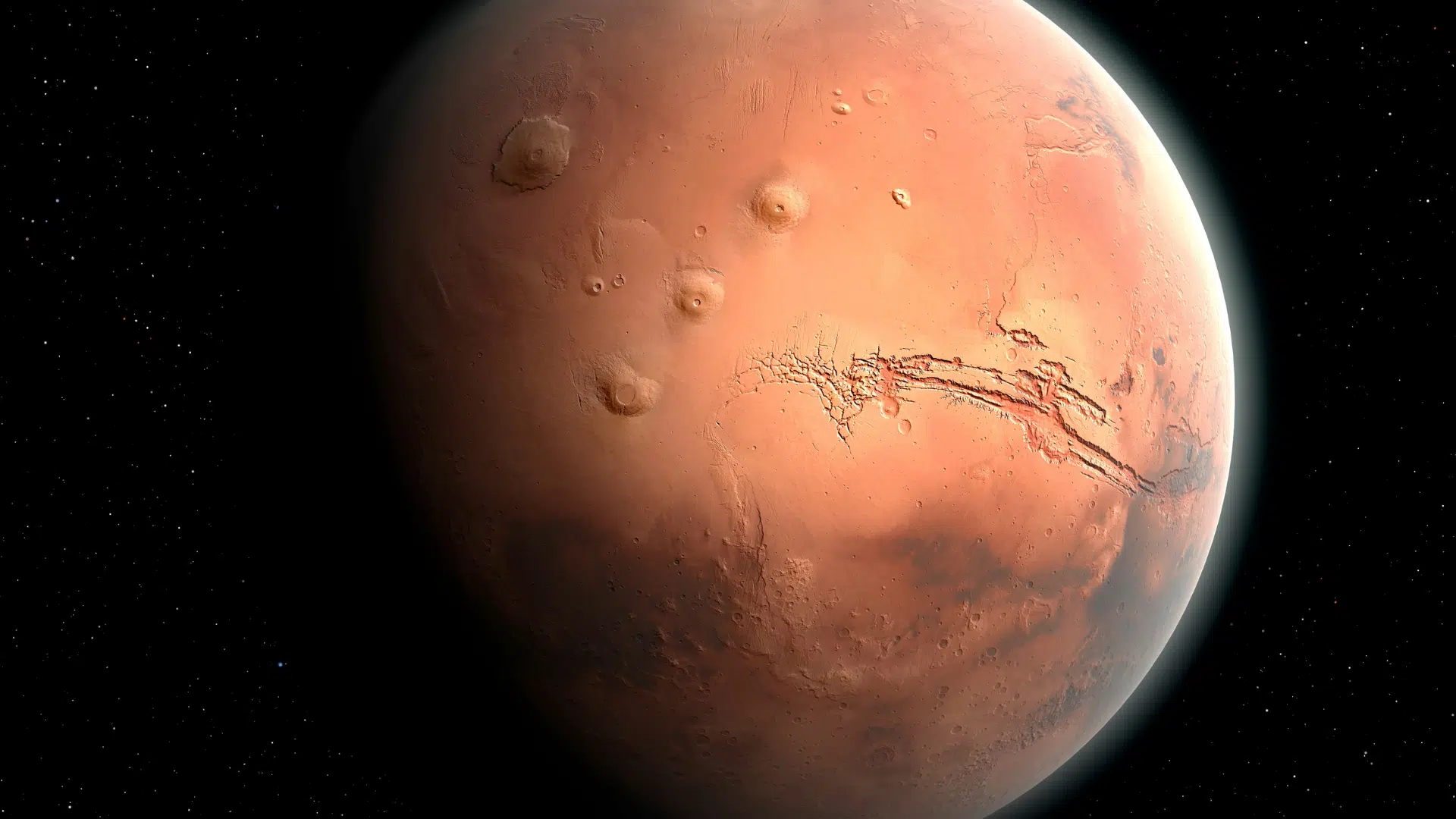
No, Mars is not a single color everywhere. Some regions expose basaltic volcanic rock. Basalt forms from cooled lava and is usually dark gray to nearly black. Where dust coverage is thin, these areas appear darker from orbit.
Other regions are more heavily coated with oxidized dust, which increases reflectivity and enhances the orange-red tone.
Large geological structures such as Valles Marineris expose stratified rock layers in shades of tan, brown, pink, and muted red. These variations reflect differences in mineral composition and geological history rather than simple color shifts.
At the poles, bright white caps composed of water ice and seasonal carbon dioxide ice create a strong contrast. The extent of these caps changes with the seasons, slightly altering the planet’s overall visual balance.
The real color of Mars is therefore regional. The red tone dominates globally, but it is not uniform.
The Role of Dust in Shaping Mars’ Appearance
Dust is one of the most important factors controlling the color of the Martian surface. Its movement, suspension in the atmosphere, and constant redistribution all influence how the planet appears from both orbit and the ground.
Key points to understand:
- Thin atmosphere and low gravity: Mars has a much thinner atmosphere than Earth and weaker gravity. These conditions allow extremely fine particles to be lifted easily and remain suspended for long periods.
- Fine particle size: The dust grains are small enough to scatter sunlight efficiently. This scattering alters how light reaches and reflects off the surface, subtly modifying the planet’s visible color.
- Local and global dust storms: Mars experiences dust storms ranging from regional events to planet-encircling events. During global storms, oxidized dust fills the atmosphere, reducing surface contrast and making the planet appear more uniformly orange from orbit.
- Continuous surface redistribution: Dust is constantly moving. Wind transports oxidized particles across the landscape, coating rocks and filling low areas.
- Temporary exposure of darker rock: Fresh impact craters can expose darker basaltic material beneath the dust layer. Over time, wind-blown dust settles again, restoring the reddish surface coating.
This continuous dust cycle helps maintain Mars’ overall reddish appearance. Even though darker rock lies beneath, the persistent movement of oxidized dust reinforces the planet’s characteristic color.
How Sunlight and the Atmosphere Affect Color
Color depends not only on material but also on illumination. Mars receives less solar energy than Earth because it orbits farther from the Sun.
Its atmosphere, though thin, contains suspended dust that scatters light differently from Earth’s nitrogen-oxygen atmosphere.
Daytime Sky
The Martian sky often appears:
- Butterscotch
- Light brown
- Dusty tan
This color comes from sunlight interacting with fine particles.
Sunset on Mars
At sunset:
- Red light is scattered outward
- Blue light remains concentrated near the Sun
- The sunset appears bluish
This is the opposite of Earth’s red sunsets. These optical effects slightly modify how the Mars surface color appears in photographs. Time of day and atmospheric conditions both matter.
Why Mars Looks Different in Different Images
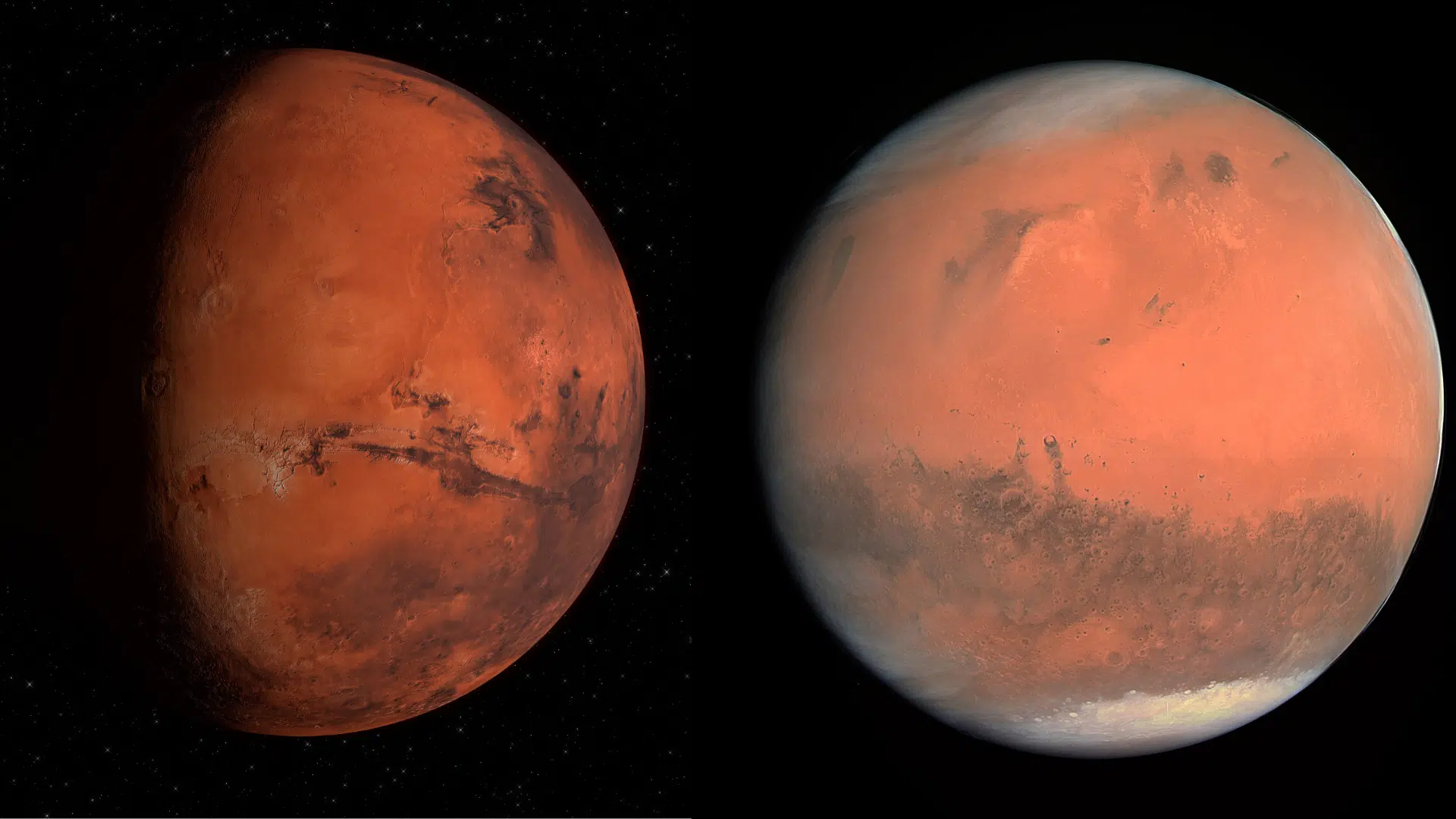
Mars does not actually change color between photographs. Most differences come from how images are captured and processed.
Several factors influence how the planet appears:
- Lighting angle: The position of the Sun affects shadows and contrast. Low-angle light can deepen reds, while direct light can make tones look flatter and more muted.
- Atmospheric dust: Suspended dust scatters sunlight. During dust storms, Mars can appear more uniformly orange and less contrasted.
- Camera calibration: Spacecraft cameras require correction for exposure and sensor response. Raw images do not automatically match human vision.
- Color enhancement: Some images are adjusted to highlight mineral differences. These enhanced versions exaggerate color contrast for scientific study.
When calibrated to approximate natural viewing conditions, Mars usually appears as a muted, rust-toned landscape rather than a bright red sphere.
Comparing Mars to Earth’s Rusted Landscapes
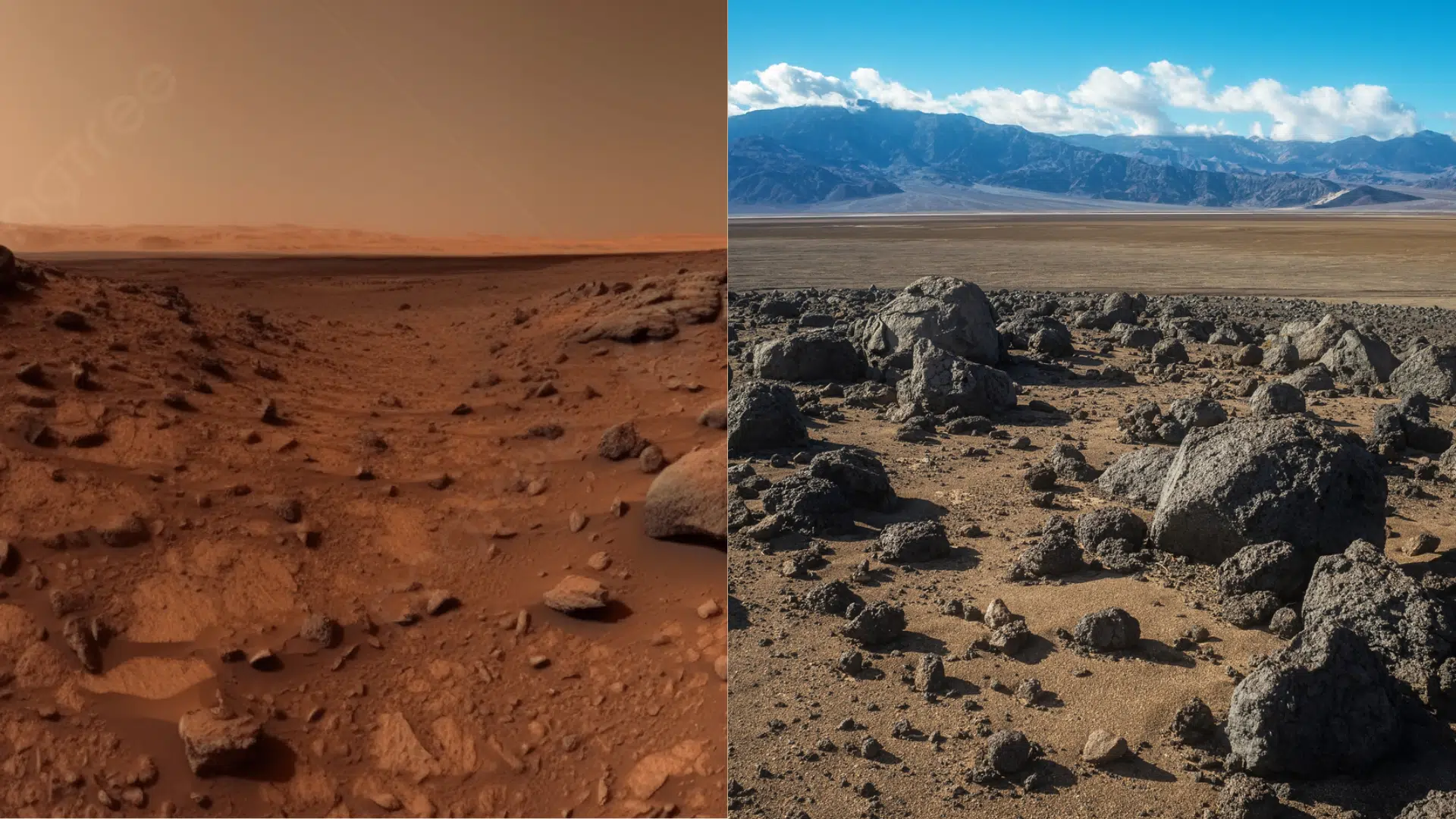
A useful way to understand Mars’s the color is to compare it to rusted surfaces on Earth. While the chemistry is similar, the planetary conditions are very different.
| Feature | Mars | Rusted Landscapes on Earth |
|---|---|---|
| Base Rock Type | Mostly basaltic volcanic rock | Often, iron-rich rock or metal surfaces |
| Source of Red Color | Iron oxide dust spread across the surface | Iron oxide formed on exposed rock or metal |
| Role of Water | Likely contributed in early history; limited today | Water actively drives ongoing rust formation |
| Surface Coverage | Oxidized dust blankets large regions | Rust usually forms in patches or localized areas |
| Atmosphere | Thin, dusty, carbon dioxide–rich | Thick, oxygen-rich atmosphere |
| Recycling Processes | Little erosion, no vegetation, no plate tectonics | Weathering, vegetation, and tectonics reshape surfaces |
| Visual Appearance | Muted orange-brown desert tones | Patchy rust coloration mixed with soil and plant cover |
Is Mars Becoming More Red?
Most large-scale oxidation likely occurred early in the planet’s history.
Today, visible changes are driven primarily by dust redistribution rather than new chemical reactions.
Wind continues to move oxidized particles across the surface. Impacts expose darker material. Dust storms temporarily modify contrast.
But on long timescales, the overall color of Mars remains stable. The planet is not steadily turning redder in the present era.
The Bottom Line
Mars is red, but not in the way many people imagine. Its color is not a painted surface or a uniform glow.
It is the visible result of iron-rich minerals that have oxidized over vast stretches of time and settled as fine dust across a volcanic landscape.
Up close, that chemistry produces muted desert tones rather than bright crimson. The planet’s appearance shifts with dust, light, and perspective, yet the underlying explanation remains grounded in geology and physics.
The color of Mars is a surface clue to its deeper history. For more discussions like this, continue reading and exploring the science behind planetary worlds.