Before humans ever left the ground, before the Moon landings or space stations, one small object changed everything. It was the first man-made object in space.
It helped humans learn how to reach space safely. Over time, more objects followed, and space travel became real. But everything started with just one launch.
This blog shares the full story of that first object. It looks at who sent it, when it happened, and why it was such a big step.
What Does “Space” Actually Mean?
Before learning about the first object in space, it helps to know what space is. Space does not start at a clear line. Earth’s air slowly becomes thinner as altitude increases.
Many scientists use the Kármán line, which sits about 100 kilometers (62 miles) above Earth. Above this height, the air is too thin for regular planes to fly. This point is often used as the start of space.
When talking about the first man-made object in space, experts look at whether the object crossed this height. This helps decide if something truly reached space or stayed within Earth’s atmosphere.
Before the First Object: A Quick Look at Early Rocket Work
Long before spaceflight, people were working with rockets. In fact, simple missiles were used in China as far back as the 1200s for fireworks and war. But real progress toward reaching space started in the early 1900s.
Key Names in Early Rocket Work
- Konstantin Tsiolkovsky (Russia): Came up with the math behind rocket flight.
- Robert Goddard (USA): Launched the first liquid-fuel rocket in 1926.
- Hermann Oberth (Germany): Helped turn rocketry into a science.
Their ideas and tests set the stage for space travel.
The Early Competition to Reach Space
After World War II, the world saw a new kind of rivalry. The United States and the Soviet Union both wanted to lead in science, technology, and space.
This contest was called the Space Race. It was part of the wider Cold War, where the two countries competed for global power without direct fighting.
Each side worked hard to build rockets, launch space missions, and prove they were stronger. Space became a way to show progress and power.
The race pushed both nations to make fast and bold moves in space science and engineering.
The First Man-Made Object in Space: The V-2 Rocket
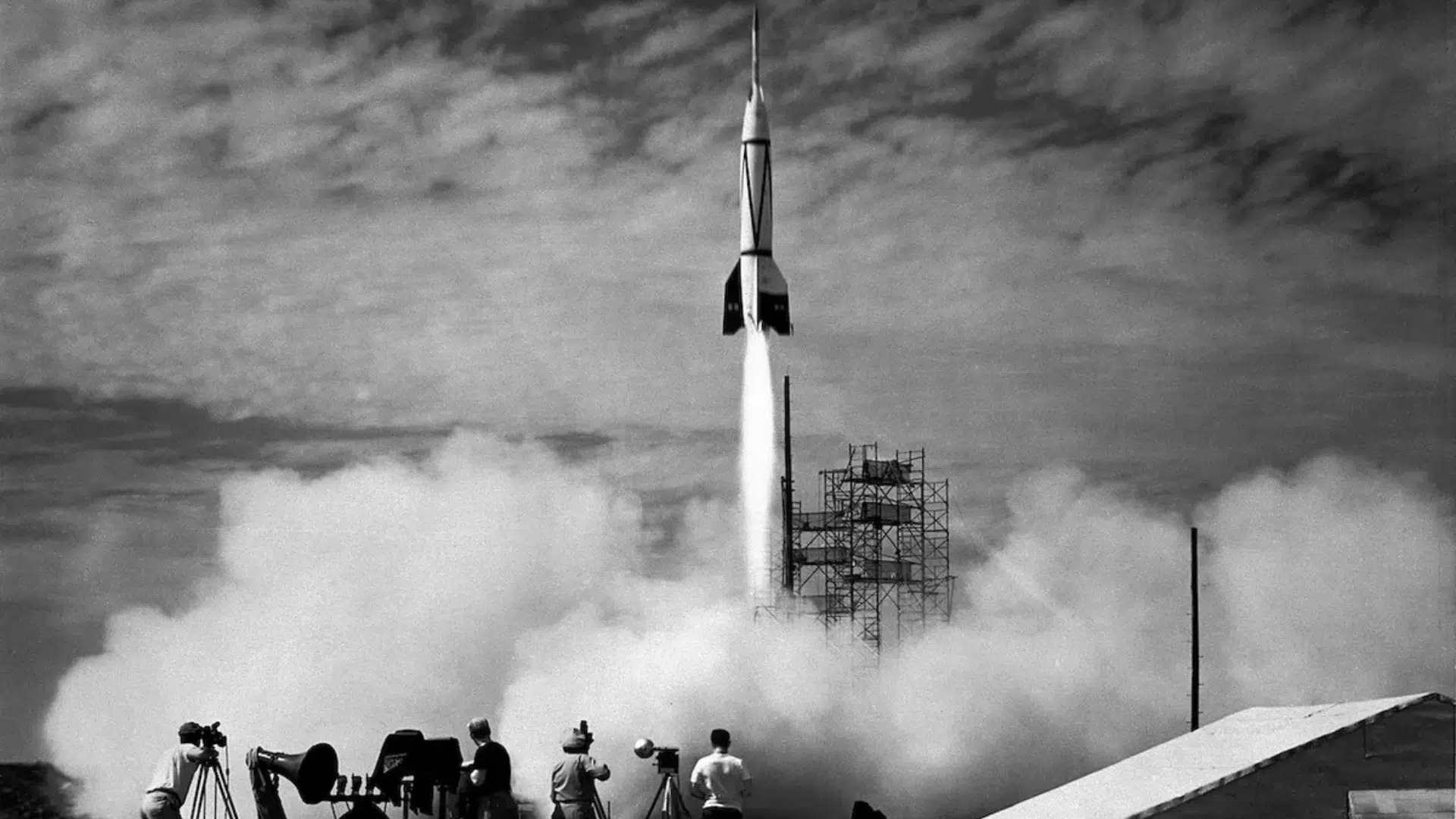
Image Source: Space
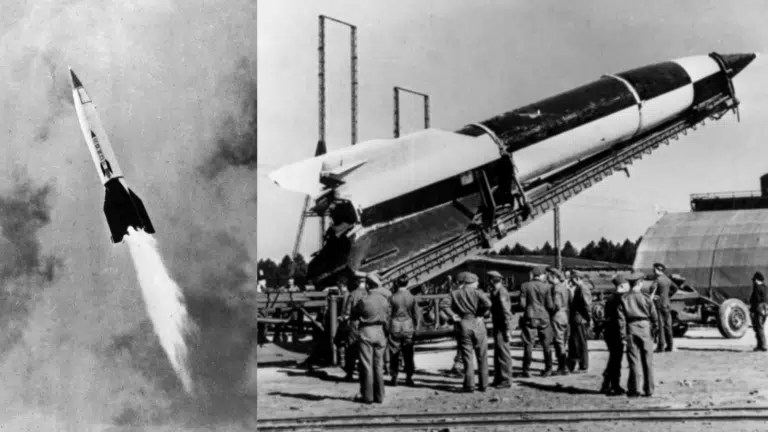
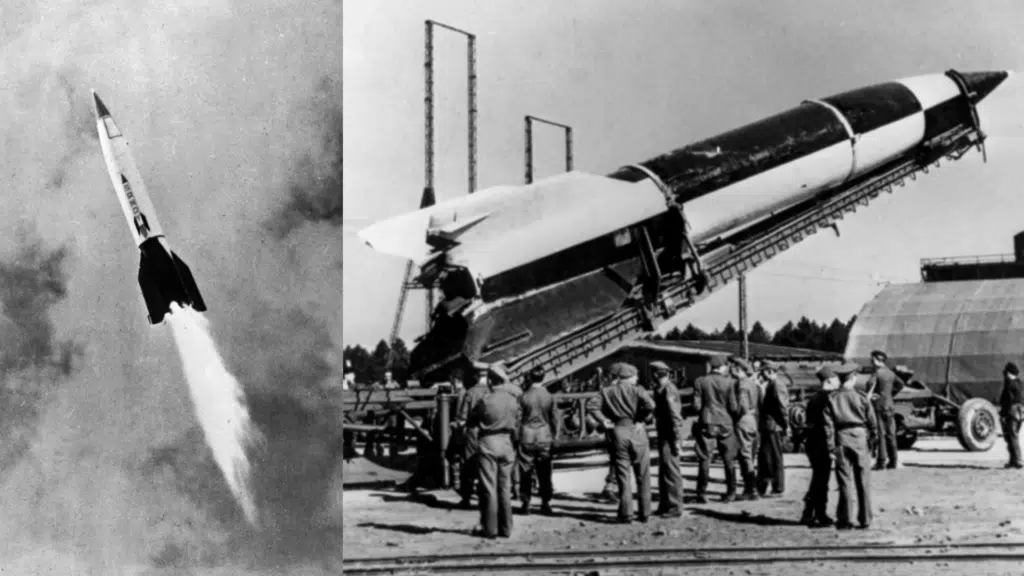
The first man-made object in space was a German V-2 rocket, launched on June 20, 1944, from the Peenemünde Army Research Center in Nazi Germany during World War II.
That V-2 rocket flight reached an altitude of 176 kilometers (109 miles), far above the 100-kilometer boundary of space.
This makes it the first human-made object ever to reach outer space.
Key Facts About the V-2 Rocket
| Feature | Detail |
|---|---|
| Name | V-2 Rocket (Vergeltungswaffe-2) |
| Country of Origin | Nazi Germany |
| First Space Launch | June 20, 1944 |
| Height Reached | 176 km (109 miles) |
| Length | 14 meters (46 feet) |
| Speed | Over 5,700 km/h (3,500 mph) |
| Type | Ballistic missile |
| Fuel Type | Ethanol and Liquid Oxygen |
| Payload | None for the first space flight |
The V-2 was not made for science. It was a weapon of war, designed to strike targets at great distances. But its speed and altitude made it a pioneer in space travel.
Who Built the V-2 Rocket?
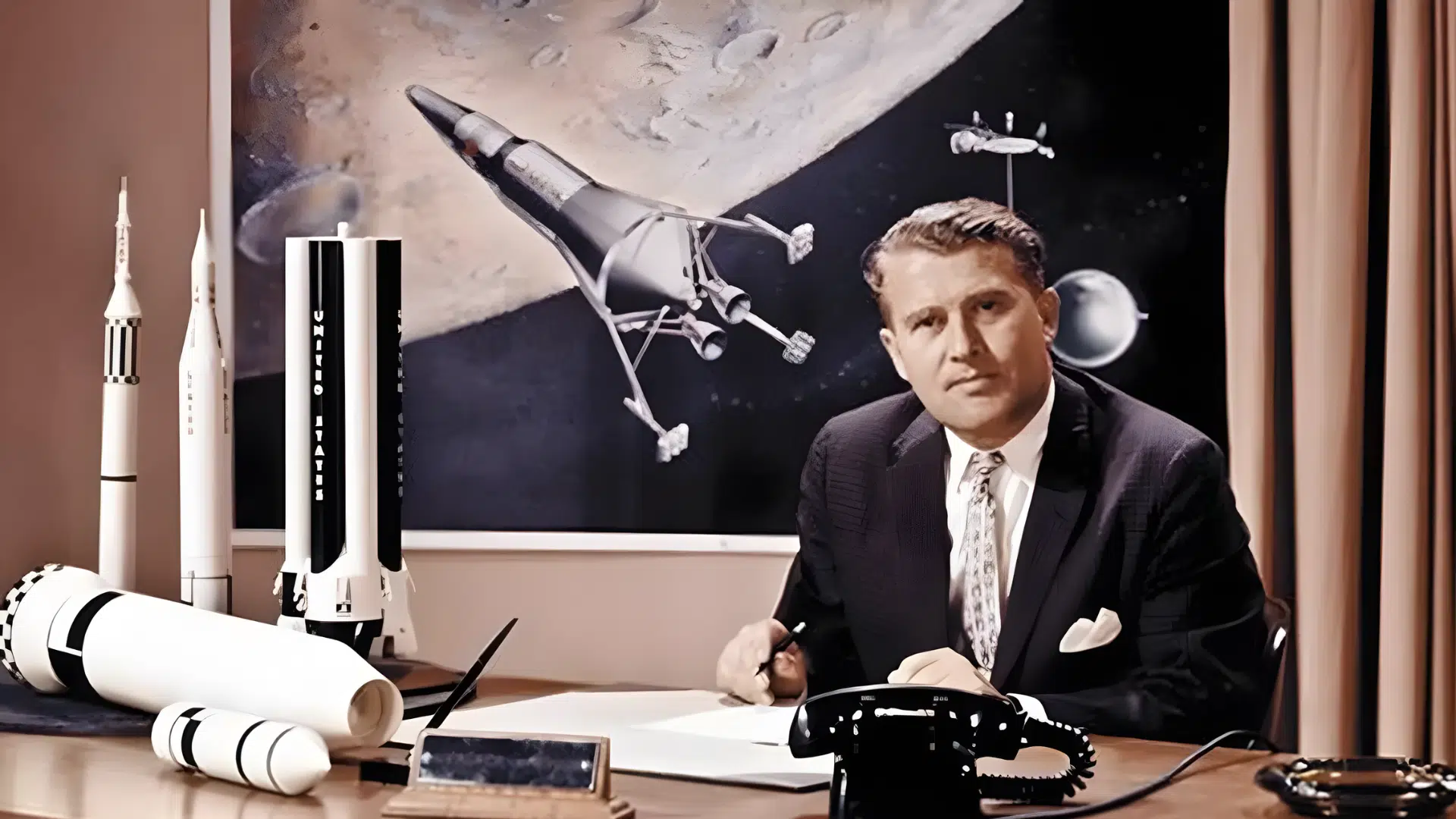
Image Source: Smithsonian Magazine
The main person behind the V-2 rocket was Wernher von Braun, a German engineer who led the rocket team in Nazi Germany.
After World War II, von Braun and many of his scientists were brought to the United States under Operation Paperclip. There, they helped start the American space program.
Von Braun later became a key figure at NASA and helped design the Saturn V rocket that sent astronauts to the Moon.
What Made the V-2 Reach Space?
Several things made the V-2 different from earlier rockets:
- Liquid-Fuel Engine: It used alcohol and liquid oxygen for fuel, which gave it more power than solid-fuel rockets.
- Gyroscopic Guidance: It had a guidance system that helped it stay on course.
- Streamlined Shape: It was built to fly fast and high, with a pointed nose to cut through the air.
- Vertical Launch: It was launched almost straight up, helping it gain altitude quickly.
These design features allowed it to go higher than any previous rocket.
The Manhole Cover That Might Have Reached Space
In 1957, during a nuclear test called Pascal-B in Nevada, scientists accidentally launched a steel manhole cover into the sky.
The explosion happened underground. When the blast forced air upward through a narrow shaft, it sent the heavy metal cap flying at an extremely high speed.
One scientist later estimated the cover may have reached speeds fast enough to escape Earth’s atmosphere entirely.
However, there is no photographic proof. The cover disappeared in less than a frame of high-speed film.
Some experts believe it likely burned up in the atmosphere. Others think it may have briefly reached space.
Because there is no confirmed tracking data, the V-2 rocket remains the officially recognized first man-made object in space.
How the V-2 Was Used After the War

Image Source: The War Zone
After the war ended, the V-2 rocket became a key tool for space research. Both the United States and the Soviet Union used it to build their early space programs.
United States
- Collected over 100 V-2 rockets and parts from Germany.
- Conducted rocket tests at White Sands Missile Range in New Mexico.
- Used rockets to study the upper atmosphere and near-space conditions.
- Sent cameras, sensors, and scientific tools onboard to gather data.
- Launched fruit flies and insects to test how living things react to space.
- Helped train early engineers who later joined NASA’s space programs.
Soviet Union
- Retrieved rocket components and captured German scientists.
- Created a copy of the V-2 called the R-1 rocket.
- Used test flights to improve engine design and control systems.
- Gained technical skills that led to Sputnik 1, the first satellite.
- Built rockets that later sent Yuri Gagarin into space.
- Used V-2 knowledge as a base for the Soviet space program.
According to NASA historical records, post-war V-2 launches in the United States provided the first direct measurements of the upper atmosphere and helped scientists understand cosmic radiation and air density at extreme altitudes.
What Came After the First Object in Space?
Once the first man-made object crossed into space in 1944, many more important events followed. Each one brought us closer to orbit, satellites, human spaceflight, and deep space missions.
| Year | Event | What Happened |
|---|---|---|
| 1946–1952 | V-2 Used for Research (U.S.) | Captured V-2 rockets launched for high-altitude tests and space research |
| 1957 | Sputnik 1 | The Soviet Union launched the first artificial satellite |
| 1957 | Laika Launched on Sputnik 2 | First living creature (a dog) sent into orbit |
| 1961 | Yuri Gagarin’s Spaceflight | First human to orbit Earth (Vostok 1, Soviet Union) |
| 1965 | First Spacewalk (EVA) | Soviet cosmonaut Alexei Leonov exited his spacecraft into open space |
| 1969 | Apollo 11 Moon Landing | First humans (U.S. astronauts) walked on the Moon |
| 1971 | First Space Station: Salyut 1 | Soviet Union launched the first long-term human space station |
| 1998 | Start of the International Space Station | A global project involving the U.S., Russia, and others began orbit construction |
| 2021 | Private Spaceflights Begin | Companies like SpaceX and Blue Origin sent civilians and tourists into space |
To Conclude
<
The first man-made object in space was not a satellite. It was not part of a peaceful research mission. It was a wartime rocket.
Yet from that moment in 1944, the possibility of space travel became real.
Technology built for destruction eventually became the foundation for exploration. The same engineering ideas that powered the V-2 would later send satellites into orbit, humans into space, and astronauts to the Moon.
Spaceflight did not begin with celebration. It began with a test launch. And from that launch, everything changed.
Frequently Asked Questions
Was the V-2 Rocket Safe?
No. It was a deadly weapon in war. Many civilians died due to V-2 attacks. Also, the rockets were built using forced labor in very poor conditions.
Did the Rocket Carry Anything into Space?
The first V-2 that reached space did not carry tools. Later test rockets carried cameras, sensors, and even insects like fruit flies.
Did the V-2 Rocket Orbit Earth?
No. It reached space but did not orbit. It went up, then came back down. Orbit means staying in space around Earth, like a satellite.