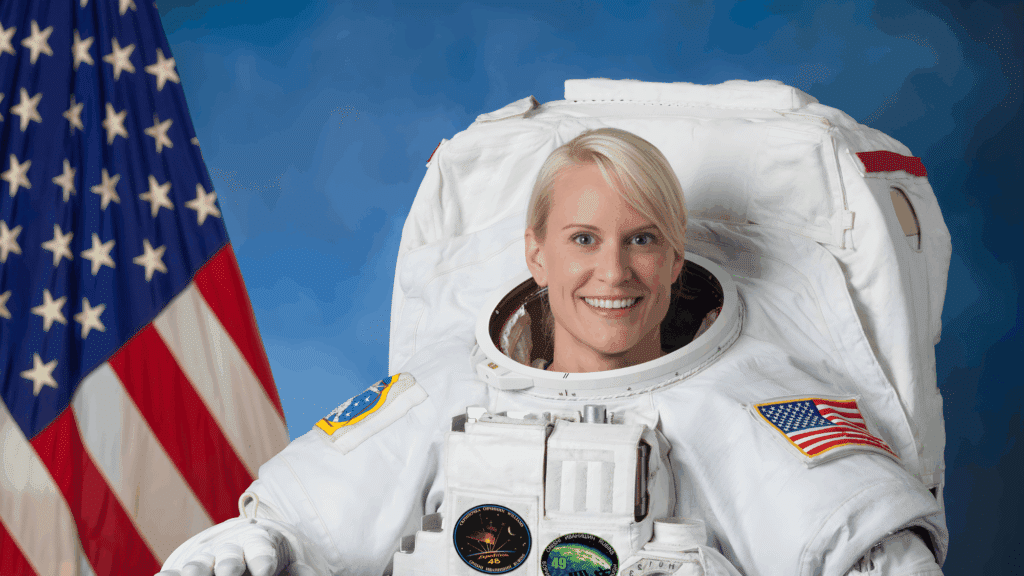
Some people dream of touching the stars. Others actually do it.
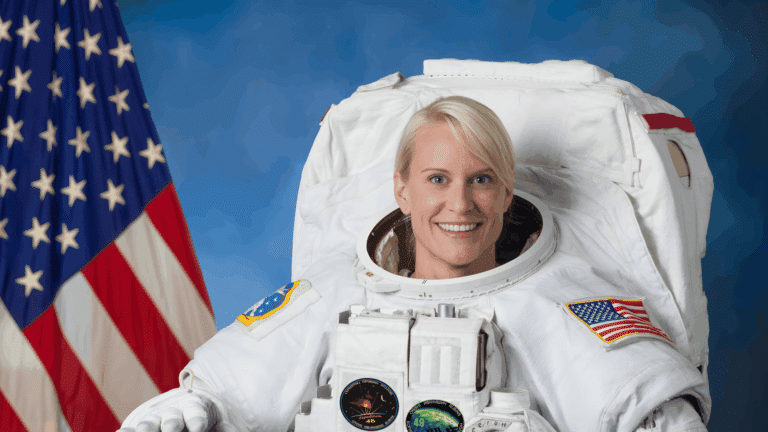
Kate Rubins stands among a select group who’ve turned that dream into reality. But her story isn’t just about floating in zero gravity.
It’s about a scientist who swapped lab coats for spacesuits and never stopped pushing boundaries.
What drives someone to leave behind a successful career to chase the unknown? Her story offers some answers, and they might just surprise you.
Early Life and Inspiration Behind Kate Rubins’ Space Journey
Kate Rubins was born on October 14, 1978, in Farmington, Connecticut. Growing up, she wasn’t the typical kid dreaming of rockets and astronauts.
Instead, her curiosity leaned toward understanding how life works at its most basic level.
Science fascinated her, but space wasn’t on her radar just yet. Her family encouraged exploration and learning, which planted the seeds for what was to come.
Rubins spent her childhood asking questions and seeking answers. That natural curiosity would eventually lead her down two unexpected paths that somehow merged into one: molecular biology and space exploration.
Kate Rubins’ Groundbreaking Education and Pre-NASA Research
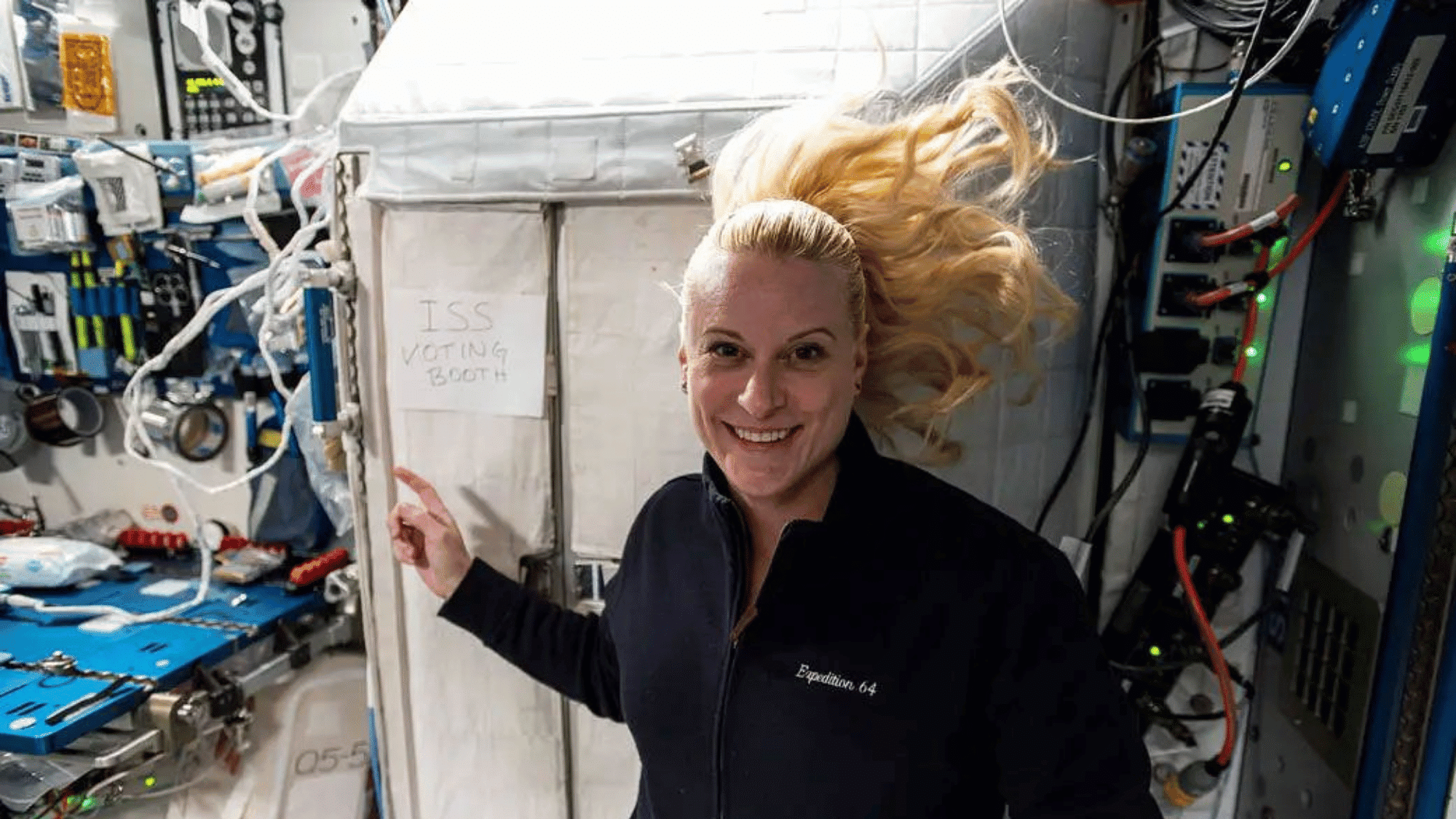
Image Source: Britannica
Rubins built a solid academic foundation that set her apart. Her educational path wasn’t typical for an astronaut, but that’s exactly what made her valuable to NASA’s mission.
- Earned a Bachelor of Science degree in Molecular Biology from the University of California, San Diego in 1999
- Completed her Ph.D. in Cancer Biology at Stanford University Medical School in 2005
- Conducted postdoctoral research at the Whitehead Institute for Biomedical Research in Cambridge, Massachusetts
- Studied deadly viral diseases, including Ebola, smallpox, and monkeypox, in biosafety level 4 laboratories
- Developed the first model of smallpox infection to study how the virus spreads
- Published over a dozen scientific papers on infectious disease mechanisms
- Worked as a principal investigator running her own research lab before NASA
- Focused on understanding host-pathogen interactions at the molecular level
NASA Selection: From Scientist to Astronaut
In 2009, Kate Rubins made a decision that would change everything. She applied to NASA’s astronaut program, competing against thousands of hopefuls.
Out of more than 3,500 applications, NASA selected just nine candidates that year. Rubins was one of them. The transition wasn’t easy. She went from controlling lab experiments to learning how to control spacecraft. Her days shifted from pipettes and microscopes to simulators and survival training.
Rubins is trained in everything from robotics to Russian language skills. She learned to spacewalk underwater and practiced emergency procedures until they became second nature.
Two years of intense preparation transformed the molecular biologist into a fully qualified astronaut.
By 2011, she’d earned her wings. The scientist who once studied viruses through microscopes now had the universe as her laboratory.
Historic Space Missions of Kate Rubins
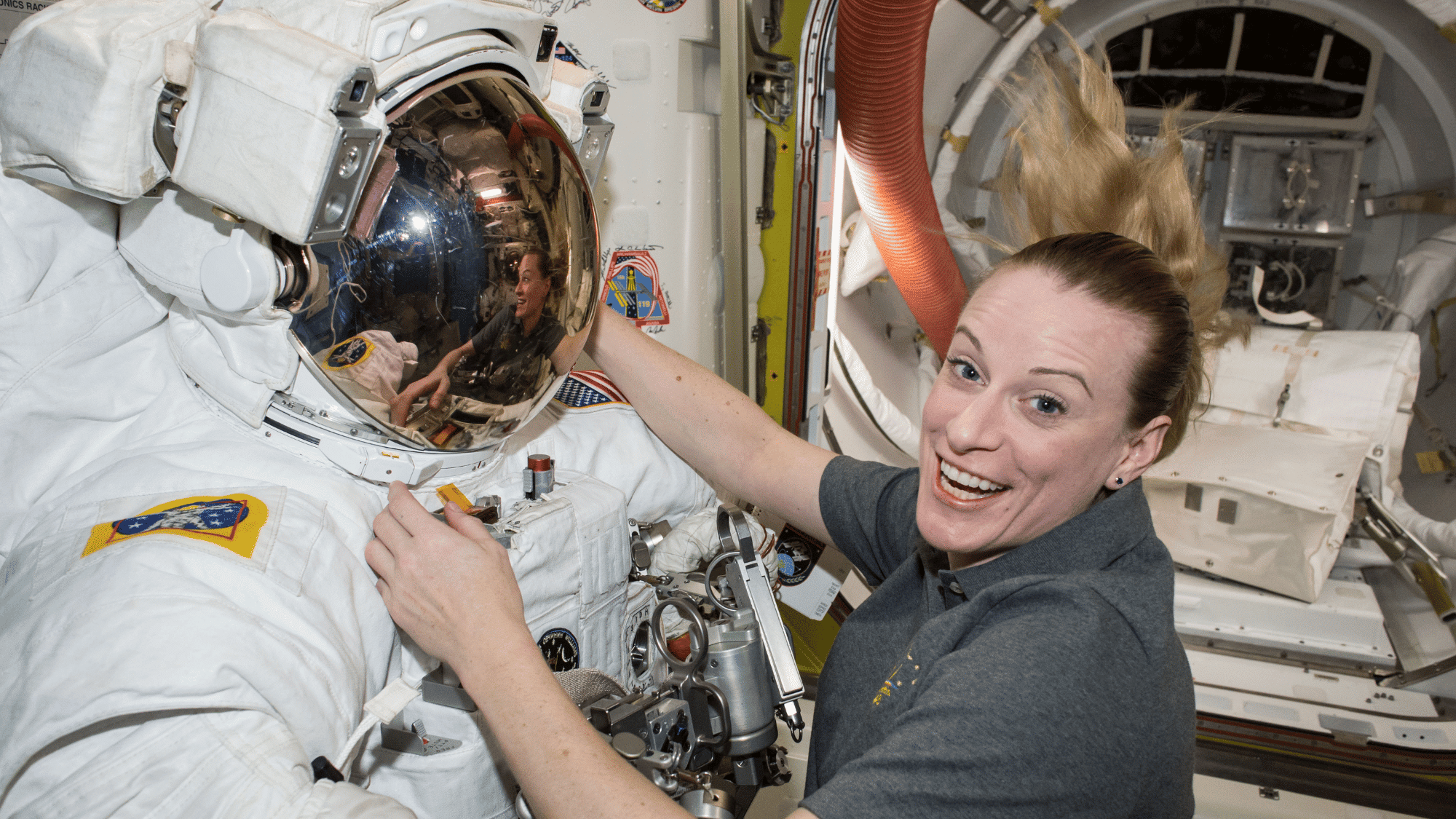
Image Source: Wikimedia Commons
Kate Rubins has launched into space twice, spending significant time aboard the International Space Station. Each mission brought new challenges, discoveries, and milestones that expanded human knowledge.
Expedition 48/49 (July 2016 – October 2016)
Rubins launched on her first spaceflight aboard Soyuz MS-01 on July 7, 2016. She spent 115 days on the ISS, making history as the first person to sequence DNA in space using a MinION device.
This breakthrough opened doors for diagnosing diseases and identifying microbes in orbit. During her stay, she conducted two spacewalks totaling 12 hours and 46 minutes.
Rubins also participated in over 100 scientific experiments ranging from plant growth studies to human health research. She returned to Earth on October 30, 2016.
Expedition 63/64 (October 2020 – April 2021)
Her second mission began on October 14, 2020, aboard Soyuz MS-17.
Rubins spent 185 days in space this time around. She participated in cardiovascular research and studied how the human body adapts to weightlessness.
Rubins also helped install new equipment and maintain critical ISS systems. She returned home on April 17, 2021, having accumulated more than 300 days in space across both missions.
Kate Rubins’ Legacy: Impact on Science and Future Exploration
Kate Rubins didn’t just visit space. She changed how we think about conducting science there. Her DNA sequencing work proved that complex biological research can happen beyond Earth’s atmosphere.
That matters for future missions to Mars and beyond, where astronauts might need to diagnose illnesses or identify unknown organisms without ground support.
Rubins showed that scientists don’t have to choose between the lab and the launch pad. They can do both. Her journey inspired a new generation of researchers to consider space as their next frontier.
Young scientists now see that expertise in biology, chemistry, or medicine opens doors to NASA just as much as engineering does.
Rubins proved that space exploration needs diverse minds solving diverse problems. Her legacy isn’t just what she discovered up there, but who she encouraged to follow.
Conclusion
Kate Rubins redefined what an astronaut looks like. She traded petri dishes for the ultimate laboratory and brought her scientific rigor to the stars.
Her story reminds us that there’s no single path to extraordinary achievements. Sometimes the most unlikely combinations create the biggest breakthroughs.
Want to learn more about pioneering astronauts who changed space exploration? There’s a whole universe of inspiring stories waiting. Rubins is still active with NASA, which means her greatest contributions might still be ahead.
For now, she stands as proof that when passion meets preparation, even the sky isn’t the limit. Keep looking up; you never know where your own curiosity might take you.