
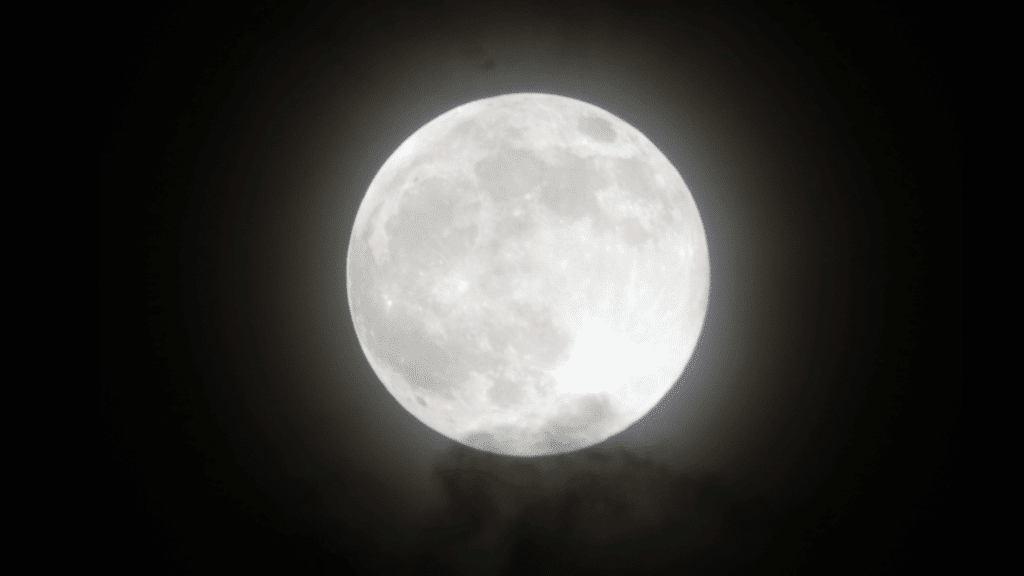
Has anyone ever looked up at the sky and noticed the moon looking orange, red, or even a deep blood red? It looks nothing like the pale white moon from the night before. Strange, right?
It’s not some kind of trick of the eye or the atmosphere or the smoke.
The moon doesn’t actually change; something else is going on. And once the reason clicks, it’s hard to look at the night sky the same way again.
The moon has been pulling off this color act for billions of years. So what’s really behind it? Read on to find out.
What is the Real Moon Color?
The moon’s true color is a dull, dark gray. That is what it looks like from space, away from Earth’s atmosphere. Its surface, called regolith, is made of silicate minerals, basalt, and feldspar.
The darker patches called maria are rich in iron and titanium. The lighter areas are made of feldspar highlands.
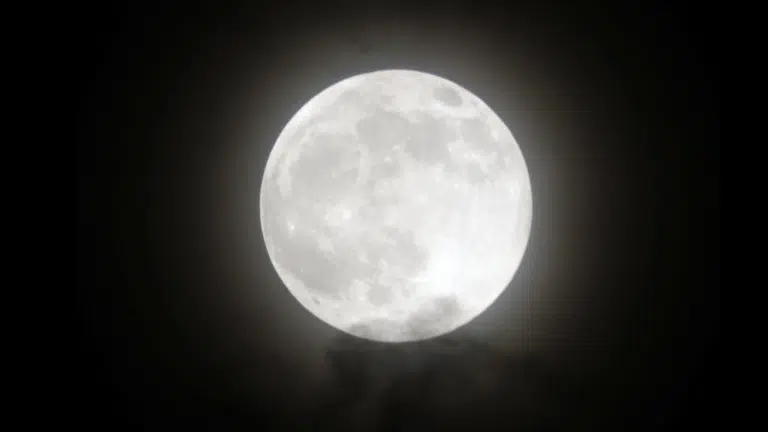
Together, they give the moon its muted, gray-brown look. From Earth, though, it appears white or yellow. That happens because of reflected sunlight and the atmosphere.
The moon itself has not changed. Only the way light reaches human eyes makes it look different.
Why Does the Moon Change Color?
The moon does not actually change color on its own. What changes is the path light takes to reach human eyes.
When the moon sits high in the sky, its light passes through less atmosphere. This makes it look white or pale yellow. But when it sits low on the horizon, light travels through a much thicker layer of air.
That extra air scatters away the blue and violet wavelengths.
Only the warmer tones: orange, red, and yellow make it through. Dust, smoke, and humidity in the atmosphere can make these color shifts even stronger.
Factors that Affect Moon Colors
Several things in Earth’s atmosphere change how the moon looks. Here are the key factors that play a role.
1. Atmospheric Thickness: When the moon sits low on the horizon, its light passes through more atmosphere. This filters out cooler tones and lets warmer reds and oranges show through.
2. Dust and Smoke Particles: Wildfires, dust storms, and volcanic eruptions push particles into the air. These particles scatter light differently, often giving the moon a deep red or orange tint.
3. Humidity and Water Vapor: High moisture levels in the air affect how light scatters. On humid nights, the moon can appear more yellow or hazy than usual.
4. Lunar Eclipses: During a lunar eclipse, Earth blocks direct sunlight from hitting the moon. Only red wavelengths bend around Earth and reach the moon, turning it a striking blood red.
5. Air Pollution: Smog and pollutants in the air scatter and absorb light. In heavily polluted areas, the moon often looks more orange or brownish, especially near the horizon.
Different Moon Color During Celestial Events
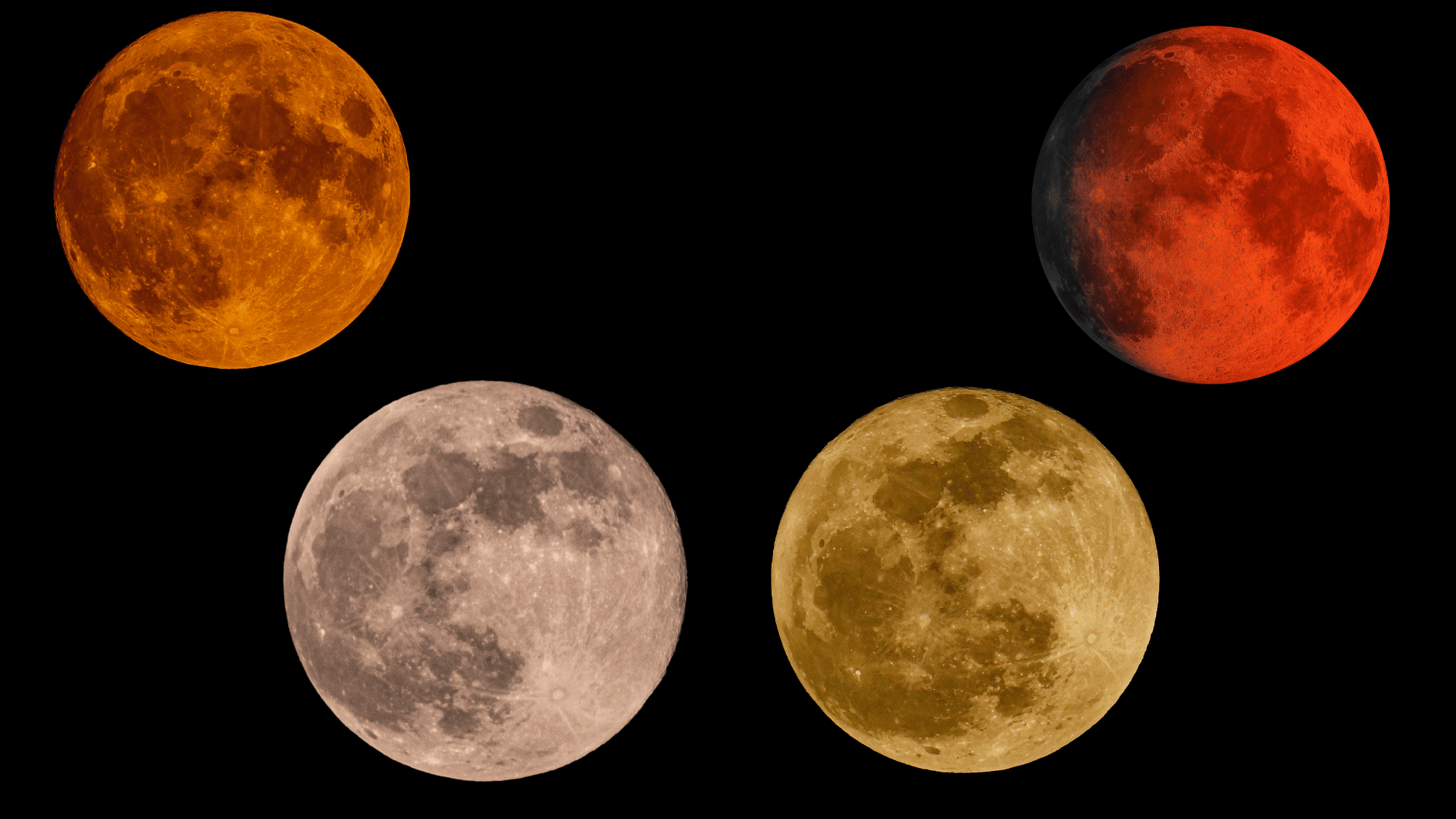
Celestial events bring out some of the most striking moon colors. This is what causes each one.
Blood Red Moon
A blood red moon happens during a total lunar eclipse.
Earth lines up directly between the sun and the moon. Sunlight bends around Earth’s edges and filters through the atmosphere.
Only red wavelengths make it through. The result is a deep, dramatic red glow that covers the entire lunar surface.
Orange Moon
An orange moon is most common when the moon sits low on the horizon. Light travels through a thicker slice of atmosphere at that angle.
Blue light scatters away, leaving orange tones behind. Wildfire smoke and dust in the air can make the orange color even deeper and more noticeable.
Yellow Moon
A yellow moon appears as it rises or sets. At this point, the moon is not as low as an orange moon but is still close to the horizon.
The atmosphere filters out some blue light, leaving a soft yellow tone. It is one of the most commonly seen color shifts during clear nights.
Harvest Moon
A harvest moon occurs closest to the autumn equinox.
It rises shortly after sunset and sits near the horizon for longer than usual. This extended time near the horizon means more atmospheric filtering.
The moon takes on a warm orange or golden tone, making it look larger and more colorful than a typical full moon.
What is the Moon’s Surface Made Of?
The moon’s surface is covered in a thick layer of broken rock and dust called regolith. This layer formed over billions of years from constant meteor impacts. Beneath it sit two main types of terrain.
The dark, flat plains called maria formed from ancient volcanic activity between 1 and 3 billion years ago.
The lighter, rougher highlands date back even further, around 4.5 billion years. Apollo mission samples confirmed these findings.
Astronauts brought back gray anorthosite from the highlands and dark basalt from the maria. Both rock types tell the story of how the moon formed and changed over time.
Does the Moon’s Surface Color Change Over Time?
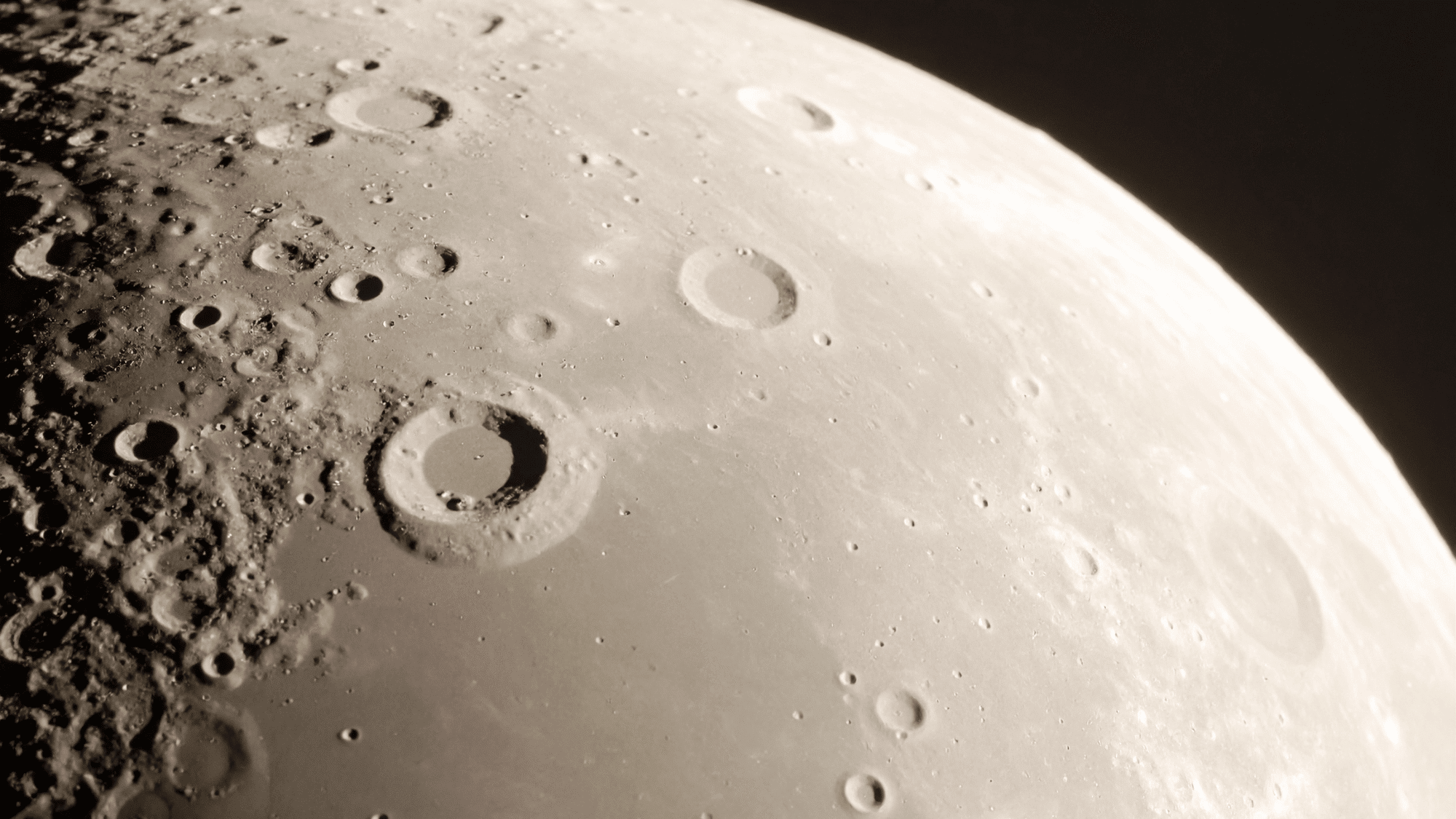
Yes, the moon’s surface color does change, but very slowly. The process is called space weathering.
Over millions of years, the lunar surface gets hit by solar wind, tiny micrometeorites, and radiation. These forces gradually darken and redden the top layer of regolith.
Fresh meteor impacts expose brighter material underneath, creating lighter patches called rays.
Over time, those bright spots fade too as space weathering continues. Scientists study these changes by comparing older and newer lunar images. The color shifts are too slow for any person to notice in a lifetime.
But over geological time, the moon’s surface does get darker and more muted with age.
Common Myths About Moon Color
Many people have wrong ideas about why the moon changes color. Here are some of the most common myths.
- The Moon Actually Turns Red or Orange: The moon does not change color on its own. Its surface stays gray. What changes is how Earth’s atmosphere filters the light before it reaches human eyes.
- A Blood Red Moon Means Something Bad Is Coming: This is a long-standing myth with no scientific basis. A red moon during a lunar eclipse is simply caused by Earth’s shadow and atmospheric light bending. Nothing more.
- The Moon Looks Bigger and More Colorful Because It Is Closer: Many people believe a large, orange moon near the horizon means the moon has moved closer to Earth. In reality, it is an optical illusion caused by how the human brain processes objects near the horizon.
- Blue Moons Are Always Blue: The term “blue moon” usually refers to the second full moon in a calendar month. It has nothing to do with color. A genuinely blue-tinted moon is extremely rare and only happens after major volcanic eruptions or wildfires.
- Moonlight Has Its Own Color: The moon does not produce any light of its own. It only reflects sunlight. The color seen from Earth depends entirely on atmospheric conditions at the time of viewing.
- A Yellow Moon Means Bad Weather Is Coming: Some people believe a yellow moon signals incoming storms. A yellow moon simply means the moon is sitting low in the sky and light is passing through more atmosphere. It has no connection to weather patterns.
The Bottom Line
The moon’s color tells a story, and now that story makes sense. Its surface stays gray.
But Earth’s atmosphere, dust, smoke, humidity, and celestial events all shape what gets seen from the ground.
A red moon during an eclipse, an orange glow near the horizon, a rare blue tint after a wildfire, none of it is random. Science explains all of it clearly.
Next time the moon looks unusually colored, take a moment to think about what is happening in the atmosphere above.