
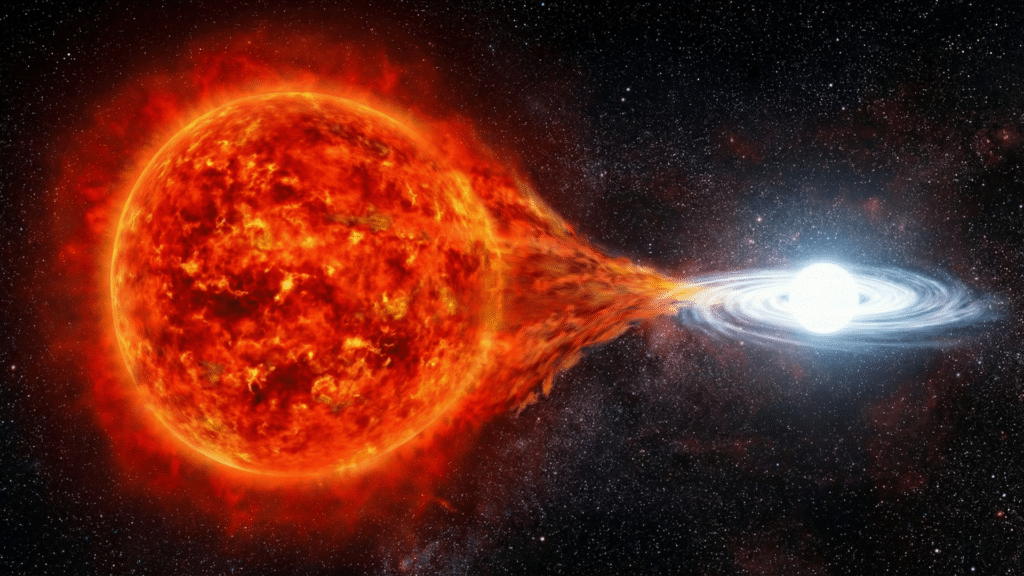
T Coronae Borealis is a star that has drawn attention for many years. It sits in the northern sky and belongs to a rare group of stars known for sudden bright outbursts.
In recent months, people have become more interested in what might happen next. Scientists are closely watching its behavior.
Many sky watchers are curious and want to know more. This blog offers a simple look at the star and why it’s now in the spotlight.
Readers will learn what makes it special, how it acts, and what experts believe could happen in the near future. It’s a story that brings science and space closer to home.
What is T Coronae Borealis?
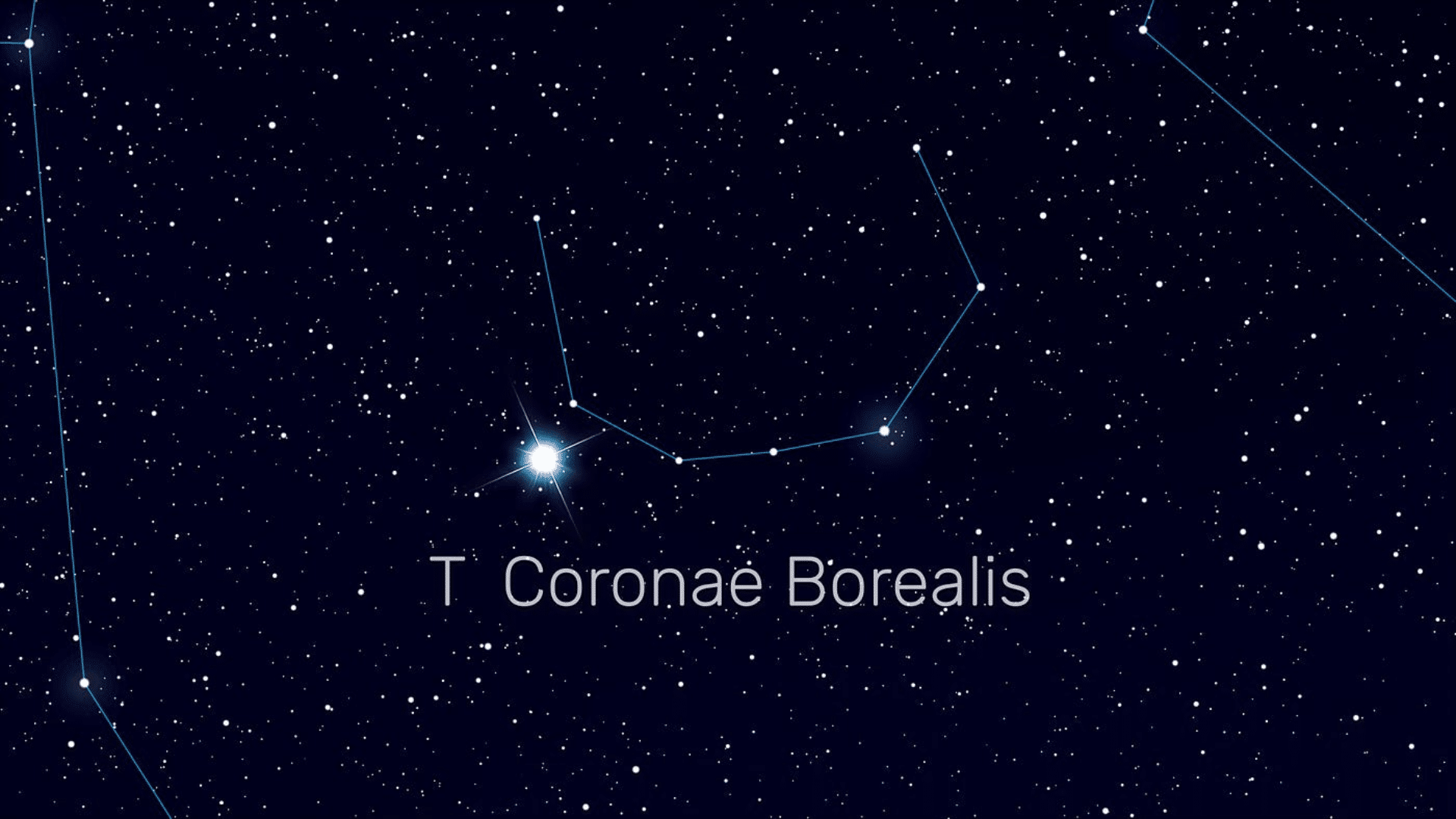
Image Source: GW Media Relations
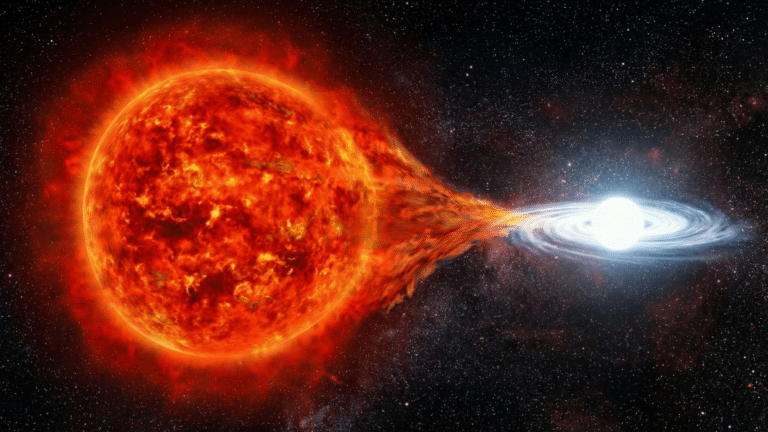
T Coronae Borealis (T CrB) is a binary star system located about 3,000 light-years from Earth. It’s composed of two very different stars:
- A red giant, which is an older, bloated star that’s nearing the end of its life.
- A white dwarf is a dense stellar remnant formed from a once-sun-like star.
These two stars are gravitationally bound and orbit each other closely. Over time, the white dwarf pulls gas, mostly hydrogen, from the red giant’s outer layers. This process leads to a periodic and powerful stellar event known as a nova.
T CrB is classified as a recurrent nova, a highly unusual type of star system that experiences multiple nova eruptions over a human timescale.
How a Nova Works: The Science Behind the Eruption
In a binary system like T CrB, the white dwarf steadily accretes gas from the red giant. As the gas builds up on the surface of the white dwarf, it forms a hot, dense layer.
Once the pressure and temperature reach a critical point, nuclear fusion ignites in an explosive burst.
This sudden outburst causes the star system to become thousands of times brighter, sometimes bright enough to be seen with the naked eye from Earth. This is what astronomers call a nova, and unlike a supernova, it doesn’t destroy the star.
After the nova event, the system settles down, and the cycle begins again.
Historical Nova Eruptions: 1866 and 1946
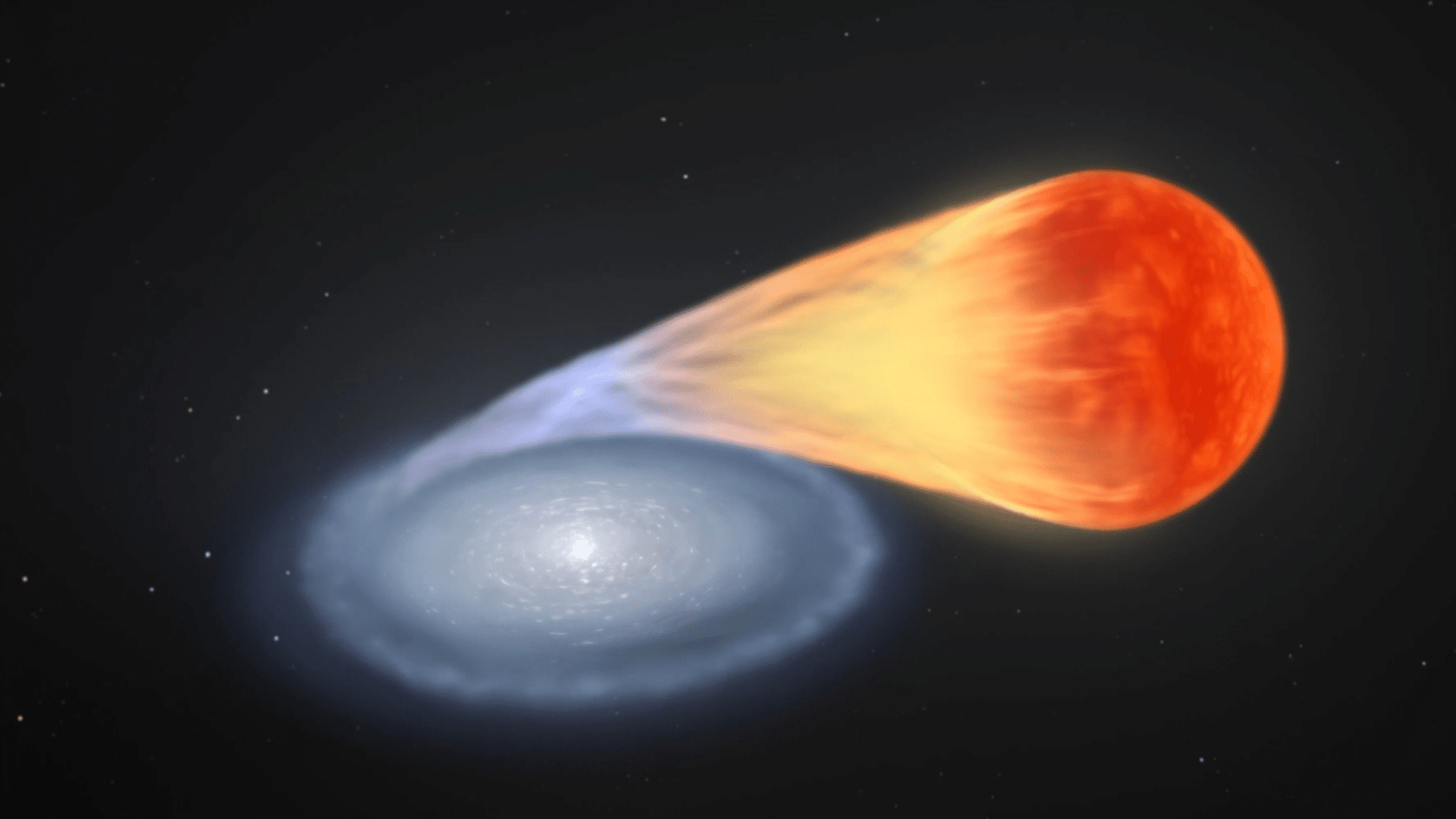
Image Source: University of Exeter
T Coronae Borealis has gone nova at least twice in recorded history. These eruptions were well observed and documented, providing key data for predicting future behavior. Below is a quick comparison of the two major events:
| Event Year | Peak Brightness | Visibility | Duration of Bright Phase | Notable Observations |
|---|---|---|---|---|
| 1866 | Magnitude 2.0 | Visible to the naked eye | A few days | First recorded eruption; surprised astronomers |
| 1946 | Magnitude 3.0 | Visible without telescopes | Several days | Matched 80-year interval prediction; well-studied |
These historical eruptions are key to the current prediction that T CrB may go nova again soon, possibly within the same 80-year cycle.
Why Astronomers Think It May Go Nova Soon
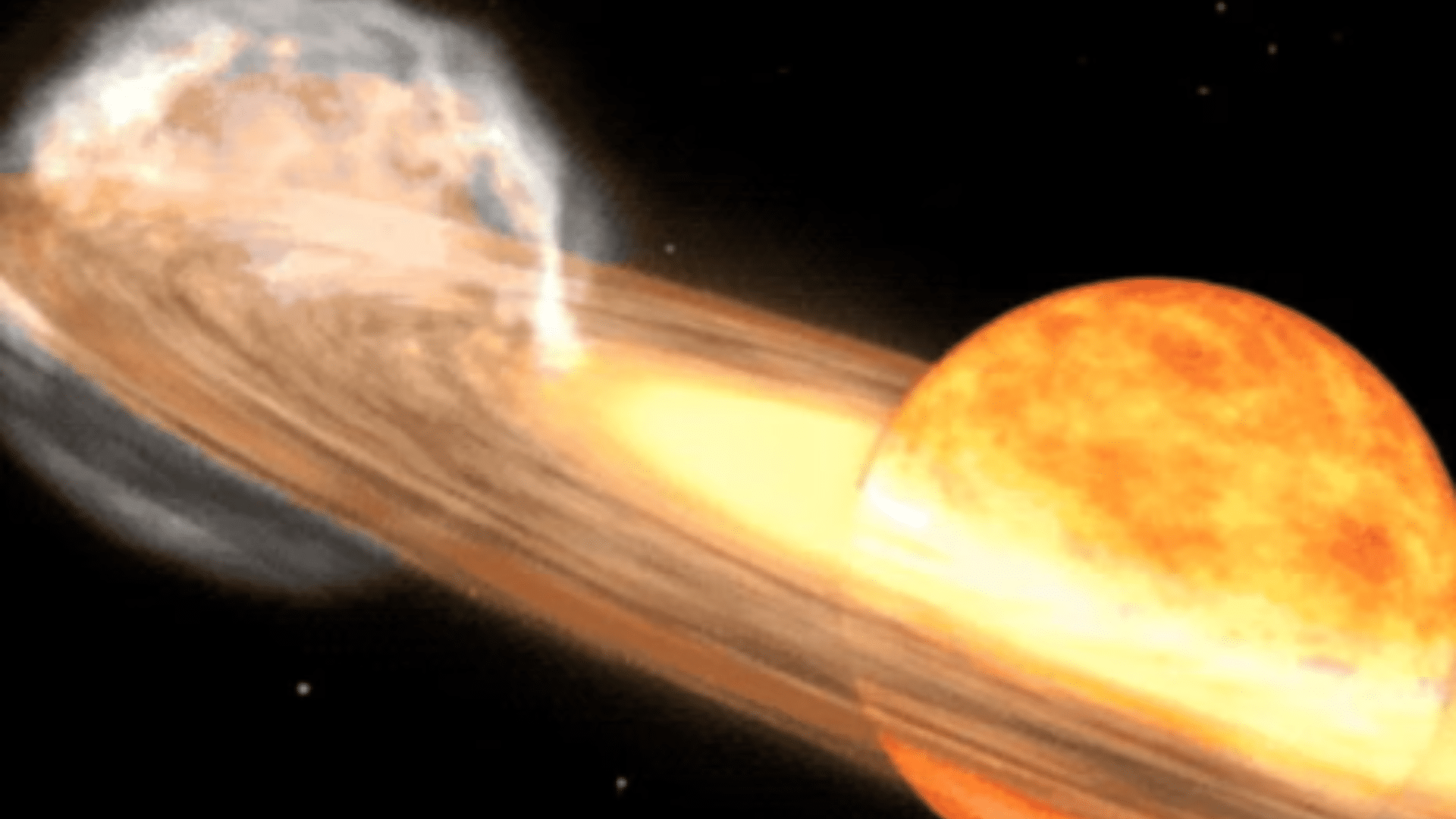
Image Source: The Guardian
In recent years, T Coronae Borealis has shown unusual activity, which closely matches the pre-nova behavior observed before its 1946 outburst. Here are the main indicators:
1. Unusual Brightness Drop
In early 2023, astronomers observed a sharp and unexpected drop in T CrB’s visual brightness, often referred to as a “pre-eruption dip.”
The system dimmed by nearly half a magnitude, a significant change for a star like this. This same phenomenon was recorded in 1945, less than a year before the previous nova.
This dip is believed to occur when the outer layers of the red giant cool and contract slightly, temporarily slowing down the flow of gas to the white dwarf.
Paradoxically, this slowdown can signal that a nova is closer, not farther away, as it allows the white dwarf to reach a more unstable state that ends in eruption.
2. Cooling of the Red Giant
Spectroscopic studies have revealed a decline in the red giant’s surface temperature, indicating that the star is in a transitional phase.
A cooler red giant suggests a change in internal dynamics, possibly related to magnetic activity or envelope instability.
This cooling alters the nature of the gas being transferred to the white dwarf. If the material becomes denser or less ionized, it can affect the rate of accretion and may actually hasten the build-up of pressure needed to trigger nuclear fusion on the white dwarf’s surface.
The system is acting in ways that strongly suggest a tipping point is near.
3. Reduced Ultraviolet and X-ray Emissions
Another important clue comes from NASA and ESA’s space observatories, which have been tracking emissions from the T CrB system across various wavelengths.
Observations show a marked decline in UV and X-ray output, which often points to changes in accretion behavior and surface activity on the white dwarf.
In other words, the region around the white dwarf seems to be entering a quiet phase, which, ironically, could precede a dramatic nova outburst.
This is similar to what was observed in other novae, such as RS Ophiuchi, where a temporary lull in high-energy activity preceded the explosion.
4. Optical Brightness Monitoring
Over the past decade, long-term optical monitoring has shown a gradual upward trend in brightness.
This slow, steady rise, known as pre-nova brightening, is thought to reflect the slow build-up of heat and pressure on the white dwarf’s surface due to ongoing mass transfer.
This increasing light curve trend, observed by organizations like the AAVSO (American Association of Variable Star Observers), matches pre-eruption patterns not only from the 1946 event but also from other known recurrent novae. It serves as yet another clue that T CrB may be on the cusp of erupting.
What Would the Nova Look Like from Earth?
If T Coronae Borealis goes nova again, it is expected to reach a visual magnitude of 2 or brighter, making it clearly visible to the naked eye. For comparison:
- Magnitude 2.0 is roughly as bright as the North Star (Polaris).
- It would appear as a “new star” in the constellation Corona Borealis.
It will likely remain visible for several days to a few weeks before fading back to its original dim state (magnitude 10+), requiring telescopes to view again.
How Often Do Recurrent Novae Occur?
Recurrent novae are extremely rare. Of the billions of stars in our galaxy, only a handful show this repeating nova behavior. Each system is different, with recurrence intervals ranging from years to over a century.
Some known recurrent novae include:
- RS Ophiuchi: erupts roughly every 15-20 years
- U Scorpii: erupts every 8–12 years
- T Coronae Borealis: ~80-year interval
These systems provide valuable data for understanding how binary interactions evolve and how white dwarfs may eventually become Type Ia supernovae, which are used to measure the expansion of the universe.
What Happens After the Nova, and Could it Lead to a Supernova?
After the nova event, the T Coronae Borealis system doesn’t end; it resets. The explosive outburst ejects a shell of hot gas into space, but the white dwarf remains intact.
Over time, the red giant resumes shedding material, which the white dwarf begins to accrete again. This process builds a fresh layer of hydrogen on the white dwarf’s surface, setting the stage for another eruption decades later.
While this cycle can repeat many times, it won’t go on forever. If the white dwarf eventually accumulates enough mass to reach the Chandrasekhar limit (~1.4 solar masses), it could collapse under its own weight and explode as a Type Ia supernova, a much more powerful and final event.
However, T CrB’s white dwarf is thought to be well below that limit for now, and each nova actually ejects some mass, delaying such a fate.
Where and When to See It
T Coronae Borealis may soon become visible to the naked eye during its next eruption. Here’s a quick guide to help you spot it when the time comes:
| Category | Details |
|---|---|
| Best Time to Look | Spring and summer months in the Northern Hemisphere |
| Constellation | Corona Borealis, located between Boötes and Hercules |
| How to Spot It | Look for a semi-circle or crown shape of stars in the night sky |
| T CrB sits inside this arc, normally too dim but will brighten during a nova | |
| Visibility | If a nova occurs, it may become visible to the naked eye, with a magnitude of 2–3 |
| Helpful Tools | – Stargazing apps: SkyView, Stellarium– Binoculars (if needed)- Follow alerts from NASA, ESA, or AAVSO |
What are Scientists Doing Now?
Researchers are actively monitoring T CrB using:
- Ground-based optical telescopes
- Ultraviolet and X-ray space telescopes
- Infrared instruments to track temperature changes
- Spectroscopy to study gas flow and chemical makeup
Several academic papers are being prepared based on these observations, and multiple alert systems are in place to notify astronomers when the eruption begins.
Amateur astronomers also play a key role; anyone with a telescope can contribute data to organizations like the American Association of Variable Star Observers (AAVSO).
To Conclude
T Coronae Borealis is one of the most exciting stars to watch in the coming months. Signs suggest it may go nova soon, just as it did in 1866 and 1946.
When it does, it could become one of the brightest objects in the night sky. The event will be safe but rare, and may not happen again for another 80 years.
Scientists are watching it closely, and sky watchers are eager to catch a glimpse.
If you enjoy learning about space, keep checking trusted sources for updates. Don’t miss your chance to see a real-life nova.