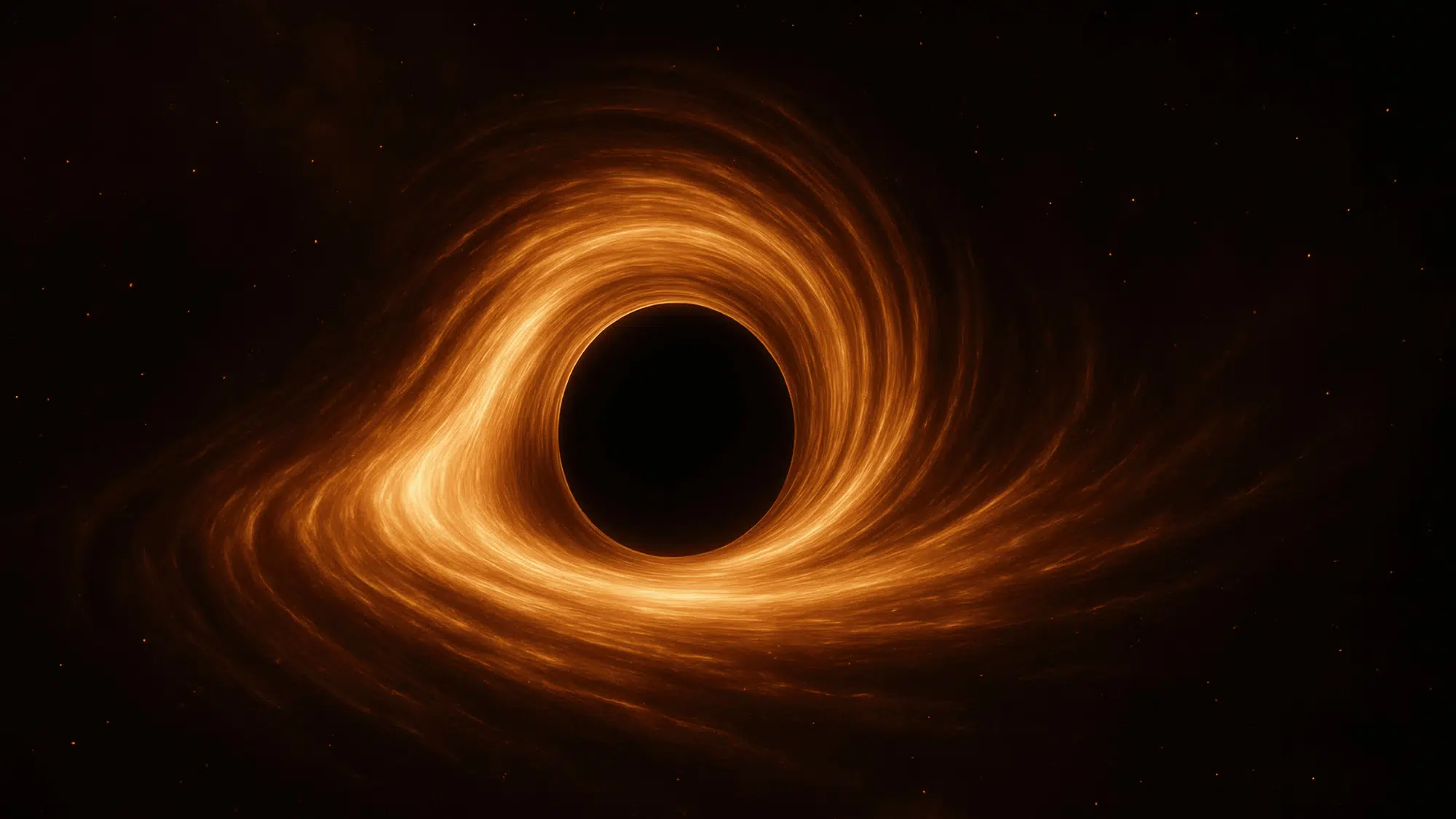



Black holes are one of the strangest things in the universe. They pull in everything around them, even light can’t get out.
Scientists have studied them for decades, and yet, most people still have no idea how they actually form.
It sounds like something out of a sci-fi movie. But black holes are very real, and the story behind how they come to life is wilder than most people expect.
So, how does something so powerful actually get made? The answer might surprise you. Read on to find out.
What is a Black Hole?
A black hole is a region in space where gravity is so strong that nothing can escape it. Not even light. It forms when a massive amount of matter gets packed into a very small space.
Think of it like a cosmic vacuum but far more powerful than anything on Earth.
Once something crosses the edge of a black hole, called the “event horizon,” there’s no coming back.
Black holes come in different sizes. Some are small, and some are billions of times bigger than the Sun. Each one plays a unique role in space.
How Stars Form Black Holes
Not every star becomes a black hole. Only the biggest ones do, and the process they go through is nothing short of dramatic.
- A massive star is born: It all starts with a star at least 20 times bigger than the Sun. These giant stars burn extremely hot and live fast compared to smaller ones like our Sun.
- The star burns fuel: For millions of years, the star burns hydrogen deep in its core. This burning creates an outward pressure that keeps the star from collapsing under its own weight.
- The core runs out of fuel: Eventually, the hydrogen runs dry. The core starts burning heavier elements like helium and carbon. But this only buys the star a little more time before everything changes.
- The star collapses: With no fuel left, there is nothing pushing outward anymore. Gravity wins. The core collapses in on itself in a matter of seconds, one of the fastest and most violent events in the universe.
- A supernova explodes: The collapsing core sends a shockwave tearing through the outer layers of the star. This triggers a massive explosion called a supernova, so bright it can outshine an entire galaxy for a short time.
- A black hole is left behind: Once the explosion clears, what remains is a core so dense and heavy that nothing can stop gravity from crushing it further. At that point, a black hole is born.
Different Types of Black Holes and How They are Formed
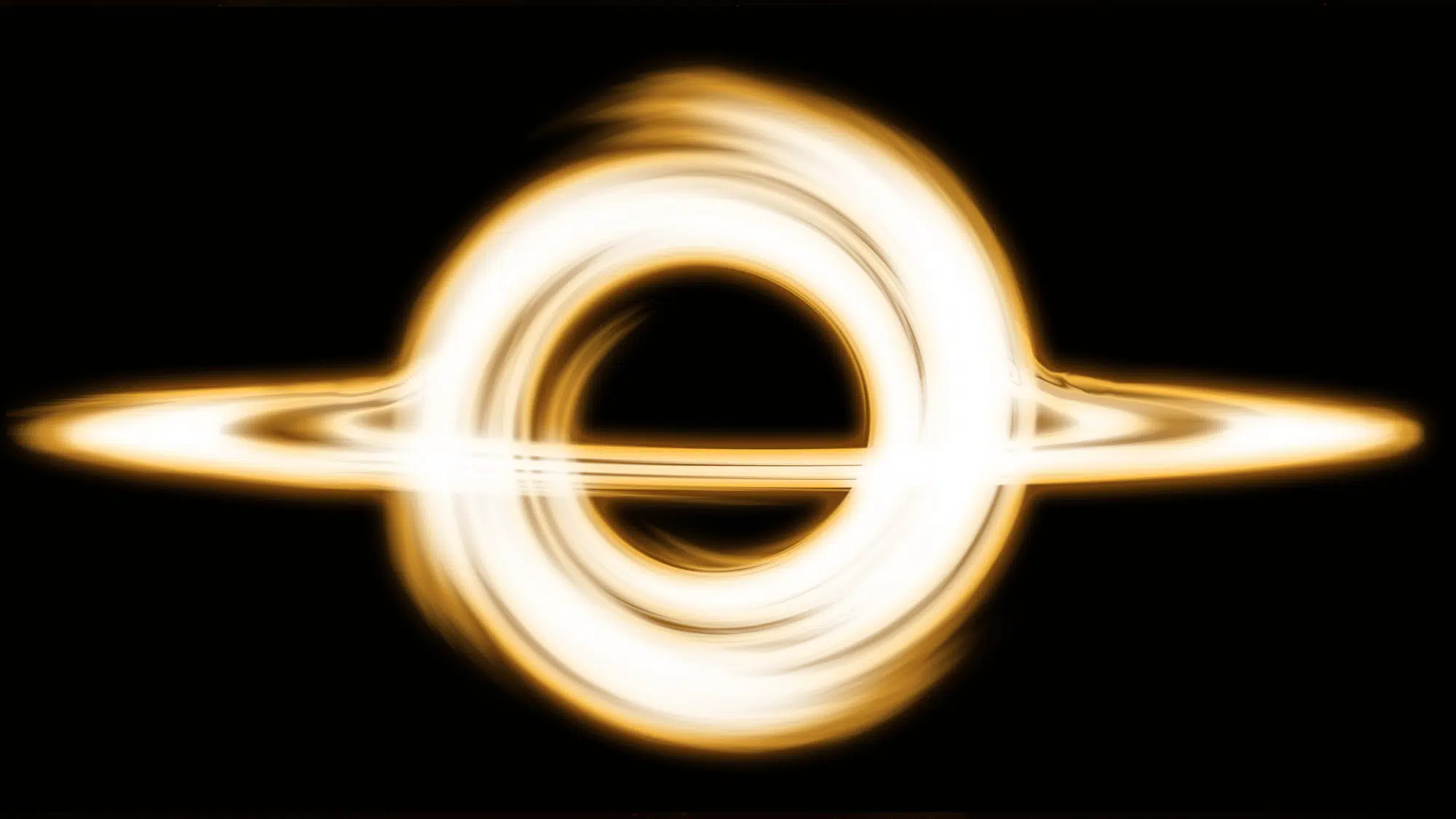
Black holes are not all the same. They vary in size and how they form, and each type has its own story.
1. Stellar Black Holes
These are the most common types. They form when a massive star collapses after a supernova.
Stellar black holes are relatively small, usually between 5 and 20 times the mass of the Sun. But don’t let that fool you. Their gravitational pull is still incredibly strong, and they can pull in nearby gas and stars with ease.
2. Supermassive Black Holes
These are the giants of the black hole family. They sit at the center of most large galaxies, including our own Milky Way.
Supermassive black holes can be millions or even billions of times heavier than the Sun. How they got so big is still one of the biggest questions in science today.
3. Intermediate Black Holes
These fall right in the middle. They are bigger than stellar black holes but smaller than supermassive ones. For a long time, scientists were not even sure they existed.
Now, there is growing evidence that they form when smaller black holes merge together over time.
4. Primordial Black Holes
These are the oldest kind. Scientists think they may have formed shortly after the Big Bang. They were not made from stars at all.
Instead, they came from dense patches of matter in the very early universe. Primordial black holes are still mostly a theory, but many researchers believe they are out there.
What are the Main Characteristics of a Black Hole
Black holes have some truly strange features. Understanding these characteristics helps paint a clearer picture of what makes them so unique.
- Event Horizon: This is the point of no return. Once anything crosses this boundary, it cannot escape the black hole’s gravity, not even light.
- Singularity: At the very center of a black hole lies the singularity. This is where all the mass is packed into an infinitely small point, and the laws of physics break down completely.
- Gravitational Pull: Black holes have an extremely powerful gravitational force. The closer something gets, the stronger the pull becomes, making escape impossible beyond a certain point.
- Accretion Disk: As a black hole pulls in nearby matter, that matter forms a spinning disk around it. This disk glows brightly and releases enormous amounts of energy as it heats up.
- Hawking Radiation: Black holes slowly lose energy over time. Physicist Stephen Hawking discovered that black holes emit tiny amounts of radiation. Over billions of years, this can cause a black hole to shrink and eventually disappear.
- Time Dilation: Gravity affects time. Near a black hole, time moves much more slowly compared to areas farther away. This effect gets stronger the closer one gets to the event horizon.
- Invisibility: Black holes cannot be seen directly. Since no light escapes them, scientists detect them by observing how they affect the space and matter around them.
What Happens Inside a Black Hole?
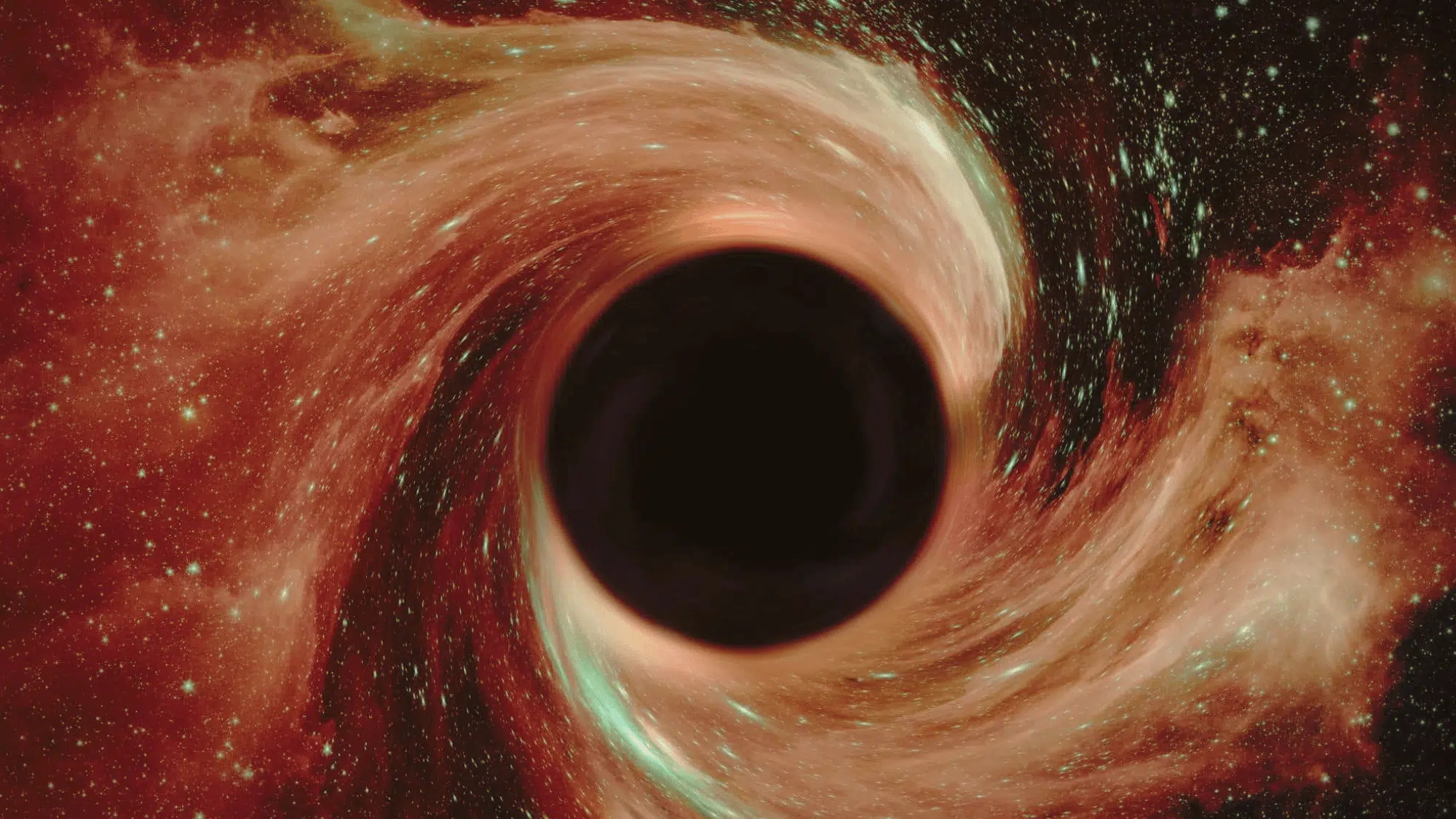
Nobody truly knows what happens inside a black hole. That’s the honest answer.
No spacecraft has ever gone in, and no signal has ever come back out. So everything scientists know comes from math, theory, and observation from the outside.
What they do believe is that the deeper something falls into a black hole, the more extreme things get.
Gravity becomes stronger with every passing moment. Space and time stop behaving the way they normally do. Matter gets stretched and compressed in ways that are hard to picture.
At the center sits the singularity, a place where all known science simply stops working.
Why Don’t Black Holes Suck Up Everything?
A lot of people assume black holes act like giant vacuum cleaners pulling in everything around them. But that’s actually a common misconception.
Black holes only affect things that get too close. Objects that stay far enough away simply orbit them, just like planets orbit the Sun.
If the Sun were suddenly replaced by a black hole of the same mass, Earth would actually keep moving in the same orbit. Nothing would get pulled in.
A black hole’s gravity is powerful, but it has limits. Only things that cross the event horizon are truly gone for good.
Recent Discoveries About Black Hole Formation
Science never stands still. Researchers keep making new finds about black holes that change the way the universe is understood.
- The First Image of a Black Hole (2019): The Event Horizon Telescope captured the very first real image of a black hole. It sat at the center of galaxy M87, confirming what scientists had long theorized.
- Sagittarius A Image (2022)*: Scientists captured the first image of the black hole at the center of our own Milky Way galaxy. This was a massive step forward in understanding black holes up close.
- Black Hole Mergers Detected: Gravitational wave detectors like LIGO have picked up signals from two black holes colliding. These mergers give scientists a whole new way to study how black holes grow over time.
- Faster Formation Than Expected: Recent studies suggest some black holes formed much earlier in the universe than previously thought. This has raised big new questions about how the earliest black holes came to be.
- Black Holes and Galaxy Growth: New research shows a strong connection between black hole size and galaxy size. Scientists now believe black holes may actually play a big role in shaping the galaxies around them.
- Smallest Black Hole Ever Found: Researchers recently identified one of the smallest black holes on record. Named “The Unicorn,” it sits just 1,500 light-years from Earth and is only about 3 times the Sun’s mass.
Conclusion
Black holes are far more than just scary voids in space. They shape galaxies, bend time, and challenge everything science thought it knew about the universe.
From dying stars to billion-solar-mass giants sitting at galactic centers, each type tells a different story.
Scientists are still learning. Every new image, every gravitational wave detected, and every fresh study adds another piece to the puzzle.
Got a question about black holes? Drop it in the comments below to break down the universe, one discovery at a time.