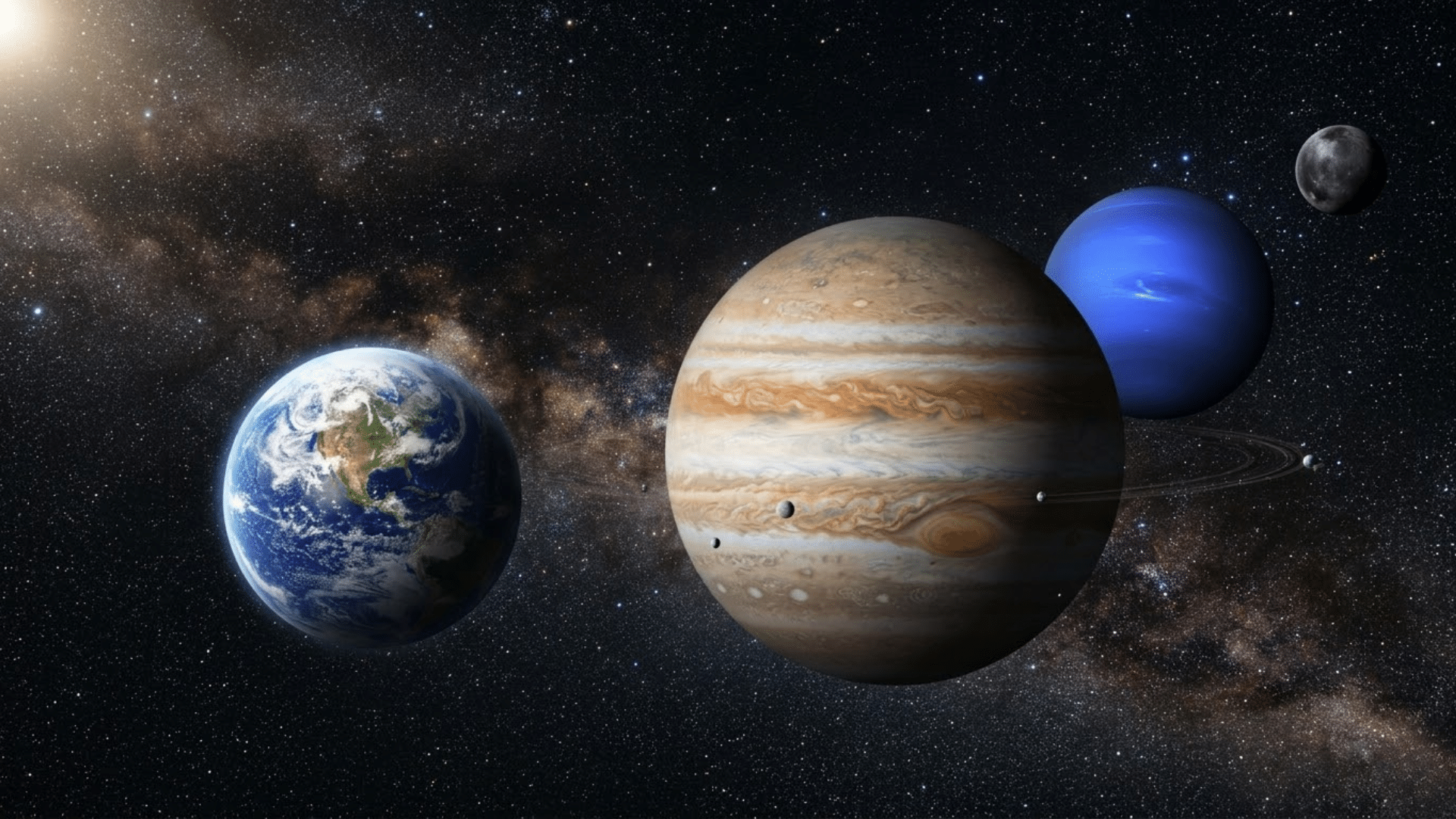



For most of history, planets were simply seen as bright objects moving across the night sky. As knowledge grew, that simple view changed.
Scientists began to notice patterns in size, surface, and behavior. These patterns led to a better way to group planets by construction and behavior.
This shift helped turn basic observation into a deeper understanding. Instead of seeing planets as similar points of light, they are now studied as distinct worlds with clear differences.
Learning about these groups makes it easier to follow how planets form, change, and fit into the larger picture of space.
What is a Planet?
A planet is a large object in space that orbits a star, such as the Sun. It does not produce its own light but reflects light from the star it circles.
To be called a planet, it must have enough gravity to form a nearly round shape. It must also clear its orbit, meaning it has removed or controlled any nearby objects.
Planets can be made of rock, gas, or ice, and they vary greatly in size and structure.
In our solar system, there are eight recognized planets, each with its own unique features and motion through space.
How are Planets Classified?
Planets are classified using key features that help scientists group them in a clear and structured way:
- What they are made of: Planets can be rocky, gaseous, or rich in icy materials
- Their size and gravity: Some are small and dense, while others are massive with strong gravity
- Distance from their star: Inner planets and outer planets often differ in composition and conditions
- Surface or outer layer: Some have solid ground, while others have thick gas layers with no true surface
- Atmospheric conditions: The presence and type of atmosphere vary widely between planets
- Internal structure: Differences in core, layers, and overall build help define each type
These factors allow scientists to group planets into types that share similar traits and behaviors.
Main Types of Planets in Our Solar System
Planets in our solar system are grouped into clear types based on their composition, size, and overall structure. These categories help explain how each planet is built and how it behaves in space.
Terrestrial Planets (Rocky Planets)
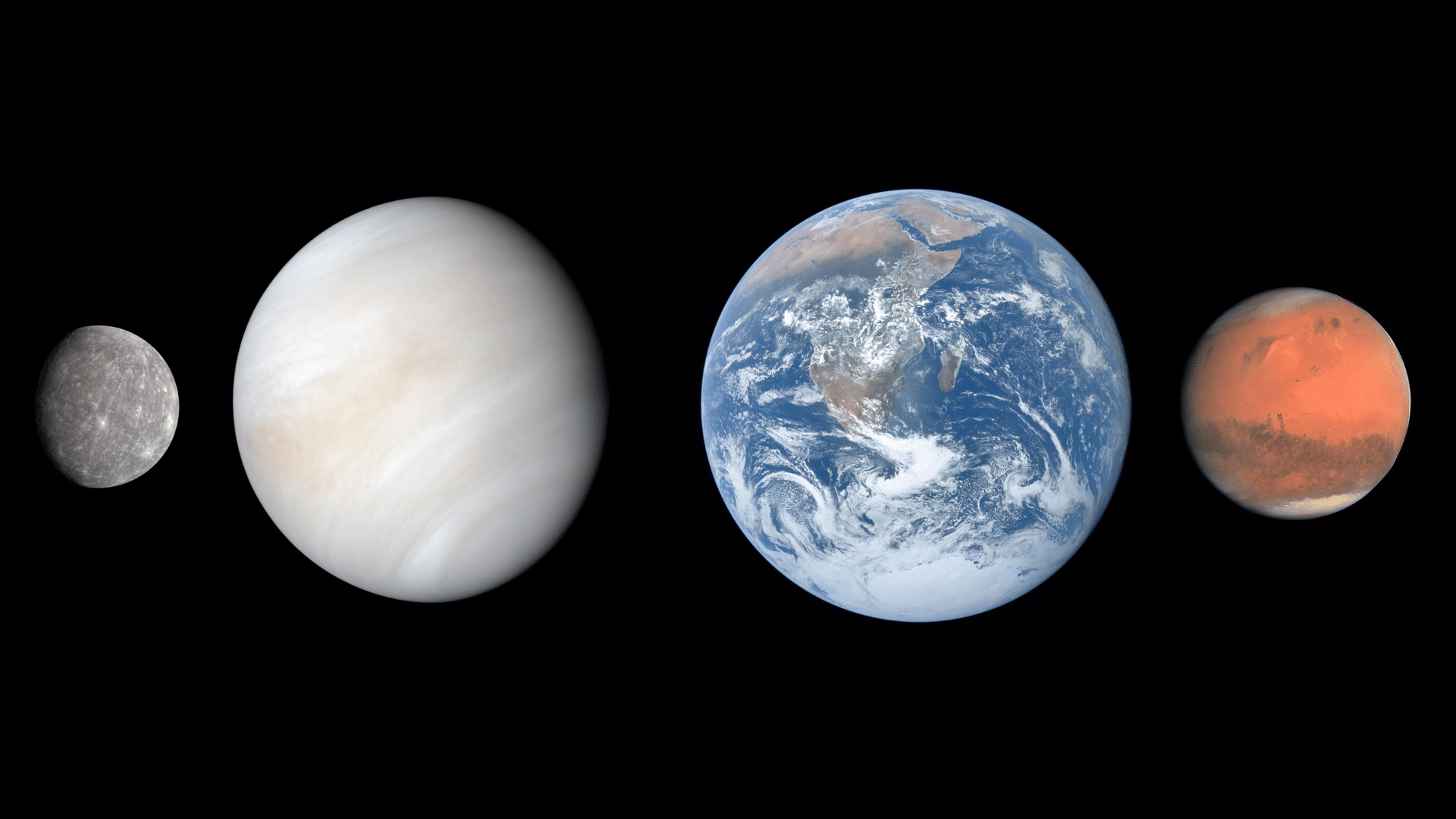
Image Source: Universeh
These are small, dense planets with solid surfaces made mostly of rock and metal. They are located in the inner part of the solar system, closer to the Sun.
Because they are on solid ground, they often show features such as mountains, valleys, and craters. Terrestrial planets have relatively thin atmospheres compared to larger planets.
Mercury, Venus, Earth, and Mars are all part of this group, each with different surface conditions and environments.
Gas Giants
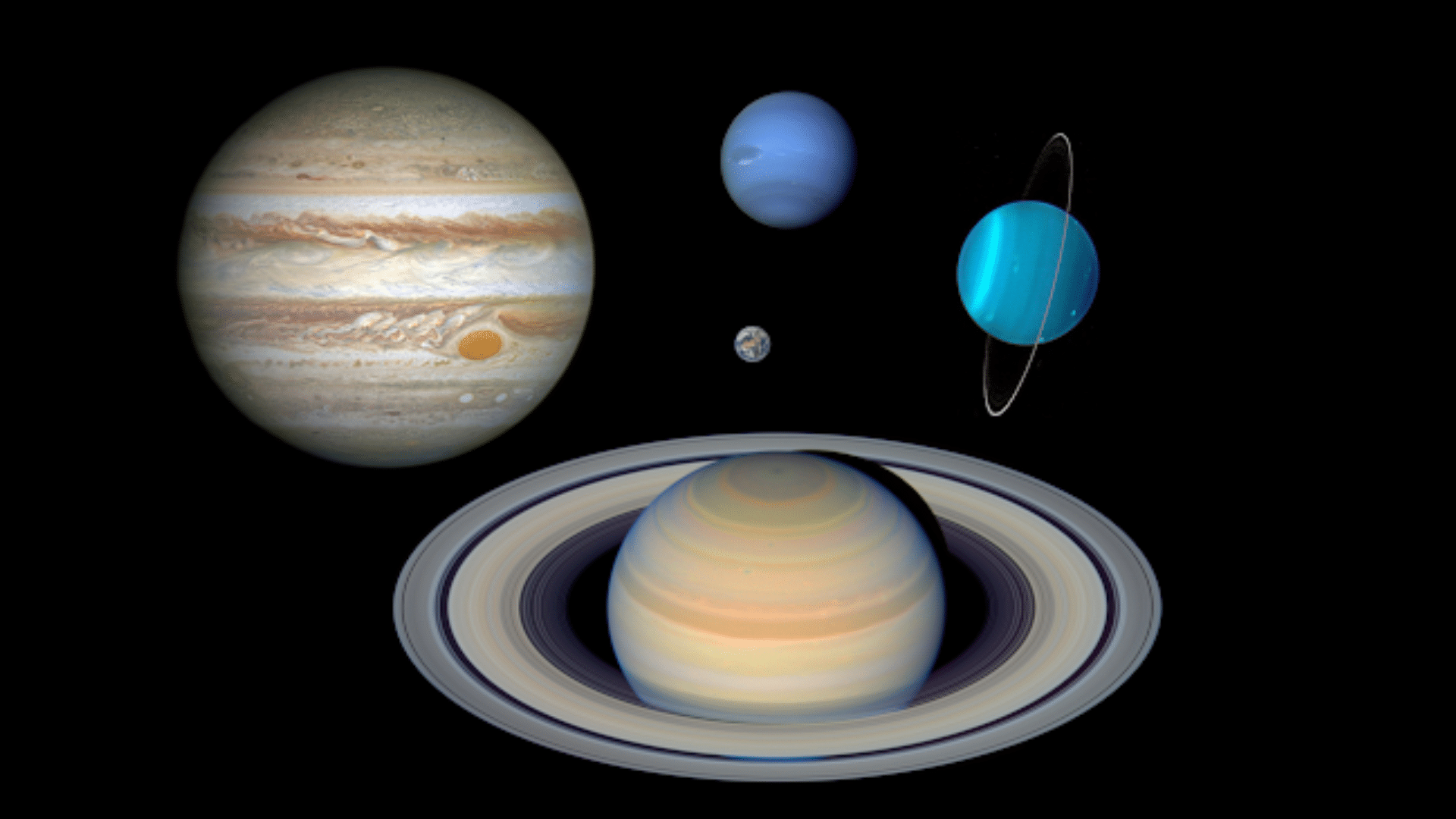
Image Source: spiff.rit.edu
Gas giants are the largest planets in the solar system and are made mostly of hydrogen and helium. They do not have a true solid surface, as their outer layers are made of thick gases.
These planets have strong gravity and often have many moons and ring systems. Their atmospheres can show storms and bands of clouds.
Jupiter and Saturn are the main examples, both known for their massive size and complex atmospheric patterns.
Ice Giants
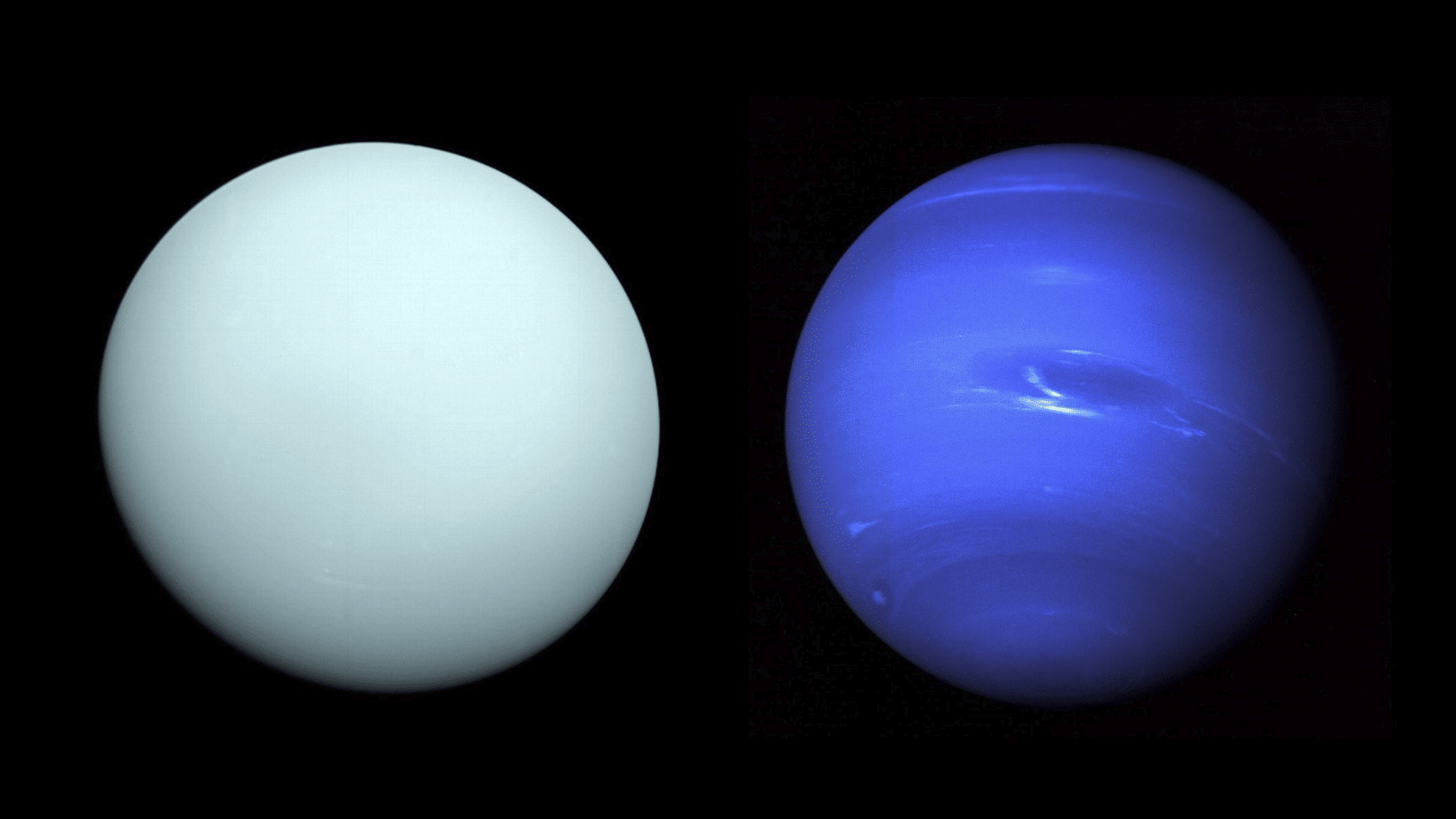
Image Source: Astronomy Magazine
Ice giants are large planets composed of heavier elements than gas giants, including water, methane, and ammonia. These materials give them a colder and denser structure.
They are located farther from the Sun, where temperatures are much lower. Ice giants also have thick atmospheres, often with strong winds and unique color tones.
Uranus and Neptune belong to this category and are known for their deep blue appearance.
Dwarf Planets
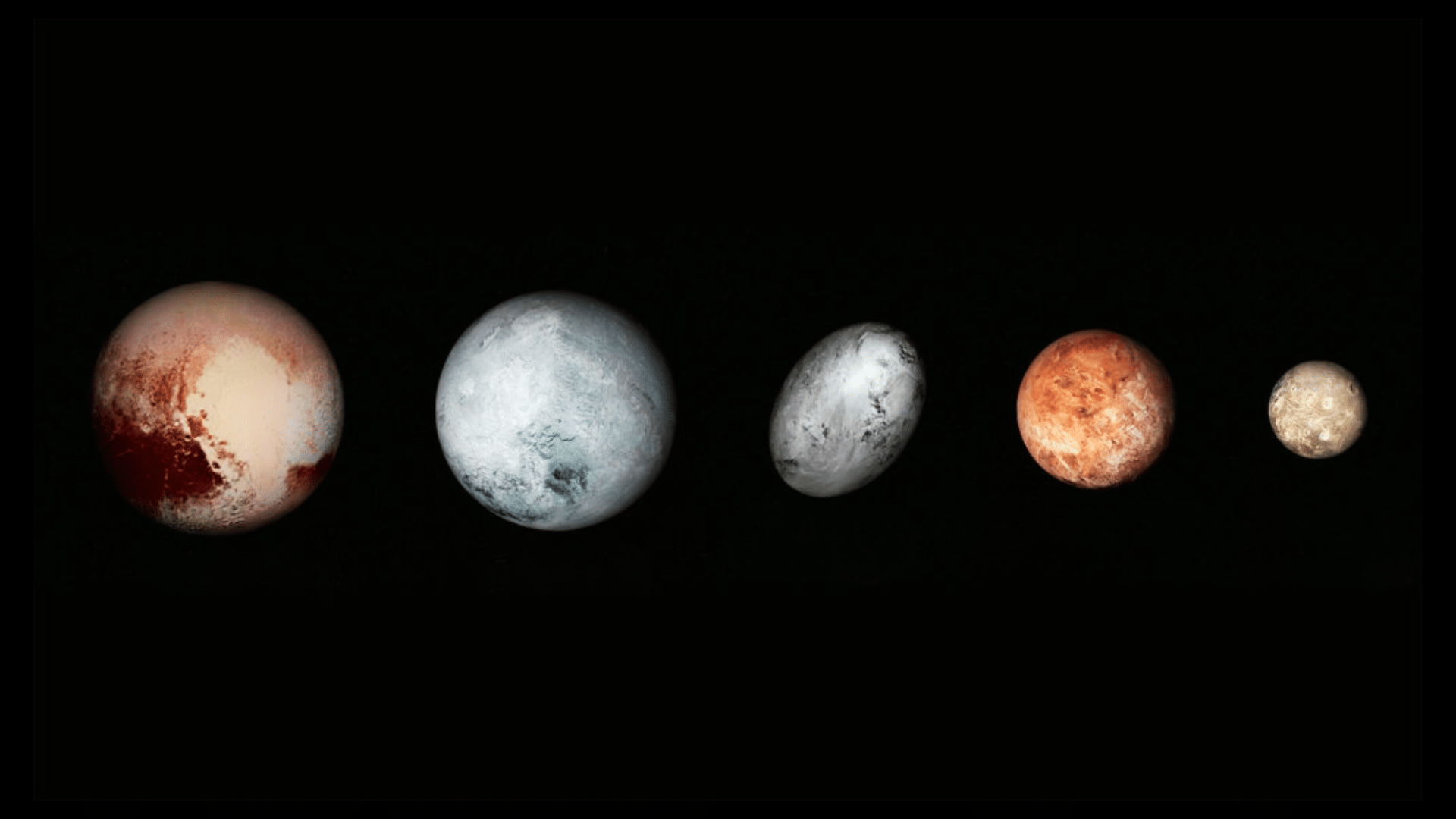
Dwarf planets orbit the Sun and are round in shape, but they do not meet all the criteria required to be called full planets.
They share their orbital space with other objects, which is the main difference. These bodies are usually smaller and are found in regions such as the Kuiper Belt.
Pluto is the best-known dwarf planet, along with Eris, Haumea, and Makemake.
Key Differences Between Planet Types
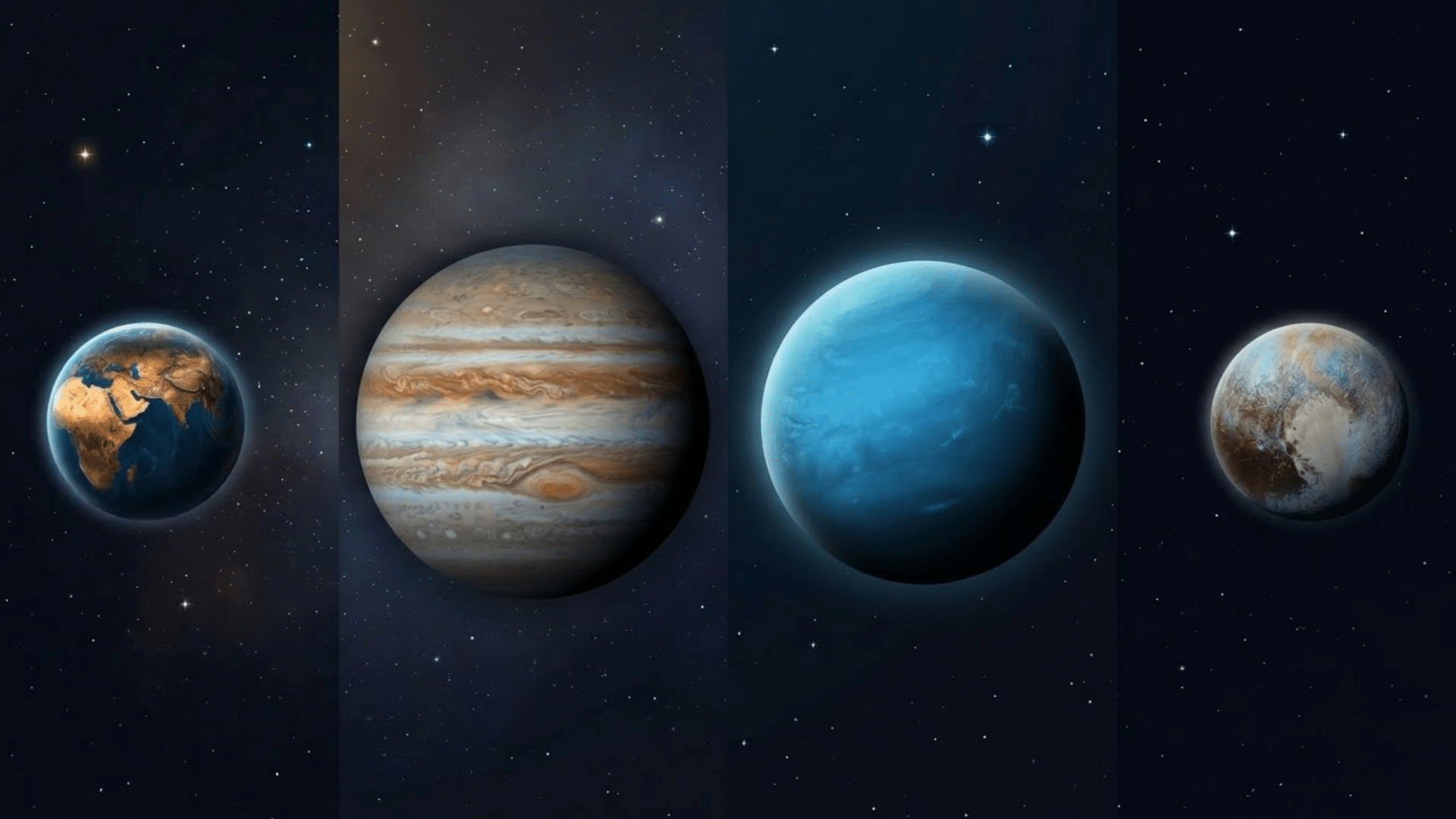
Each type of planet has distinct features that set it apart. The table below highlights the main differences in a simple and clear way:
| Planet Type | Size | Composition | Surface Type | Atmosphere | Location |
|---|---|---|---|---|---|
| Terrestrial | Small to medium | Rock and metal | Solid surface | Thin to moderate | Inner solar system |
| Gas Giants | Very large | Hydrogen and helium | No solid surface | Very thick | Outer solar system |
| Ice Giants | Large | Ice, gas, heavy elements | No solid surface | Thick | Outer solar system |
| Dwarf Planets | Small | Rock and ice | Solid surface | Thin or none | Kuiper Belt and beyond |
Types of Planets Beyond Our Solar System
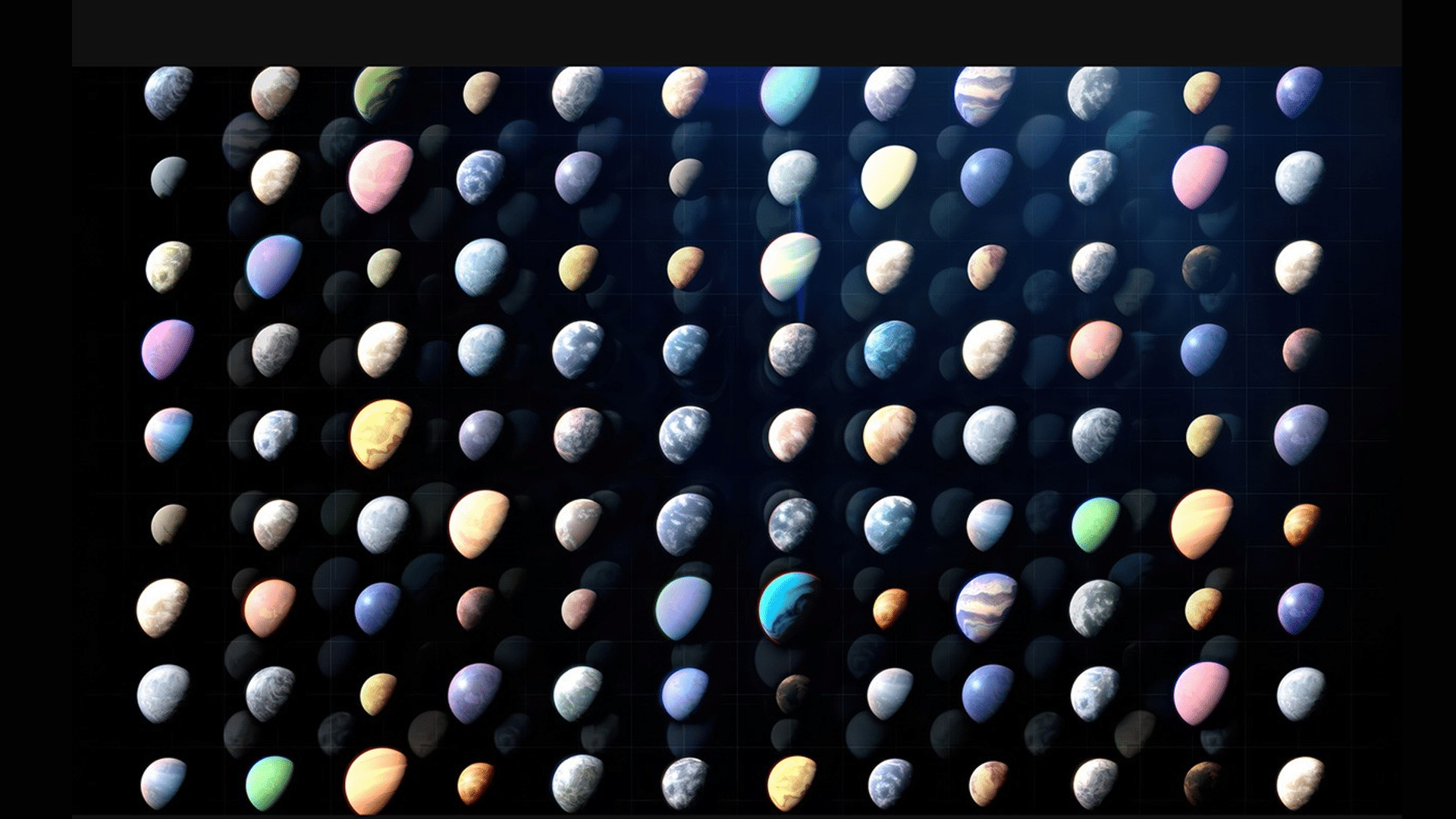
Planets found outside our solar system are called exoplanets. Scientists have identified many types of these planets based on their size, composition, and distance from their stars. These categories help explain the wide variety of worlds that exist in space.
Terrestrial Exoplanets
These are rocky planets similar to Earth. They have solid surfaces and are often smaller in size. Some may have conditions that could support liquid water, depending on their distance from their star.
Gas Giant Exoplanets
These planets are large and made mostly of gas, much like Jupiter and Saturn. Many of them orbit very close to their stars, making them much hotter than gas giants in our solar system.
Super-Earths
Super-Earths are larger than Earth but smaller than gas giants. They can be rocky, gaseous, or a mix of both. Their exact nature depends on their composition and atmosphere.
Neptunian Planets
These planets are similar in size and composition to Neptune and Uranus. They often have thick atmospheres and are made of gases and icy materials.
Hot Jupiters
Hot Jupiters are gas giants that orbit extremely close to their stars. As a result, they have very high temperatures and short orbital periods.
Conclusion
Planets offer a useful way to see how varied space can be when looked at closely. Clear groupings make it easier to compare them without getting lost in too many details.
These categories also give a basic structure for anyone trying to understand how different worlds exist and behave.
As research improves, new findings continue to refine how planets are viewed and grouped.
To go further, consider reading about individual planets or recent discoveries to see how this knowledge applies in real space research.
Frequently Asked Questions
Which Type is Earth?
Earth is a terrestrial planet, also known as a rocky planet. It has a solid surface, a metal core, and a relatively thin atmosphere compared to larger planets. It is located in the inner part of the solar system.
Are There More Types Beyond Our Solar System?
Yes, there are additional planet types beyond our solar system. These include super-Earths, Neptunian planets, and hot Jupiters. Scientists continue to find new types as more exoplanets are discovered.
What is the Largest Type of Planet?
The largest type of planet is a gas giant. These planets, like Jupiter and Saturn, are made mostly of gas and can be much larger than rocky planets. Jupiter is the largest planet in our solar system.