


Space is full of surprises. And nebulae? They might just be the strangest, most striking things out there.
Most people have seen a photo of a nebula at some point. Those big, colourful clouds floating in space. But what are they, really? And why do scientists get so excited about them?
They are not just pretty pictures taken by a telescope. They hold some of the biggest secrets about how stars are born and how they die.
There is a lot going on inside those glowing clouds of gas and dust. Some of it is hard to believe. Read on to find out what makes nebulae so remarkable.
What is a Nebula?
A nebula is a giant cloud of gas and dust floating in space. The word “nebula” comes from the Latin word for “cloud” or “mist.” That name fits perfectly.
These clouds are made mostly of hydrogen and helium. Some also contain tiny particles of dust and other elements. They can stretch across hundreds of light-years of space.
Not all nebulae look the same, though. Some glow brightly. Others are dark and nearly impossible to see. A few reflect light from nearby stars.
What makes them truly special is what happens inside them. Nebulae are where stars are born and sometimes, where they end up after they die.
Types of Nebulae Explained with Examples
Nebulae come in several different types. Each one forms differently and looks nothing like the other.
- Emission Nebulae: These nebulae glow on their own. Nearby stars heat up the gas inside, causing it to release coloured light.
- Reflection Nebulae: These do not produce their own light. Instead, they reflect light from stars nearby, often appearing in shades of blue.
- Dark Nebulae: These are cold, dense clouds that block the light behind them. They show up as dark patches against brighter backgrounds.
- Planetary Nebulae: These form when a dying star sheds its outer layers. The gas spreads out in a shell-like shape around the star’s core.
- Supernova Remnants: These appear after a massive star explodes. The blast sends gas and dust flying outward in all directions.
Key Nebula Facts You Should Know
Nebulae hold some of the most surprising truths about space. Here are the facts that go beyond the basics.
1. The Crab Nebula is a Supernova Remnant Still Expanding Today
The Crab Nebula formed from a supernova explosion recorded by Chinese astronomers in 1054 AD. It is still expanding outward at roughly 1,500 kilometres per second.
Scientists study it closely because it gives real-time data on how supernova remnants behave over hundreds of years.
2. Some Nebulae Smell Like Raspberries and Rum
Astronomers detected ethyl formate in the Sagittarius B2 nebula. This chemical compound is responsible for the smell of raspberries and the taste of rum.
It was found while scientists were scanning the cloud for complex organic molecules using radio telescopes.
3. The Pillars of Creation are Already Destroyed
The famous Pillars of Creation in the Eagle Nebula likely no longer exist. A nearby supernova explosion is believed to have destroyed them around 6,000 years ago.
The light showing their destruction has not yet reached Earth, so the view remains visible for now.
4. Nebulae Can Be Trillions of Kilometres Wide
The size of nebulae is hard to wrap one’s head around. Some stretch across hundreds of light-years.
The Tarantula Nebula, for example, spans about 1,000 light-years. If it were placed where the Orion Nebula sits, it would cover a quarter of the entire night sky.
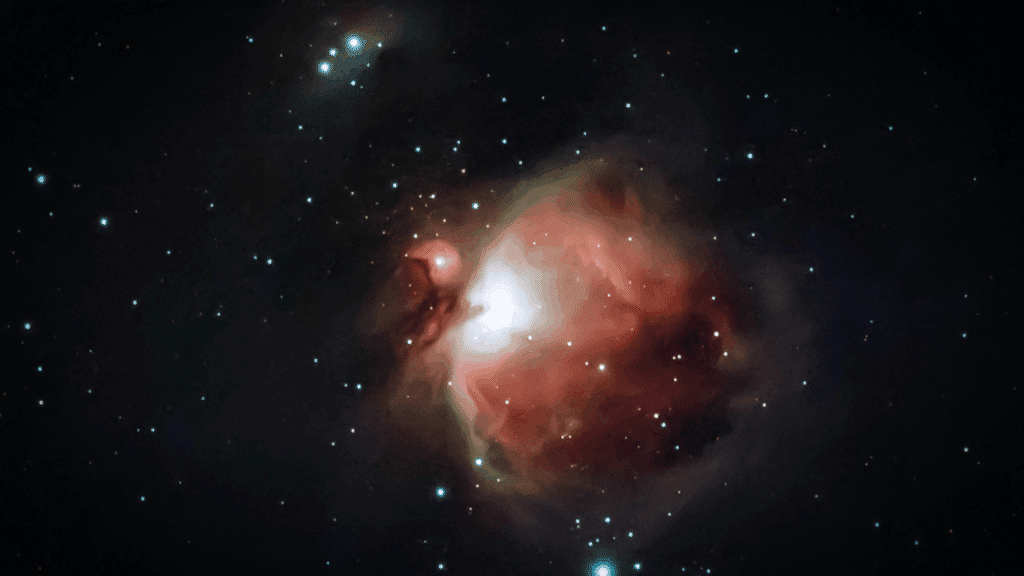
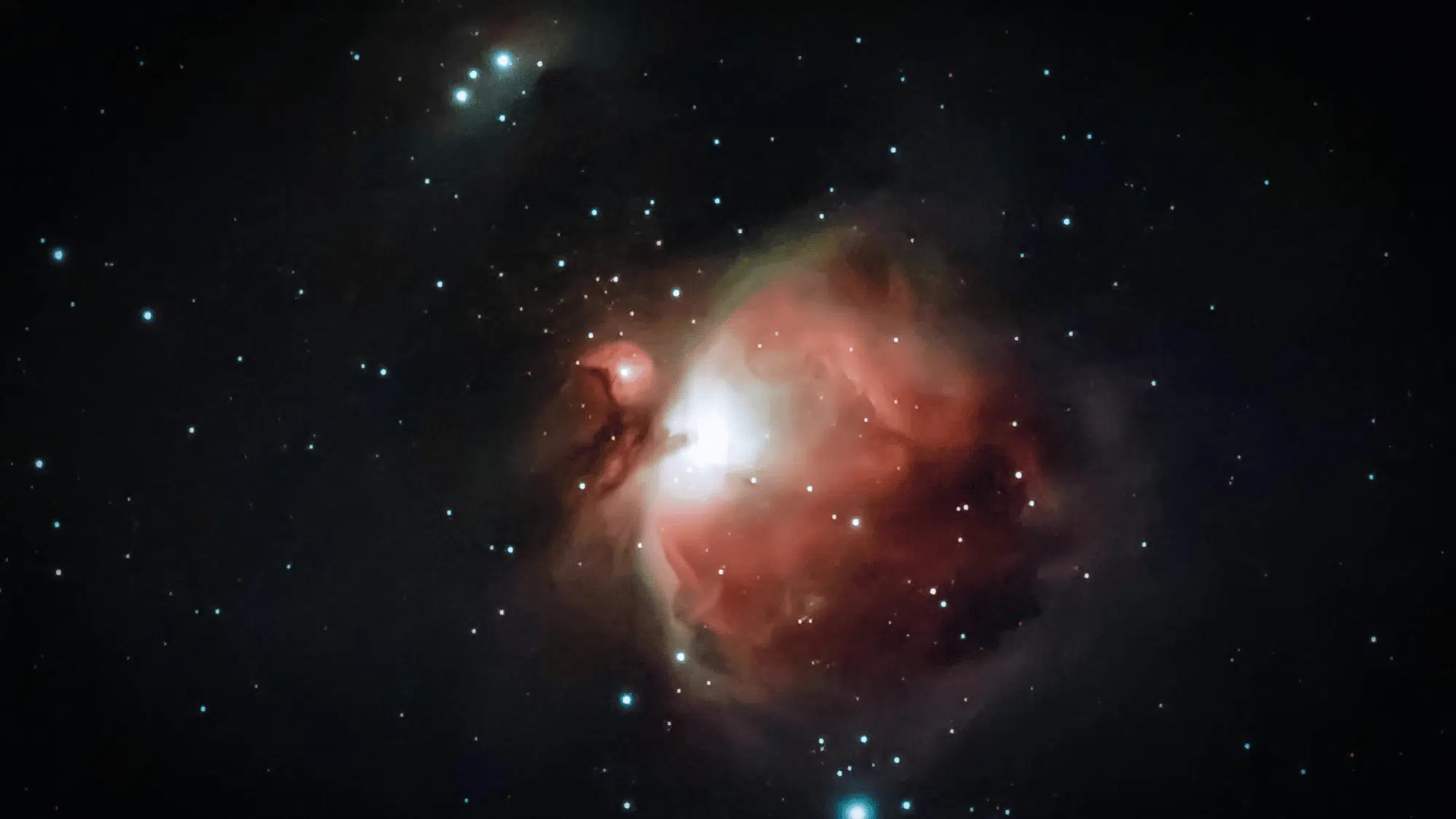
5. The Orion Nebula is Visible to the Naked Eye
Most nebulae require a telescope to spot. The Orion Nebula is different.
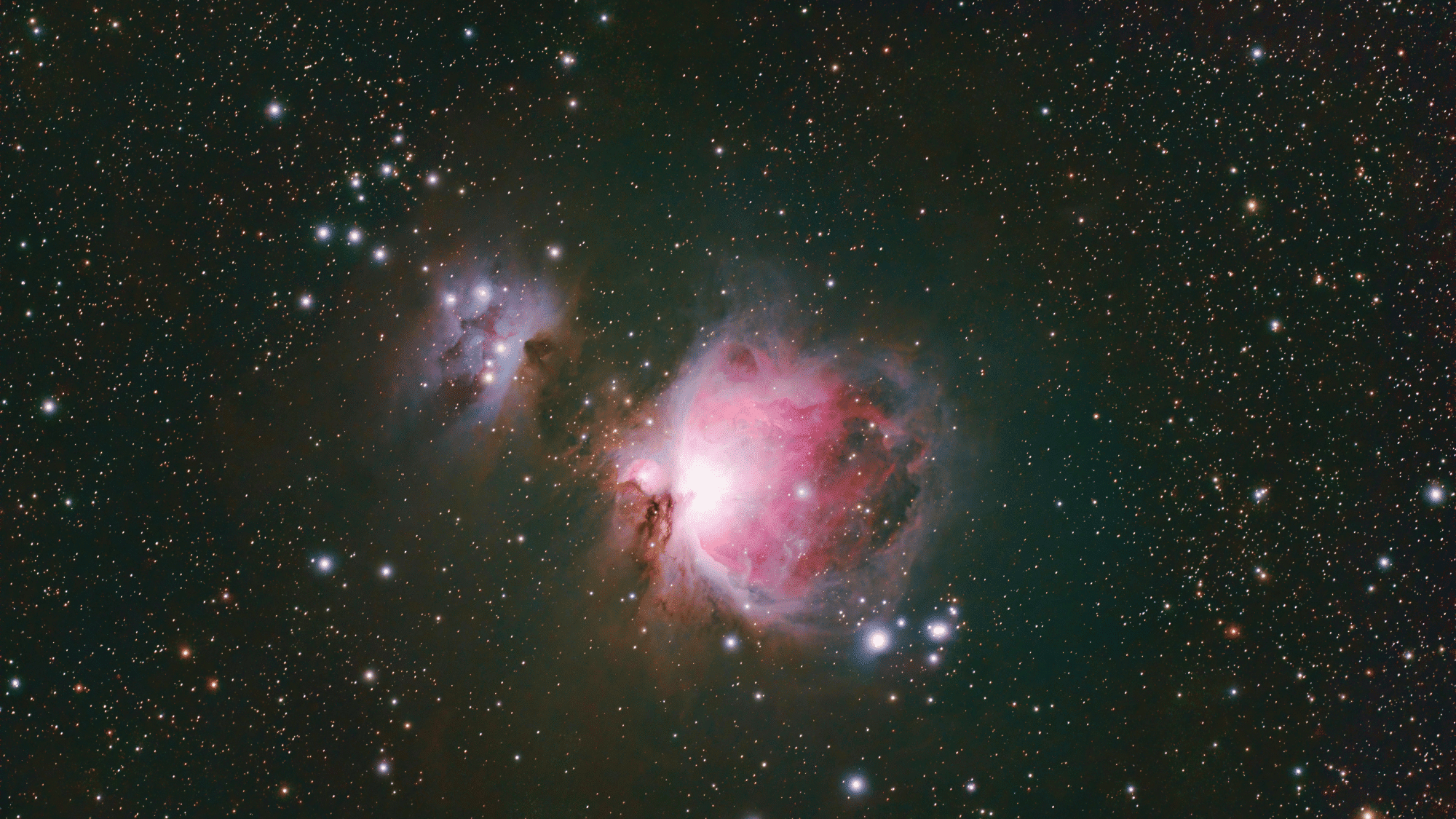
It sits about 1,344 light-years away and is bright enough to see without any equipment. It appears as a faint smudge just below the three stars that form Orion’s Belt on a clear night.
6. Nebulae Played a Role in Forming Earth’s Oceans
Water molecules have been detected inside several nebulae. Scientists believe that water present in the early solar nebula eventually contributed to the formation of Earth’s oceans.
This suggests the water on Earth may have its origins in the cloud of gas that formed the solar system.
7. A Nebula Once Confused Astronomers for Decades
When the Andromeda Galaxy was first observed, astronomers mistook it for a nebula.
For years, it appeared in star catalogues as a fuzzy cloud. It was not until the 1920s that Edwin Hubble confirmed that it was an entirely separate galaxy, located over two million light-years from Earth.
8. Some Nebulae Form Perfect Geometric Shapes
Not all nebulae are irregular and shapeless. Some form surprisingly neat structures. The Ring Nebula, for instance, looks like a perfect smoke ring in space.
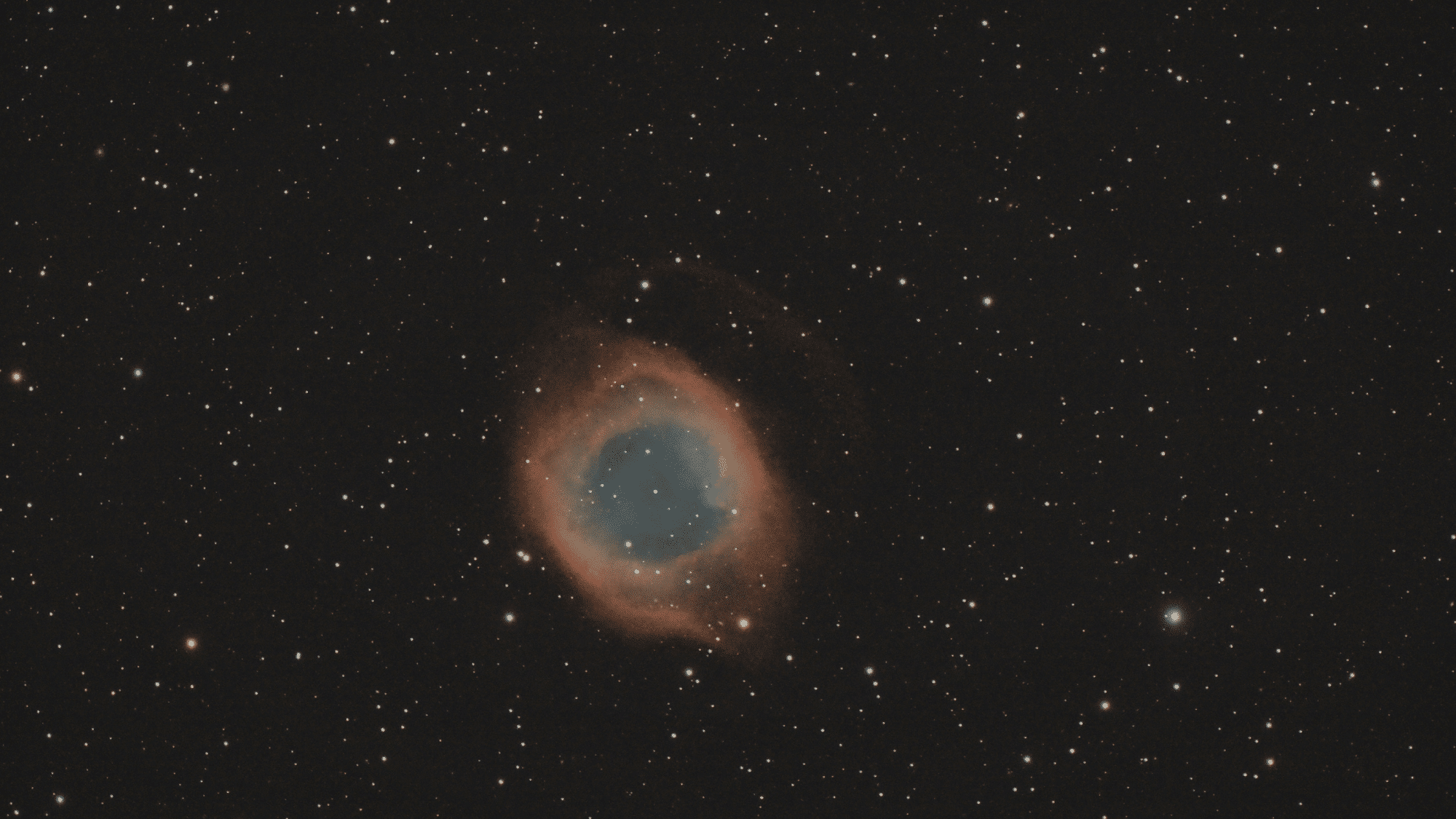
The Helix Nebula resembles a giant eye staring into space. These shapes form because of the way dying stars release their outer layers evenly.
9. Nebulae Contain the Building Blocks of Life
Complex organic molecules, including amino acid precursors, have been found inside certain nebulae. These molecules are considered basic building blocks of life as known on Earth.
Their presence in space raises serious questions about whether the ingredients for life are spread far more widely across the universe than previously thought.
10. The Horsehead Nebula is Actually a Dark Nebula
The Horsehead Nebula in the Orion constellation is one of the most recognised shapes in astronomy.
Many people assume it glows. In reality, it is a dark nebula, a dense cloud of gas and dust that blocks the bright emission nebula sitting directly behind it.
11. Nebulae Were Once Mistaken for Solar Systems in Formation
In the 18th and 19th centuries, many scientists believed nebulae were young solar systems taking shape. This idea was known as the nebular hypothesis.
Parts of it turned out to be correct; the solar system did form from a collapsing cloud of gas and dust, much like a nebula.
How Nebulae Form: The Science Behind It
Nebulae do not just appear out of nowhere. There is always a process behind them.
Most nebulae start as massive clouds of gas and dust already floating in space. Over time, gravity pulls this material closer together. As it clumps up, the cloud grows denser in certain spots.
Some nebulae form when a star reaches the end of its life. It pushes out its outer layers into space, creating a glowing shell of gas.
Others form from a supernova, a powerful stellar explosion that throws material outward at tremendous speed.
In each case, the result is the same. A new cloud takes shape in space, carrying the raw material needed to one day build new stars.
The Role of Nebulae in the Universe
Nebulae do far more than look striking. They play a key role in how the universe grows and changes.
- Star Formation Grounds: Nebulae are where new stars are born. Gravity pulls gas and dust together until a new star ignites.
- Recyclers of Stellar Material: When stars die, they release material back into space. Nebulae collect this and use it to build new stars.
- Chemical Factories: Nebulae contain elements like carbon, oxygen, and nitrogen. These elements eventually make their way into planets and even living things.
- Galactic Building Blocks: Nebulae help shape entire galaxies over time. The stars create clusters together to form the structures seen across the universe.
- Windows Into the Past: Studying nebulae helps scientists understand how early stars formed. They offer a look at conditions that existed billions of years ago.
Historical Discoveries and Observations of Nebulae
Humans have been looking at nebulae for centuries. But understanding what they actually were took a long time.
Early astronomers thought nebulae were just faint, fuzzy stars. With basic tools, there was no way to tell otherwise. That changed in the 18th century when Charles Messier created his famous catalogue of deep-sky objects.
Many of those objects turned out to be nebulae. Later, William Herschel studied thousands of these objects in greater detail. His work significantly advanced the field.
The real breakthrough came with spectroscopy in the 19th century. Scientists could finally study the light from nebulae and figure out what they were made of.
Each discovery built on the last, slowly piecing together a clearer picture of these giant space clouds
How Scientists Study Nebulae Today
Studying nebulae today looks very different from what early astronomers did with basic telescopes.
Modern scientists use powerful space telescopes like the Hubble and the James Webb Space Telescope. These tools capture light across different wavelengths, including infrared and ultraviolet. That allows researchers to see through dust clouds that would otherwise block the view.
Radio telescopes on the ground also detect signals from nebulae that optical telescopes cannot.
Computer modelling plays a big role too. Scientists build detailed simulations to understand how nebulae behave over time.
Together, these methods give a much fuller picture of what is happening inside these vast clouds of gas and dust.
To Conclude
Nebulae are more than just clouds in space. They are the universe’s way of building, breaking down, and starting over again. Every star that exists today came from one.
Every element that makes up planets and people passed through one at some point.
Scientists keep finding new things with better tools and sharper images. There is still a lot left to learn.
For anyone curious about space, nebulae are a great place to start looking. Keep learning to see some of the most striking nebulae ever captured by modern telescopes.