


An eclipse is a clear example of how movement in space affects what people see from Earth. At times, the Moon passes into Earth’s shadow.
At other times, the Moon moves between Earth and the Sun, changing how sunlight reaches the ground. These two events are known as lunar and solar eclipses.
They are often grouped together, yet they differ in how they happen and how they appear in the sky. This can make the topic confusing at first.
A simple explanation of both types helps show what sets them apart and why each one looks so different when it occurs.
What is an Eclipse?
An eclipse is an event that happens when one object in space moves into the shadow of another.
In simple terms, it occurs when the Sun, Earth, and Moon line up in a straight or near-straight line. This alignment changes how light reaches either the Earth or the Moon.
As a result, part or all of the Sun or Moon may appear darkened for a short time.
Eclipses follow a predictable pattern based on the motion of these bodies, but they are not seen everywhere on Earth during each event.
What is a Solar Eclipse?
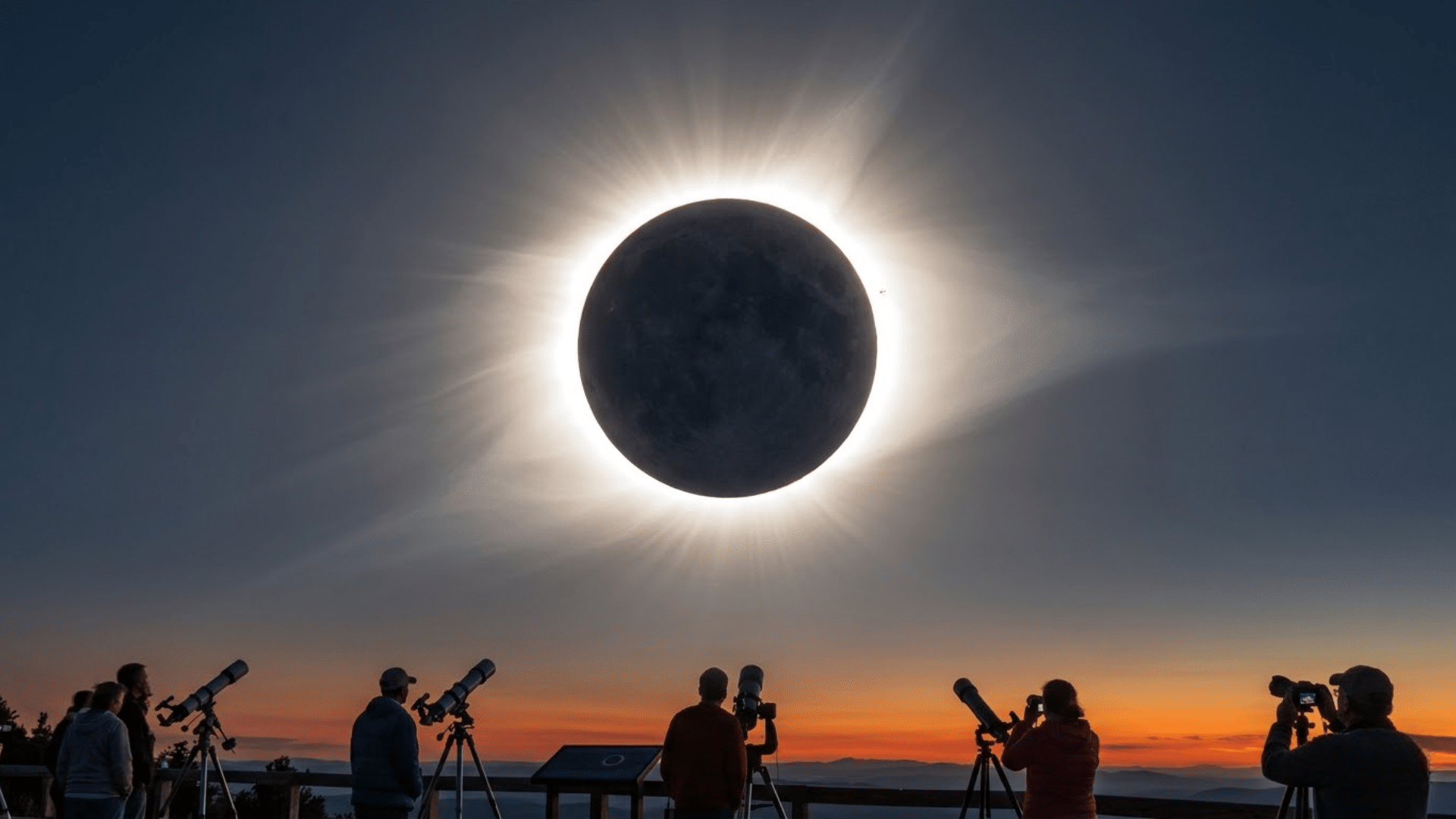
A solar eclipse happens when the Moon moves between the Earth and the Sun and blocks some or all of the Sun’s light.
This event occurs during the new moon phase, when the Moon is on the same side of Earth as the Sun. When the alignment is close enough, the Moon casts a shadow onto Earth.
People standing within that shadow see the Sun appear partly or completely covered for a short time.
How a Solar Eclipse Happens
A solar eclipse occurs when the Moon moves between the Earth and the Sun, blocking sunlight and casting a shadow on Earth. This alignment does not happen every month.
The shadow has a darker inner area and a lighter outer area, which affects how much of the Sun is covered, depending on where a person is located.
Types of Solar Eclipses
There are four main types of solar eclipses, based on how much of the Sun is covered:
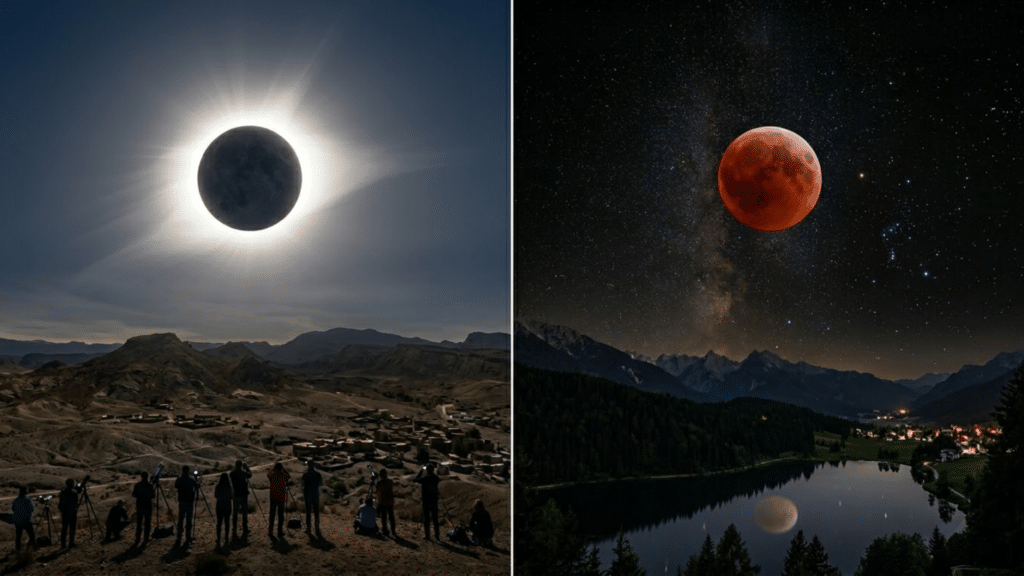
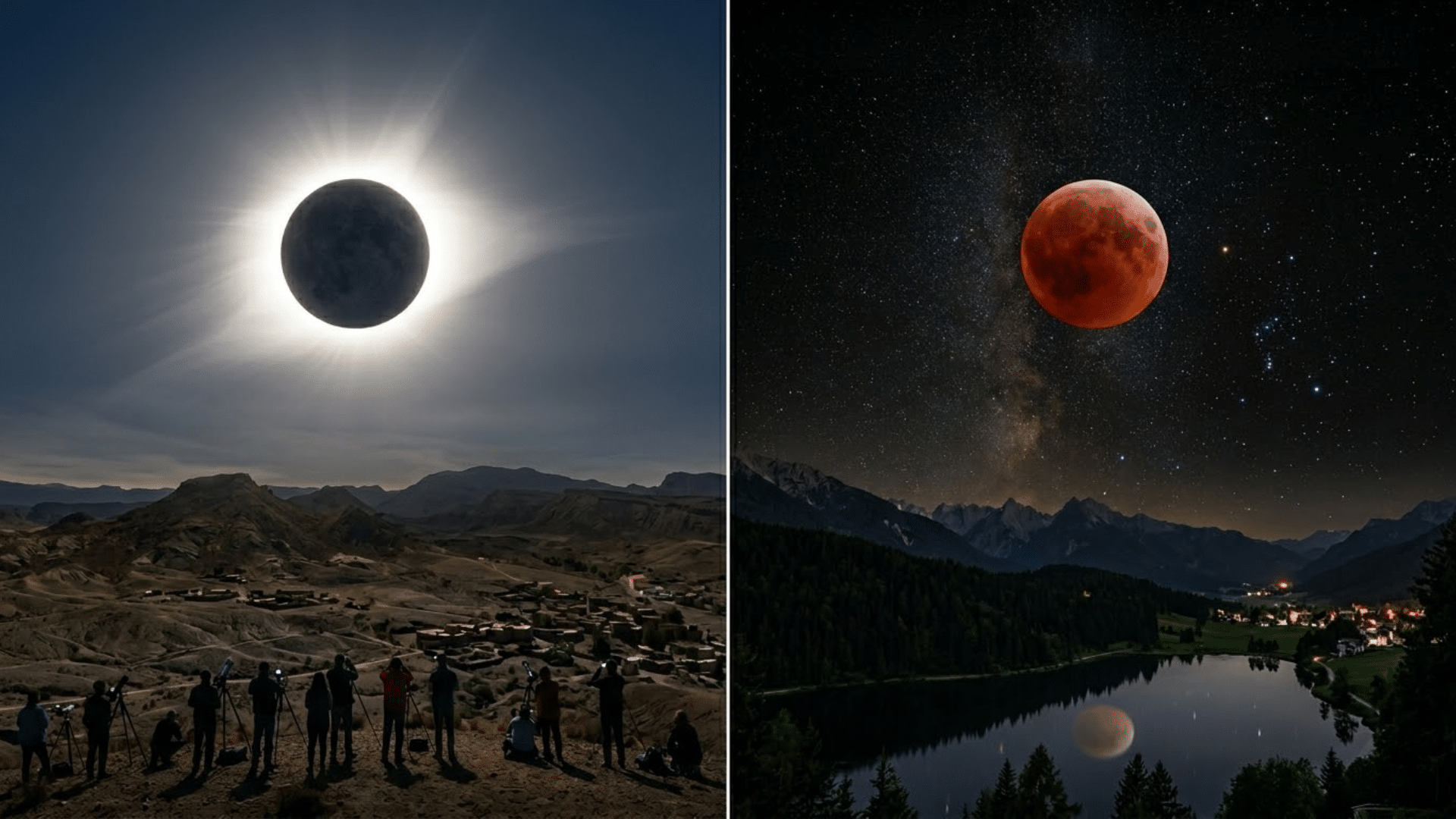
- Total Solar Eclipse: The Moon completely covers the Sun for a short period. The sky darkens, and only the Sun’s outer atmosphere is visible.
- Partial Solar Eclipse: Only a portion of the Sun is blocked. The Sun appears as if a small section has been taken out of it.
- Annular Solar Eclipse: The Moon is farther from Earth and appears smaller, so it cannot fully cover the Sun. This leaves a bright ring of sunlight visible around the Moon.
- Hybrid Solar Eclipse: A rare type that shifts between total and annular depending on the observer’s location on Earth.
Key Features of a Solar Eclipse
- Happens during the day: Solar eclipses are visible only in daylight since they involve the Sun.
- Visible only in limited areas: The Moon’s shadow covers a narrow path on Earth, so only certain regions can see the full eclipse.
- Short duration: Most solar eclipses last only a few minutes at their peak, especially total eclipses.
What is a Lunar Eclipse?
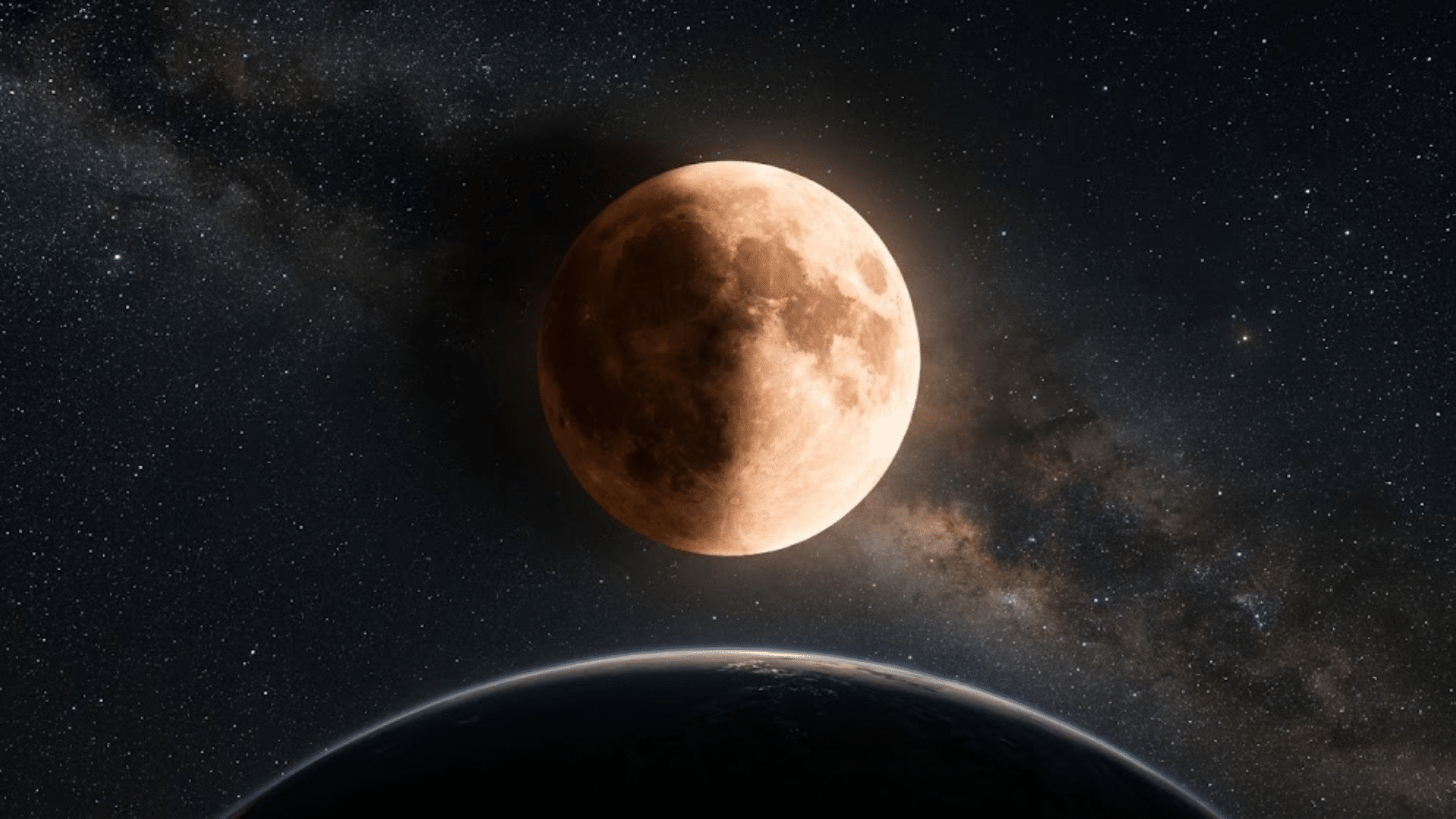
A lunar eclipse occurs when the Earth moves between the Sun and the Moon, blocking sunlight from reaching the Moon. This happens during a full moon, when the Moon is on the opposite side of Earth from the Sun.
When the alignment is close enough, Earth casts a shadow on the Moon, making it appear darkened for a period of time.
How a Lunar Eclipse Happens
A lunar eclipse occurs when the Earth moves between the Sun and the Moon, blocking sunlight and casting a shadow on the Moon.
This shadow has a darker inner part and a lighter outer part, which affects how much of the Moon appears darkened in its different positions.
Types of Lunar Eclipses
There are three main types of lunar eclipses:
- Total Lunar Eclipse: The Moon moves fully into Earth’s dark shadow and often appears red or copper in color.
- Partial Lunar Eclipse: Only a part of the Moon enters the darker shadow, so a section appears darkened.
- Penumbral Lunar Eclipse: The Moon passes through the lighter shadow, causing a subtle dimming that can be hard to notice.
Key Features of a Lunar Eclipse
- Happens at night: Lunar eclipses are visible only when the Moon is above the horizon at night.
- Visible from a wide area: Anyone on the night side of Earth can usually see the eclipse.
- Longer duration: Lunar eclipses can last for several hours from start to finish.
Lunar vs Solar Eclipse: Key Differences
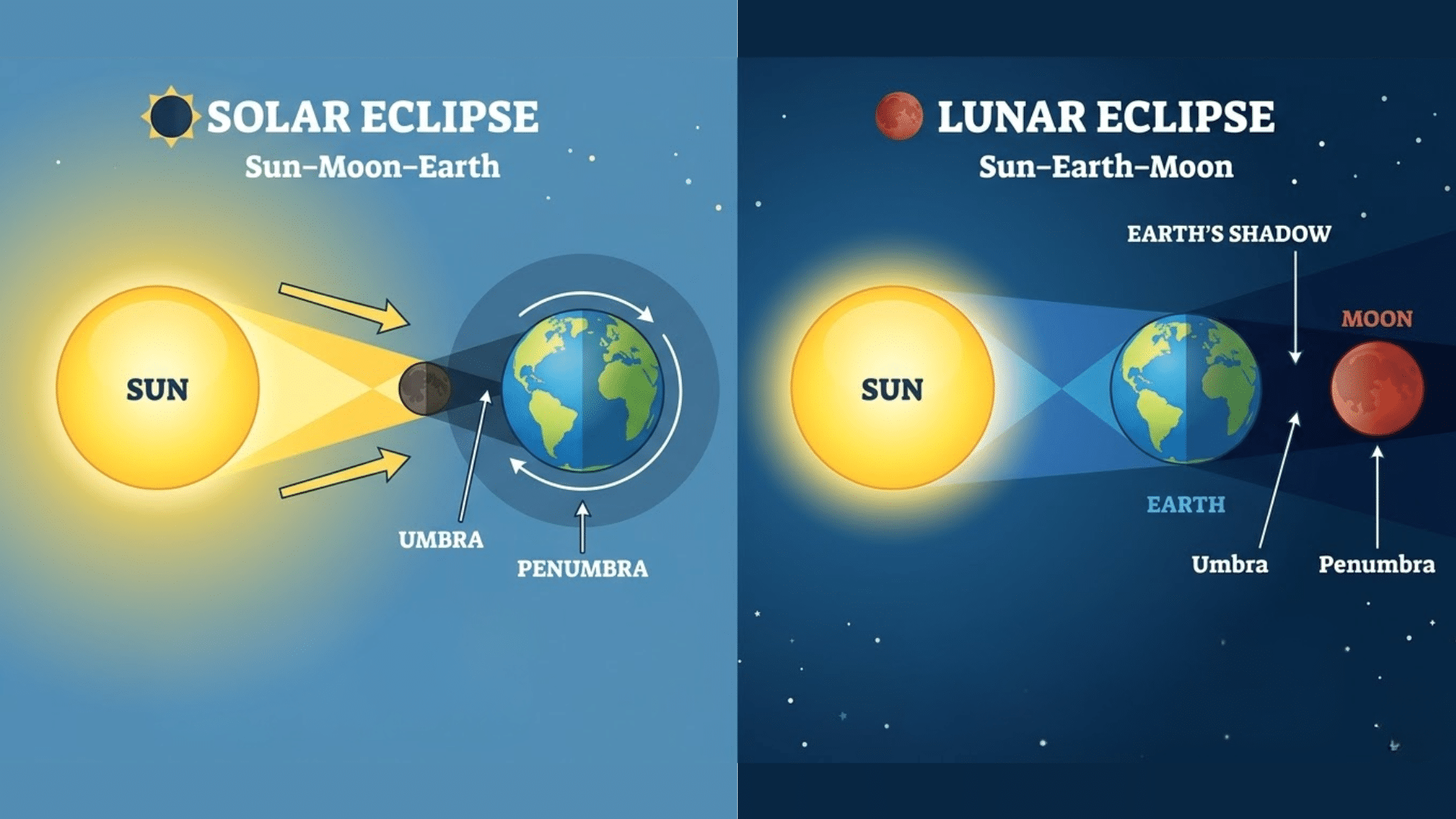
Both lunar and solar eclipses involve the alignment of the Sun, Earth, and Moon, but they differ in how they occur and how they appear from Earth.
| Feature | Solar Eclipse | Lunar Eclipse |
|---|---|---|
| Cause | Moon blocks the Sun | Earth blocks sunlight from the Moon |
| Alignment | Sun – Moon – Earth | Sun – Earth – Moon |
| Time | Happens during the day | Happens at night |
| Visibility | Seen from limited areas | Seen from most of the night side of Earth |
| Appearance | The sun appears partly or fully covered | Moon appears darkened or reddish |
| Duration | Usually lasts a few minutes at peak | Can last for several hours |
| Safety | Requires eye protection to view safely | Safe to view with the naked eye |
| Frequency | Occurs more often globally, but is harder to see | Seen more often from a single location |
Similarities Between Lunar and Solar Eclipses
Although lunar and solar eclipses appear different, they share several key features based on how they occur in space.
- Same celestial bodies involved: Both events result from the interaction of the Sun, Earth, and Moon. Their positions determine when an eclipse can take place.
- Require near-perfect alignment: An eclipse happens only when these three bodies line up in a straight or nearly straight line, which does not occur often.
- Occur during eclipse seasons: Both types take place during specific periods of the year when the Moon’s orbit aligns correctly with Earth’s orbit.
- Follow predictable cycles: Eclipses can be calculated years in advance because the movements of the Moon and Earth follow regular patterns.
- Depend on shadow formation: In both cases, one object blocks sunlight and casts a shadow, creating the visible effect of the eclipse.
- Have different shadow zones: Each eclipse has a darker inner shadow and a lighter outer shadow, which affect how it appears from different locations.
- Are temporary events: Both eclipses happen for a limited time and pass as the alignment between the Sun, Earth, and Moon changes
Why Do Eclipses Not Happen Every Month?
Eclipses require a very specific alignment of the Sun, Earth, and Moon, which does not occur every month. Although the Moon orbits Earth regularly, its path is slightly tilted compared to Earth’s orbit around the Sun.
Because of this tilt, the Moon usually passes either above or below the direct line needed for an eclipse. As a result, no shadow is cast in a way that creates an eclipse.
Eclipses only happen during certain times called eclipse seasons, when the Moon’s orbit crosses Earth’s orbital plane at the right angle.
During these short periods, the alignment becomes possible, allowing solar or lunar eclipses to occur.
Safety Tips for Viewing Eclipses
Watching an eclipse can be exciting, but it is important to take the right precautions, especially during a solar eclipse.
- Never look directly at the Sun: Even for a few seconds, direct viewing can damage your eyes.
- Use certified eclipse glasses: Only proper eclipse glasses or solar filters provide safe protection.
- Avoid regular sunglasses: They do not block harmful rays and are unsafe for eclipse viewing.
- Use indirect-viewing methods: A pinhole projector is a simple and safe way to view a solar eclipse.
- Lunar eclipses are safe to view: You can watch them with the naked eye without any risk.
Final Thoughts
Eclipses offer a direct way to see how the Sun, Earth, and Moon interact in real time. Even a basic understanding can make these events easier to follow and more interesting to watch.
The difference between a lunar and a solar eclipse comes down to position and perspective, which shape how each appears from Earth.
Paying attention to timing, location, and visibility can improve the viewing experience. With this knowledge, it becomes easier to know what to expect when an eclipse is announced.
Stay updated on upcoming events and plan ahead so the next eclipse can be viewed clearly and safely.