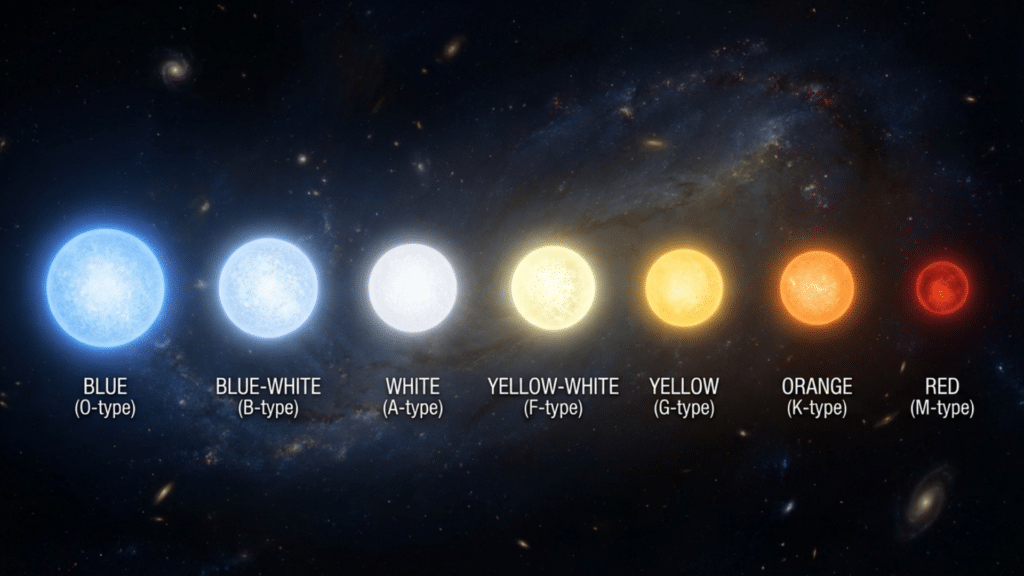
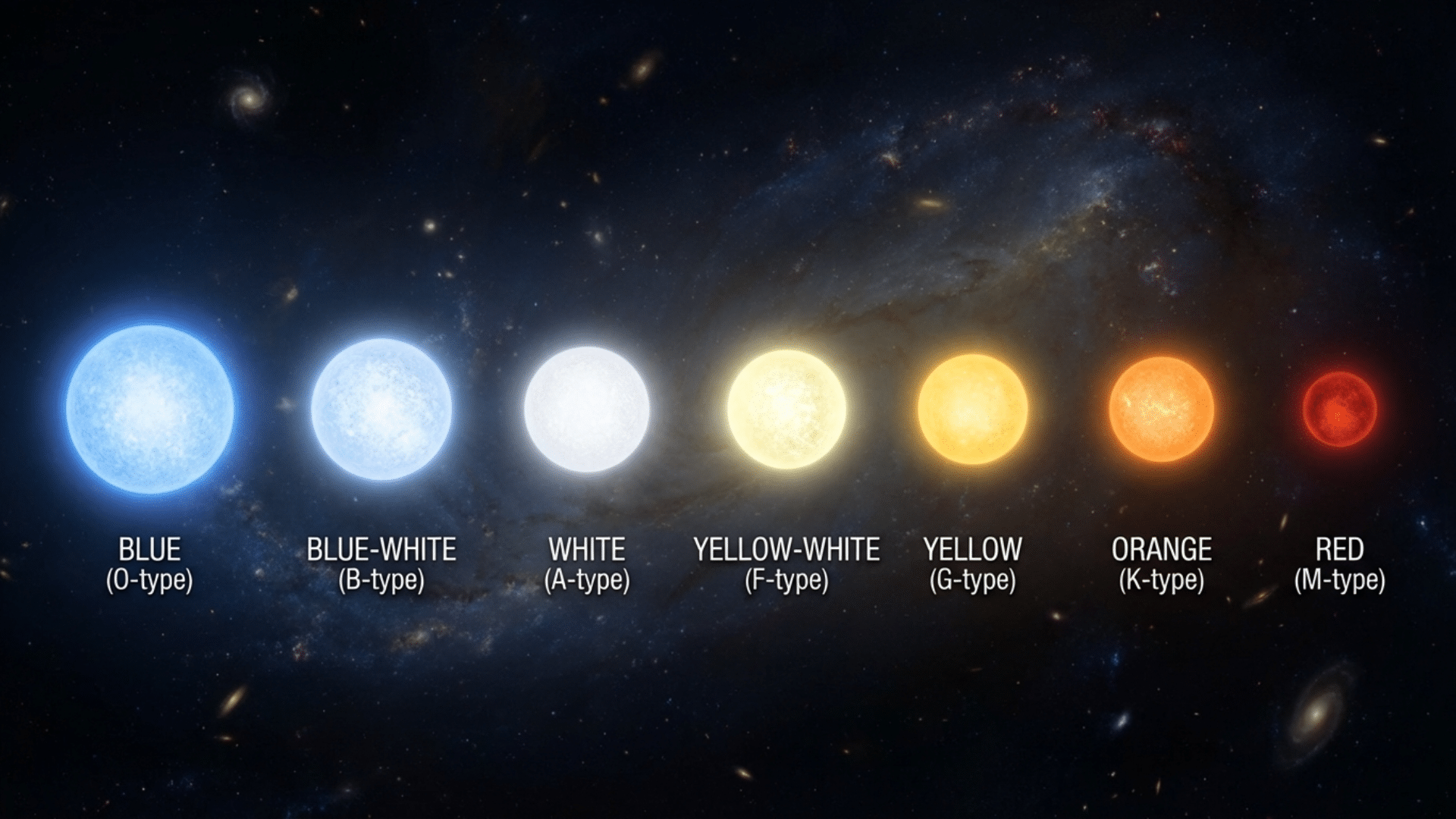



Not all stars shine the same color. In the night sky, they appear in shades of blue, white, yellow, orange, and red. These colors are not simply visual differences.
Each color reflects the physical conditions inside the star and offers important clues to astronomers.
By observing color, scientists gain insight into how stars behave, evolve, and produce energy. Color also helps researchers compare stars across the galaxy and place them into meaningful groups.
For this reason, star color is one of the first traits studied in astronomy.
This article presents the list of star colors from hottest to coldest and explains why stars appear in different shades across space.
What Determines the Color of a Star?
Star color comes from the temperature of the star’s surface. A hotter surface emits light at shorter wavelengths, while a cooler surface emits light at longer wavelengths.
This relationship follows Wien’s Law, which explains how the peak wavelength of radiation changes with temperature. When an object heats up, the color of the light it produces changes.
For example:
- Extremely hot objects glow blue or blue-white
- Moderately hot objects glow white or yellow
- Cooler objects glow orange or red
Stars behave in the same way. Because they are massive spheres of hot gas, their color changes with the temperature of their outer layer, the photosphere.
Astronomers measure these temperatures in Kelvin (K) rather than Celsius or Fahrenheit. Surface temperatures of stars range from roughly 2,000 K to over 40,000 K.
The List of Star Colors from Hottest to Coldest
When arranged by temperature, stars follow a clear color order. Understanding these colors helps astronomers quickly estimate a star’s energy output and its stage of life.
Blue Stars: The Hottest Stars in the Universe
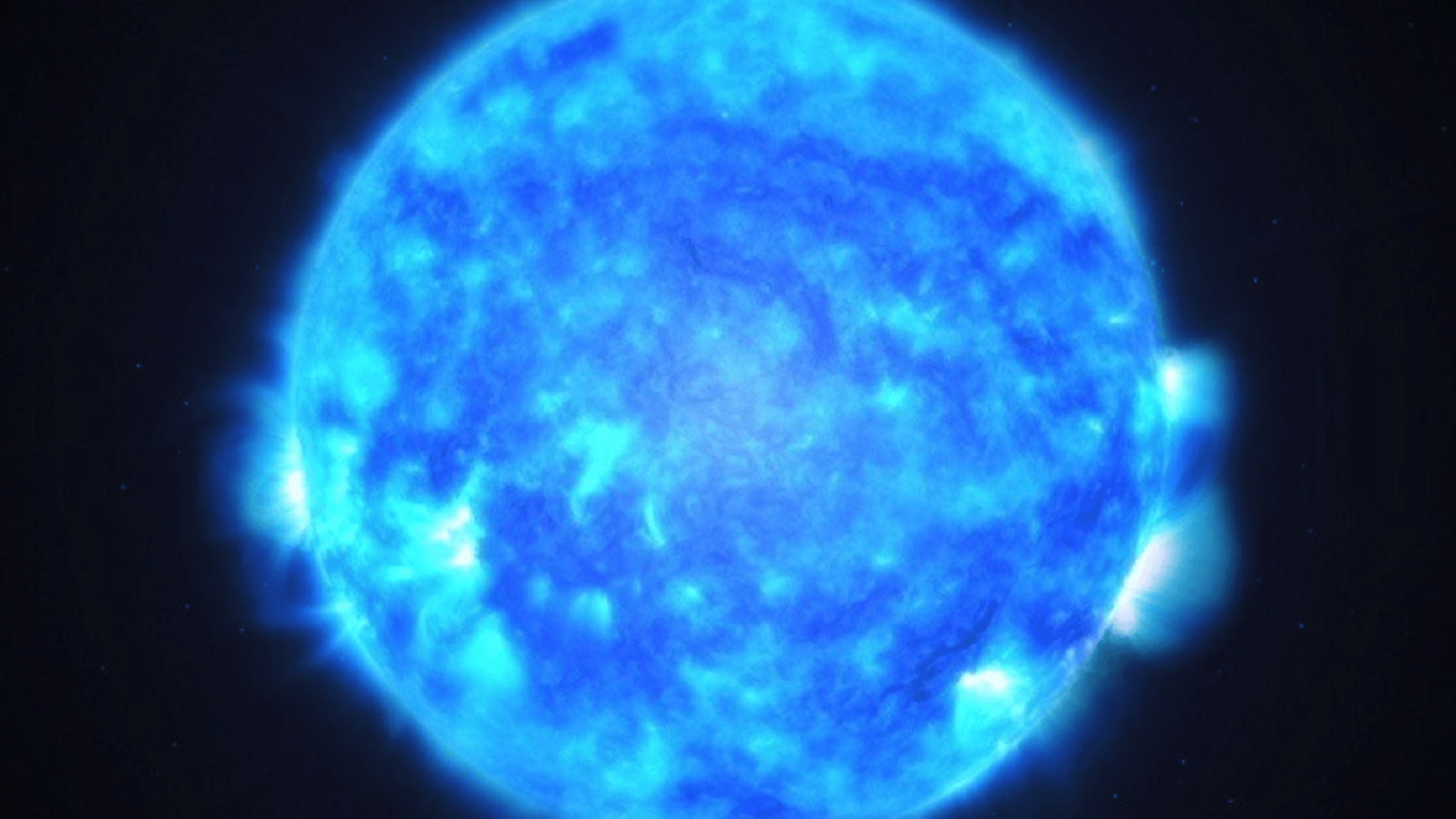
Image Source: Labroots
Blue stars are the hottest stars known. Their surface temperatures can exceed 30,000 Kelvin and sometimes reach 40,000 K or more.
Because of these extreme temperatures, blue stars emit enormous amounts of energy. Most of their radiation falls in the ultraviolet part of the spectrum, but the visible light appears bright blue.
Key Characteristics of Blue Stars
- Surface temperature: 30,000–40,000+ K
- Extremely bright and energetic
- Often very large and massive
- Short lifespans compared to cooler stars
These stars burn through their nuclear fuel quickly because of their intense energy output. As a result, they may live for only a few million years, which is very short in astronomical terms.
Examples of Blue Stars
- Zeta Puppis
- Spica
- Rigel (blue supergiant)
Many blue stars are found in regions where new stars are forming, such as stellar nurseries within galaxies.
Blue-White Stars
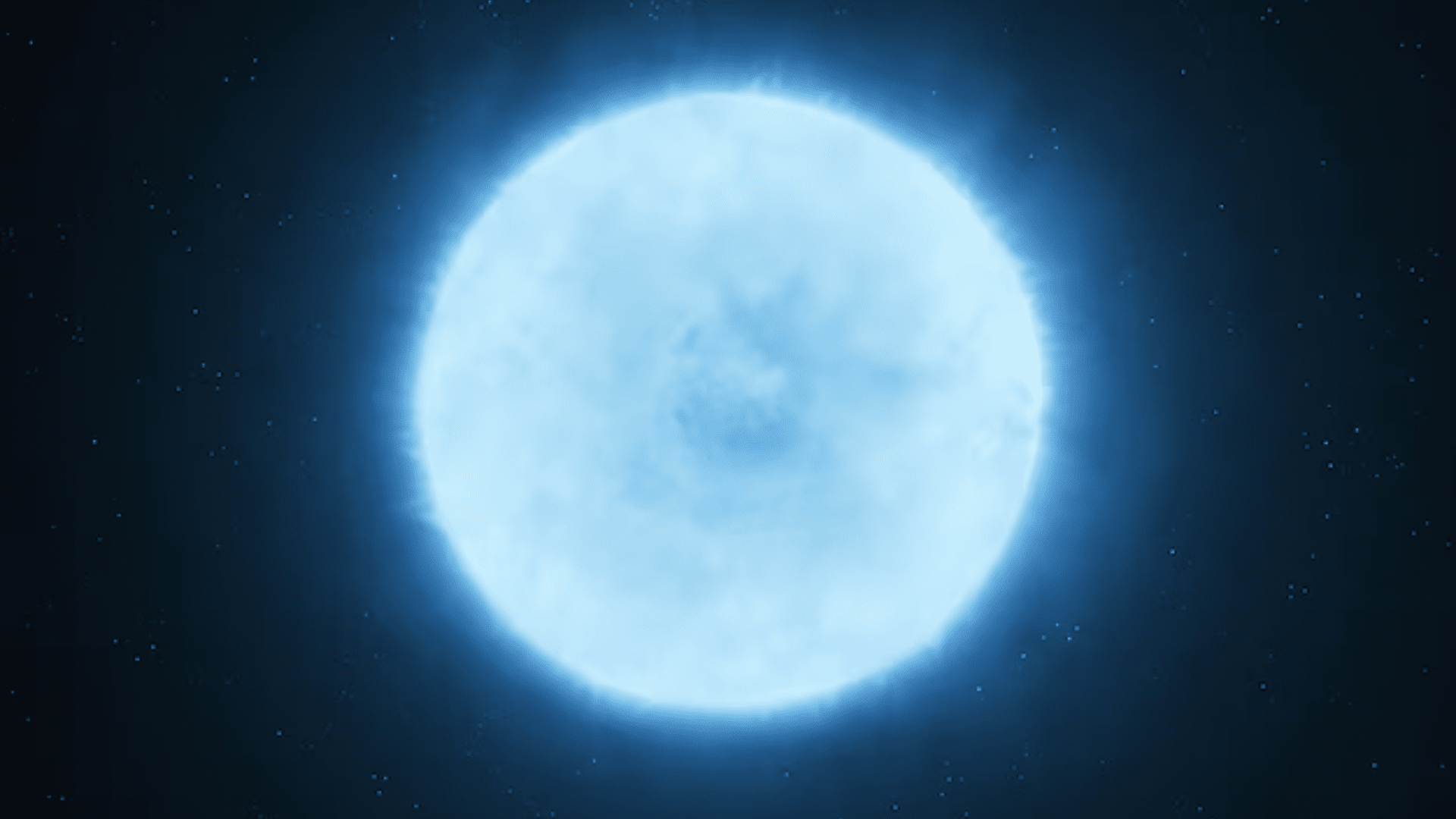
Blue-white stars are slightly cooler than pure blue stars but still extremely hot. Their temperatures usually range from 10,000 to 30,000 Kelvin.
These stars shine with a strong white light, with a noticeable blue tint. Despite their high temperature, they still produce significant amounts of ultraviolet radiation.
Characteristics of Blue-White Stars
- Surface temperature: 10,000–30,000 K
- Very bright and luminous
- Often young stars
- Usually massive compared to the Sun
These stars belong to what astronomers classify as spectral types B and A.
Examples of Blue-White Stars
- Vega
- Sirius A
- Deneb
Sirius, the brightest star in Earth’s night sky, is a famous example of a blue-white star.
White Stars
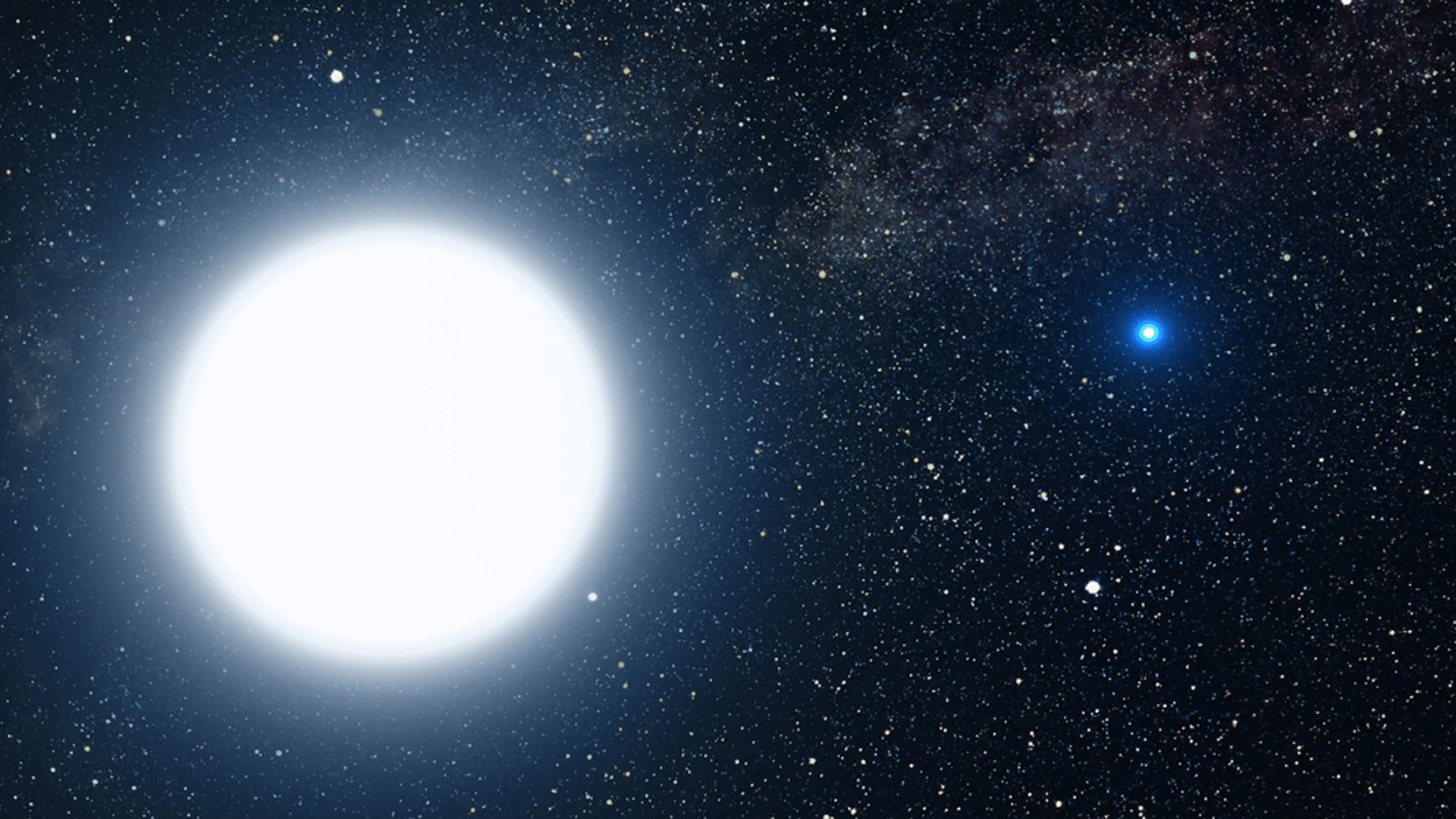
Image Source: Advanced Science News
White stars fall in the middle of the list of star colors from hottest to coldest. Their surface temperatures usually range from 7,500 to 10,000 Kelvin.
These stars appear bright white because their light contains a balanced mix of wavelengths across the visible spectrum.
Characteristics of White Stars
- Surface temperature: 7,500–10,000 K
- Strong brightness
- Often stable main-sequence stars
- Moderate mass compared to hotter stars
White stars are still very energetic, but they burn their fuel more slowly than hotter stars.
Examples of White Stars
- Altair
- Fomalhaut
These stars are common in many star systems and often form part of the main sequence in stellar classification charts.
Yellow-White Stars
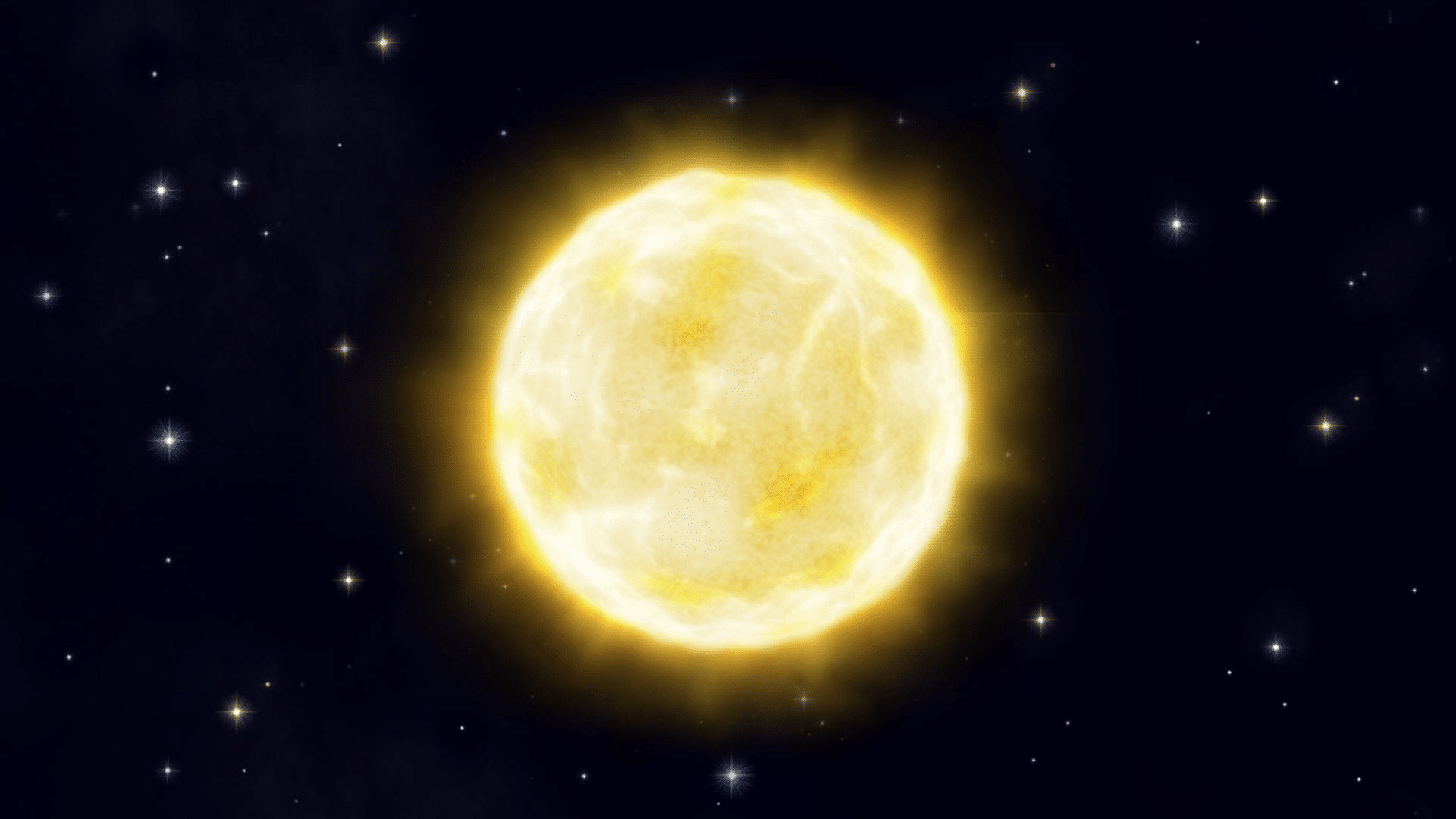
Image Source: Star Walk
Yellow-white stars are slightly cooler than white stars but still quite hot. Their surface temperatures range between 6,000 and 7,500 Kelvin.
These stars emit light that appears pale yellow or creamy white.
Characteristics of Yellow-White Stars
- Surface temperature: 6,000–7,500 K
- Stable nuclear fusion in the core
- Medium lifespan compared to hotter stars
These stars typically belong to the F spectral class. Yellow-white stars often serve as an intermediate stage between hotter white stars and cooler yellow stars.
Yellow Stars
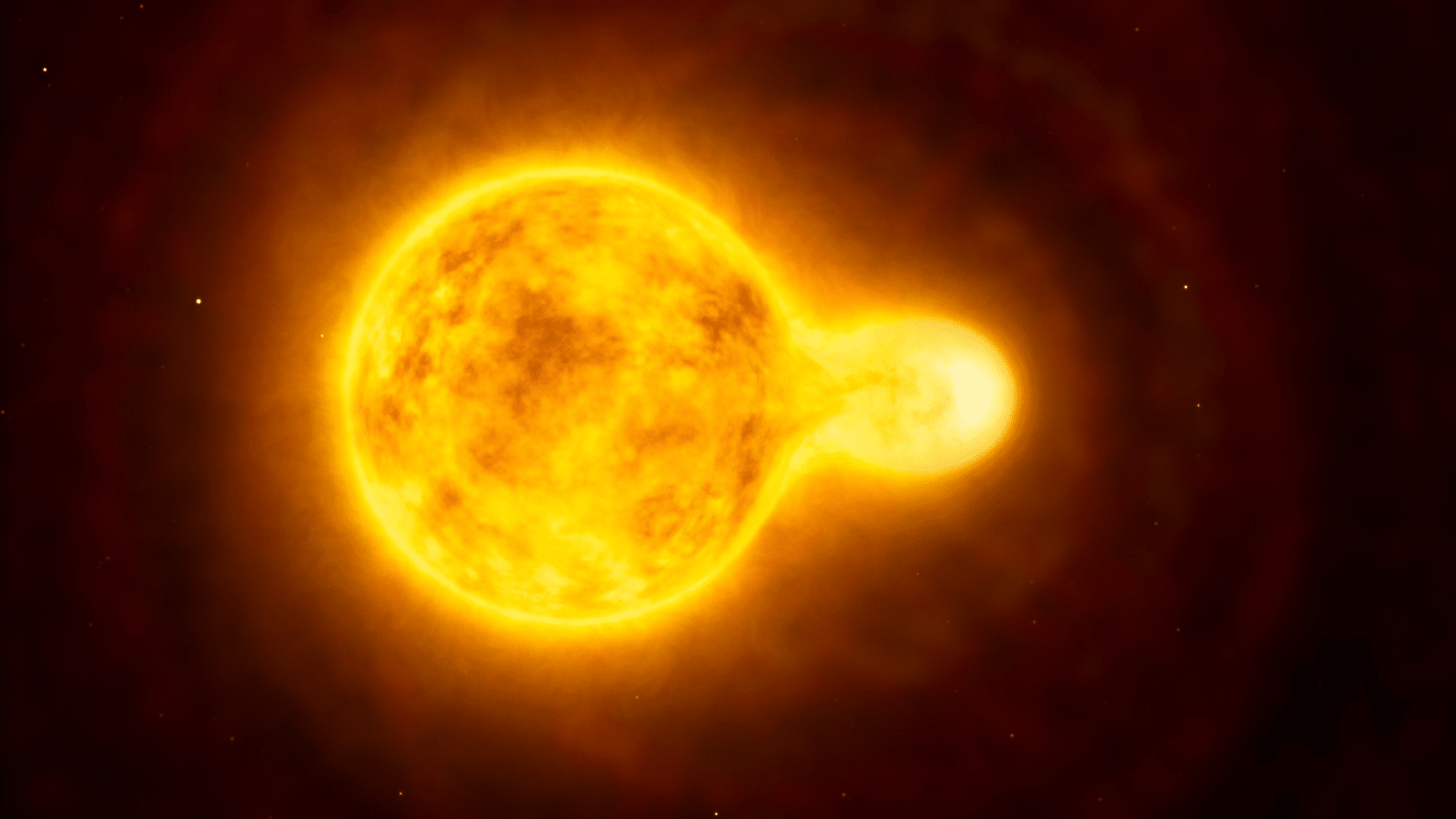
Image Source: Space Awareness
Yellow stars are among the most familiar types of stars because our Sun belongs to this group. Their surface temperatures range from about 5,200 to 6,000 Kelvin.
Characteristics of Yellow Stars
- Surface temperature: 5,200–6,000 K
- Balanced brightness and lifespan
- Stable hydrogen fusion
Yellow stars typically remain stable for billions of years, allowing planetary systems to form around them.
Example: The Sun
The Sun is classified as a G-type main-sequence star. Although it appears bright yellow from Earth, its true color in space is closer to white with a yellow tint.
Orange Stars
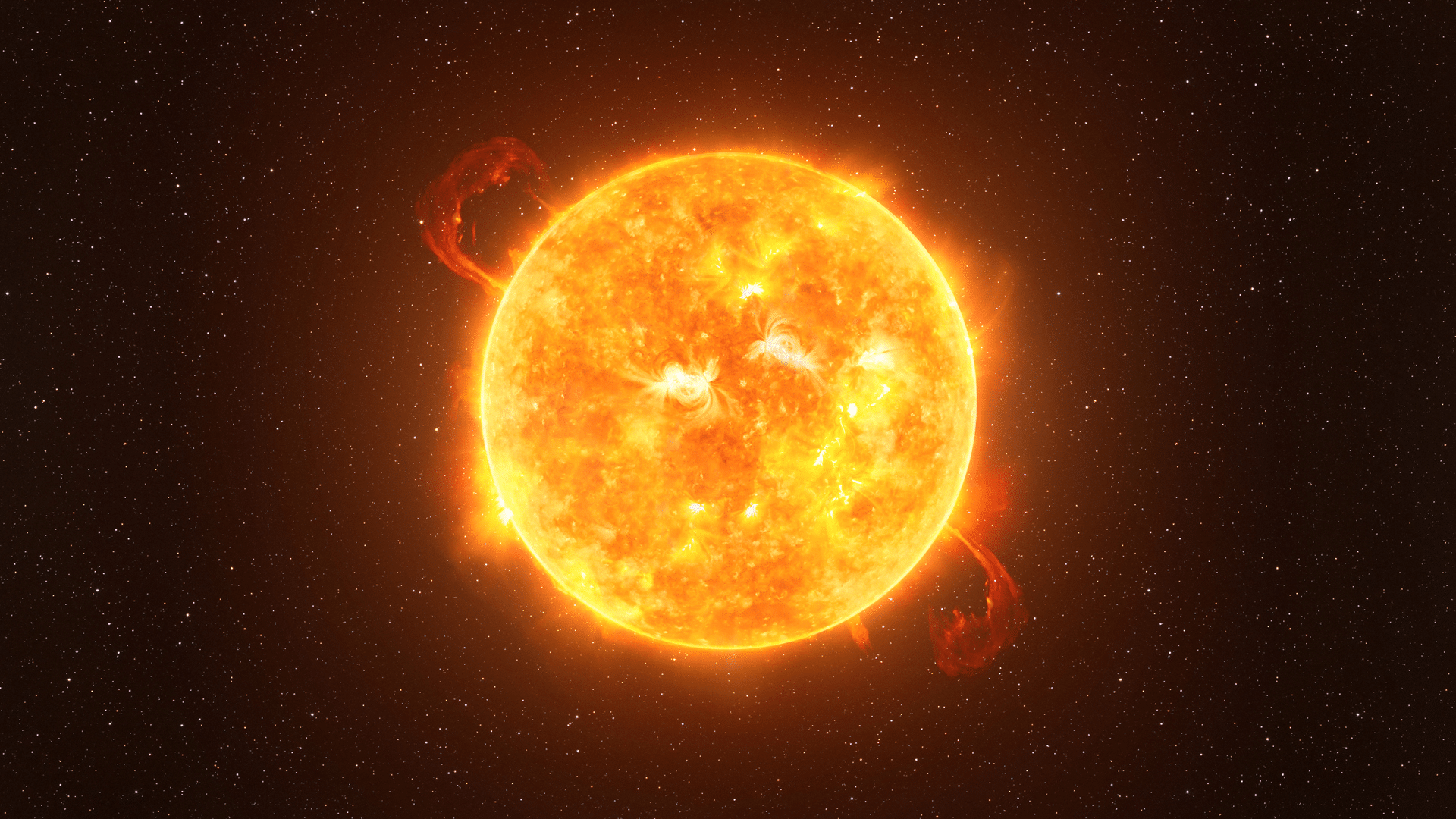
Image Source: Innovation News Network
Orange stars are cooler than yellow stars and shine with a warm orange glow. Their surface temperatures usually range from 3,700 to 5,200 Kelvin.
Characteristics of Orange Stars
- Surface temperature: 3,700–5,200 K
- Often smaller than the Sun
- Longer lifespans due to slower fusion rates
Many orange stars are K-type stars, which are common in the galaxy.
Examples of Orange Stars
- Arcturus
- Aldebaran
Arcturus is one of the brightest orange stars visible from Earth. Because orange stars burn their fuel slowly, they can remain stable for very long periods of time.
Red Stars – The Coolest Stars
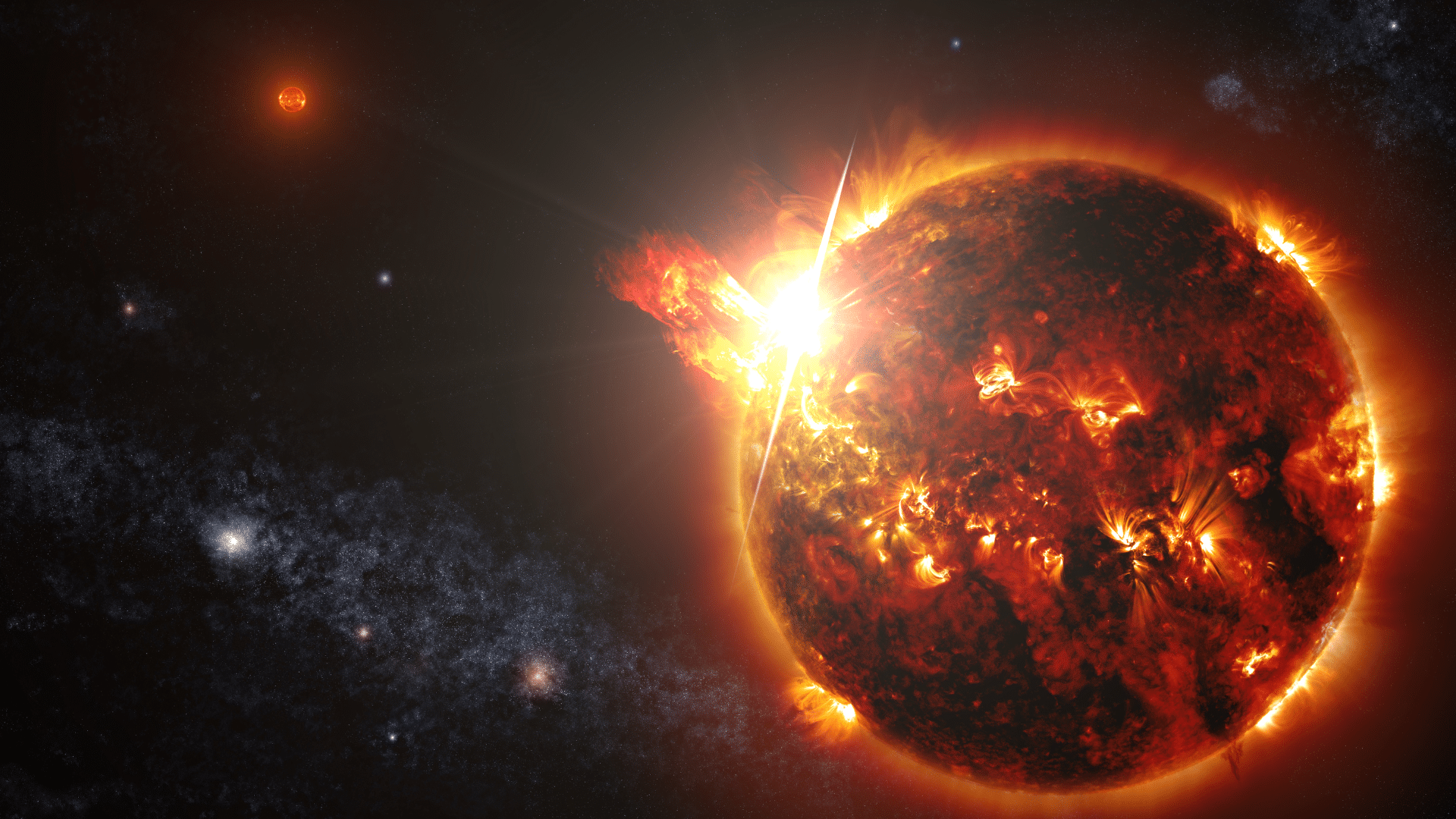
Image Source: Space
Red stars sit at the cool end of the list. Their surface temperatures are typically below 3,700 Kelvin. Despite being cooler, red stars are extremely common in the universe.
Characteristics of Red Stars
- Surface temperature: 2,000–3,700 K
- Lower energy output
- Often small and long-lived
Many red stars are red dwarfs, which are small stars with very long lifespans.
Examples of Red Stars
- Betelgeuse (red supergiant)
- Proxima Centauri
- Antares
Some red stars, like Betelgeuse, are enormous supergiants nearing the end of their life cycle.
Spectral Classification of Star Colors
Astronomers use a system called spectral classification to organize stars by temperature and color. The main categories are:
| Spectral Type | Star Color | Temperature |
|---|---|---|
| O | Blue | 30,000+ K |
| B | Blue-white | 10,000–30,000 K |
| A | White | 7,500–10,000 K |
| F | Yellow-white | 6,000–7,500 K |
| G | Yellow | 5,200–6,000 K |
| K | Orange | 3,700–5,200 K |
| M | Red | 2,000–3,700 K |
Why Blue Stars are Rare Compared to Red Stars
Blue stars are extremely bright but relatively rare. Their high temperatures cause them to burn fuel quickly, which shortens their lifespans. Red stars, especially red dwarfs, burn their fuel slowly and can live for trillions of years.
Because of this difference:
- Blue stars are short-lived
- Red stars are long-lived and abundant
In fact, red dwarf stars make up the majority of stars in the Milky Way galaxy.
How Astronomers Measure Star Color?
Astronomers use several scientific techniques to determine the color and temperature of stars. These methods allow scientists to measure the wavelengths of light a star emits and correctly place it on the list.
| Method | How It Works | What It Reveals |
|---|---|---|
| Spectroscopy | Splits starlight into a spectrum using instruments called spectrographs. | Shows the exact wavelengths of light emitted, helping determine a star’s color and temperature. |
| Photometry | Measures a star’s brightness through different colored filters. | Helps calculate the star’s color index and overall temperature. |
| Color Index (B–V) | Compares brightness in blue light (B) and visible light (V). | Indicates whether a star is hotter (bluer) or cooler (redder). |
| Space Telescope Imaging | Uses sensitive cameras that capture light across many wavelengths. | Provides highly accurate measurements of star color without atmospheric interference. |
Factors That Change How Star Colors Appear
Even though stars have specific colors based on their temperature, they do not always appear exactly the same when viewed from Earth. Several factors can affect how their light reaches our eyes.
- Earth’s Atmosphere: As starlight passes through Earth’s atmosphere, gases and particles scatter certain wavelengths of light. This scattering can slightly change the color we perceive, especially when a star is close to the horizon.
- Distance from Earth: Very distant stars may appear white or faint because their light becomes weaker by the time it reaches Earth. The human eye may not detect subtle color differences at such distances.
- Brightness of the Star: Bright stars often show clearer color tones, while dim stars can appear pale or colorless to the naked eye.
- Human Eye Sensitivity: The human eye struggles to detect color in very low light conditions. As a result, some stars that are actually colored may appear white or gray when observed without a telescope.
- Telescope and Camera Observations: Scientific instruments can capture precise wavelengths of light. Telescopes and space cameras often reveal star colors more accurately than the naked eye can.
Final Thoughts
Star colors provide valuable clues about how stars behave and how hot they are. The sequence from blue to red follows a clear temperature pattern: blue stars are the hottest, and red stars the coolest.
This relationship helps astronomers classify stars and understand their life cycles. By observing color, scientists can estimate temperature, energy output, and other important traits.
Even small differences in color reveal meaningful details about a star’s nature.
If you enjoyed this guide, keep reading more astronomy articles to learn about stars, galaxies, and the wider universe.