


Most startup founders have a solid idea but no clear plan for building it.
Who writes the code? How much will it cost? What do you actually need to launch? These are fair questions, and they don’t have easy answers, but they do have answers.
This guide walks you through the full picture of software development for startups: from building your first product to picking the right team.
Whether you’re pre-revenue or post-funding, getting your software decisions right early saves you time, money, and a lot of frustration down the road.
What Is Software Development for Startups?
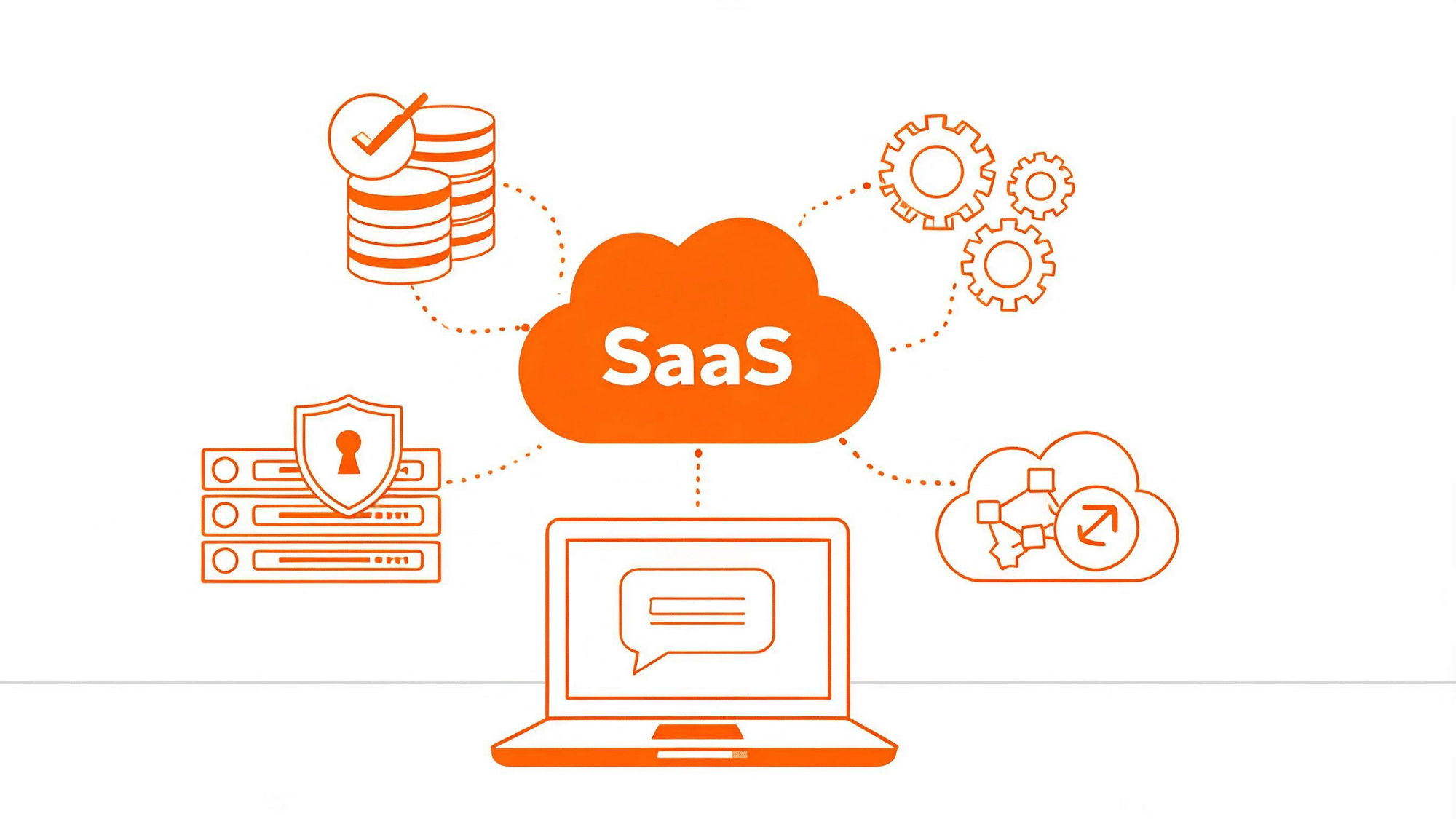
Software development for startups is the process of turning a business idea into a working digital product, such as a web app, mobile app, or SaaS platform, while working with limited budgets, small teams, and tight deadlines.
Unlike large companies that can afford to rebuild, startups need to get the core product right quickly, test it with real users, and improve it based on what they learn.
The Startup Software Development Lifecycle
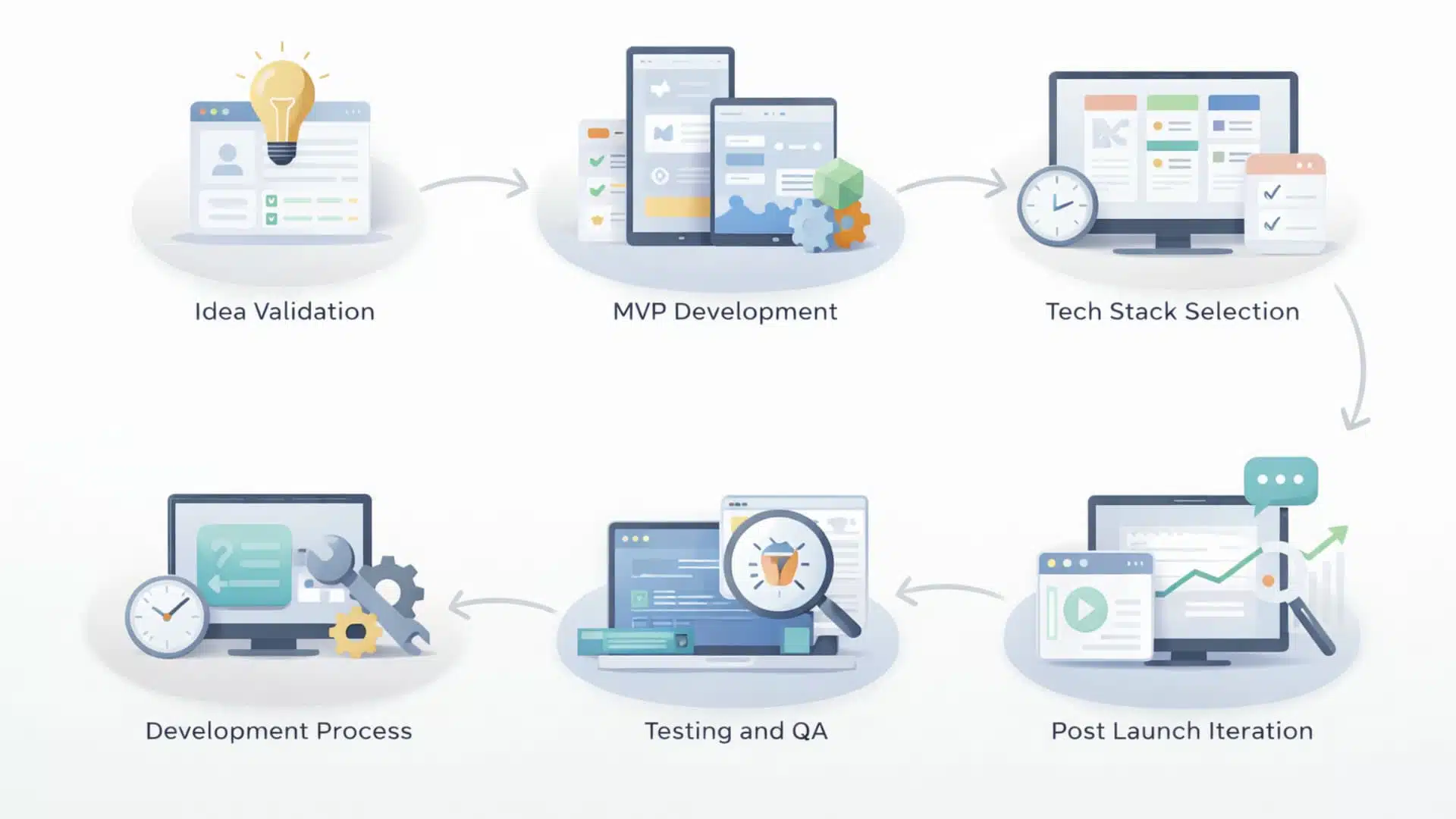
Building software is not a single event. It is a series of connected steps, and skipping any one of them tends to create problems you have to fix later, usually at a higher cost.
Step 1: Idea Validation Before Writing Code
Before any code gets written, you need to confirm that people actually want what you are building. Run quick surveys, build a landing page, or talk directly to your target users.
According to the Lean Startup methodology, teams should validate assumptions before writing code, and a CB Insights study found that 42% of startups fail due to building products with no market need.
Step 2: Building Your MVP
An MVP is the most basic version of your product that solves one core problem for real users.
It reduces risk, keeps costs lower, and a working prototype is far more persuasive to investors than an idea on paper. Think of it as your proof of concept, not your finished product.
Step 3: Choosing the Right Tech Stack
Your tech stack is the set of tools, programming languages, and frameworks your product runs on.
The right tech stack can reduce time to market by 40 to 60 percent, while the wrong one can double your development time and cost. Pick what your team already knows over what sounds new or impressive.
Step 4: Development Methodology
For most startups, Agile combined with Lean principles provides the best balance between speed, flexibility, and cost control.
Short sprints and frequent releases let you catch problems early and keep the product moving in the right direction.
Step 5: Testing and QA
Testing is not optional. Startups that automate tests and deployments ship updates 50% faster than those that don’t. Run user acceptance testing before any public launch and treat bugs as urgent, not cosmetic.
Step 6: Post-Launch Iteration
Launching is not the finish line. Collect real usage data, listen to your early users, and make improvements in short cycles.
Iterative development helps validate ideas early, reduces risk, and keeps the product aligned with what users actually need.
In-House vs. Outsourcing: What Works for Startups?

This is one of the most common decisions founders lose sleep over. The honest answer is that neither option is always better; it comes down to your team, your budget, and what you are building.
| Factor | In-House Team | Outsourced Team |
|---|---|---|
| Cost | Higher (salaries, benefits, tools) | Lower upfront, easier to control |
| Speed to start | Slower (hiring takes time) | Faster (teams are ready to go) |
| Control | Higher, teamwork only for you | Moderate, depends on the vendor |
| Best for | Products needing constant iteration or high security | Well-defined MVPs, limited budgets, specialized skills |
| Timezone | Same timezone, easy collaboration | Can vary: onshore, nearshore, or offshore |
| Long-term | Stronger institutional knowledge | Better for defined scopes or short engagements |
Outsourcing makes the most sense if you lack technical expertise but need a high-quality product fast, your budget is limited, or you need specialized skills like AI or blockchain that are hard to find locally. Consider building in-house if you have a technical co-founder with relevant experience, your MVP is a straightforward web app, or engineering is your core competitive advantage from day one.
How Much Does Software Development Cost for a Startup?
Costs vary widely depending on what you are building and who builds it.
A simple no-code MVP typically runs between $5,000 and $15,000 and can be completed in four to six weeks, while a complex AI or fintech product can cost $60,000 to $150,000 or more and take four to eight months.
Key factors that drive costs up include the number of platforms you are targeting (web vs. mobile vs. both), the complexity of features and third-party integrations, and where your development team is based, since North American and Western European rates are significantly higher than Eastern European or Asian teams.
7 Software Development Service Providers for Startups
Choosing a development partner is one of the highest-stakes decisions a founder makes. These seven companies consistently appear among the top choices for startups across the USA, based on client reviews, Clutch ratings, and portfolio work.
1. MojoTech
MojoTech is a US-based firm founded and run by engineers, with a strong focus on code quality and reducing technical debt. Their client portfolio includes Fortune 500 companies like Credit Karma and Aetna.
Best for: well-funded startups that want technical excellence above all else.
2. BairesDev
BairesDev is one of the top nearshore software development companies, offering services from concept to completion with a team drawn from the top 1% of nearshore developers. They have served over 500 clients, from early-stage startups to Fortune 500 companies.
Best for: startups that want Latin American talent with a strong US timezone overlap.
3. Rootstrap
Based in Los Angeles, Rootstrap blends strategy, UX, and engineering with a product studio approach. They have worked with notable clients, including Google and MasterClass, and are particularly well-regarded in the startup and media space.
Best for: founders who want both product strategy and development under one roof.
4. 10Clouds
10Clouds focuses on AI and blockchain development, particularly for FinTech and EduTech companies. Their portfolio includes a high-yield FinTech platform and a layer-1 blockchain product, and they use AI tools internally to accelerate client delivery.
Best for: startups building in fintech, blockchain, or AI-heavy products.
5. Simform
Simform is a mid-sized firm with deep expertise in cloud-native development and DevOps. They hold certifications from both AWS and Google Cloud and have built a strong US client base through consistent delivery for funded startups and mid-market companies.
Best for: startups planning to scale on cloud infrastructure from day one.
6. Vention
Headquartered in New York and operating since 2002, Vention offers custom software development, legacy modernization, cloud migration, and staff augmentation. Their teams work across AI, big data, and blockchain to deliver enterprise-grade solutions.
Best for: post-seed startups ready to build at scale.
7. Leanware
Leanware uses AI-enhanced development to accelerate delivery while maintaining high quality. They have offices across North America and focus on startups that need a long-term technical partner with strong legal structure and timezone alignment.
Best for: founders who want a partner that grows with them through multiple funding stages.
Software Development Best Practices for Startups
Getting the process right matters as much as picking the right tools. These are the practices that consistently separate startups that ship well from those that stall out.
Getting started on the right foot means making smart decisions early, before the codebase gets complex and course corrections get expensive.
- Validate before building. Confirm user demand before writing a single line of code.
- Start with an MVP. Build the smallest version that solves the core problem, nothing more.
- Use Agile sprints. Work in short cycles so you can test, learn, and fix fast.
- Document your architecture. Good documentation makes scaling the team much easier down the road.
- Build with security from the start. Secure coding, encryption, and regular checks protect user trust and prevent costly issues later.
- Choose cloud infrastructure. Cloud platforms reduce infrastructure costs and simplify management as your product grows.
- Keep UX simple. Simple, user-friendly product design wins more often than feature-heavy ones.
Mistakes Startups Make in Software Development
Even smart founders repeat the same software mistakes. Knowing what they are before you hit them is half the battle.
Most of these mistakes don’t show up as obvious failures at first. They show up as slow timelines, rising costs, and products that users don’t stick around for.
| Mistake | Why It Happens | What It Costs You |
|---|---|---|
| Building too many features | Founders want to impress early users | Longer timeline, wasted budget, confused users |
| Skipping market validation | Confidence in the idea | Building something nobody wants |
| Wrong tech stack | Following trends instead of team strengths | Technical debt, slow delivery, expensive fixes |
| Ignoring user feedback post-launch | Focus on building the next feature | Product drifts away from what users need |
| Spending the entire budget on development | No plan for what comes after launch | Nothing left for marketing, support, or iteration |
| Skipping security | Pressure to ship fast | Data breaches, loss of user trust, legal exposure |
| No success metrics before launch | Unclear what “working” looks like | No way to know if the MVP actually validated anything |
How to Choose the Right Software Development Partner?
The right partner has done this before for a startup at your stage, not just for enterprises.
Check their portfolio for projects similar in size and complexity to yours, ask for references from past startup clients specifically, and confirm they work in Agile sprints so you get regular updates rather than a big reveal months later.
Start with a small project first to test the working relationship before committing to a long-term contract. Watch for red flags like vague timelines, no QA process, or no plan for what happens after launch.
Pricing transparency matters too; fixed-cost or milestone-based contracts are easier to manage on a startup budget than open-ended hourly arrangements.
The Bottom Line
Software development for startups does not have to feel like a gamble. The founders who get it right are not the ones with the biggest budgets.
They are the ones who validate early, build lean, and make decisions based on real user feedback rather than assumptions.
Pick a method that fits your pace, choose tools your team knows, and find a development partner you can actually communicate with.
Start small, ship fast, and improve from there. If you are planning your first build, drop your biggest question in the comments, we read every one.