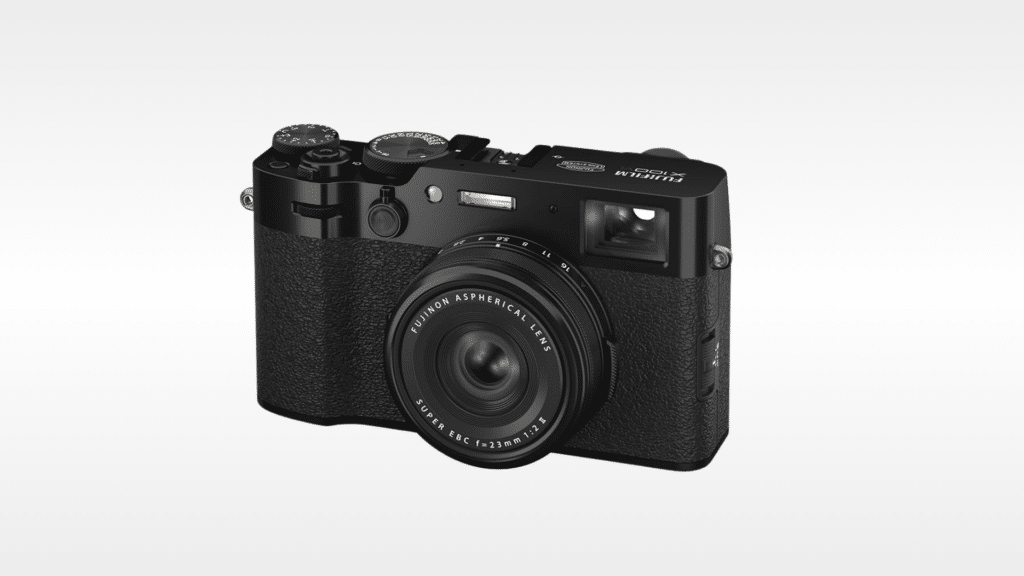
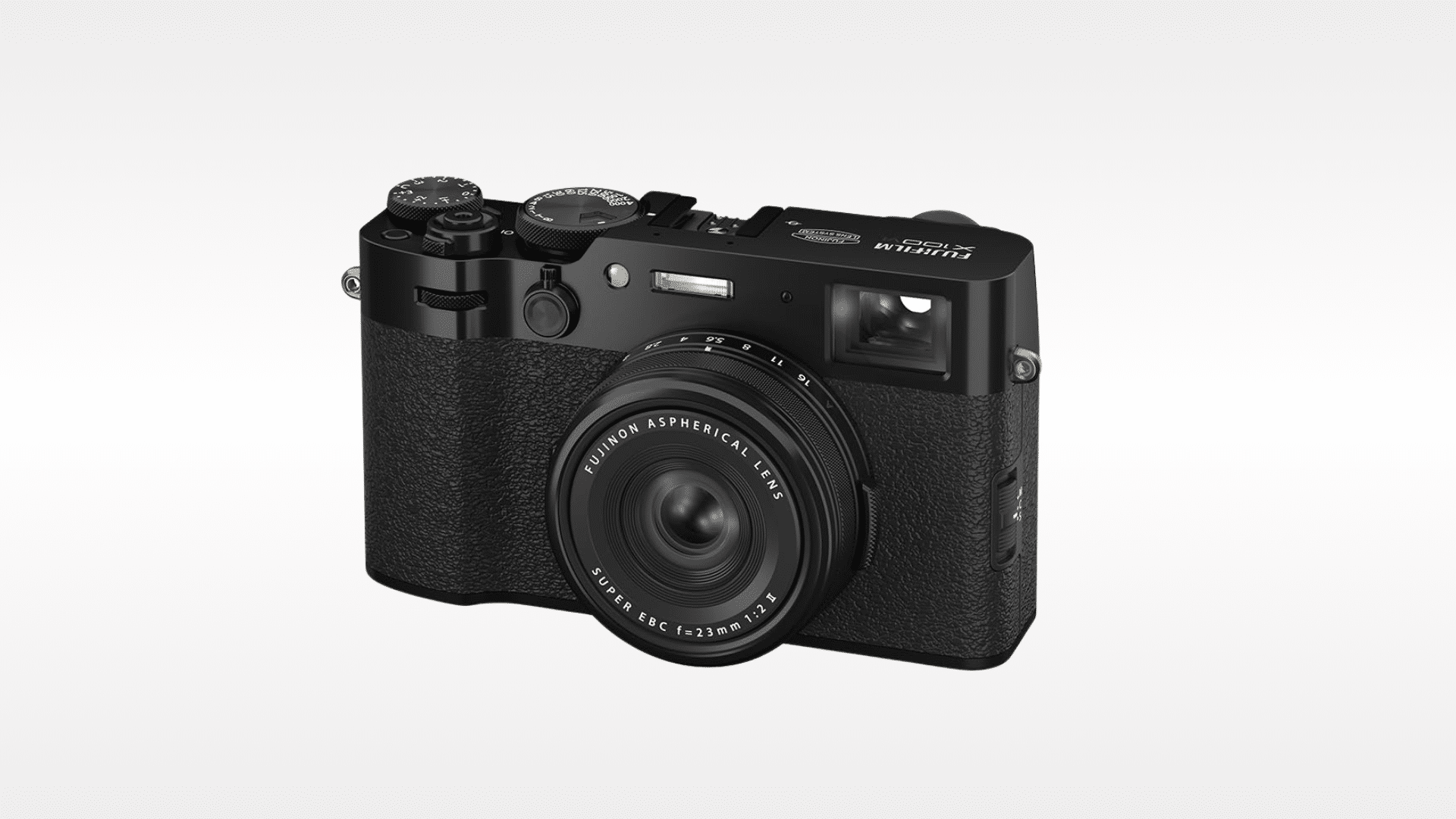



The Fujifilm X100VI has quickly drawn attention from photographers who value both design and performance.
It continues a respected camera line that has built a strong reputation over time. With each new release, expectations rise, and this model attracts significant interest.
Questions about its long-term value and everyday use are already part of the conversation. I have seen similar patterns with past X100 releases, where demand builds early, and opinions form quickly.
This review takes a careful, practical look at the camera. I focus on actual use rather than marketing claims.
Quick Overview of the Fujifilm X100VI
The Fujifilm X100VI is a premium compact camera that continues the brand’s well-known X100 series with meaningful upgrades.
Released in 2024, it features a 40MP APS-C sensor, a fixed 23mm f/2 lens, and a classic rangefinder-style design. The camera also introduces in-body image stabilization and improved autofocus, aimed at enhancing everyday shooting.
Despite its compact size, it targets serious photographers who value image quality and simplicity.
Positioned at a higher price point, it competes with both compact and interchangeable lens cameras in today’s market.
Fujifilm X100VI Key Specifications
| Feature | Details |
|---|---|
| Sensor | 40.2MP APS-C X-Trans CMOS 5 |
| Processor | X-Processor 5 |
| Lens | Fixed 23mm f/2 (35mm equivalent) |
| Image Stabilization | In-body image stabilization (IBIS, up to 6 stops) |
| ISO Range | 125–12,800 (expandable to 64–51,200) |
| Autofocus | Hybrid AF with subject detection and tracking |
| Burst Shooting | Up to 11 fps |
| Video | Up to 6.2K (30p), 4K up to 60p |
| Viewfinder | Hybrid Optical + Electronic (3.69M-dot EVF) |
| Screen | 3.0-inch tilting touchscreen LCD |
| Storage | SD/SDHC/SDXC (UHS-I) |
| Battery Life | Approx. 450 shots per charge |
| Connectivity | USB-C, Wi-Fi, Bluetooth |
| Weight | Approx. 521g (with battery) |
| Dimensions | 128 × 75 × 55 mm |
| Release Year | 2024 |
Core Upgrades in the Fujifilm X100VI
The Fujifilm X100VI brings several meaningful upgrades that push the series forward without changing its core identity. These updates focus on image quality, stability, autofocus, and video, making the camera more capable in everyday use.
40MP Sensor Upgrade
The X100VI now uses a 40.2MP APS-C X-Trans CMOS 5 sensor, a major jump in resolution from the previous model. This allows for sharper images, more detail, and better flexibility when cropping photos.
In-Body Image Stabilization (IBIS)
For the first time in the X100 series, Fujifilm has added in-body image stabilization. It offers up to 6 stops of stabilization, helping reduce blur in low light and improving handheld shooting.
Improved Autofocus System
The camera features an upgraded autofocus system with AI-based subject detection. It can recognize people, animals, and vehicles, offering faster and more reliable focusing than earlier models.
Enhanced Video Capabilities
Video performance has seen a clear step forward. The X100VI supports 6.2K recording, along with 4K at higher frame rates, making it more useful for creators who want both photo and video in a single camera.
New Processor and Performance Boost
It runs on the latest X-Processor 5, which improves overall speed, responsiveness, and image processing. This also helps improve autofocus and achieve higher-resolution output.
Refined Shooting Experience
Along with hardware upgrades, Fujifilm has improved film simulations and overall responsiveness. These changes make the camera feel more refined while keeping the same familiar shooting style.
Performance and User Experience
This section examines how the Fujifilm X100VI performs across key areas, focusing on handling, features, and overall shooting experience quality.
Design and Build Quality
The X100VI keeps its classic rangefinder-style design with a solid metal body and compact form. It feels premium in hand and remains easy to carry.
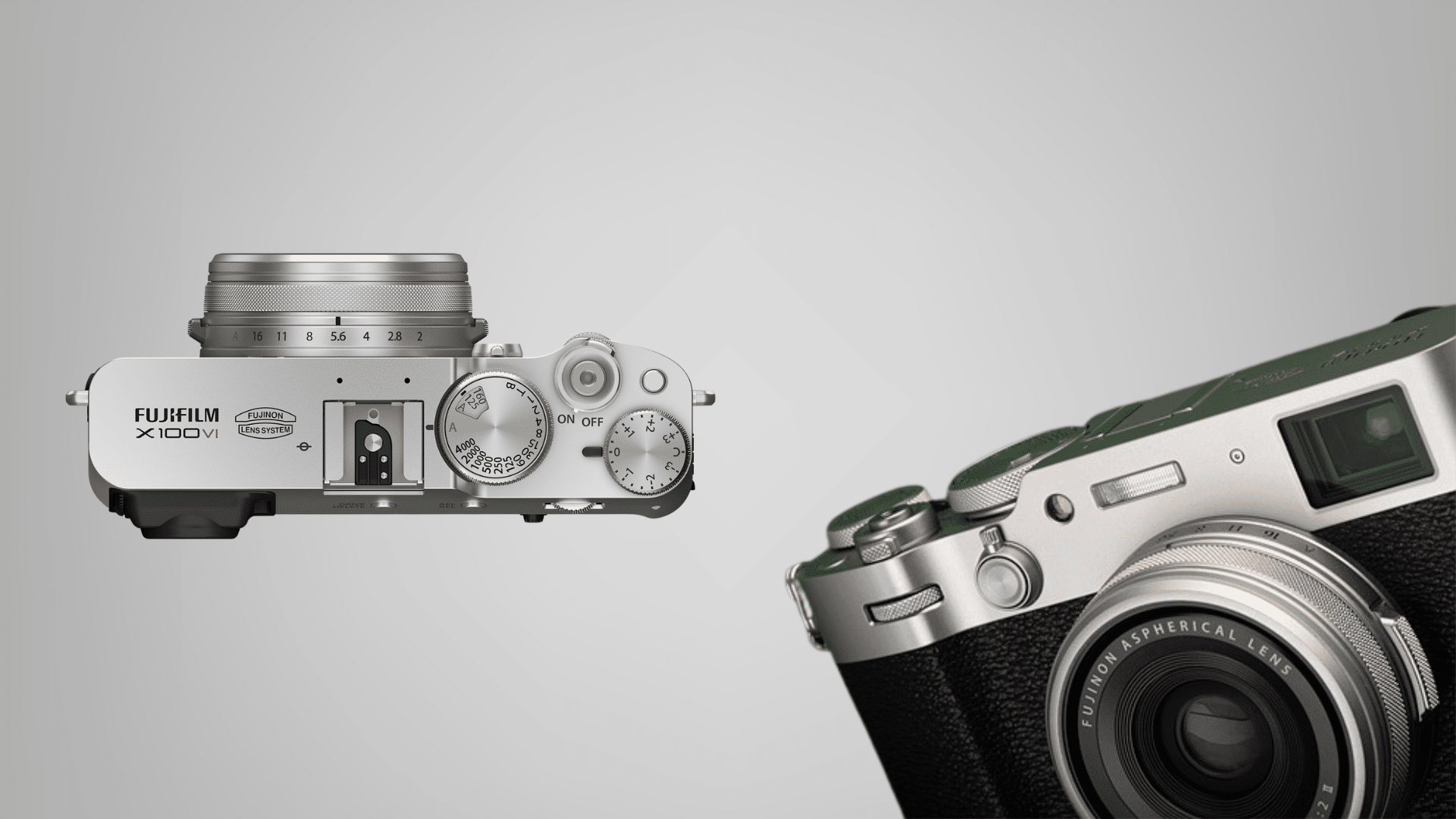
Manual dials for shutter speed, ISO, and exposure add a tactile shooting experience. The hybrid optical and electronic viewfinder remains a standout feature, giving users flexibility while composing shots.
Image Quality Performance
The 40.2MP APS-C sensor delivers sharp images with strong detail and accurate colors. It provides greater flexibility for cropping without significant loss of quality.
Fujifilm’s film simulations continue to produce rich, pleasing tones straight out of the camera. The added stabilization also helps maintain clarity in low-light conditions.
Autofocus and Shooting Performance
Autofocus has improved with better subject detection and tracking. The system can recognize faces, animals, and moving subjects with higher accuracy.
Shooting speed remains responsive, with up to 11 fps in continuous shooting mode. This makes the camera reliable for capturing fast or unpredictable moments.
Video Capabilities
The X100VI supports 6.2K video and 4K at higher frame rates, offering more flexibility for content creation.
Video quality is clear, with strong color output and improved stabilization. While it is not built as a dedicated video camera, it handles short clips and hybrid use well.
Battery Life and Connectivity
Battery life is rated at around 450 shots per charge, which is solid for a compact camera. USB-C charging makes it easier to power up on the go.
It also includes Wi-Fi and Bluetooth for quick file transfers and remote control through a mobile device.
Real-World Experience
The camera feels fast, responsive, and enjoyable to use. Its compact size and fixed lens make it easy to carry and simple to operate.
The balance between manual controls and modern features creates a smooth shooting experience that suits everyday photography.
Fujifilm X100VI vs X100V: Key Differences
The Fujifilm X100VI builds on the X100V with several meaningful upgrades, mainly in resolution, stabilization, autofocus, and video. While both cameras look very similar and share the same lens, the internal changes make the newer model more capable overall.
| Feature | Fujifilm X100VI | Fujifilm X100V |
|---|---|---|
| Release Year | 2024 | 2020 |
| Sensor | 40.2MP X-Trans CMOS 5 | 26.1MP X-Trans CMOS 4 |
| Processor | X-Processor 5 | X-Processor 4 |
| Image Stabilization | Yes (IBIS, up to 6 stops) | No IBIS |
| Autofocus | Improved with AI subject detection | Standard hybrid AF |
| Video | 6.2K (30p), 4K (60p) | 4K (30p) |
| Film Simulations | 20 (includes new options) | 17 |
| Lens | 23mm f/2 (same) | 23mm f/2 (same) |
| Viewfinder | Hybrid OVF/EVF | Hybrid OVF/EVF |
| Battery Life | ~310 shots | ~350 shots |
| Weight | 521g | 478g |
| Design | Nearly identical body | Same design language |
Who Should Buy the Fujifilm X100VI
The Fujifilm X100VI is best suited for photographers who value simplicity, portability, and strong image quality in a compact form.
It works well for street, travel, and documentary-style photography, where a lightweight camera makes a difference. The fixed 23mm lens encourages a focused shooting style rather than constant lens changes.
It is also a strong choice for enthusiasts who enjoy manual controls and Fujifilm’s film simulations.
However, it is less ideal for users who need zoom flexibility or interchangeable lenses for varied shooting needs.
Final Verdict: Is the Fujifilm X100VI Worth It?
The Fujifilm X100VI leans into a clear idea: a focused, high-quality camera without extra complexity. It does not try to cover every use case, and that feels intentional.
I see its value in encouraging a slower, more deliberate way of shooting. That approach will not suit everyone, but it can be refreshing in a crowded camera market.
It stands out more for how it feels to use than just what it offers on paper. If that kind of experience matters, take a closer look and decide if it fits your style before buying.
Frequently Asked Questions
Is the Fujifilm X100VI Good for Everyday Photography?
Yes, it works well for everyday use thanks to its compact size and fast performance. It is easy to carry and quick to shoot.
How Portable is the Fujifilm X100VI?
It is highly portable. The compact design makes it easy to carry for travel, street photography, and daily use.
Is the Fujifilm X100VI Suitable for Low-Light Shooting?
Yes, the added image stabilization and improved sensor help produce clearer images in low-light conditions.