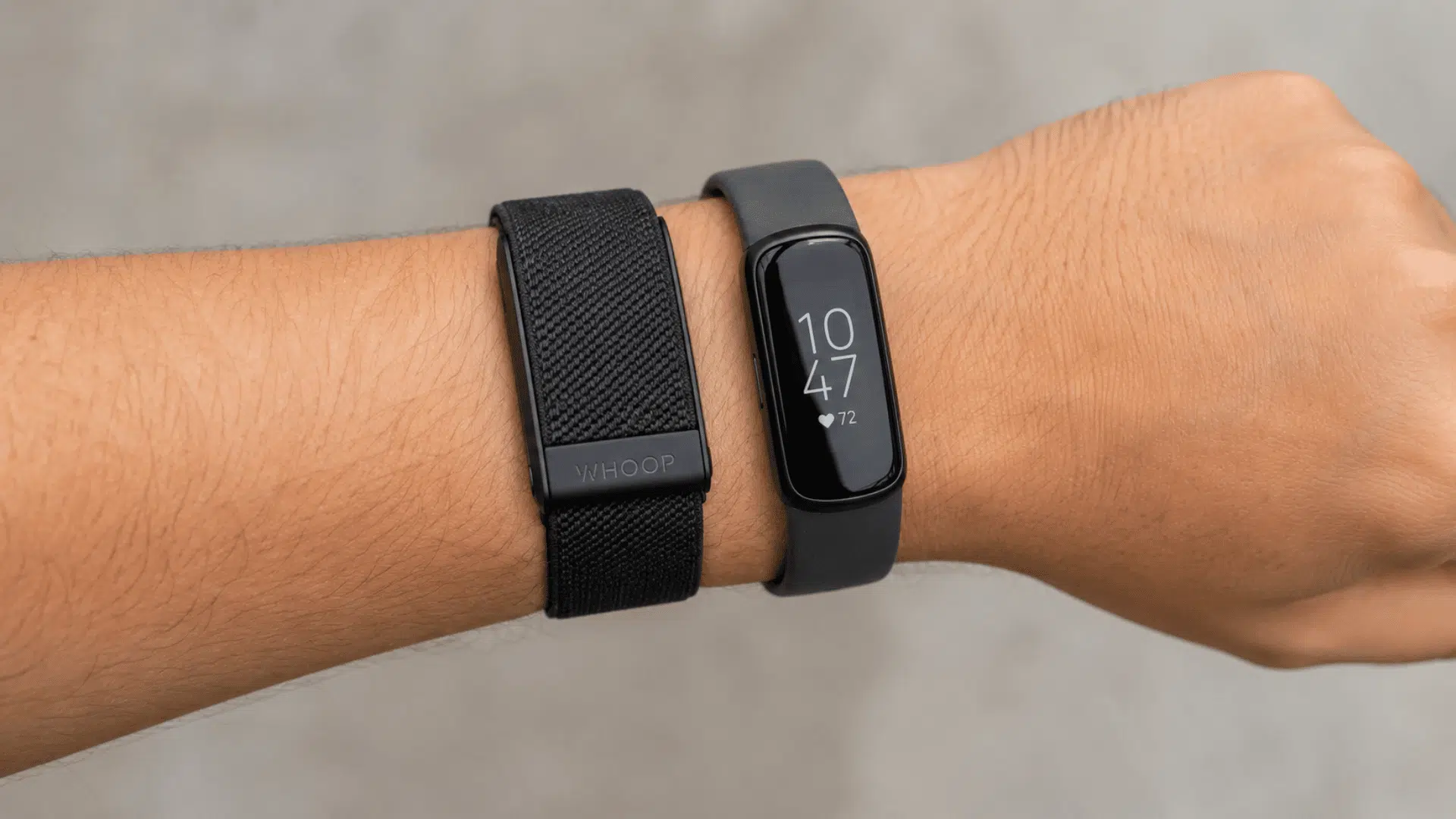



WHOOP and Fitbit both track health and fitness, but they are built for very different types of users.
WHOOP focuses heavily on training, sleep, strain, and recovery, while Fitbit offers a broader mix of activity tracking, health insights, and everyday features.
The right choice depends on how much performance data you need, which features you actually use, and how much you want to spend.
This comparison looks at WHOOP vs Fitbit for accuracy, fitness tracking, sleep, design, battery life, smart features, and overall value.
Read on to see which fitness tracker is the better fit for your goals and daily routine.
Whoop and Fitbit at a Glance
WHOOP and Fitbit are wearable fitness trackers, but they are designed around different priorities and types of users.
WHOOP is a performance-first wearable focused on recovery, sleep, training strain, and long-term physiological trends. Its screenless design supports continuous wear, while access to its main features requires an ongoing membership.
Fitbit takes a broader fitness and wellness approach, covering steps, workouts, heart rate, sleep, and other health trends. Available features, including GPS and displays, vary across models.
Overall, WHOOP suits recovery-focused training, while Fitbit offers greater flexibility for everyday fitness tracking and general wellness.
WHOOP vs Fitbit: Key Differences

Both trackers collect useful health and fitness data, but they differ in how they measure, present, and use that information.
Features and Fitness Tracking
WHOOP focuses on continuous fitness monitoring through Strain, Recovery, and personalized coaching.
It tracks workouts, heart rate, steps, calories, and training load while helping users understand how exercise affects their bodies.
Fitbit provides broader everyday tracking, including steps, workouts, active minutes, heart rate, and calories. Certain Fitbit models also include built-in GPS.
WHOOP suits structured training better, while Fitbit offers a familiar approach for people managing general fitness and daily activity goals.
Accuracy and Health Data
Both WHOOP and Fitbit track heart rate and health trends, though accuracy can vary with fit, movement, and activity type.
WHOOP emphasizes continuous data such as heart rate variability and resting heart rate to support recovery and training insights.
Fitbit combines similar health metrics with everyday activity, workout, and wellness tracking.
Neither device replaces medical testing, so long-term trends are generally more useful than individual readings.
Sleep and Recovery Tracking
WHOOP makes sleep a central part of its recovery system. It tracks sleep duration, consistency, efficiency, and sleep needs, then connects those measurements with daily Recovery scores and training recommendations.
Fitbit also tracks sleep duration, stages, and related trends, making it useful for users who want a clear overview of their nightly rest.
WHOOP provides deeper recovery-focused interpretation, while Fitbit offers simpler sleep information that fits naturally alongside everyday activity and general wellness tracking.
Users mainly interested in sleep and recovery can also consider the Oura Ring review for another approach to tracking these metrics.
Design and Comfort
WHOOP uses a screenless design that keeps the wearable simple and less distracting during workouts, sleep, and daily activities.
Its lightweight band is intended for continuous wear and can be paired with different wearing accessories. Fitbit design varies by model.
Fitbit Air also uses a screenless format, while devices such as Charge 6 include a display.
Users who want minimal interaction may prefer WHOOP or Fitbit Air, while those wanting wrist-based information may prefer another Fitbit model.
Smart Features and Display
WHOOP does not have a traditional display, so detailed statistics and recommendations are viewed through its companion app.
This keeps attention on health information rather than notifications or smartwatch functions. Fitbit offers more choice.
Screen-equipped models such as Charge 6 can show workout information, notifications, navigation features, and other useful details directly on the wrist.
Fitbit, therefore, works better for users wanting fitness tracking alongside everyday smart functions, while WHOOP stays focused mainly on performance, recovery, and health insights.
Battery Life and Charging
WHOOP 5.0 offers more than 14 days of battery life, making it easier to track sleep, workouts, and recovery with fewer charging breaks.
Some WHOOP memberships also include a wireless PowerPack, which can charge the tracker while it stays on the wrist. This helps reduce gaps in continuous health data.
Fitbit battery life varies by model. Fitbit Air and Charge 6 can last up to seven days on a full charge.
WHOOP is the stronger option for longer wear between charges, while Fitbit still offers practical battery life for everyday use.
Price and Overall Value
WHOOP uses a membership model that includes the device. In the U.S., WHOOP One costs about $199 per year, Peak about $239 per year, and Life about $359 per year.
Fitbit devices are purchased upfront. For example, the Fitbit Charge 6 is currently about $160, while optional premium services may add extra cost.
WHOOP can justify its higher long-term cost for users who consistently use its recovery and training insights.
Fitbit may be more cost-effective for everyday fitness tracking because it doesn’t require an annual hardware membership.
WHOOP vs Fitbit: Pros and Cons
Both trackers have clear strengths, but the better choice depends on whether you prioritize detailed recovery data or everyday fitness features.
| Category | WHOOP | Fitbit |
|---|---|---|
| Pros | Detailed recovery and strain insights | Simple everyday fitness tracking |
| More than 14 days of battery life | Wider range of device options | |
| Strong sleep and training analysis | Some models include displays and built-in GPS | |
| Designed for continuous wear | Lower-cost options are available | |
| Cons | Requires an ongoing membership | Recovery insights are less training-focused |
| No traditional screen | Battery life varies by model | |
| Limited smartwatch-style features | Advanced features may require a subscription | |
| Higher long-term ownership cost | Features vary considerably between devices |
Note: If you are still comparing options, the best wearable tech includes other devices worth considering alongside WHOOP and Fitbit.
Is WHOOP Better Than Fitbit?
WHOOP is better for users who want detailed training and recovery analysis. WHOOP 5.0 tracks sleep, Strain, Recovery, VO2 max, heart-rate zones, and continuous health trends.
It also offers more than 14 days of battery life and has no screen, keeping the experience focused on data rather than notifications.
Fitbit is more practical for broader everyday fitness tracking.
For example, Fitbit Charge 6 tracks steps, heart rate, workouts, sleep, and Active Zone Minutes while adding built-in GPS, a color touchscreen, Google Maps, Google Wallet, ECG support, and up to seven days of battery life.
WHOOP is stronger for structured recovery-based training, while Fitbit offers more useful everyday features without requiring the same performance-focused approach.
WHOOP vs Fitbit: Which One Should You Buy?
The better choice depends on your fitness goals, preferred features, and how much detail you want from daily tracking.
- Choose WHOOP for Training and Recovery: WHOOP suits athletes and frequent exercisers who want detailed recovery, sleep, strain, and training insights.
- Pick Fitbit for Everyday Fitness: Fitbit works well for tracking steps, workouts, heart rate, sleep, and general health without a performance-first approach.
- Consider the Display: WHOOP offers a distraction-free, screenless design, while certain Fitbit models provide on-wrist stats, notifications, GPS, and smart features.
- Compare Long-Term Cost: WHOOP requires an ongoing membership, while Fitbit offers upfront device purchases and more options across different budgets.
Tips Before Choosing WHOOP or Fitbit
Focus on the features you will actually use instead of choosing a tracker based only on the longest specification list.
1. Set Your Main Goal: Decide whether recovery, training, sleep, steps, GPS, or everyday health tracking matters most to you.
2. Compare Long-Term Costs: Check WHOOP membership fees against Fitbit’s upfront device cost and any optional premium services.
3. Choose Your Preferred Design: Pick a screenless tracker for fewer distractions or a display model for quick access to stats.
4. Review Health Data Carefully: Use wearable readings to follow personal trends and seek medical advice for concerning results.
Conclusion
The better tracker is the one that matches how you actually plan to use it. Cost, battery life, display preferences, and smart features can also shift the decision.
WHOOP stands out for recovery-focused training, continuous wear, and deeper performance insights, while Fitbit offers broader fitness features, more device choices, and easier everyday use.
Instead of choosing based on popularity alone, focus on the data and functions you will use consistently. That will give you better value over time.
Which tracker would you choose? Share your WHOOP or Fitbit experience in the comments.
Frequently Asked Questions
Can WHOOP Be Worn While Swimming?
Yes. WHOOP is water-resistant and can be worn during swimming, showering, and other water-based activities within rated limits.
Can Fitbit Track Menstrual Health?
Fitbit includes menstrual health tracking features that allow users to log cycles, symptoms, and related personal health information.
Can WHOOP Detect Naps Automatically?
WHOOP can detect and log naps, including daytime sleep, when calculating total sleep and recovery-related information.
Does Fitbit Measure Skin Temperature?
Some Fitbit devices can estimate skin temperature variation, but availability depends on the model and supported sensing features.