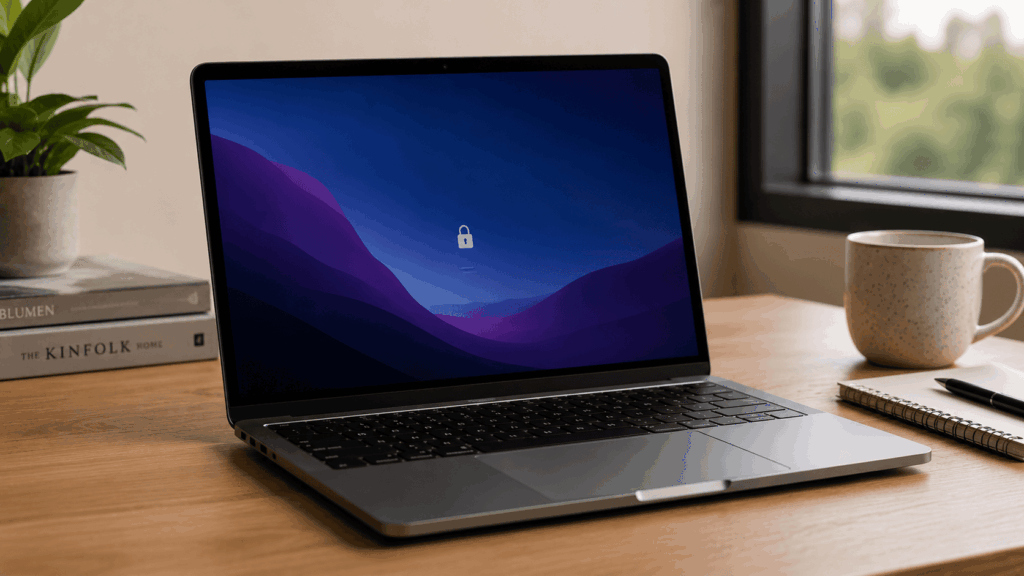
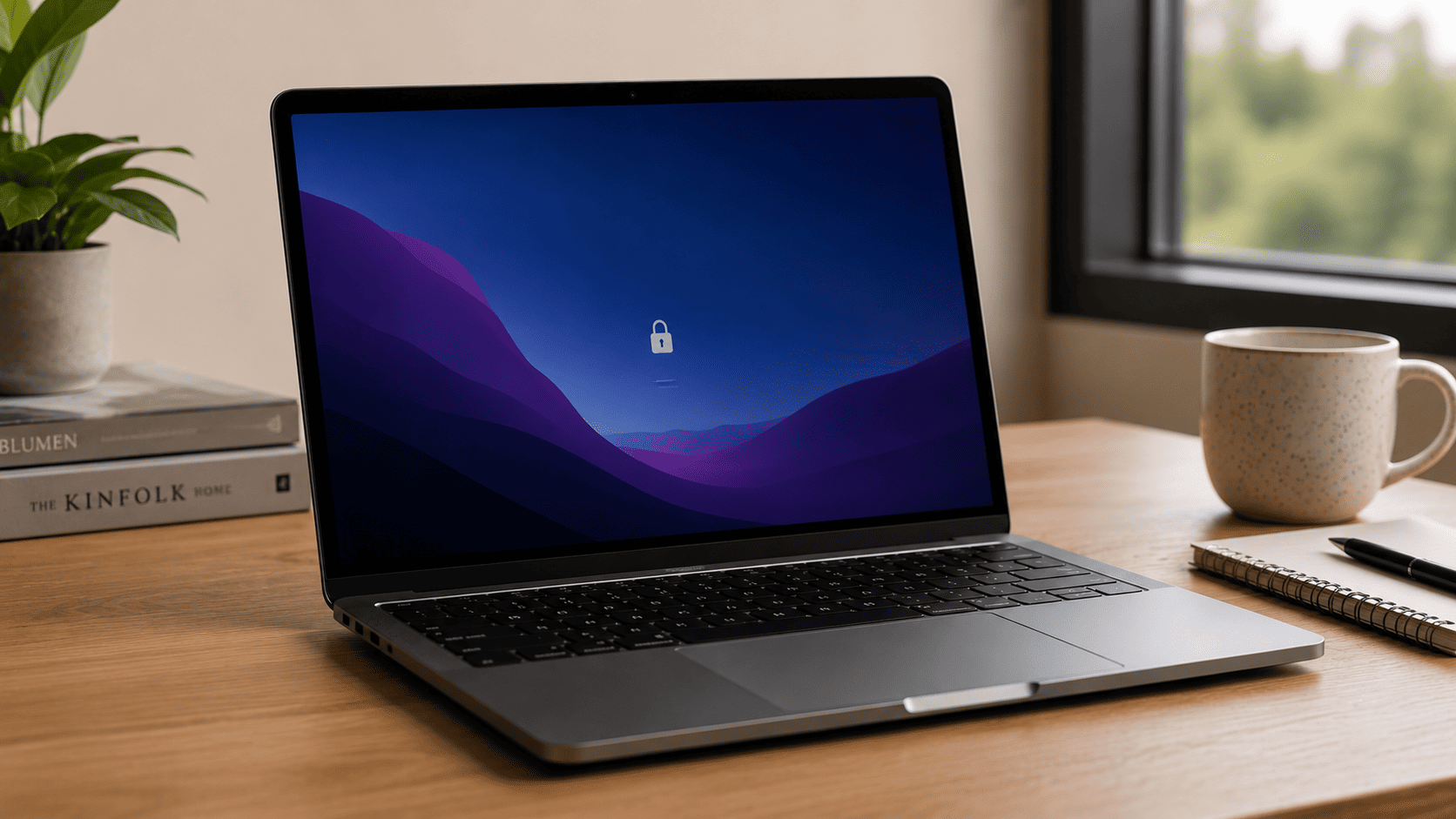



Keeping your MacBook locked when you step away helps protect your files, accounts, and personal information from unwanted access.
The good news is that macOS offers several built-in ways to lock your screen, including keyboard shortcuts, Hot Corners, and automatic security settings.
You can choose the method that fits your daily routine and switch between them whenever needed.
Read on to find the method that works best for you and make securing your MacBook part of your everyday workflow.
Why You Should Lock Your MacBook Regularly
Locking your MacBook each time you step away is one of the simplest ways to protect your data.
A locked screen prevents others from accessing your files, emails, apps, and saved accounts without your password, Touch ID, or another approved sign-in method.
This is especially important in shared homes, offices, classrooms, libraries, and other public spaces where someone could access your device while you are away.
Locking your MacBook also reduces the risk of accidental changes to documents or system settings. Making screen locking a daily habit adds an extra layer of security with very little effort.
Keyboard Shortcuts to Lock Your MacBook
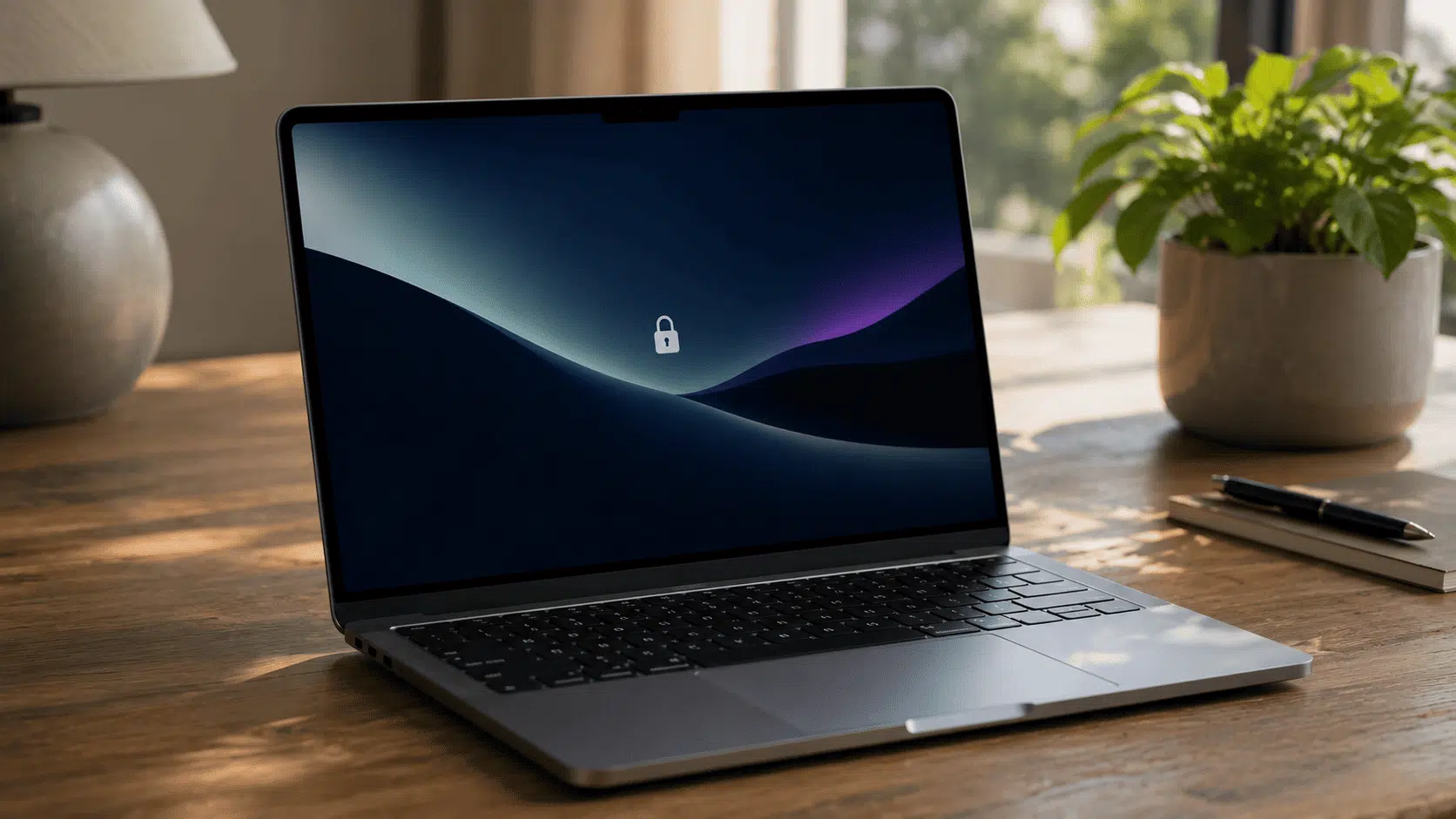
Using a keyboard shortcut is the fastest way to lock your MacBook without navigating through menus. It helps secure your device instantly whenever you step away.
- Press Control + Command + Q to lock your MacBook immediately. This is the quickest built-in shortcut available in macOS, as it appears in Apple’s list of Mac keyboard shortcuts.
- Save your work first if you’re editing important files, although locking the screen won’t close your apps or documents.
- Touch ID users can quickly unlock the MacBook after locking it by placing a registered finger on the Touch ID sensor.
- Works on most modern versions of macOS, making it a reliable option for everyday use.
- Keep the shortcut in mind when working in offices, cafés, libraries, or shared spaces to prevent unauthorized access.
- Practice using it regularly so locking your MacBook becomes a simple habit that takes only a second and improves your device’s security.
How to Lock Your MacBook Using the Apple Menu
If you’re learning how to lock a MacBook without using a keyboard, the Apple menu offers a quick and reliable method. While the lock Mac shortcut is the fastest option, this built-in feature is just as effective for securing your device.
- Click theApple menu in the top-left corner of your screen.
- SelectLock Screen from the drop-down menu.
- Your MacBook locks instantly and displays the sign-in screen.
- Unlock it with your password or Touch ID if your MacBook supports Touch ID and it is enabled.
- All open apps and documents stay open, so you can continue working after signing in.
Use this method whenever you step away to keep your files, accounts, and personal information protected from unauthorized access.
Lock Your MacBook with Touch ID or the Power Button
If you’re looking for a quick way to lock a MacBook without opening menus, using Touch ID or the power button is a convenient option.
While the shortcut is the fastest method, this built-in feature also lets you secure your device in seconds.
On MacBook models with Touch ID, press the Touch ID (power) button once to lock the screen.
Your apps and documents remain open, so you can continue working after signing in. If your MacBook does not have Touch ID, use the lock Mac shortcut (Control + Command + Q) or select Lock Screen from the Apple menu.
Since your MacBook may stay online while locked, it’s worth pairing this habit with a few steps to prevent a data breach, particularly on public Wi-Fi where your traffic is more exposed.
Set Up Hot Corners to Lock Your Screen
If you’re looking for a quick way to lock your MacBook, Hot Corners offer a simple, hands-free option.
While the lock Mac shortcut is the fastest method, Hot Corners lets you lock your MacBook by moving the pointer to a corner of a selected screen.
- Open the Apple menu and select System Settings
- Click Desktop & Dock in the sidebar
- Scroll to the bottom and select Hot Corners
- Choose the corner you want to use
- Select Lock Screen from the drop-down menu
- Click Done to save your changes
Move the pointer to the selected corner whenever you want to lock your MacBook
Automatically Lock Your MacBook After Inactivity
If you’re looking for a hands-free way to improve security, you can configure your MacBook to require authentication automatically after the display turns off or the screen saver begins.
This is useful if you forget to use the lock Mac shortcut before stepping away.
Open the Apple menu, go to System Settings, and select Lock Screen. Then choose how soon your MacBook should require your password after the screen saver starts or the display turns off.
Selecting “Immediately” provides the highest level of protection. You can also adjust your display sleep and screen saver settings to control when these events occur.
The same rule applies to your network security key, since a shared password on either front opens the door to unwanted access.
Common Mistakes to Avoid When Locking Your MacBook
Knowing how to lock your MacBook correctly is just as important as locking it regularly. Avoid these common mistakes to keep your device and personal information secure.
- Forgetting to Lock Before Walking Away: Even a short absence can leave your files, apps, and accounts exposed to others.
- Assuming Closing the Lid Is Enough: Depending on your Lock Screen settings, your MacBook may not require a password immediately after reopening.
- Holding the Touch ID or Power Button: On supported models, press the button once to lock the screen. Holding it may instead open startup or shutdown options.
- Ignoring Hot Corners: If you frequently leave your desk, Hot Corners provide a fast, hands-free way to lock your screen.
- Sharing Your Password: Never share your account password with others, as it weakens the security of your MacBook and your personal data.
Wrapping Up
Locking your MacBook is one of the easiest habits you can adopt to help protect your files, accounts, and personal information.
With several built-in locking methods available in macOS, you can choose the option that best matches your workflow and use it whenever you step away from your device.
Combining manual screen locking with automatic security settings provides added peace of mind without interrupting your work.
Making this a part of your daily routine takes only a few seconds but can significantly reduce the risk of unauthorized access.
Frequently Asked Questions
How to Lock MacBook without Putting It to Sleep?
Using the Lock Screen option or the keyboard shortcut locks your MacBook while keeping your apps and documents open in the background.
Does Locking the MacBook Disconnect Wi-Fi or Active Downloads?
No. Locking the screen does not automatically disconnect Wi-Fi or stop downloads, as long as your MacBook remains awake.
Can You Answer Phone Calls or Receive Notifications While the MacBook is Locked?
Yes. Your MacBook can still receive notifications while locked, depending on your notification settings. However, accessing apps or responding to notifications may require you to unlock the device first.