




A missed shipment, a misplaced pallet, a carrier invoice that does not match the rate you quoted.
Ask any business owner who has switched logistics software, and they will say the same thing: these are not one-off mistakes; they are what happens when a growing operation still runs on spreadsheets.
Logistics management software fixes that by integrating inventory, warehouse operations, and freight movement into a single system.
But what works for one business can fall flat for another, which is why real user feedback matters more than feature lists. We cover what to look for and what other owners say works.
From Spreadsheets to Systems: What LMS Actually Solves
Logistics management software is a digital platform that centralizes supply chain execution. It connects what most teams manage separately: inventory levels, warehouse workflows, carrier selection, route planning, and shipment tracking.
Instead of updating multiple tools to process one order, everything runs through a single system.
The core value is not just automation; it is visibility. When a shipment is delayed, you know before the customer does.
When a carrier’s performance drops, the data surfaces it. When warehouse space is misallocated, the system flags it. That shift, from reactive to informed, is what most businesses feel first.
Features That Separate a Strong LMS from a Basic One

Not every platform that calls itself logistics management software does the same thing. These are the features worth prioritizing when you evaluate options:
- Real-Time Shipment Visibility: Live multimodal tracking with automated alerts and customer self-service options.
- Warehouse Management Tools: Receiving, inventory tracking, pick-and-pack, slotting, barcode scanning, cycle counts.
- Transportation Management and Rate Shopping: Carrier comparison, lane benchmarking, freight audit, faster quoting.
- AI and Automation Capabilities: Demand forecasting, route optimization, and predictive alerts lower shipment costs.
- Integrations: Connects ERP, Shopify, Magento, accounting; weak integrations cause most failures.
- Reporting and Analytics: KPI dashboards track delivery rate, cost, performance, and throughput.
Best Logistics Management Software by Business Size

Not every platform fits every operation. Here is how the strongest logistics management software options stack up by business size.
Enterprise and Global Supply Chains
At the enterprise level, the priority is deep integration with existing ERP infrastructure and support for complex, multi-modal, multi-region operations.
- SAP Logistics: Best for large SAP ERP users needing connected logistics, but usually requires setup support, integration work, and enterprise planning.
- Oracle Transportation Management: Suits global freight teams managing complex transport operations, with strong carrier tools, financial integration, and longer setup times.
- FourKites: Tracks shipments across transport modes in real time, helping large networks spot disruptions early alongside existing TMS or WMS tools.
Mid-Market and Third-Party Logistics Providers
3PLs have specific needs: multi-client billing, flexible rate structures, and robust freight management. These platforms are well-regarded in that space.
- MercuryGate TMS: A recognized standard for 3PLs needing configurable, mid-market freight management. Handles multi-mode and multi-client operations without requiring enterprise-level IT overhead.
- Magaya Supply Chain: Combines freight forwarding, warehouse management, and customs compliance on a single platform. A strong fit for mid-size freight forwarders and importers/exporters.
- FreightPop: Cloud-based, multi-modal rate shopping and freight management. Works well for businesses that ship via multiple carriers and need faster quote comparison.
Small Businesses and Delivery Operations
Smaller operations need software that is quick to set up, light on IT requirements, and ideally available at low or no cost to start.
- Zoho Creator: A low-code platform that lets small and medium-sized businesses build custom tracking and dispatch apps. Flexible, affordable, and no developer required.
- Shipday: A user-friendly delivery management platform with a free tier. Popular with restaurants, couriers, and small logistics teams managing last-mile delivery.
- Onfleet / Circuit: Map-based route optimization with real-time driver tracking and delivery notifications. Both are well-suited to small- to mid-sized businesses running their own delivery fleet.
Main Types of Tools to Know Before You Buy
Not every platform does the same job. This is where many buyers get confused.
| Software Type | Main Use | Good Fit |
|---|---|---|
| Transportation management system | Freight, carriers, rates, shipping | Shippers, brokers, 3PLs |
| Warehouse management system | Stock, picking, packing, and storage | Warehouses and retailers |
| Fleet management tool | Vehicles, drivers, mileage, maintenance | Companies with owned vehicles |
| Delivery management tool | Local delivery, routes, driver app | Couriers, stores, food delivery |
| Freight forwarding software | Customs, booking, documents | Freight forwarders |
| Supply chain visibility tool | Multi-carrier shipment tracking | Larger or fast-growing teams |
What Users Say About These Platforms
Feature lists only tell half the story. Here is what verified users report after working with these platforms day to day.
Zoho Creator
Zoho Creator is one of those tools that can be very handy for quickly spinning up new apps once you get a handle of their proprietary programming language
A user highlights Zoho Creator’s speed in building apps once teams master its proprietary scripting language, Deluge.
MercuryGate TMS
MercuryGate offers strong transportation planning and execution tools, especially for multimodal freight
A user credits MercuryGate’s strength in transportation planning and execution, particularly for multimodal freight management needs.
Shipday
Shipday makes it possible for us to integrate delivery management with our ordering platform seamlessly
A small business owner highlights the platform’s intuitive setup and straightforward application to daily delivery operations.
What Business Owners Often Recommend
Owner and operator feedback usually comes down to one idea: start with the tool that solves your most repeated problem.
For example:
- If routes change daily, start with route planning.
- If customers keep asking for updates, start with live tracking.
- If drivers miss details, start with the dispatch and driver apps.
- If freight costs are rising, start with rate comparison and carrier tools.
- If warehouse errors cause delays, start with inventory and warehouse sync.
This approach keeps the buying process practical. It also helps you avoid paying for features your team may not use.
Matching the Right Platform to Your Industry

Business size is only part of the picture. Industry-specific workflows change what you actually need from a platform.
E-Commerce and Direct-to-Consumer
Fast order fulfillment and returns management are the priorities here.
Look for platforms with native e-commerce integrations, multi-carrier rate shopping, and customer-facing tracking. Shipium and ShipBob are purpose-built for this segment.
Third-Party Logistics (3PL) Providers
3PLs need client billing separation, configurable reporting per account, and multi-warehouse visibility.
MercuryGate and Magaya are strong choices here because they were built with 3PL workflows in mind, not retrofitted for them.
Manufacturing and Industrial
Inbound raw material logistics, supplier visibility, and production schedule alignment are the core needs. SAP and Oracle OTM are typically preferred for their deep ERP integration.
Retail and Omnichannel
Inventory accuracy across stores, distribution centers, and online channels is the main challenge.
Platforms with strong WMS functionality and real-time inventory sync across locations perform best in this environment.
How Much Does Logistics Management Software Cost?
Pricing varies significantly based on platform type, user count, shipment volume, and the number of modules you activate. Here is a rough breakdown:
| Tier | Typical Range | What You Get |
|---|---|---|
| Free | $0 | Basic delivery management (Shipday), limited shipments or users |
| Starter / SMB | $50–$300/month | Core tracking, dispatch tools, basic reporting |
| Mid-Market | $500–$2,000/month | Multi-carrier integration, warehouse tools, API access |
| Enterprise | Custom pricing | Full LMS suite, dedicated implementation, SLA support |
How to Pick the Right Logistics Planning Software
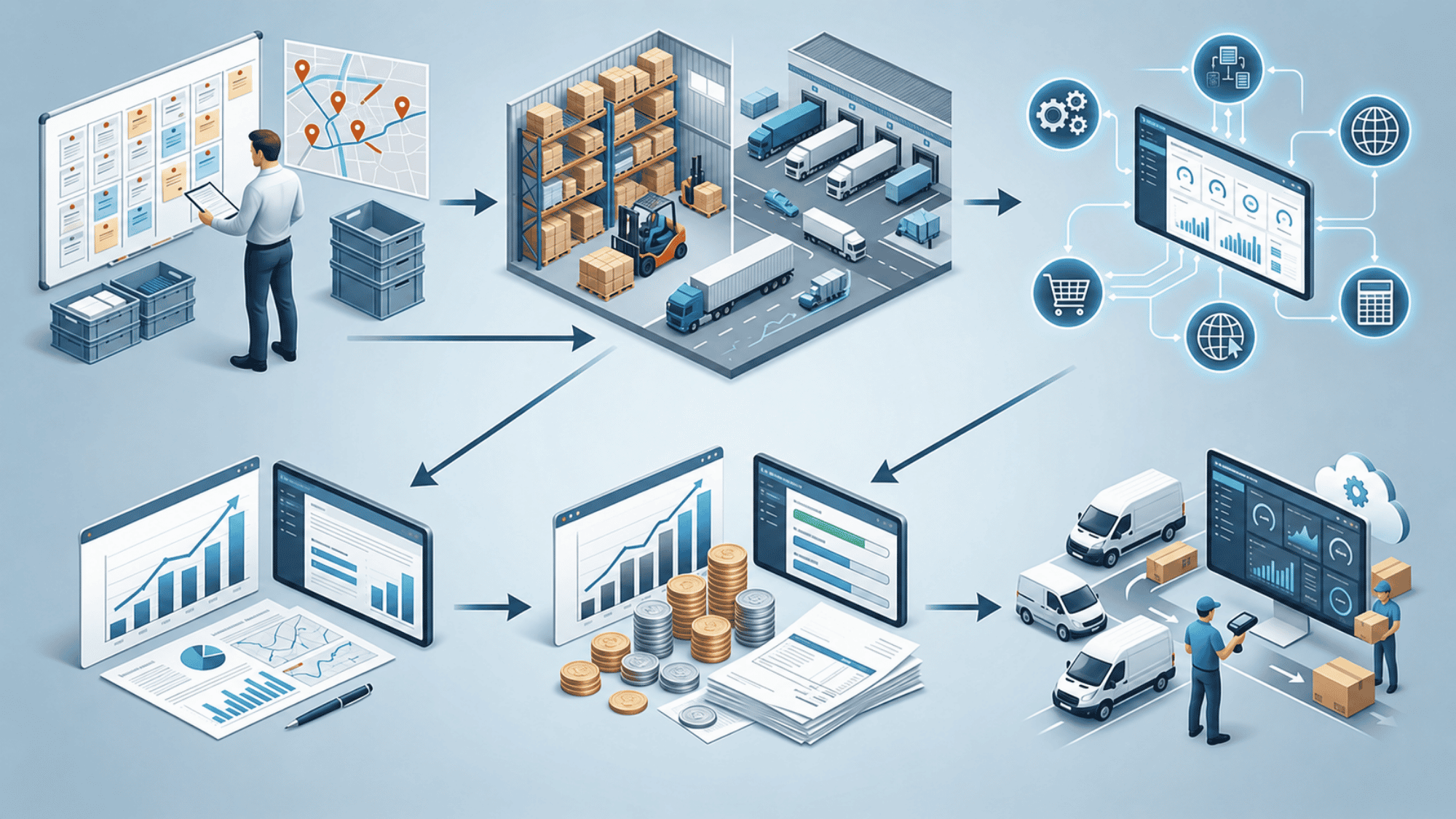
Most businesses pick the wrong platform because they evaluate features before clarifying their actual problem. Work through these steps before you start a trial:
1. Map Your Workflow Gaps: Where do shipments go wrong? Where does your team lose the most time on manual tasks? Those answers define your requirements list.
2. Decide Between WMS, TMS, or Both: Warehouse-side issues call for a standalone WMS. Freight-side issues call for a TMS. Need both? Look at a full LMS.
3. List Must-Have Integrations: Confirm native integrations with your ERP, e-commerce system, and accounting software before the demo. Middleware workarounds add cost and fragility.
4. Set a Realistic Total Budget: Include implementation, onboarding, training, and the first 12 months of licensing. Sticker price is rarely the full cost.
5. Run a Structured Pilot: Test with real shipments, not demo data. A pilot reveals the edge cases a demo will not show you.
What to Expect When You Implement LMS
Most LMS projects hit delays not because of the software, but because of the groundwork.
Onboarding timelines range from one to four weeks for small SaaS deployments to 18 months for enterprise rollouts replacing legacy systems.
Data migration is the highest-risk phase; clean your records before moving them, not after.
Warehouse teams, dispatch coordinators, and finance staff all use the system differently, so role-specific training beats a single all-hands session.
The most common mistakes are skipping a single-site pilot, assuming integrations will work without testing, and leaving data cleanup until after go-live.
Common Buying Mistakes
Avoid these mistakes when comparing vendors and choose the one that matches your needs:
- Choosing the cheapest tool without testing it
- Paying for features your team will not use
- Ignoring the driver app experience
- Forgetting warehouse or inventory needs
- Skipping integration checks
- Not asking about setup time
- Comparing platforms without a clear problem list
- Rolling it out to everyone before a small test
A tool should make the day easier for dispatchers, drivers, managers, and customers. If it only looks good in a demo, keep looking.
The Bottom Line
There is no single platform that fits every logistics operation, and that is actually good news. It means you are not stuck paying for enterprise complexity you do not need, or getting by on a tool that cannot scale with you.
The decision comes down to three things: where your operation breaks down today, what systems you need it to connect to, and what your total 12-month budget actually looks like.
Start there, run a real pilot with live shipments, and let the data make the case.
Looking at logistics optimization software options and not sure where to start? Drop your setup in the comments and get specific input from others who have been there.
Frequently Asked Questions
Can Logistics Management Software Handle International Shipments?
Yes. Most mid-market and enterprise platforms support multi-currency, customs documentation, and cross-border compliance for international freight operations.
Does LMS Work for Businesses that Use Multiple Warehouses?
Yes. Many do, butsupport levels vary, so recommend checking which customs modules and country‑specific compliance features a vendor actually offers rather than assuming parity across vendors.
Is Cloud-Based LMS Better than on-Premise?
Cloud-based platforms offer faster deployment, automatic updates, and lower IT costs. On-premise suits businesses with strict data control or offline operational needs.