




What if your next software product could be built by a world-class team, without hiring a single local developer?
Offshore software development helps companies cut costs, access top talent, and build products faster.
But it’s not magic, and it’s not for everyone. This guide breaks down everything you need to know before jumping in.
What Is Offshore Software Development?
Offshore software development means hiring a tech team in another country to build, maintain, and grow your software.
It’s not just about cutting costs; it’s a strategic move to access specialized talent worldwide, ship products faster, and build scalable teams.
Companies like those in Silicon Valley pioneered this approach decades ago, turning to hubs in India, Poland, and China. Today, it’s standard practice for businesses of all sizes.
Offshore vs. Nearshore vs. Onshore: What’s the Difference
Choosing between offshore, nearshore, and onshore development comes down to three things: cost, time zones, and how closely you need to collaborate.
| MODEL | LOCATION | COST | TIME ZONE OVERLAP |
|---|---|---|---|
| Onshore | Same country | Highest | Full |
| Nearshore | Neighboring country | Moderate | Partial |
| Offshore | Distant country | Lowest | Limited |
How Offshore Software Development Works

Getting started with an offshore team follows a clear, repeatable process. Here’s how it typically unfolds from idea to launch.
Step 1: Requirement Analysis and Scope
Define what you’re building, who needs it, and what success looks like. The clearer your brief, the smoother everything downstream.
Document every assumption early so your offshore team works from the same page as you from day one.
Step 2: Vendor and Partner Selection
Vet offshore agencies or talent platforms based on tech stack, portfolio, communication style, and time zone compatibility.
Take your time here since the right partner shapes everything that follows. Ask for case studies, check references, and run a small paid trial before committing to the long term.
Step 3: Team Onboarding
Align your offshore team on tools, workflows, culture, and expectations. This step determines the quality of long-term collaboration more than most people realize.
Invest in proper documentation, welcome sessions, and shared project management tools from the very start.
Step 4: Agile Development Cycles
Work in sprints with regular standups, demos, and feedback loops to keep development fast, flexible, and on track.
Consistent communication is what separates good offshore teams from great ones. Treat your offshore developers as full team members, not just remote contractors executing a task list.
Step 5: QA, Deployment, and Maintenance
Test rigorously, ship confidently, and keep your offshore team engaged post-launch for ongoing support and iteration.
The best partnerships don’t end at launch; they deepen over time. Plan for regular performance reviews, sprint retrospectives, and roadmap syncs to keep momentum going strong.
Key Benefits of Offshore Software Development
Offshore software development goes beyond cost savings, offering businesses a strategic edge through faster execution, global expertise, and operational flexibility.
- Cost efficiency: Reduce development costs by 60–80% compared to US hiring without compromising quality
- Access to global talent: Tap into specialized skills and larger talent pools not available locally
- Faster time-to-market: Enable round-the-clock development cycles for quicker delivery
- Scalability & flexibility: Easily scale teams up or down based on project needs
- Strategic focus: Free up internal resources to concentrate on core business and innovation
Challenges and Risks of Offshore Development
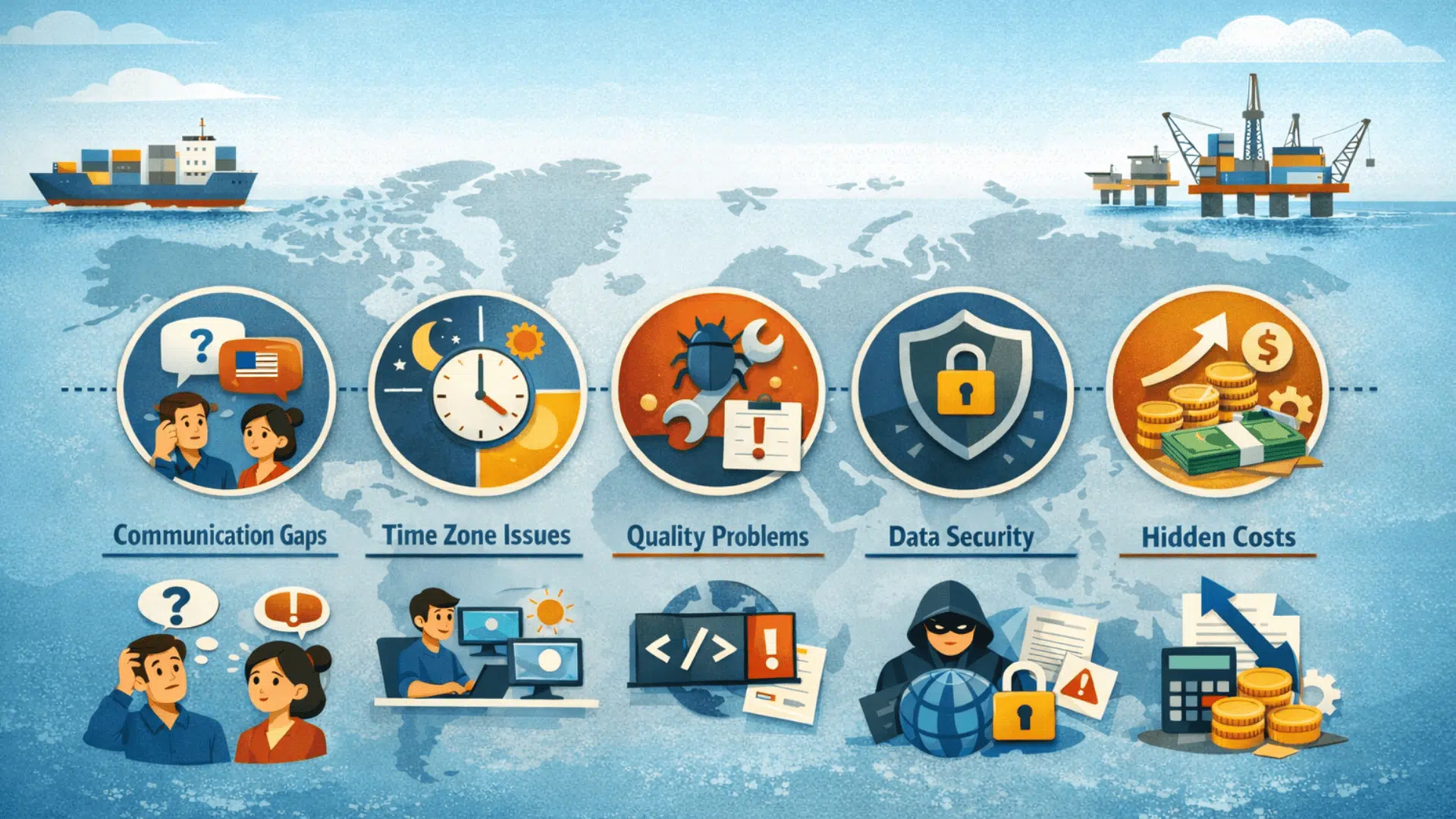
While offshore development offers clear advantages, it also introduces operational and strategic risks that can impact project outcomes if not managed properly.
- Communication gaps: Misaligned expectations due to language or cultural differences can delay projects.
- Time zone challenges: Limited overlap can slow collaboration and decision-making.
- Quality inconsistencies: Lack of oversight may lead to rework or subpar deliverables.
- Data security concerns: Handling sensitive data across borders increases compliance risks.
- Hidden costs: Poor management, rework, and coordination can reduce expected cost savings.
Offshore Software Development Models
Choosing the right offshore engagement model directly impacts cost, control, and project success, making it a critical decision for businesses.
- Dedicated team model: A full-time offshore team works exclusively on your project, offering maximum control and long-term collaboration
- Project-based model: Fixed scope, timeline, and cost make it ideal for clearly defined, short-term projects
- Staff augmentation: Extend your in-house team with offshore talent to fill skill gaps or scale quickly
- Hybrid approach: Combine models to balance flexibility, cost efficiency, and control based on project needs
Top Countries for Offshore Software Development
Choosing the right offshore location depends on your budget, time zone needs, and project complexity. Each region offers distinct strengths suited for different business use cases.
| COUNTRY/REGION | KEY STRENGTHS | BEST FOR USE CASE |
|---|---|---|
| India | Large talent pool, cost-effective | Startups, SaaS, long-term dev |
| Poland/Eastern Europe | High quality, strong engineering | Enterprise, complex projects |
| Vietnam | Affordable, growing tech talent | MVPs, startups |
| Philippines | Strong English, support roles | Customer-facing apps |
| Latin America | Time zone alignment with the US | Agile teams, real-time collab |
How to Choose the Right Offshore Development Company
Selecting the right offshore partner is crucial to avoid costly mistakes and ensure long-term project success. A structured evaluation approach helps you make a confident decision.
- Technical expertise: Assess tech stack, past projects, and domain experience
- Communication & culture fit: Ensure smooth collaboration, time overlap, and responsiveness
- Client reviews & credibility: Check platforms like Clutch, case studies, and testimonials
- Security & compliance: Verify data protection standards, NDAs, and regulatory adherence
- Pricing transparency: Look for clear cost structures with no hidden charges
Is Offshore Software Development Right for Your Business?
Offshore development works best for startups that need to ship fast, enterprises looking to cut costs, and teams struggling to hire specialists locally.
It’s less ideal if your project handles sensitive regulated data, requires constant real-time collaboration, or if your internal requirements are still unclear.
The real question isn’t whether offshoring is good or bad; it’s whether your business is ready to make it work.
Wrapping It Up
Offshore software development has quietly shifted from a cost-cutting tactic to a full-blown business strategy.
The companies winning with it aren’t the biggest or the best-funded; they’re simply the most prepared.
Get the basics right with clear requirements, the right partner, and strong communication, and distance stops being a real barrier to success.