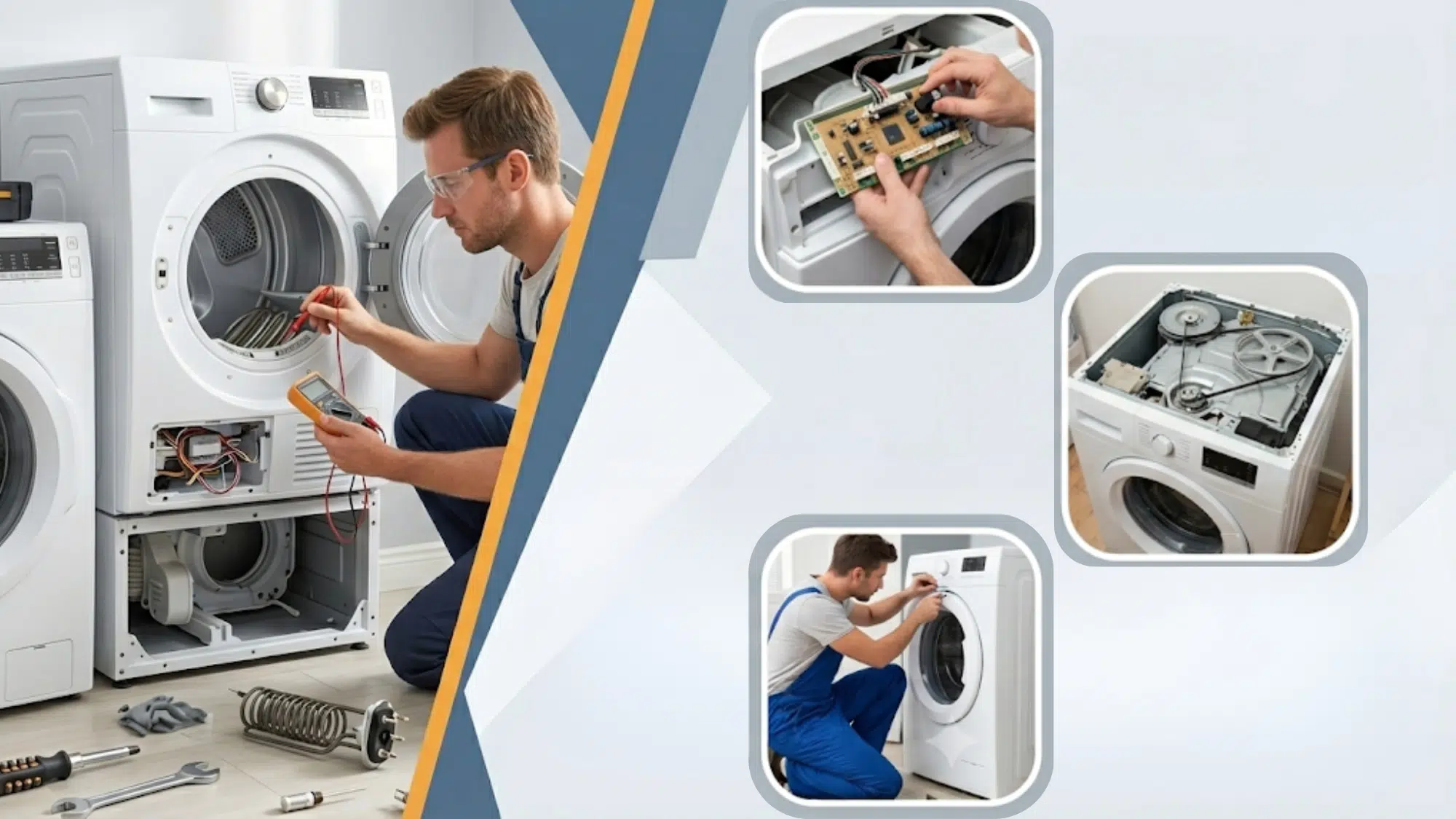



The clothes are wet. The dryer is running. But there’s no heat, and that’s a completely different kind of problem from a dryer that won’t start at all.
A Samsung dryer not heating usually comes down to one of a few fixable causes: a blown thermal fuse, a clogged vent, a faulty heating element, or an easy-to-miss setting.
This blog walks through every likely cause in order, from the simplest checks to the more involved repairs, so you’re not guessing your way through it.
Before You Begin, Know Your Dryer Type
Some Samsung dryers are condenser or heat pump models that do not use a traditional heating element.
Research from the Office of Scientific and Technical Information shows that airflow restrictions and heating element issues are common causes of heating failures in residential electric dryers.
Heat pump dryers rely on refrigerant to generate warmth, so troubleshooting steps aimed at heating elements may not apply. Before following repair instructions, confirm the exact type of your dryer.
Misidentifying the dryer could lead to unnecessary testing or part replacement, as condenser and heat pump systems operate differently from standard electric models.
Always check your user manual to ensure you follow the correct procedures for your specific unit.
Common Causes Why Your Dryer Is Not Working
Understanding the root causes of heating failures enables accurate diagnosis and prevents recurring problems.
- Blocked Vents: Reduce airflow, triggering the thermal limiter and preventing the dryer from heating.
- Blown Thermal Fuse: The thermal fuse helps prevent overheating. Depending on the Samsung dryer model, a blown fuse may stop the heat or keep the dryer from starting. Symptoms can include no heat, a spinning drum, or no startup.
- Faulty Heating Element: Prevents heat from being generated even when the drum spins normally.
- Defective Thermostat or Thermistor: Sends incorrect temperature signals, stopping the element from activating.
- Low Voltage or Wiring Issues: Insufficient voltage or wiring problems prevent the heating system from operating properly.
Tools You Need to Fix a Samsung Dryer
Having the right tools ensures repairs are safe and effective. These tools allow you to inspect, test, and replace components without damaging the dryer.
| Tool | Use |
|---|---|
| Multimeter | Tests continuity and resistance. |
| Screwdrivers | Removes panels and accesses parts. |
| Pliers | Disconnect wires and small components. |
| Flashlight | Helps inspect dark areas clearly. |
Step-By-Step Guide To Fix The Samsung Dryer

These steps walk through simple checks, component tests, and safe fixes to quickly restore proper heating, helping you get warm, dry clothes without unnecessary repairs.
1. Check the Settings and Power First
Before inspecting internal components, ensure your Samsung dryer is connected to a 240-volt breaker, as insufficient voltage prevents heating.
Confirm the selected cycle uses heat, avoiding Air Dry, Air Fluff, or Delicate, which do not activate the heating element. If power and settings are correct, unplug the dryer for 3–5 minutes to reset the control board safely.
These quick checks often resolve common heating issues efficiently without opening the dryer or unnecessarily replacing parts.
2. Inspect the Vent System
Proper airflow is critical for heating. Remove lint from the trap after every load and inspect vent hoses for blockages, kinks, or compression. Ensure the exterior vent flap opens freely to allow hot air to exit the home.
Restricted airflow triggers the thermal limiter, cutting off heating to prevent overheating.
Keeping the vents clear restores warmth, improves dryer efficiency, and prevents repeated component failures, while ensuring the dryer operates safely over its lifespan.
3. Test the Thermal Fuse
The thermal fuse is a one-time safety device that cuts power to the heating element when the dryer overheats.
If the dryer is not heating despite clear vents and proper settings, test the fuse with a multimeter for continuity.
A blown fuse must be replaced. Always address the root cause, such as clogged vents, before replacing the fuse to avoid repeated failures. Correctly testing and replacing the thermal fuse ensures the heating circuit functions safely.
4. Test the Heating Element
The heating element generates heat for electric Samsung dryers.
If the dryer stops heating, visually inspect the coils for breaks or burn marks and test with a multimeter. A reading outside the specified ohm range indicates failure.
Replacing a damaged element restores proper heat output. Ensure you use the correct OEM part and, if unsure, consult a technician for installation.
Maintaining the heating element ensures consistent performance and prevents repeated overheating or incomplete drying cycles.
5. Check the Thermostats and Thermistor
The cycling thermostat, high-limit thermostat, and thermistor work together to regulate the dryer’s temperature.
Each component should be tested with a multimeter for continuity or resistance, following the specifications in your Samsung dryer’s manual, as values vary by model.
Faulty sensors can prevent the heating element from activating even when other parts are functioning correctly.
Proper testing ensures the drum reaches the intended temperature safely, restores efficient drying, and prevents unnecessary wear on the dryer’s heating system
6. Gas Dryer-Specific Checks
For gas Samsung dryers, inspect the gas supply valve to ensure it is fully open. Check the igniter for cracks or failure, as it must glow to light the burner.
Test the flame sensor, which detects ignition and signals the gas valve. Examine the gas valve solenoid coils, which control gas flow; weakened coils may prevent proper operation.
Correctly evaluating these components ensures the gas burner ignites consistently, maintaining safe and effective heating in your dryer.
Repair Cost Breakdown
This section breaks down typical expenses for Samsung dryer heating issues, including parts, labor, and replacement estimates to support informed decision-making.
| Component | DIY Part Cost | Pro Labor (estimate) |
|---|---|---|
| Thermal fuse | $5–$15 | $80–$120 |
| Heating element | $20–$30 | $100–$200 |
| Cycling thermostat | $10–$25 | $80–$150 |
| Thermistor | $10–$30 | $80–$150 |
| Gas igniter | $15–$40 | $100–$180 |
| Vent cleaning (professional) | — | $80–$175 |
Most heating repairs land well under $200 for parts. Whether DIY makes sense depends on comfort level with basic appliance work and whether the dryer is still under Samsung’s warranty.
When to Call a Professional
Most heating fixes on a Samsung dryer are genuinely DIY-friendly. But there are situations where calling a technician makes more sense:
- The control board may be faulty, diagnosing a board issue without specialized tools is difficult, and replacing the wrong component gets expensive fast.
- The dryer is under warranty, and opening it yourself could void coverage.
- Multiple components have failed at once, which can point to a deeper electrical issue in the home or dryer.
- Gas component work feels outside a comfortable skill level; gas repairs that go wrong carry real safety risks.
Maintenance Tips to Prevent Heating Problems
Keeping a Samsung dryer heating reliably long-term comes down to a few consistent habits:
- Clean the lint filter before every single load, not just occasionally.
- Run a full vent cleaning once a year, or more often if the dryer is used heavily. A dryer vent cleaning kit costs under $20 and takes about 20 minutes.
- Never run the dryer with a damaged or kinked vent hose. Replace it.
- Avoid overloading. Stuffed drums restrict airflow, forcing the heating system to run longer and hotter than it’s designed to.
- Check the exterior vent flap seasonally; birds and rodents sometimes build nests in accessible vent openings.
Wrapping Up
A Samsung dryer that won’t heat can be frustrating, but it’s usually a problem you can fix yourself without paying for a service call. Begin with simple checks, including the breaker, dryer settings, lint trap, and vent system.
From there, using a multimeter to test components and installing the correct replacement part resolves most heating issues.
Common culprits like thermal fuses, heating elements, and thermostats are affordable and easy to replace for anyone familiar with basic appliance repair.
Follow the steps carefully, test before replacing, and your dryer will regain full heating quickly. If you find another effective fix, sharing it in the comments can help others avoid the same frustration.
Frequently Asked Questions
Does a Clogged Lint Trap Immediately Affect the Dryer’s Heating?
A partially blocked lint trap can gradually reduce airflow, causing the thermal fuse to trip and the heating element to stop functioning, even if the dryer appears to run normally.
Can Low Voltage or a Faulty Outlet Prevent Heating?
Yes, insufficient voltage or loose connections at the outlet can prevent the heating element from activating, while the drum motor continues to spin normally.
Are Replacement Parts Universal for All Samsung Dryer Models?
No, heating elements, fuses, and thermostats vary by model. Always check the model number before ordering OEM replacement parts to ensure proper fit and performance.