


Speed has always had a way of pulling people in. From the first time a car crossed 100 mph to jets cutting through the sky, humans have kept pushing the limits.
But there’s one speed that stands apart from the rest. It carries a certain weight, a line that, once crossed, changes everything about how speed works.
Supersonic speed isn’t just fast. It’s a whole different world of physics, pressure, and power. And yet, most people have only a rough idea of what it actually means in real numbers.
This blog explains it all about supersonics, how fast it gets, and what happens when something moves that quickly through the air
What Does Supersonic Actually Mean?
Supersonic refers to any speed that goes faster than the speed of sound. Simple as that. But the speed of sound isn’t a fixed number; it shifts depending on the air temperature and altitude.
At sea level, sound travels at roughly 767 mph. Anything moving faster than that crosses into supersonic territory.
The term comes from the Latin word sonus, meaning sound.
It’s used in aviation, physics, and military technology. Once an object breaks that barrier, the rules of aerodynamics change completely.
Mach Number: The Key to Understanding Supersonic Speed

Supersonic speed starts at anything above 767 mph at sea level. That’s the point where an object outruns the sound waves it creates. But supersonic isn’t just one speed; it covers a range.
- Scientists and engineers use the Mach scale to measure it.
- Mach 1 equals the speed of sound.
- So Mach 1.1, Mach 2, or Mach 3 all fall within the supersonic range.
- Generally, speeds between Mach 1 and Mach 5 are considered supersonic.
Below Mach 1 is subsonic. Above Mach 5 enters a completely different category altogether. Each step up the scale brings its own set of challenges.
Why Does the Speed of Sound Change?
Sound travels by pushing through air molecules. So the state of those molecules matters a lot.
When the air is warm, molecules move faster and carry sound more quickly. When the air is cold, they slow down, and so does sound.
At 68°F at sea level, sound moves at about 767 mph. But at 35,000 feet, where most commercial jets fly, the temperature drops significantly.
Sound slows to around 660 mph up there. Humidity plays a small role, too. This is why Mach 1 doesn’t represent a single fixed speed. It shifts based on the conditions around the moving object.
What Happens When You Break the Sound Barrier?
When an object moves faster than sound, it outruns its own sound waves. Those waves pile up and compress into what’s called a shock wave.
That shock wave doesn’t just disappear; it trails behind the object and hits the ground as a sonic boom.
It’s that sudden, thunderous crack people hear when a jet passes overhead at supersonic speed. The pressure buildup around the aircraft also creates enormous drag and heat.
Early test pilots described hitting a wall of resistance just before breaking through. Structures have to be specially built to handle those forces without falling apart.
How Fast Do Supersonic Aircraft Actually Fly?
Supersonic aircraft don’t all fly at the same speed. Some are built for combat, others for records, and the numbers vary widely.
| Aircraft | Top Speed | Mach Number |
|---|---|---|
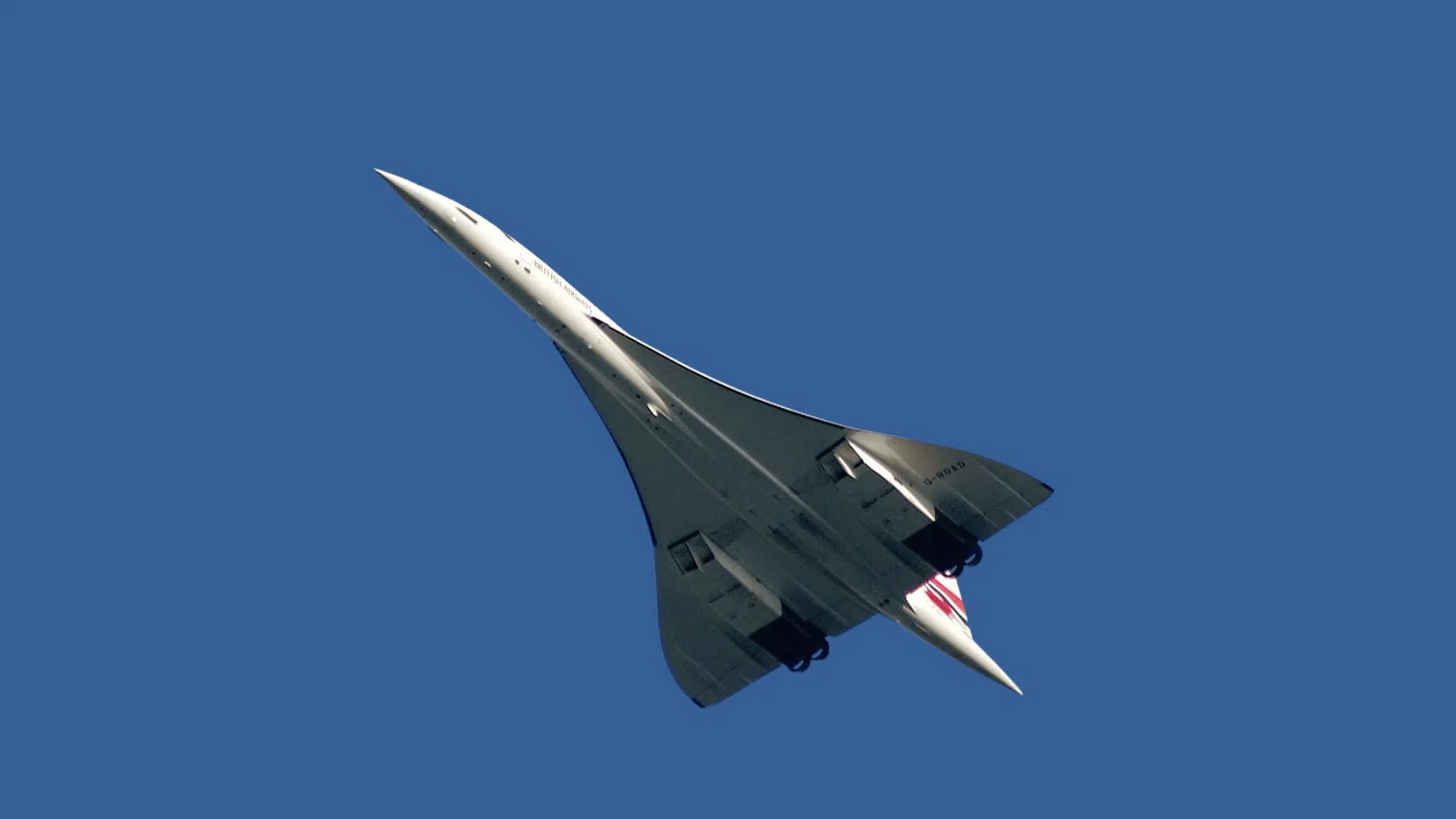
| Concorde | 1,354 mph | Mach 2.04 |
| F-22 Raptor | 1,500 mph | Mach 1.82 |
| SR-71 Blackbird | 2,200 mph | Mach 3.3 |
| MiG-25 Foxbat | 2,190 mph | Mach 2.83 |
| F-15 Eagle | 1,875 mph | Mach 2.5 |
| X-15 (Experimental) | 4,520 mph | Mach 6.7 |
How Do Aircraft Achieve Supersonic Speed?

Reaching supersonic speed isn’t just about having a powerful engine. The entire aircraft has to be built for it. The shape matters enormously.
Supersonic jets use a narrow, pointed nose to cut through compressed air with less resistance. Wings are swept back at sharp angles to reduce drag at high speeds.
The engines used are typically afterburning turbofans or ramjets designed to push out massive thrust.
Fuel burns at a much higher rate during supersonic flight. The materials used in the body also have to handle intense heat caused by air friction. Every single detail of the design plays a role.
Supersonic vs Hypersonic Speed: What’s the Difference?
Both supersonic and hypersonic go faster than sound, but they operate in very different leagues. Here’s a quick breakdown:
| Feature | Supersonic | Hypersonic |
|---|---|---|
| Speed Range | Mach 1 to Mach 5 | Mach 5 and above |
| Speed in MPH | 767 mph to 3,800 mph | 3,800 mph and beyond |
| Heat Generated | High | Extreme |
| Shock Waves | Moderate | Severe |
| Aircraft Examples | Concorde, F-22 Raptor | X-43, HTV-2 |
| Primary Use | Military, Aviation | Space, Missile Technology |
| Air Resistance | Significant | Massive |
The Future of Supersonic Travel
Supersonic travel is making a comeback, and this time, it’s not just for military jets. Several companies are working hard to bring it to everyday passengers.
- Boom Supersonic’s Overture: A passenger jet currently in development. It aims to fly at Mach 1.7, cutting flight times nearly in half.
- NASA’s X-59 QueSST: Built to reduce sonic boom noise significantly. It could open the door to supersonic flight over land.
- Quieter Engines: New engine designs focus on lowering noise levels. This makes supersonic travel more practical for commercial use.
- Sustainable Fuels: Future supersonic jets are being designed to run on cleaner fuels. This addresses environmental concerns around high-speed flight.
- Faster Business Travel: Companies see supersonic jets as a way to cut long-haul travel time. A New York to London flight could drop to just 3.5 hours.
- Military Advancements: Defense programs around the world are testing supersonic and hypersonic missiles. Speed is becoming a major factor in modern defense strategy
The Bottom Line
Supersonic speed is more than just a number on a scale. It represents decades of engineering, science, and human curiosity pushing against limits.
And with companies now working on commercial supersonic travel, these speeds may soon become part of everyday life.
The sky isn’t the limit anymore, it’s just the starting point.
For those keen on learning more about the future of aviation and high-speed travel, there’s a lot more ground left to cover.