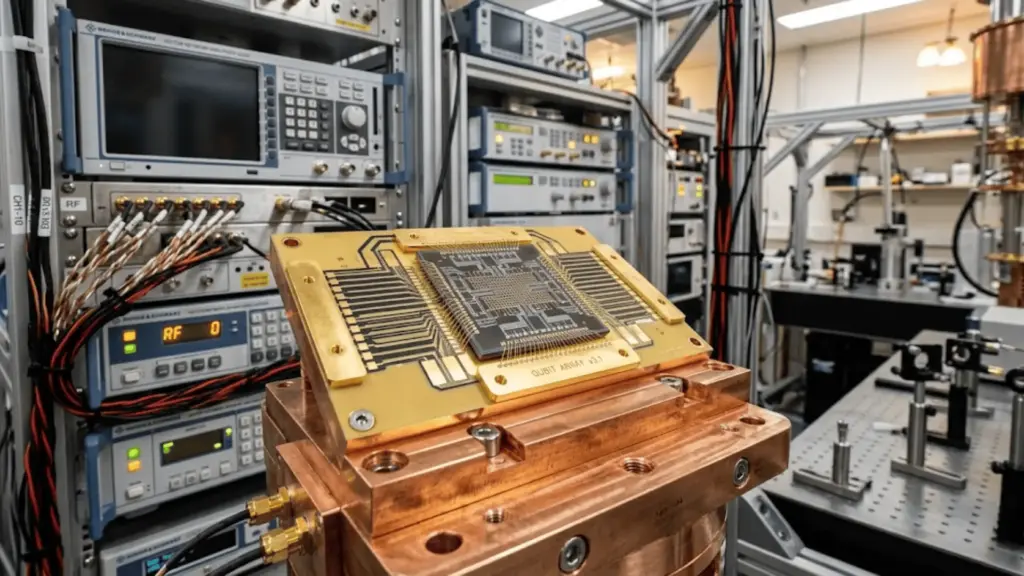
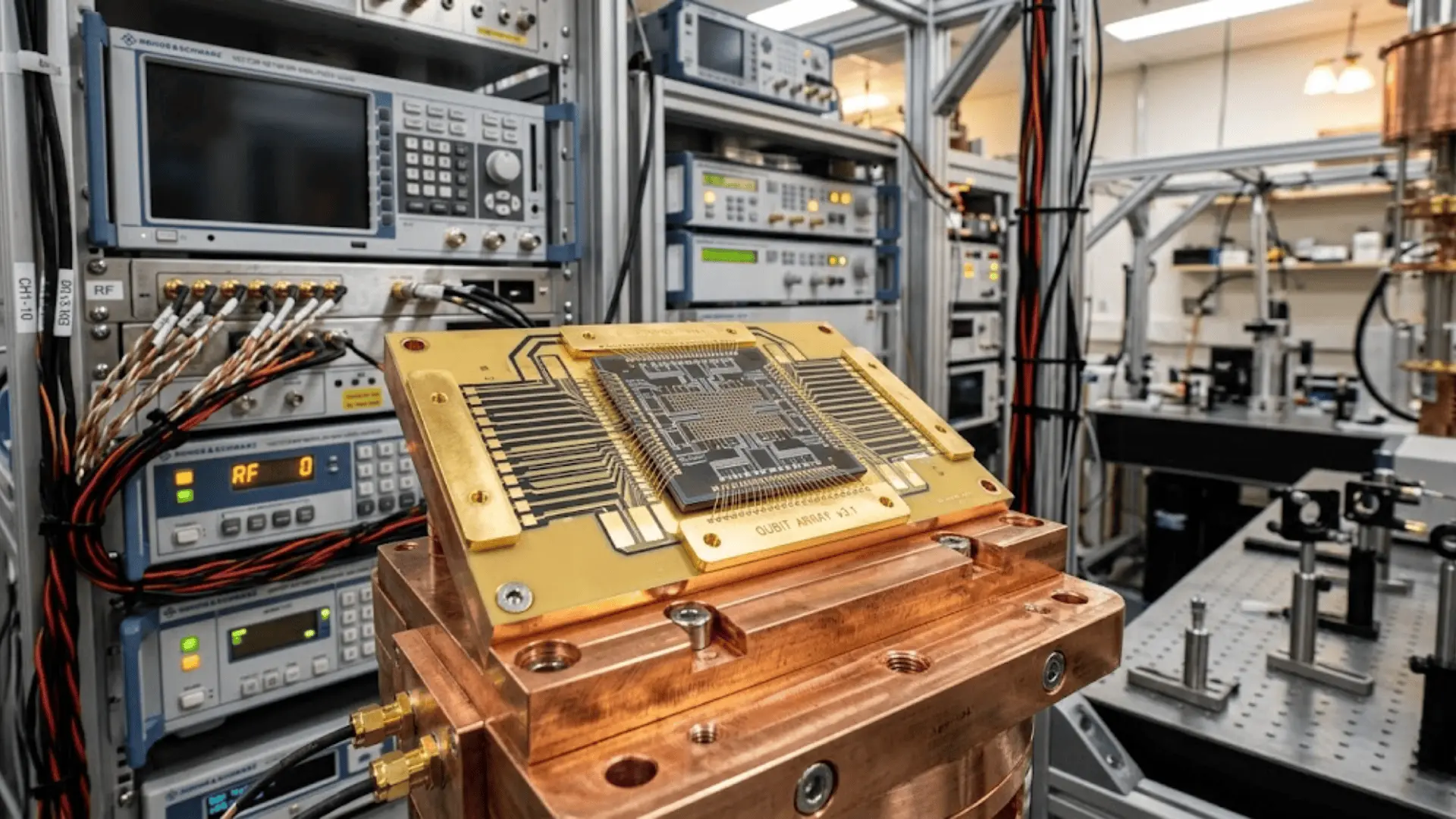


Computers have always had a tidying-up system working behind the scenes, catching mistakes before they snowball into something bigger.
Quantum computers need that too, except the stakes are a little wilder and the rulebook looks completely different.
Qubits are so sensitive to their environment that even the faintest disturbance can throw everything off.
Quantum error correction is essentially that behind-the-scenes crew, keeping fragile information intact long enough to actually be useful.
The principles, the challenges, the real-world progress, it is all worth understanding, especially when the people building tomorrow’s computers are losing sleep over it.
What is Quantum Error Correction?
Classical computers fix errors by doing something simple: making copies. If one version of the data gets corrupted, you still have backups to compare against. Quantum computers cannot do that.
The no-cloning theorem means qubits cannot be duplicated, so the entire backup strategy falls apart before it even begins.
Quantum error correction spreads information across multiple qubits, allowing detection and reversal of errors caused by noise without directly measuring the original data.
It is a completely different kind of protection for a completely different kind of machine.
Why Quantum Systems Need Error Correction?
Quantum systems are not just sensitive, they are temperamental in ways classical systems never have to deal with. A few things work against them constantly:
- Qubits lose their quantum state the moment they interact with their environment, a process called decoherence.
- Bit-flip errors can randomly switch a qubit from one state to another, much like a coin flipping mid-count.
- Phase-flip errors alter the relationship between quantum states without changing the value itself.
- Even measuring a qubit to check for errors destroys the very state you were trying to protect.
- Noise does not announce itself; it accumulates quietly until the computation is already compromised.
This is not a minor inconvenience to engineer around. It is the central problem quantum computing has been wrestling with since the beginning.
Key Principles of Quantum Error Correction
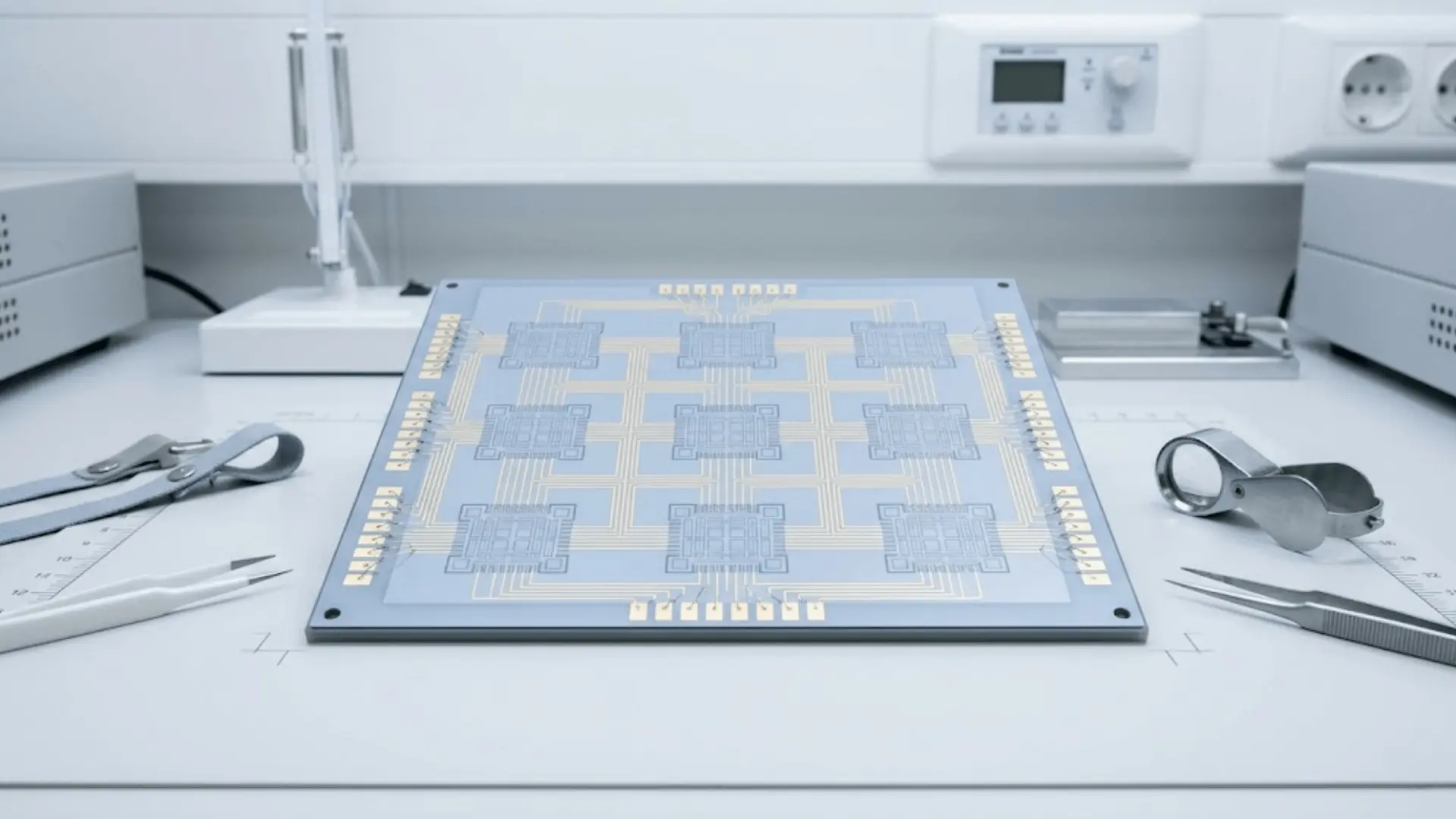
Protecting quantum information is less about brute force and more about being clever with the rules. Three core ideas hold the whole system together.
Principle 1: Redundancy Without Cloning
Since copying a qubit is off the table, quantum error correction takes a different route entirely. One logical qubit gets spread across several physical qubits, not as identical copies but as entangled pieces of a whole.
If noise disturbs one of them, the others carry enough information to piece together what went wrong and quietly correct it.
Principle 2: Syndrome Measurement
Catching an error without directly observing the quantum state seems contradictory, but syndrome measurement does exactly that. It measures the relationships between qubits, not the actual information-holding qubits.
Those relational clues, called syndromes, point to where the error occurred without collapsing the data you were trying to protect in the first place.
Principle 3: Error Detection vs. Correction
Detection and correction are not the same step, even though they are easy to conflate. Detection identifies that something has gone wrong and roughly where.
Correction is the active follow-through, applying the right operation to reverse the damage. A system that can only detect errors is useful, but a system that can correct them is what actually makes reliable quantum computing.
Types of Quantum Errors
Not all quantum errors look the same, and knowing the difference matters more than it might seem at first.
| Error Type | What Happens | What Causes It |
|---|---|---|
| Bit-Flip Error | A qubit switches from one state to its opposite | Environmental interference nudging the qubit out of place |
| Phase-Flip Error | The phase relationship between states gets inverted without changing the value | Subtle electromagnetic disturbances affecting the quantum phase |
| Depolarizing Error | The qubit gets pushed into a completely random state | Generalized noise with no single identifiable source |
| Combined Errors | Multiple error types hit the same qubit simultaneously | Real-world conditions where noise rarely arrives in just one neat form |
Basic Quantum Error Correction Codes
Every big idea in quantum error correction started somewhere small. These three codes trace that progression from the simplest possible fix to something genuinely efficient.
1. 3-Qubit Bit-Flip Code
This is where most explanations of quantum error correction begin, and for good reason. It takes one logical qubit and encodes it across three physical qubits, not as clones but as an entangled arrangement.
If one qubit gets flipped by noise, a quick comparison across the three reveals the odd one out. It only handles bit-flip errors, but as a foundation for understanding the logic of QEC, nothing beats it.
2. Shor Code
The Shor code was a turning point because it proved that both bit-flip and phase-flip errors could be corrected within a single framework. It stacks two protection strategies using nine physical qubits for one logical qubit.
It is resource-heavy by modern standards, but the conceptual leap it represented opened the door to everything that followed.
3. Steane Code
Where the Shor code used nine qubits to do the job, the Steane code does it with seven. That might sound like a small difference, but in quantum computing, every qubit counts.
It draws on a branch of classical coding theory to build a more refined structure, one that corrects both error types with noticeably less overhead. It was an early sign that efficiency and error correction did not have to be at odds.
Surface Codes (Most Practical Approach Today)
Surface codes arrange qubits in a flat grid and use the relationships between neighboring qubits to catch errors, an approach rooted in topological error correction.
What makes them stand out is how well they hold up under real-world noise levels, which is why most serious quantum hardware efforts are built around them today.
The tradeoff is overhead: a single logical qubit requires many physical qubits working together to maintain it reliably.
That ratio is still large, but surface codes remain the most scalable path toward fault-tolerant quantum computing anyone has found so far.
How Quantum Error Correction Works?
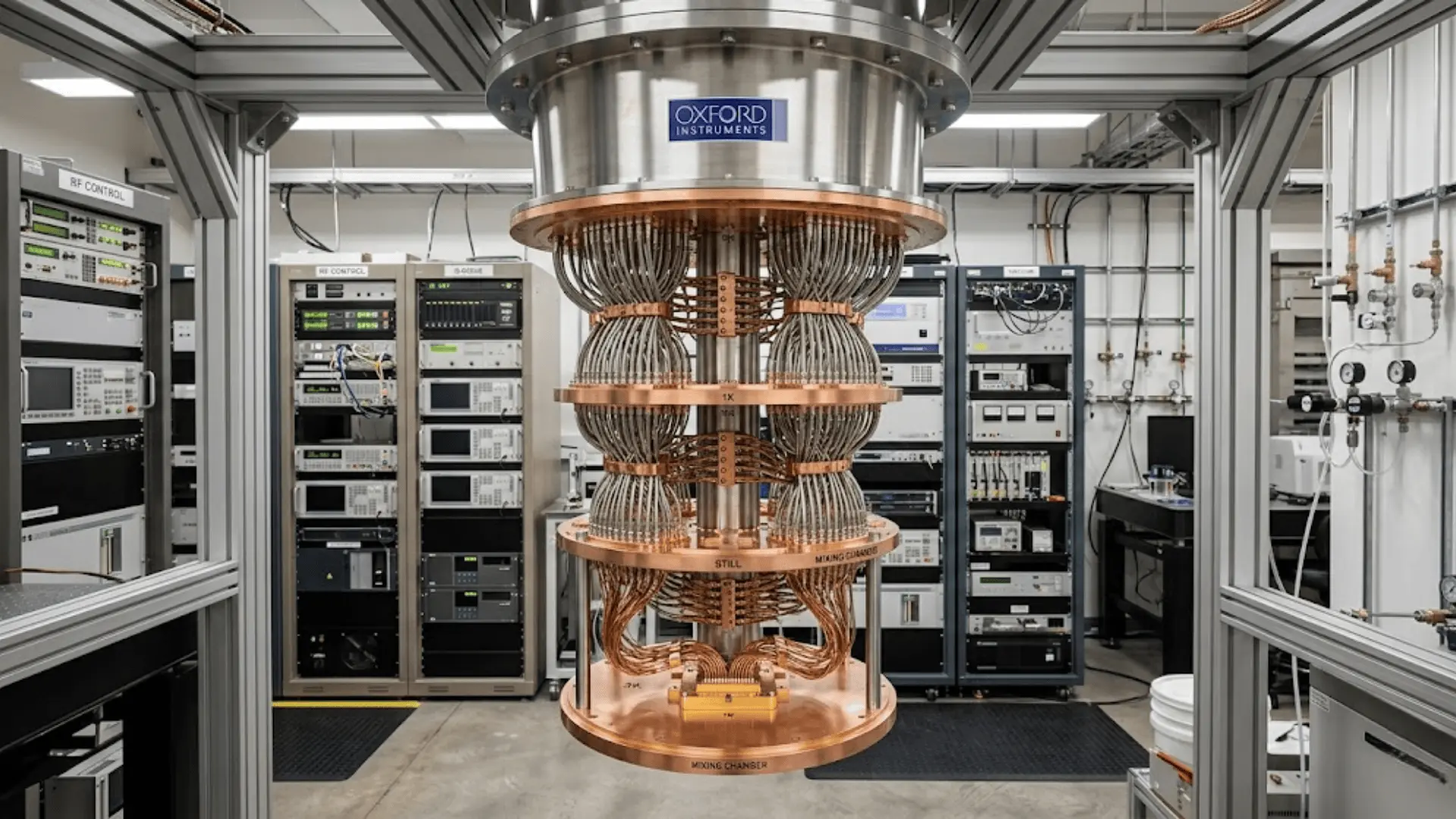
Quantum error correction is not a single action but a continuous process running underneath every computation. Each step builds on the last, and none of them work in isolation.
Step 1: Encode the Logical Qubit
Before any computation begins, the information stored in one logical qubit gets distributed across several physical qubits through entanglement.
This spreading-out is deliberate because no single qubit holds the complete picture; noise cannot destroy the information by targeting just one. The encoding is the first line of defense, and everything downstream depends on it.
Step 2: Perform Syndrome Measurements
Once the logical qubit is encoded, the system begins watching for trouble without actually looking at the data itself.
Syndrome measurements probe the relationships between qubits rather than their individual states, pulling out just enough information to flag that something has shifted without disturbing the quantum information underneath.
Step 3: Detect Error Patterns
The syndrome measurements produce a pattern, and that pattern is what tells the system what kind of error occurred and roughly where.
Different errors leave different signatures, so reading those patterns correctly is what separates a recoverable mistake from a lost computation. This step is where the diagnostic work actually happens.
Step 4: Apply Corrections
Once the error is identified, the system applies a targeted operation to reverse it. The correction does not require knowing the exact quantum state, which is what makes this step possible without violating the rules of quantum mechanics.
Speed matters here, too, because qubits do not wait around while decisions get made.
Step 5: Maintain Coherence Over Time
Error correction is not a one-time fix. The entire cycle repeats continuously throughout a computation, keeping the logical qubit stable for as long as the calculation needs it to be.
Coherence is always decaying at the edges, and the correction cycle is what holds the line against that constant pressure.
Fault-Tolerant Quantum Computing
Even with error correction in place, the correction process itself can introduce new errors.
Fault-tolerant quantum computing is the answer to that problem, designing every layer of the system so that errors do not quietly compound as they move through it.
At the heart of this is the threshold theorem, which states that as long as the error rate stays below a certain limit, adding more qubits actually improves reliability rather than worsening it.
That crossover point is what makes large-scale quantum computation a real possibility rather than just a theoretical one.
Challenges in Quantum Error Correction
Quantum error correction works beautifully in theory. Putting it into practice is a different conversation entirely.
- Encoding a single logical qubit can demand hundreds to thousands of physical qubits, making overhead one of the field’s most pressing resource problems.
- Hardware remains deeply sensitive to temperature fluctuations and environmental noise, and even the most controlled lab conditions are not perfectly controlled.
- Real-time error detection has to happen fast enough to outpace decoherence, which puts enormous pressure on classical processing running alongside the quantum system.
- Scaling the whole architecture up without the error rates scaling up alongside it is a problem nobody has cleanly solved yet.
Progress is real, and it is steady, but the gap between where the field stands and where it needs to be is still honestly quite wide.
Real-World Progress & Research
The shift from theoretical frameworks to actual hardware has been gradual, but the momentum is undeniable.
IBM Quantum has been steadily pushing qubit counts and error thresholds on real devices, while Google Quantum AI made waves demonstrating that logical qubits could outperform physical ones under certain conditions.
Experimental breakthroughs are coming faster now, with teams successfully encoding and maintaining logical qubits in ways that would have seemed premature just a few years ago.
The field is not at the finish line, but it is meaningfully closer to error-corrected quantum systems than it has ever been.
Applications of Quantum Error Correction
Reliable error correction is not just a technical milestone; it is the prerequisite for quantum computing to be useful in any meaningful, real-world sense.
| Field | Application | Why QEC Matters |
|---|---|---|
| Cryptography | Quantum-secure communication | Qubits must stay intact long enough to be trustworthy |
| Drug Discovery | Molecular simulation | Sustained, error-free computation at the quantum scale |
| Optimization | Logistics and financial modeling | Stable systems prevent drift mid-calculation |
| Materials Science | Atomic-level material modeling | Precision that only corrected qubits can reliably offer |
| Scalable Computing | Large-scale quantum systems | Logical qubits are maintained reliably across the entire stack |
Future of Quantum Error Correction
The next chapter is really about doing more with less.
Researchers are actively working on more efficient error-correcting codes that bring the qubit overhead down to something hardware can realistically sustain.
At the same time, the line between hardware and software is blurring, with hardware-software co-design emerging as a serious strategy for building systems where every layer is optimized around the other.
The destination the field is moving toward is practical, large-scale quantum computers that do not just exist in controlled lab settings but actually solve problems the classical world cannot.
Wrapping Up
Quantum error correction is what stands between where quantum computing is today and everything it is supposed to become.
The science is intricate, the engineering challenges are real, and the progress being made is quietly remarkable.
What once lived entirely on whiteboards is now running on actual hardware, inching closer to systems that can compute at a scale the classical world simply cannot match.
It is a long game, and the most interesting moves are still being made. If you have thoughts or questions after reading, the comments are right there.
Frequently Asked Questions (FAQs)
Why Can’t We Just Copy Qubits?
Quantum mechanics simply does not allow it. The no-cloning theorem makes duplicating an unknown quantum state physically impossible, so classical backup strategies never had a chance here.
How Many Qubits are Needed for Error Correction?
More than feels reasonable. A single logical qubit can require hundreds of physical qubits working in coordination, and that number climbs with computational demand.
Is Quantum Error Correction a Solved Problem?
Not yet. The foundations are solid, but scalable, hardware-ready error correction is still very much a work in progress.