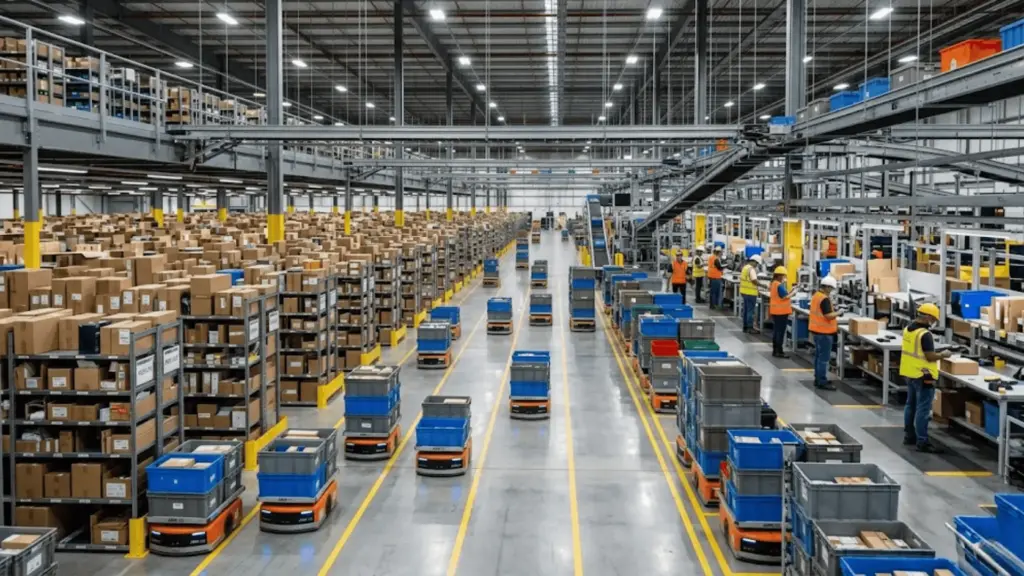
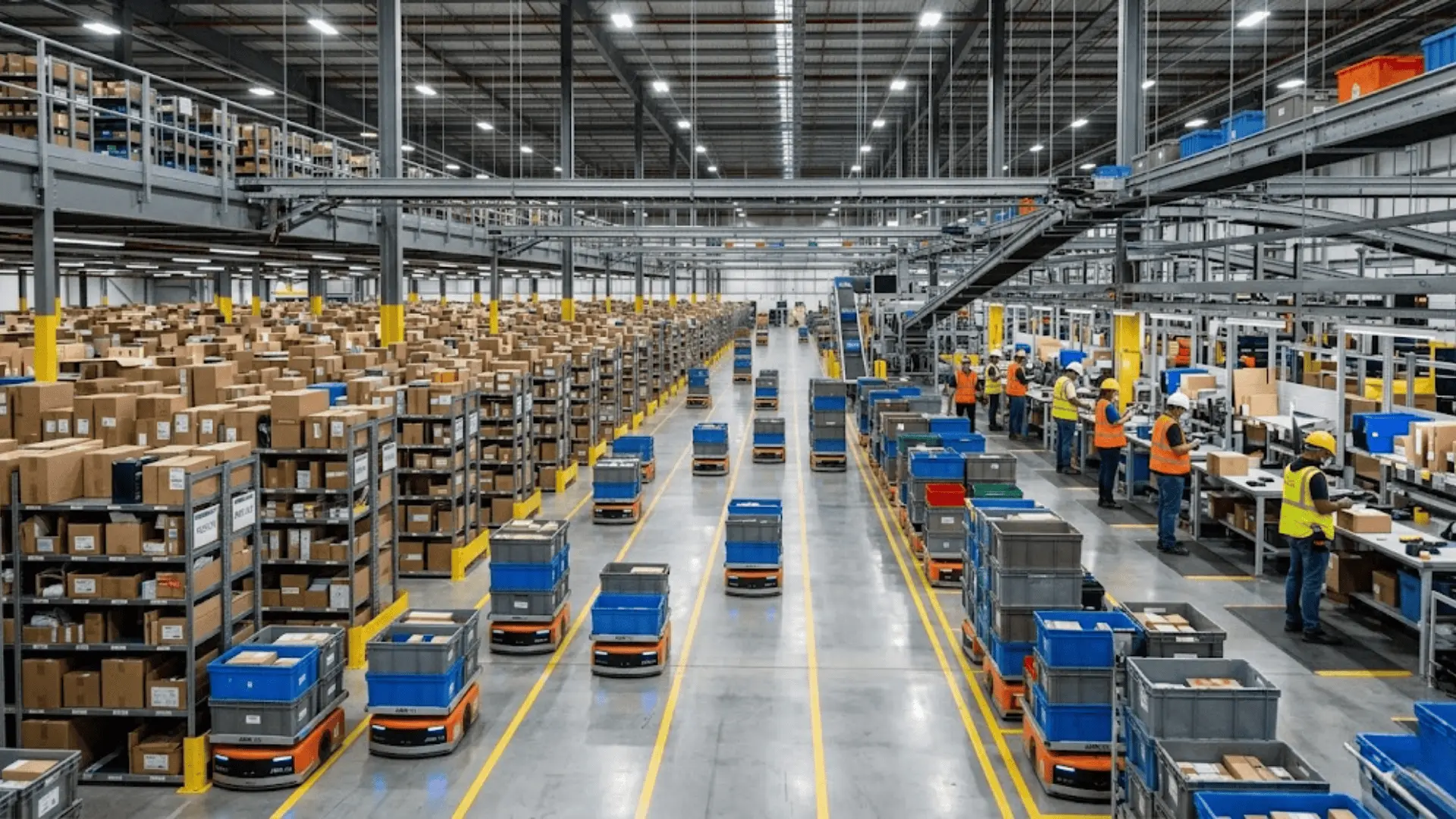



Warehouses used to run on manpower, muscle memory, and a whole lot of guesswork.
Today, that picture looks completely different.
Between the surge in online shopping and the growing gaps in available labor, businesses are quietly rethinking what happens behind those big warehouse doors, and warehouse automation solutions are at the center of it all.
From intelligent software systems to robotics that move and sort without a single human hand, automation is reshaping how goods get stored, tracked, and shipped.
And honestly, once you see how it all connects, it changes the way you think about the supply chain entirely.
What are Warehouse Automation Solutions?
Warehouse automation solutions are technology-driven systems that handle the movement, storage, and processing of inventory with minimal human intervention.
They bring together two layers working in sync:
- the hardware side, think robots, conveyor belts, and automated storage and retrieval systems, and
- the software side, covering warehouse management systems, execution systems, and control systems.
Together, they keep your supply chain moving accurately and at scale.
One thing worth knowing: warehouse automation is not the same as a warehouse management system. A WMS organizes and tracks operations digitally, while automation physically carries them out.
One thinks, the other acts.
How Warehouse Automation Works?
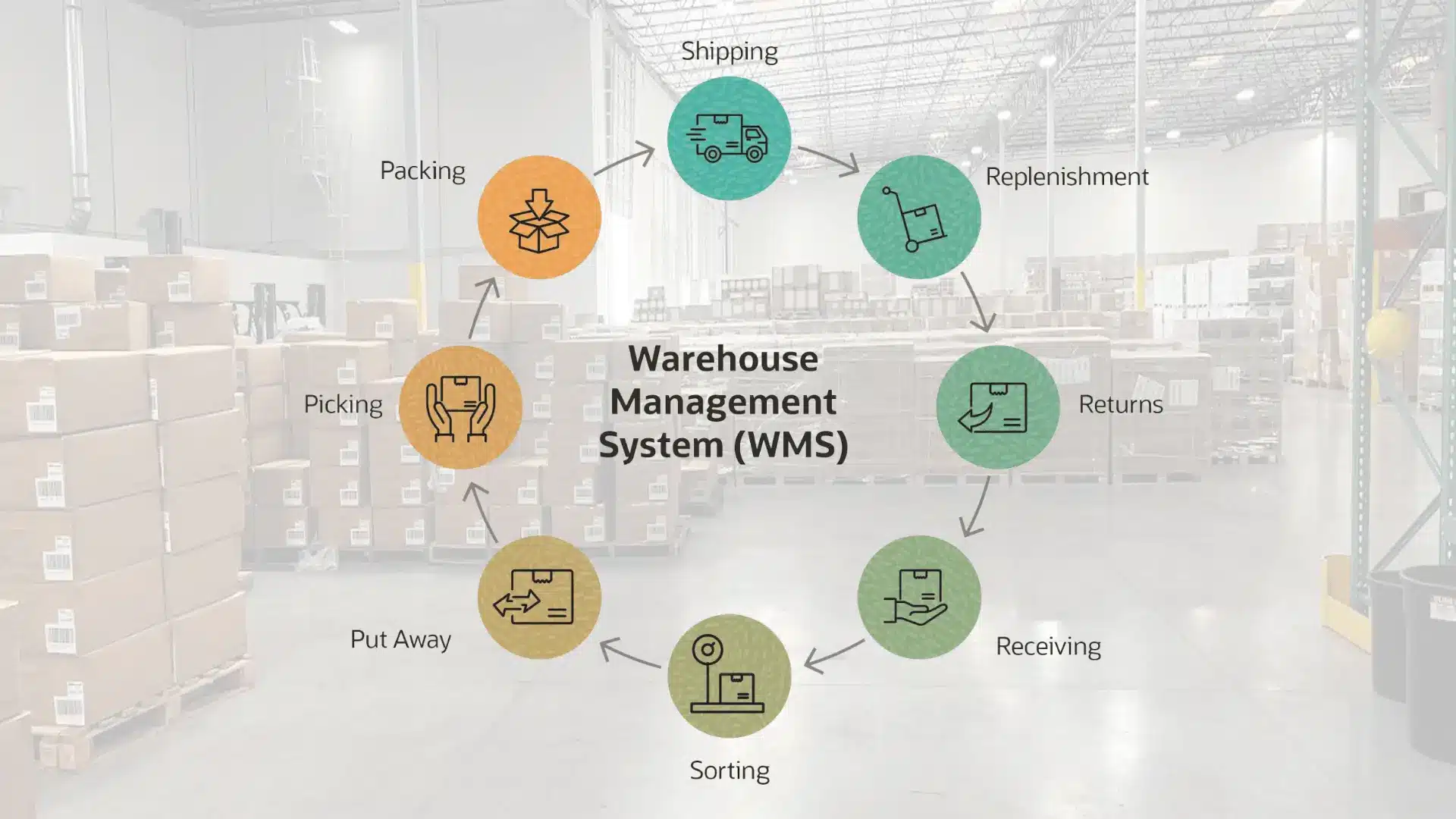
Every order that moves through a warehouse follows a path. Automation just makes sure that the path runs without delays, errors, or unnecessary stops along the way.
Step 1: Receiving & Putaway
When goods arrive, barcode scanners and AI-powered vision systems read, verify, and categorize each item within seconds. There is no manual logging, no misread labels.
Once identified, automated sorting systems direct products to their designated storage zones, and robotic putaway systems place them precisely where they belong.
What used to take hours of human coordination now happens before the truck finishes unloading.
Step 2: Storage
Once inventory is inside, automated storage and retrieval systems take over.
AS/RS units and shuttle systems stack, organize, and retrieve products across vertical space that human workers simply cannot reach efficiently.
Every item is tracked in real time, slotted by demand frequency, and retrievable on command. The result is a denser, smarter warehouse that holds more and wastes less.
Step 4: Picking
Picking is where traditional warehouses lose the most time.
Automation flips the model entirely. With goods-to-person systems, shelves come to the worker rather than the other way around.
Robotic picking arms handle individual item retrieval with vision-guided precision, managing high-SKU environments at a speed and consistency no manual process can match, especially during peak seasons.
Step 5: Packing & Sorting
After picking, items move through conveyor systems that carry them seamlessly to packing stations.
Automated sortation systems then read each package and route it down the correct lane based on size, destination, or carrier. Inline weighing and dimensioning happen automatically.
The entire process runs continuously, reducing bottlenecks that would otherwise stack up fast in high-volume operations.
Step 6: Shipping & Dispatch
At the final stage, automated loading and dispatch systems stage packages by route, scan them out of inventory, and prepare them for carrier pickup without manual sorting at the dock.
Some facilities use automated conveyor-to-truck loading for heavy or repetitive loads.
Every outbound shipment is logged, verified, and traceable the moment it leaves the building.
Warehouse Automation Software Solutions
The hardware gets the work done, but the software is what tells it where to go, when to move, and how to adapt.
These three systems form the digital backbone of any automated warehouse.
| System | Primary Role | Controls | Best For |
|---|---|---|---|
WMS | Inventory & order flow | Stock levels, locations, and labor | End-to-end inventory visibility |
| WCS (Warehouse Control System) | Hardware communication | Conveyors, sorters, AS/RS units | Hardware-heavy automation setups |
| WES (Warehouse Execution System) | Real-time orchestration | WMS + WCS in sync | High-volume, dynamic fulfillment |
Role of AI & Data Analytics
AI sits across all three systems, doing the work that static rules cannot. Predictive demand modeling anticipates inventory needs before stockouts occur.
Real-time optimization redistributes tasks based on floor conditions and order urgency.
Digital twins create a live simulation of the entire warehouse, letting operators test layouts and stress-test peak scenarios without touching a single physical asset.
Types of Warehouse Automation Solutions
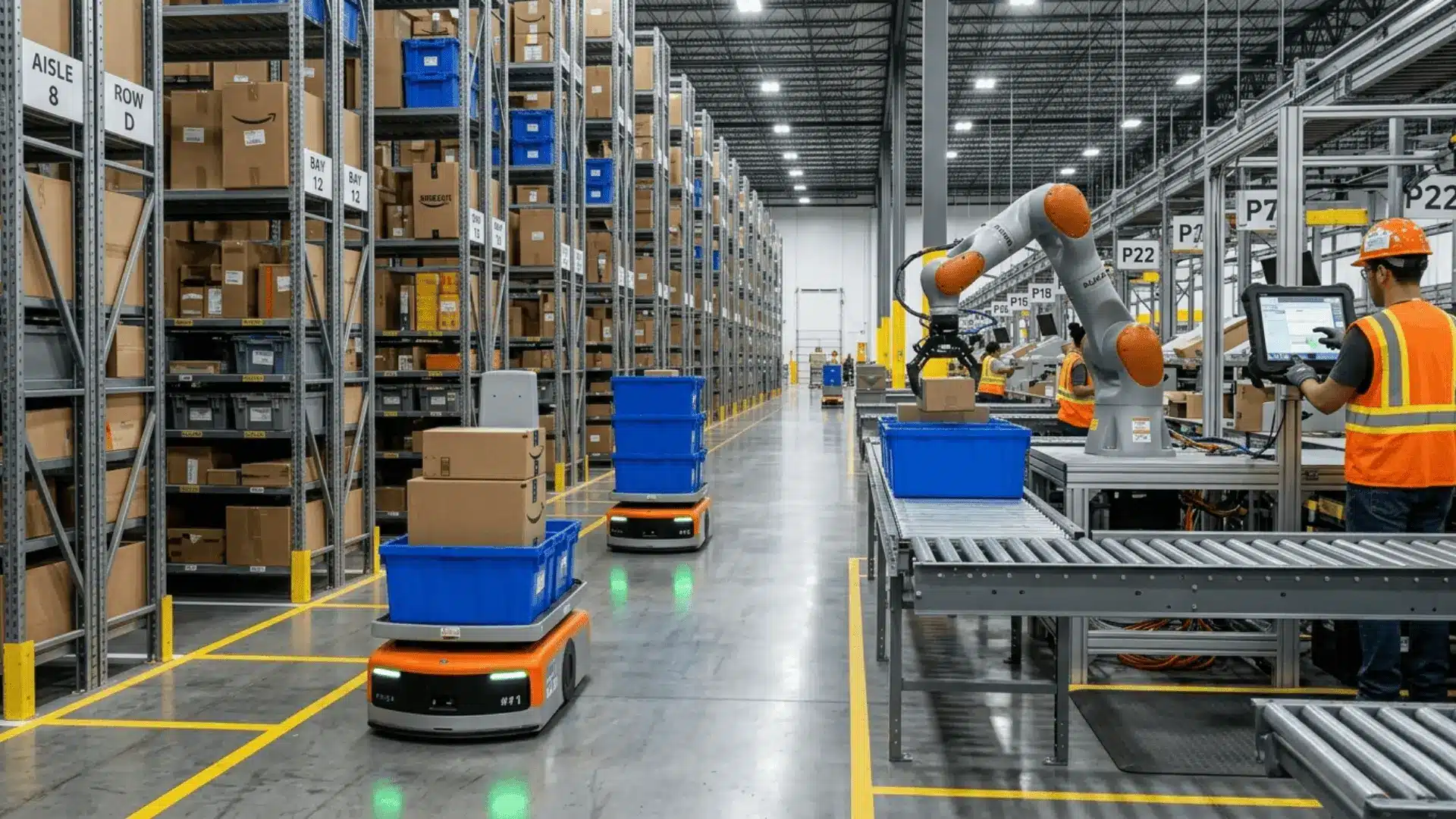
Not all automation looks the same on the warehouse floor. The right mix depends on your operation, your volume, and how much flexibility you need to scale.
1. Autonomous Mobile Robots (AMRs) & AGVs
AMRs and automated guided vehicles move inventory across the warehouse floor without fixed tracks or human direction.
AMRs navigate dynamically using onboard sensors and maps, while AGVs follow set paths. Both reduce the time workers spend walking between zones.
What makes them compelling for growing operations is their scalability: you add robots as volume increases, without rebuilding your infrastructure.
2. Automated Storage & Retrieval Systems (AS/RS)
AS/RS solutions use cranes, shuttles, or mini-loads to store and retrieve products across vertical space, most of which are left completely unused in most warehouses.
They are built for high-density storage in a smaller footprint, which matters enormously in urban fulfillment centers where real estate is expensive.
Inventory is organized by demand frequency, so fast-moving SKUs are always the quickest to retrieve.
3. Conveyor & Sortation Systems
Conveyors are the connective tissue of an automated warehouse, physically linking every stage from receiving to dispatch.
Products move continuously without being carried, handed off, or staged manually.
Sortation systems sit within this network, reading barcodes or RFID tags and directing each item down the correct lane based on size, destination, or order priority. High-volume operations depend on them to eliminate pileups.
4. Robotic Picking & Palletizing
Robotic arms handle the repetitive, physically demanding work of picking items from shelves or building and breaking down pallets.
Vision systems and AI allow them to identify, grip, and place products with precision across varying shapes and sizes.
Palletizing robots are especially valuable in shipping and receiving, where consistent, stable pallet builds directly affect transport safety and downstream handling efficiency.
5. Pick-to-Light & Put-to-Light Systems
These systems use LED indicators mounted on shelves or bins to guide workers visually to the exact location they need, removing the need to read lists or memorize locations.
Pick-to-light reduces picking errors significantly and speeds up the process in high-SKU environments.
Put-to-light works in reverse, directing workers where to place items during sorting or order consolidation with the same visual simplicity.
6. Voice Picking Systems
Voice picking gives warehouse workers audio instructions through a headset, keeping both hands free and eyes on the task.
Workers confirm actions verbally, and the system updates inventory in real time. It works well in cold storage, food distribution, and any environment where handheld devices are impractical.
The hands-free format alone meaningfully cuts pick times and reduces the cognitive load on workers during long shifts.
7. Automated Sortation Robots
AI-powered sortation robots process parcels at speeds that manual sorting cannot come close to matching, handling thousands of packages per hour across multiple destinations simultaneously.
They read labels, weigh items, and route each parcel without pause.
Where traditional conveyor sortation follows fixed logic, these robots adapt dynamically, making them particularly effective for e-commerce operations dealing with high order variability and tight carrier cutoff windows.
Key Benefits of Warehouse Automation
Automation does not just speed things up. It quietly fixes the parts of warehouse operations that have always been the hardest to get right consistently.
- Productivity jumps significantly, with many operations reporting two to three times the output after full implementation.
- Labor costs come down as repetitive, high-effort tasks shift from human workers to automated systems.
- Order accuracy improves because machines do not misread labels, skip items, or fatigue mid-shift.
- Fulfillment cycles get faster, shrinking the window between order placement and dispatch.
- Vertical space gets used, with AS/RS and shuttle systems turning unused ceiling height into active storage.
- Workplace safety improves as robots take over heavy lifting, repetitive movement, and high-traffic floor navigation.
Across all of these, the compounding effect is what makes automation worth the investment. Each benefit reinforces the next, and over time, the gap between automated and manual operations only widens.
Challenges & Considerations
Automation is a long-term commitment, and going in with a clear picture of what it demands is just as important as knowing what it delivers.
- Upfront costs are significant, covering equipment, software, installation, and the infrastructure changes that come with them.
- Legacy system integration takes time, especially when existing warehouse tech was not built to communicate with modern automation platforms.
- Workforce training is non-negotiable, as even the most intuitive systems require staff to operate, monitor, and troubleshoot effectively.
- Maintenance and scalability need planning from day one, because systems that work well at current volume may strain under rapid growth.
- ROI typically arrives between two and five years, depending on operation size, system complexity, and how quickly adoption reaches full capacity.
None of these is a reason to avoid automation. There are reasons to approach it with the right partners, realistic timelines, and a roadmap that accounts for the transition, not just the destination.
Top Warehouse Automation Solutions & Companies
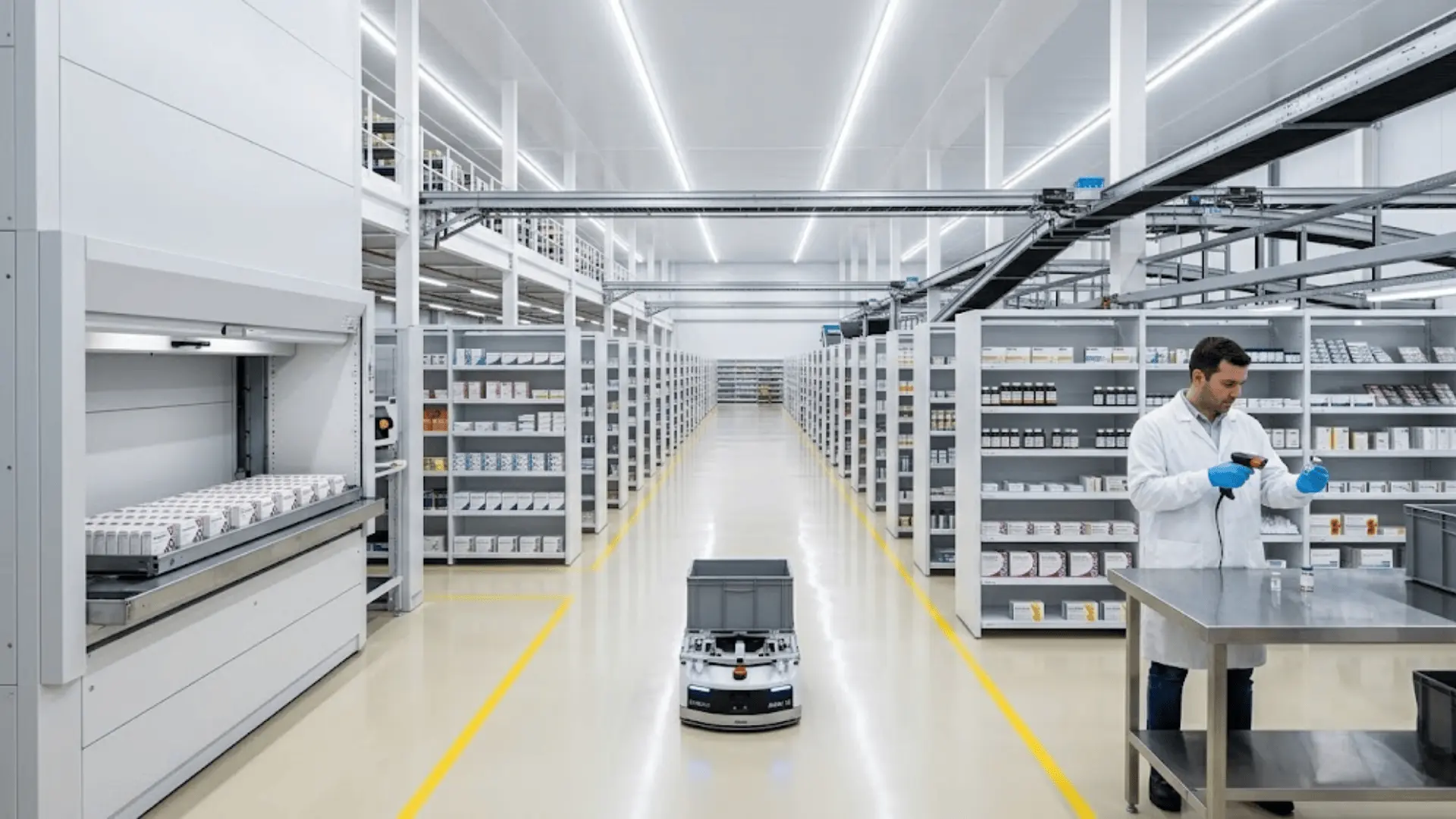
The warehouse automation market has no shortage of players, and the best fit depends entirely on what your operation needs most.
Here is a look at who is leading each category.
1. Robotics Platforms
These companies specialize in mobile robotics that work alongside human teams, handling the movement and navigation side of automation without requiring a full facility overhaul.
- Locus Robotics builds AMRs designed specifically for piece-picking in high-volume fulfillment environments, collaborating directly with workers on the floor.
- Fetch Robotics offers a cloud-based AMR platform covering everything from material transport to data collection across warehouse zones.
- Geek+ delivers goods-to-person robotic systems with a strong footprint across Asia, Europe, and North America.
2. End-to-End Automation Providers
These are the large-scale integrators that design, build, and manage complete automation ecosystems, from software orchestration down to physical hardware on the floor.
- Honeywell Intelligrated combines conveyor systems, sortation, and warehouse software into fully integrated fulfillment solutions.
- Dematic provides modular automation systems spanning AS/RS, conveyors, software, and robotics, built for both retail and industrial scale.
- Daifuku is one of the world’s largest material handling companies, delivering automation across automotive, airport, and distribution sectors.
3. Storage & AS/RS Specialists
When the priority is maximizing storage density and retrieval speed, these companies deliver systems built specifically around that challenge.
- SSI Schaefer engineers end-to-end intralogistics systems with deep expertise in automated storage, shelving, and shuttle technology.
- TGW Logistics focuses on fulfillment automation with a strong emphasis on AS/RS, picking systems, and software integration for retail and e-commerce.
- Kardex specializes in compact, vertical storage solutions, including carousels and lift modules designed for space-constrained facilities.
4. Niche & Emerging Solutions
The edges of the market are where some of the most interesting innovations are happening, from AI-native sorting to inventory systems that have left the ground entirely.
- AI sortation startups are building systems that process parcels dynamically using computer vision and machine learning, moving beyond fixed conveyor logic to handle high variability at speed.
- Drone inventory systems from companies like Gather AI and Corvus Drones autonomously scan barcodes and audit stock across tall racking systems, cutting cycle count time from days to hours.
Warehouse Automation by Industry & Cost
Every industry moves goods differently, and automation costs shift just as much as the use cases do.
| Industry | Primary Use Case | Key Automation Applied | Typical Investment |
|---|---|---|---|
| eCommerce & Retail | High-volume fulfillment with tight delivery windows | AMRs, goods-to-person, sortation systems | $500K to $5M+ |
| 3PL & Logistics | Multi-client inventory across shared facilities | WMS, conveyor systems, automated sortation | $500K to $5M |
| Manufacturing | Raw material movement and finished goods handling | AGVs, AS/RS, robotic palletizing | $1M to $5M+ |
| Healthcare & Pharma | Precision picking, compliance tracking, cold chain integrity | AS/RS, voice picking, automated dispensing | $500K to $5M+ |
| Cold Storage | Inventory management in temperature-controlled environments | Shuttle systems, AS/RS, voice picking | $1M to $5M+ |
| Small-Scale Operations | Single-function automation for growing facilities | Pick-to-light, basic conveyor, entry-level WMS | $50K to $500K |
Cost shifts based on three things: facility size, how deeply automation runs across each process, and the level of customization the operation requires.
Future Trends in Warehouse Automation
Warehouse automation is moving fast, and the next wave is already taking shape. AI-driven decision-making is shifting from rule-based logic to systems that learn, adapt, and self-optimize in real time.
Fully autonomous warehouses with minimal human presence are no longer hypothetical.
Robotics-as-a-Service is lowering the entry barrier, letting smaller operations access enterprise-grade automation without the capital commitment.
IoT-connected devices are turning warehouses into live, sensor-rich environments where every asset communicates.
And sustainability is finally entering the equation, with energy-efficient automation systems designed to reduce power consumption without compromising throughput.
The Closing Note
Warehouse automation is no longer a distant investment reserved for the largest players in the industry.
The right warehouse automation solutions exist for operations of every size, and the gap between where you are and where you could be is smaller than it looks.
From smarter software to robotics that genuinely take the load off your team, the pieces are there.
The question is really just where to start.
If you are exploring automation for your facility or have questions about what fits your setup, drop them in the comments below.
Frequently Asked Questions (FAQs)
How Long Does Implementation Take?
It varies widely. Deploying AMRs or pick-to-light systems can take a matter of weeks, while full-scale AS/RS or end-to-end automation rollouts can run anywhere from one to several years.
Is Warehouse Automation Worth It?
For high-volume operations with growth on the horizon, the return is clear. Productivity gains, reduced errors, and lower long-term labor costs consistently outweigh the upfront investment over time.
Can Small Warehouses Use Automation?
Absolutely. Starting with a WMS, barcode scanning, or a small AMR fleet is entirely viable and often the smartest entry point before committing to larger infrastructure changes.