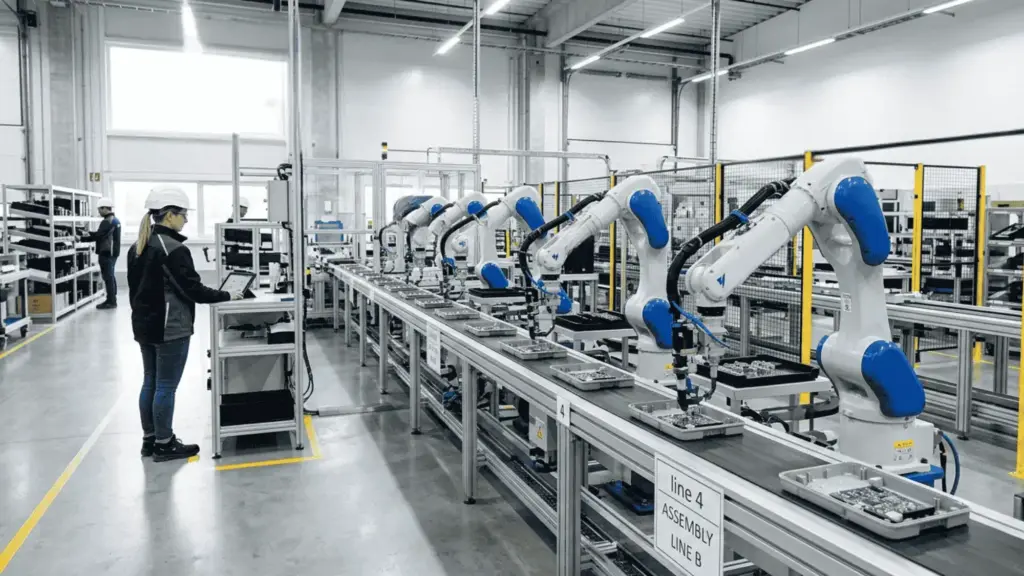
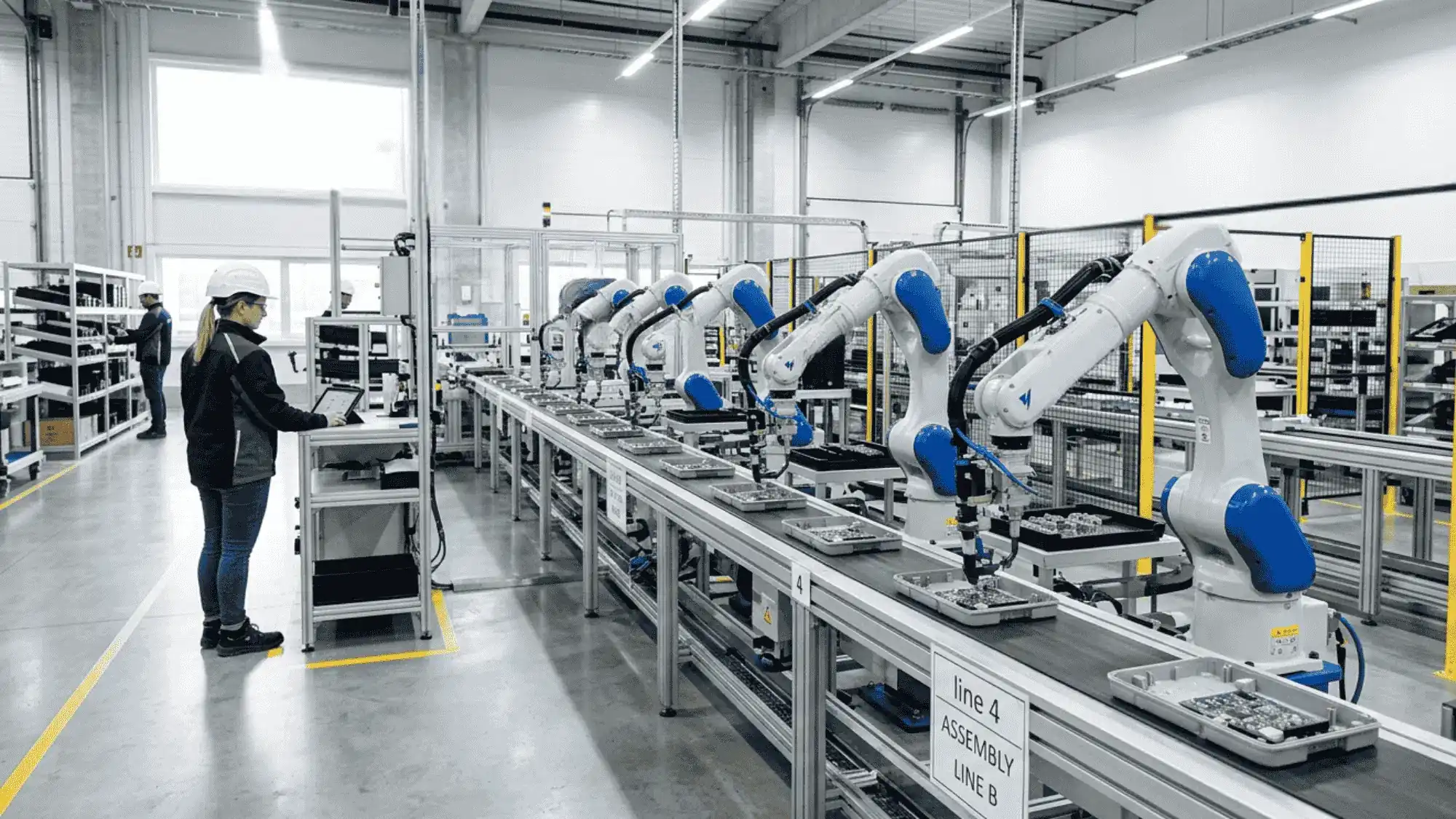



Factories today don’t look the way they did 50 years ago. The loud, crowded shop floors packed with workers doing the same task over and over, that image is slowly fading.
Something has changed the way products get made, and it’s changing things fast. Manufacturing process automation is at the center of it all. It’s a topic that comes up a lot in boardrooms, factory floors, and trade publications.
What does it actually mean? How does it work? And why does it matter so much right now?
Get a clear, honest look at what manufacturing process automation really is. Read on to find out more.
Overview of Process Automation in Manufacturing
Manufacturing process automation means using machines, sensors, and control systems to handle production tasks with little human help.
Things like assembly, inspection, and material handling get done faster and more consistently this way. Workers don’t have to spend their days on repetitive, tiring tasks.
Instead, they can focus on problem-solving and overseeing operations. The result? A shop floor that runs smoother, makes fewer mistakes, and gets a lot more done.
Key Benefits of Manufacturing Process Automation
Automation does more than just speed things up. This is a look at what manufacturers actually gain from it.
- Higher Productivity: Automated systems run around the clock without breaks, cutting cycle times and boosting output significantly.
- Better Quality and Consistency: Machines follow the same steps every time, reducing human error and keeping product standards tight.
- Lower Operational Costs: Less scrap, less rework, and smarter use of materials mean spending drops over time.
- Improved Worker Safety: Robots take over dangerous, heavy, or repetitive tasks, keeping workers away from harm.
- Stronger Data Visibility: Connected sensors and controls track everything in real time, making it easier to spot and fix issues fast.
Types of Factory Automation Systems
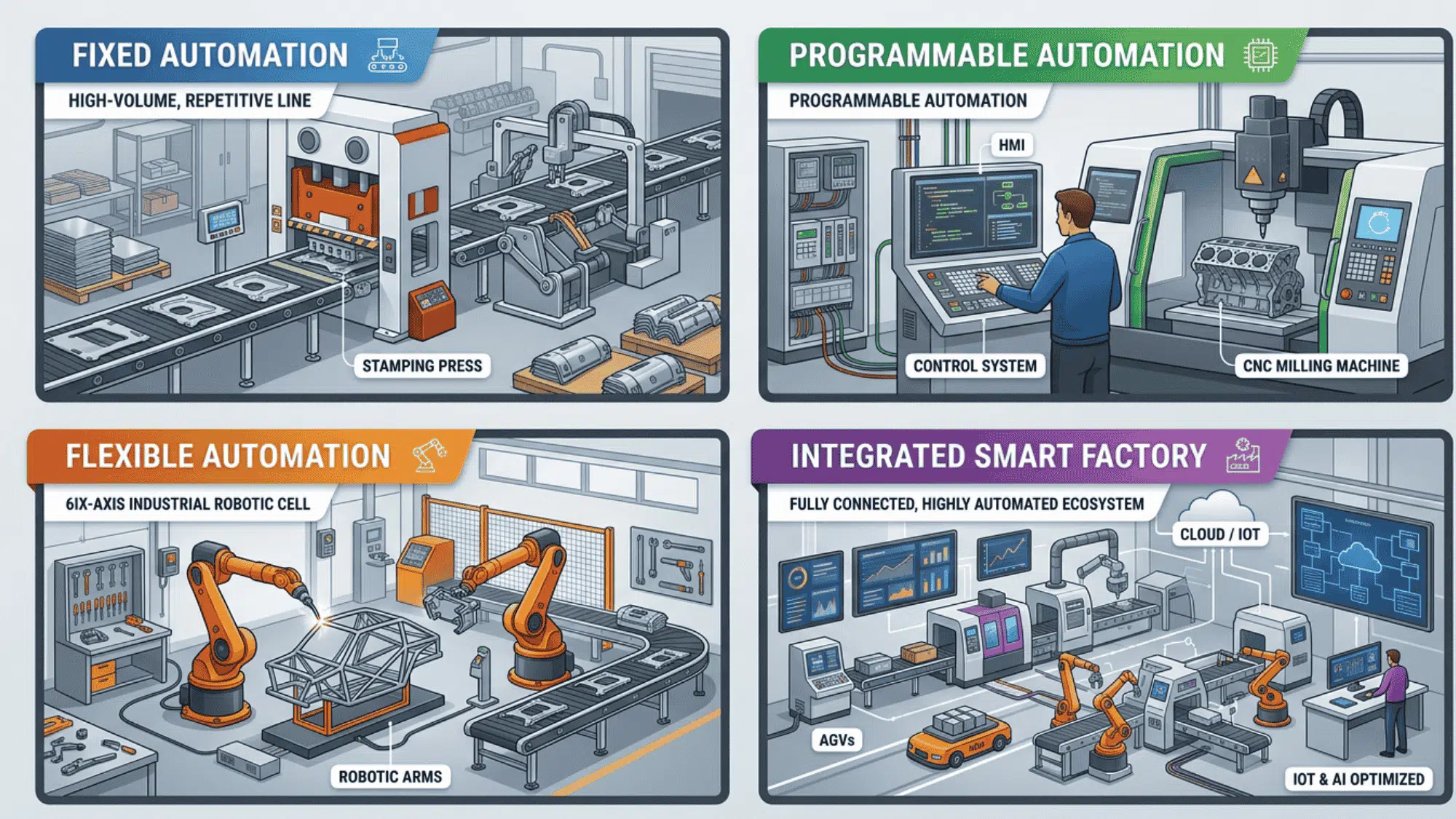
Not all automation works the same way. Different setups suit different production needs, volumes, and levels of flexibility.
1. Fixed (Hard) Automation
This type uses highly specialized equipment built to handle one specific task or product. It works best for very high-volume production where the product design stays the same for a long time, like automotive transfer lines. Changing it over to a new product is costly and time-consuming.
2. Programmable Automation
Here, the equipment gets reprogrammed between production batches to handle different products. It suits manufacturers who produce in moderate volumes with some variety. The trade-off is that changeovers take time, so it works better when batches are large enough to justify the setup effort.
3. Flexible (Soft) Automation
These are computer-integrated systems that switch between different products with very little manual changeover. They work well in high-mix, low-volume settings where quick response to changing demand matters. The setup costs more upfront, but the added flexibility pays off in the right environment.
4. Integrated Automation (CIM)
This connects machines, planning systems, and information flows end-to-end across the entire factory. It targets full coordination from the moment an order comes in to the point of shipment. Smart factories aiming for complete digital control typically rely on this level of automation.
Common Applications of Process Automation in Manufacturing
Automation shows up across many areas of a factory floor. Some of the most common ones are listed below.
- Material Handling: Conveyors, AGVs, and mobile robots move parts and pallets around the facility without manual effort.
- Assembly Operations: Robotic arms handle fastening, welding, dispensing, and placing components with high speed and precision.
- Machine Tending: Robots and cobots load and unload CNC machines, presses, and injection molding equipment continuously.
- Inspection and Quality Control: Vision systems and sensors check dimensions, surface quality, and product performance automatically during production.
- Process Control: PLC and DCS systems manage mixing, heating, chemical reactions, and other continuous or batch processes reliably.
Key Technologies Powering Factory Automation
Several technologies work together to make factory automation possible. Here’s a quick look at the main ones.
| Technology | What It Does |
|---|---|
| PLCs and DCS | Control machines and processes in real time with high reliability and precision |
| SCADA and MES | Monitor production lines, collect data, and coordinate operations across plants |
| Industrial Robots and Cobots | Handle welding, painting, assembly, and material movement with speed and accuracy |
| IIoT and Sensors | Stream live data on equipment status, quality levels, and environmental conditions |
| AI and Analytics | Power predictive maintenance, detect anomalies, and help optimize production processes |
| Digital Twins | Create virtual copies of assets and lines to simulate, test, and improve operations |
Real-World Examples of Manufacturing Automation
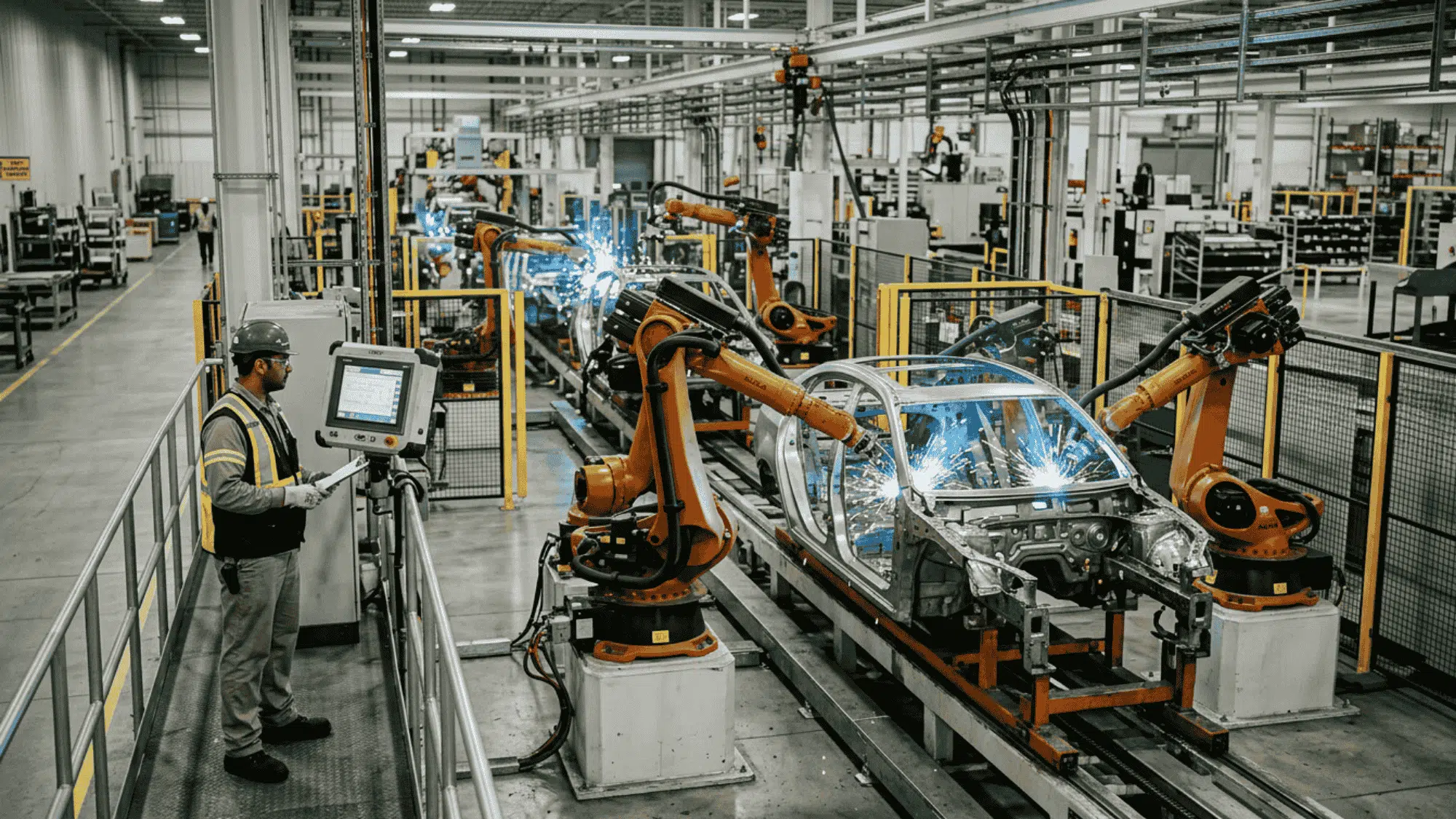
Automation isn’t just a concept on paper. It’s already running at full speed across some of the world’s biggest industries.
Car manufacturers use industrial robots for welding, painting, and final assembly. AGVs supply parts to the line without a single person pushing a cart.
Electronics plants rely on flexible automation, high-speed pick-and-place robots, and vision systems to put together circuit boards at a pace no human team could match.
In chemicals and food production, DCS and PLC systems run continuous operations while SCADA platforms keep an eye on everything from a central point.
And in precision manufacturing, AI-enabled cobots now handle complex assembly tasks that once required highly skilled workers on the floor.
Challenges of Implementing Process Automation in Manufacturing
Automation brings real gains, but getting there isn’t always smooth. These are the common roadblocks manufacturers face.
- High Initial Investment: Equipment, integration, and infrastructure costs add up fast, making it hard for smaller plants to justify.
- Integration Complexity: Connecting new automation systems with older legacy machines and enterprise software is rarely straightforward or quick.
- Skills Gaps and Workforce Resistance: Workers need significant training, and getting buy-in from teams resistant to change takes real effort.
- Cybersecurity Risks: More connected machines mean more entry points for cyber threats, putting operations and data at risk.
- Data Quality Issues: Noisy or inconsistent process data can lead automation systems to make unreliable and costly decisions.
Future Trends in Factory Automation
Factory automation keeps moving forward. These are the key trends shaping what manufacturing floors will look like tomorrow.
1. AI-Optimized Smart Factories: Factories will use AI to learn from production data and self-tune processes and maintenance schedules continuously.
2. Wider Use of Digital Twins: Virtual replicas of lines and assets will help simulate, test, and optimize operations with closed-loop feedback.
3. Greater Connectivity: 5G, edge computing, and IIoT platforms will enable faster, low-latency control and real-time analytics at the machine level.
4. Sustainability-Focused Automation: Fine-grained monitoring and optimization will help factories cut energy use, reduce waste, and lower emissions significantly.
5. Human-Centered Automation: Cobots, AR/VR tools, and advanced interfaces will work alongside people, adding to their capabilities rather than replacing them.
Final Thoughts
Manufacturing process automation has moved well past being a nice-to-have. It’s now a practical tool that helps factories run faster, safer, and smarter.
From robotics on the assembly line to AI keeping tabs on equipment health, the pieces are already in place across industries worldwide.
The road to automation isn’t without its bumps. Costs, skills gaps, and integration challenges are real. But manufacturers who plan carefully and invest in the right technologies stand to gain a lot more than they give up.
Ready to see how automation could work on a specific production floor? Start by identifying the most repetitive, error-prone tasks, which are usually the best place to begin.