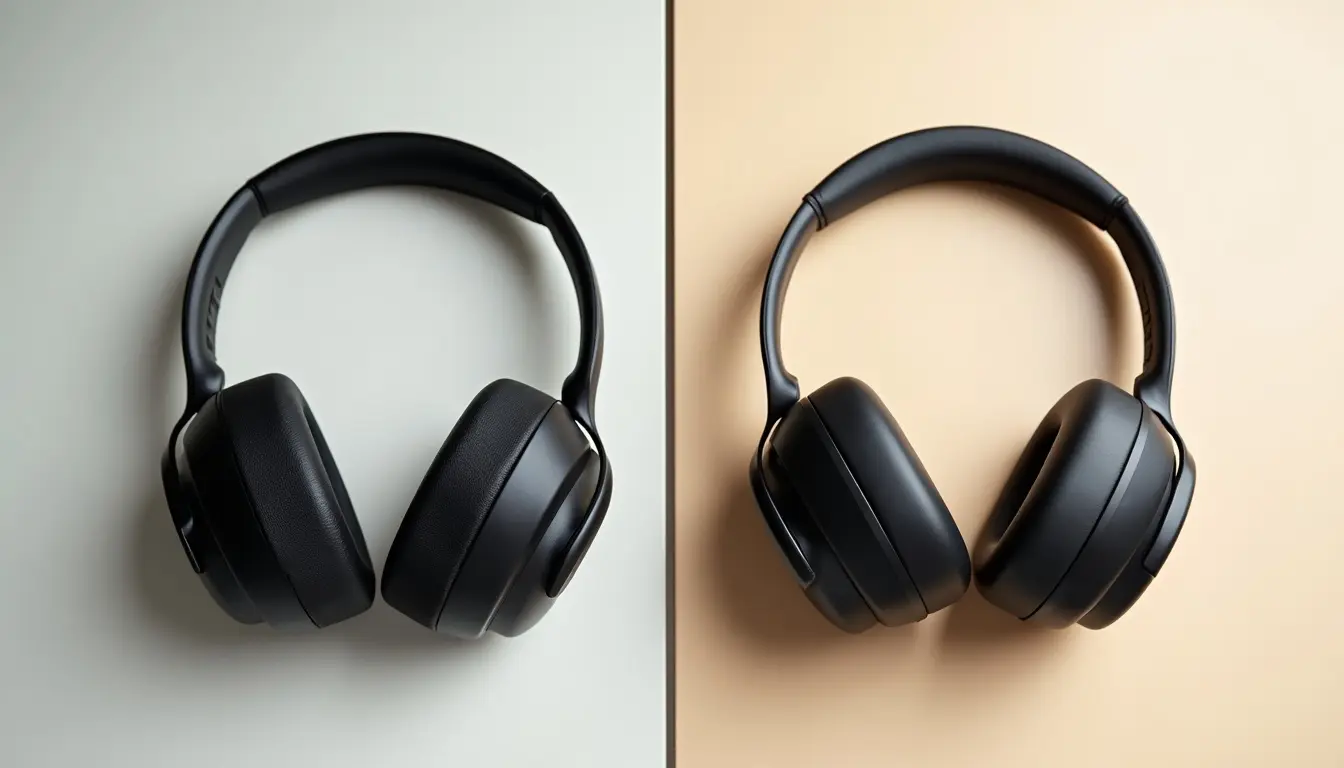



You are standing in front of two Bose boxes, and both say “QuietComfort.” One says “Ultra.” That word changes more than the label.
Searching Bose QuietComfort vs QuietComfort Ultra usually means you already sense a real gap and want to know if it is a genuine upgrade or just nicer packaging.
The real differences show up in specific places: how the headphones feel after six hours on a flight, how well they block engine drone or office chatter, how much detail you hear once you press play, and how long before you go hunting for a charger.
Some differences matter depending on how you use headphones; others barely register once you own either pair.
Bose Quietcomfort vs Quietcomfort Ultra
The Bose QuietComfort (2023 model) remains Bose’s mainstream noise-canceling headphone today, comfortable, reliable, and priced to compete with the current Sony WH-1000XM6 without breaking the bank.
It still holds its own against newer rivals, sticking with solid ANC, punchy sound, and simple physical buttons that work.
The Bose QuietComfort Ultra Headphones (2nd Gen), released in October 2025, are Bose’s current flagship.
It builds on everything the standard QC does well and adds premium materials, a newer Bluetooth chip, USB-C lossless audio, a new Cinema Mode, and a meaningfully longer battery. It is built for anyone who wants the best Bose has to offer right now and is willing to pay for it.
Major Differences Between Bose QuietComfort And QuietComfort Ultra
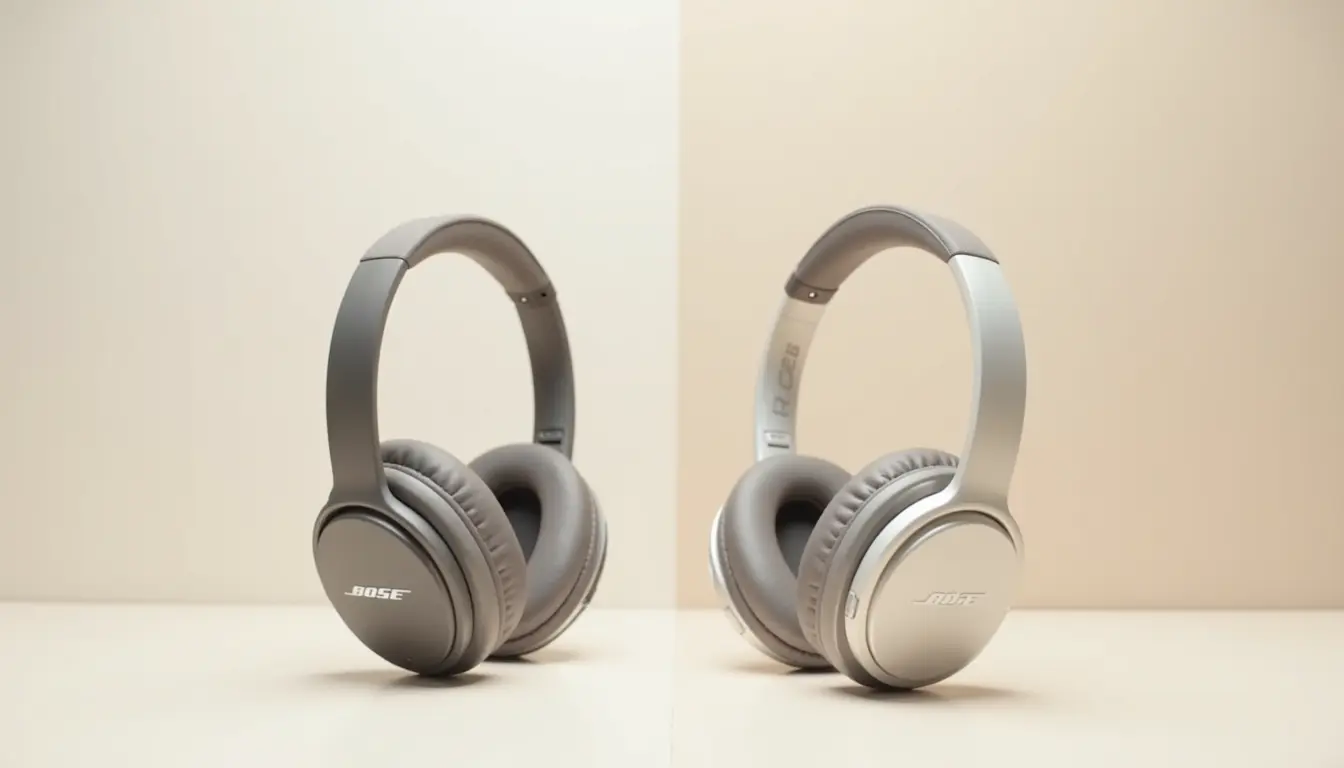
Six categories decide most buying decisions between these two. Here is how they actually stack up once you look past the marketing copy.
1. Build And Comfort
Both pairs handle a full workday or a long flight without complaint. The standard QuietComfort is lighter and simpler, better suited to anyone who prioritizes a light clamp above all else.
The Ultra feels more finished, with thicker padding and more metal in the build, and wins if comfort and material quality matter more to you than price.
- Standard QuietComfort: 8.4 oz (240g), lighter clamp, simpler build
- Ultra (2nd Gen): 9.3 oz (263g), plusher padding, more metal in construction
2. Noise Cancellation
Both use Bose’s adjustable ANC system with custom levels between full noise canceling and full transparency.
The 2nd Gen Ultra adds an improved ActiveSense algorithm and, unlike its predecessor, lets you switch ANC off entirely. In loud environments like airplane cabins, it handles low-frequency rumble a touch better, though the gap is small enough that daily listening rarely reveals it.
- Standard QuietComfort: adjustable ANC with multiple listening modes, cannot be fully switched off
- Ultra: same adjustable ANC system, plus an improved ActiveSense algorithm and the option to disable ANC entirely
3. Sound Quality
The standard QuietComfort leans bassier and more fun straight out of the box, which some casual listeners prefer.
The Ultra is the more technical performer, using CustomTune personalization, Immersive Audio, and aptX Adaptive to produce a wider soundstage with more resolved detail. If you care about hearing instrument separation, the Ultra is worth the jump.
- Standard QuietComfort: warmer, bassier, fun out of the box
- Ultra: CustomTune personalization, Immersive Audio, aptX Adaptive support
4. Smart Features
This is where the Ultra pulls furthest ahead. Bluetooth 5.4 (versus 5.1 on the standard model) means better efficiency and stability, and it is the only one of the two with USB-C lossless audio, Cinema Mode for movies, and support for Qualcomm’s aptX Adaptive family.
Both models are easy to connect with phones, tablets, and computers, although the exact steps can vary slightly by device. If you’re setting one up for the first time, how to pair Bose headphones covers the complete process.
The standard QuietComfort keeps things simple with physical buttons only, while the Ultra mixes buttons with a touch slider.
- Standard QuietComfort: warmer, bassier, fun out of the box
- Ultra: CustomTune personalization, Immersive Audio, aptX Adaptive support
5. Battery Life
This used to be a tie between the two. Not anymore. The standard QuietComfort still tops out at 24 hours, but the 2nd Gen Ultra now delivers up to 30 hours with ANC on and 45 hours with it off, dropping to 23 hours if Immersive Audio runs the whole time.
That is a genuine upgrade over the original Ultra and a real reason to consider the newer flagship for long trips.
- Standard QuietComfort: up to 24 hours
- Ultra (ANC on): up to 30 hours
- Ultra (ANC off): up to 45 hours
- Ultra (Immersive Audio on): around 23 hours
6. Price and Value
The Ultra costs about $90 more than the standard model, or roughly a 25 percent premium depending on ongoing sales. That gets you better materials, longer battery life, lossless wired audio, and sharper noise canceling.
The standard QuietComfort still covers most of that experience for meaningfully less, especially when it goes on sale.
- Standard QuietComfort: $359 MSRP, often discounted to $179 to $229
- Ultra (2nd Gen): $449 MSRP
None of these gaps are dramatic on their own, but they add up. If most of the wins above matter to how you actually listen, the Ultra earns its price tag. If they do not, the standard model is doing almost the same job for a lot less money.
Quick Comparison Table
Here is how the two stack up on the essentials. This is the fastest way to see where the two models actually differ.
| Feature | Bose QuietComfort | Bose QuietComfort Ultra (2nd Gen) |
| Price (MSRP) | $359 | $449 |
| Comfort | Lighter, simpler fit | Plusher padding, more premium feel |
| Noise Cancellation | Adjustable ANC, multiple modes | Adjustable ANC, improved algorithm, can switch off fully |
| Sound Quality | Warm, bassier, casual friendly | CustomTune, aptX Adaptive, more detail overall |
| Features | Physical buttons, Bluetooth 5.1 | Bluetooth 5.4, USB-C lossless audio, Cinema Mode |
| Battery Life | Up to 24 hours | Up to 30 hours (ANC on), 45 hours (ANC off) |
| Best For | Everyday, budget-conscious buyers | Audiophiles, frequent flyers, premium seekers |
How These Two Stack up Against the Competition?
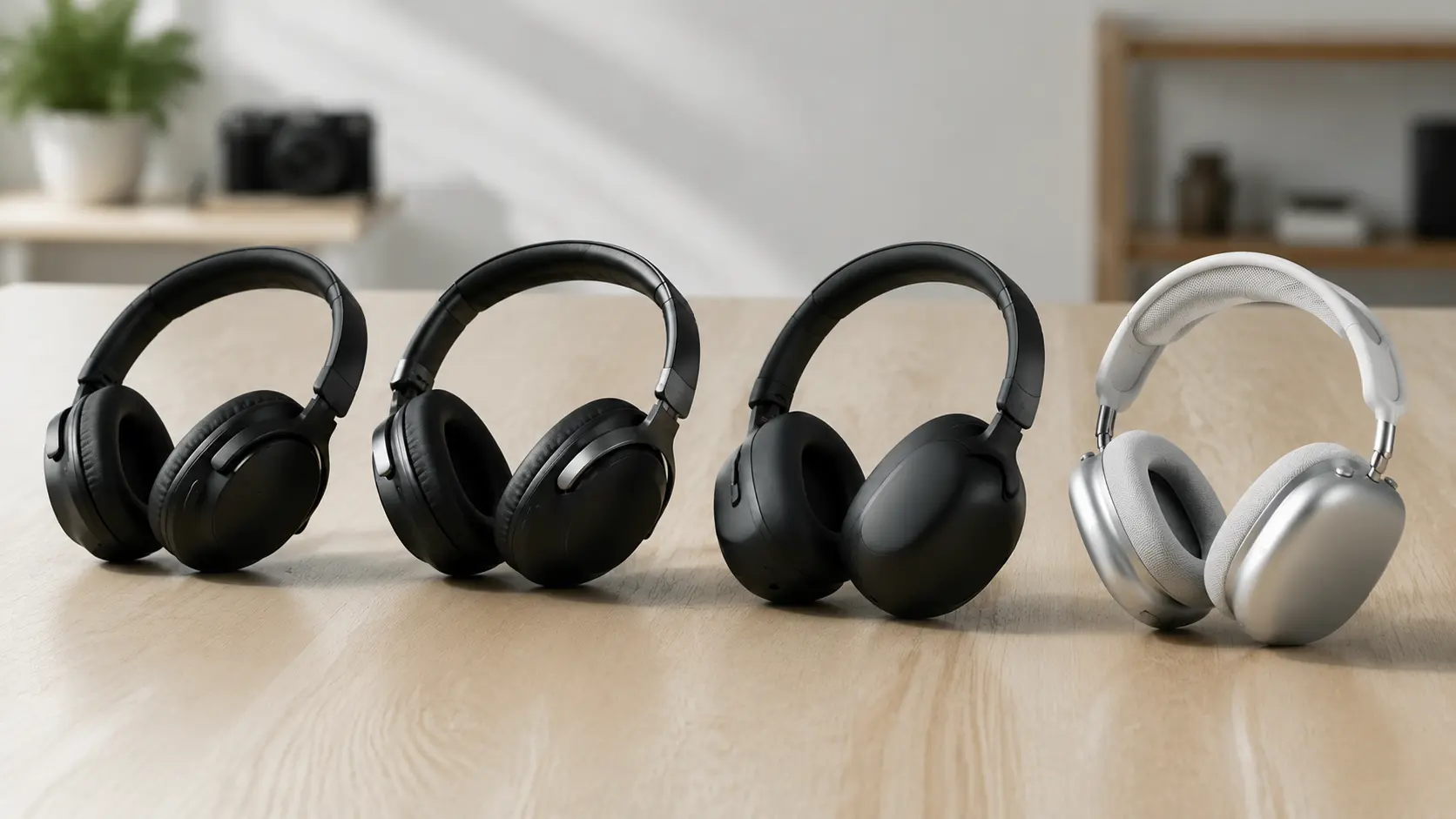
Neither Bose headphone exists in a vacuum. Before you commit to either one, it’s worth seeing where they land next to the two headphones most people cross-shop them against: the Sony WH-1000XM6 and the Apple AirPods Max 2.
- Sony WH-1000XM6 ($449): Lighter than both Bose models, with LDAC support for Android users who want high-res audio.
- Sony’s battery life: Around 30 hours with ANC on, matching the QuietComfort Ultra almost exactly.
- Apple AirPods Max 2 ($549): The priciest of the four, with unmatched build quality and deep Apple ecosystem integration.
- Apple’s battery life: Around 20 hours with ANC on, shorter than both Bose models and the Sony.
- Standard QuietComfort: Still the cheapest of the four and the lightest, though it lacks LDAC and the newer Bluetooth standard.
- QuietComfort Ultra: Priced close to the Sony XM6, but wins on materials, app polish, and overall comfort for long wear.
Purely on specs and price, the Sony XM6 is the one that actually threatens the QuietComfort Ultra’s position. Bose still wins on comfort and app simplicity, which tends to matter more than a spec sheet once you’ve had these on your head for eight hours straight.
If you’re still deciding whether Bose is the right brand for you, a broader comparison of Beats vs Bose headphones can help highlight how the two companies differ in sound, comfort, and everyday use.
Is Now the Right Time To Buy?
Timing matters here more than usual. Bose’s standard QuietComfort is currently on sale, sometimes as low as $179, because a second-generation model has reportedly been leaked for an August 2026 launch, bringing USB-C lossless audio and a redesigned build at the same $359 price.
If you genuinely need new headphones right now, the current sale price is hard to beat and worth grabbing. If you can comfortably wait a few weeks, holding off might get you newer hardware for the same money.
The Ultra faces no such timing pressure, since it only launched last October and should remain Bose’s flagship for a good while yet. Buy the Ultra whenever suits you, but maybe hold off on the standard model.
Bose Quiet Comfort vs Quiet Comfort Ultra: Which One Should You Choose?
Choose the Bose QuietComfort if you want excellent noise cancellation and comfort without paying flagship prices, you prefer physical controls, or you mostly listen to music and take calls without needing spatial audio.
Choose the Bose QuietComfort Ultra if you are an audiophile who wants the best sound Bose can offer, you travel frequently and want the sharpest possible ANC, or you want the most premium version of the QuietComfort experience and do not mind paying for it.
Final Thoughts
Neither headphone is a bad choice, and that is the truth about the Bose QuietComfort vs QuietComfort Ultra debate.
The standard QuietComfort remains the smarter buy for most people, nailing comfort and noise cancellation at a friendlier price.
The QuietComfort Ultra 2nd Gen is genuinely the better headphone, but it is a refinement, not a reinvention.
You are paying extra for polish, richer sound, longer battery life, and sharper noise cancellation, not a completely different experience overall.
If your budget is flexible and you want Bose’s absolute best, get the Ultra. If you want most of that experience for less money, the standard QuietComfort will serve you well for years. Already own one? Tell us which you picked below.
Frequently Asked Questions
Are Both Headphones Foldable for Travel?
yes. Both the Standard QuietComfort and the QuietComfort Ultra Fold Flat into Their Carrying Cases for Easier Packing.
Can You Keep Listening if The Battery Dies Mid-Flight?
No, not with The Ultra. the Standard QuietComfort works passively on a Dead Battery, but The Ultra Needs Power Flowing in through USB-C to Work at all.
Does the QuietComfort Ultra Automatically Pause when You Take It off?
Yes. Its on-head detection senses removal and pauses playback, then resumes once you put the headphones back on.