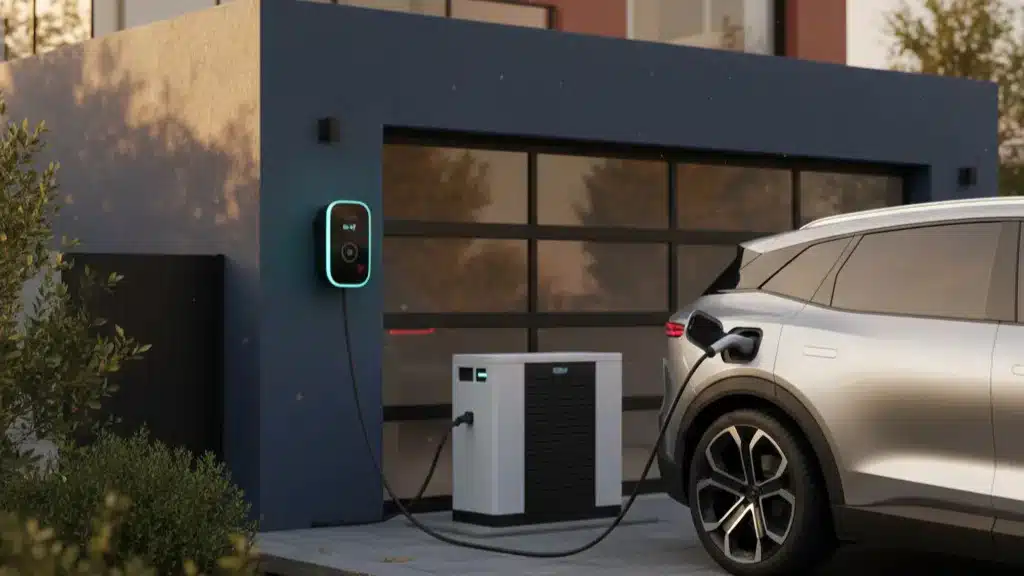



Understand how installing an EV charger at home can save you time, effort, and money. Charging your electric car at home is faster and more convenient than relying on public stations.
Fortunately, there are ways to reduce expenses through federal and state rebates, utility incentives, and tax credits.
This guide explains everything homeowners need to know about installing an EV charger at home, whether they opt for a DIY setup or hire a professional.
See how to maximize savings, avoid common mistakes, and take full advantage of incentives for a cost-effective, hassle-free EV charger installation.
What is an EV Charger?
An EV charger is a device that supplies electric energy to recharge the batteries of electric vehicles (EVs).
It’s essentially the “fuel pump” for electric cars, but instead of gasoline, it delivers electricity safely and efficiently.
EV chargers come in different types, offering varying charging speeds depending on your vehicle. Some are simple and portable, while others are permanent installations in homes.
Understanding how an EV charger works is the first step toward planning a home installation that fits your lifestyle, ensures safety, and helps you save money on energy costs over time.
Why Does Installing an EV Charger at Home Make Sense?
Installing an EV charger at home brings major convenience and saves time by letting you charge your car overnight or whenever it’s most convenient, without waiting at public stations.
You can start each day with a full battery, reducing stress on busy mornings. Beyond everyday ease, a home EV charger can also boost your property’s value.
Buyers increasingly look for EV-ready homes, and having a charger already installed shows foresight and energy efficiency, making your home more attractive in the market.
Plus, it gives you more control over energy use and can lower charging costs compared to public stations.
Types of Home EV Chargers
Choosing the right home EV charger depends on your daily driving habits, budget, and how quickly you need a full charge
Level 1 Chargers – Simple & Low-Cost

A Level 1 charger plugs into a standard household outlet, so it needs no special electrical setup.
It is easy to set up, with minimal installation, allowing most users to start charging quickly. It works best for occasional charging or short daily commutes.
However, it charges slowly and may take many hours to fully charge. Its portable design also makes it useful for travel or temporary charging needs.
Level 2 Chargers – Fast & Efficient

A Level 2 charger requires a dedicated 240V circuit, making home charging faster and more efficient.
It adds much more range in less time than Level 1, making it ideal for daily use and long-range electric vehicles.
Homeowners prefer it for its speed and convenience, without relying on public stations.
Its reliable performance supports consistent charging, helping drivers plan daily trips without worrying about low battery levels.
Step-by-Step: Installing an EV Charger at Home

Planning an EV charger installation involves choosing the right setup, preparing your electrical system, and ensuring safe, efficient installation. Breaking it into clear steps makes the process manageable and cost-effective.
Step 1: Preparation & Planning
Begin by determining whether a Level 1 or Level 2 charger best suits your daily driving habits, commuting distance, and overall charging needs.
Choose a convenient location near your usual parking spot that is easily accessible, safe, and protected from weather.
Carefully check your home’s electrical system to ensure it can handle the charger, considering voltage, circuit capacity, and potential upgrades to ensure efficient, safe installation.
Step 2: Electrical Setup & Wiring
Hire a licensed electrician if needed, particularly for Level 2 charger installations, to ensure safety and proper handling.
Make sure a dedicated circuit is installed with the correct amperage and proper grounding. Double-check that all wiring, connections, and breakers meet local safety codes and regulations.
Proper installation prevents overloads, reduces fire risk, and ensures your charging setup operates reliably and efficiently for years to come.
Step 3: Mounting, Testing & Safety Checks
Begin by securely mounting the charger on a wall or pedestal according to the manufacturer’s instructions, making sure it is level and firmly anchored.
Once installed, carefully test the unit to confirm it powers on and charges correctly or not.
Perform thorough safety checks, including inspections of wiring, connections, and grounding, to ensure reliable, long-term operation and prevent electrical hazards or malfunctions.
Cost Breakdown: Home EV Charger Installation
Understanding the main costs of a home EV charger helps you plan your budget and compare options for faster, safer charging.
| Item | Estimated Cost | Notes |
|---|---|---|
| EV Charger (Level 1) | $300 – $600 | Basic, plugs into a standard outlet, slower charging |
| EV Charger (Level 2) | $500 – $1,200 | Faster charging requires a 240V outlet and a dedicated circuit |
| Electrical Upgrades | $200 – $1,500+ | Depends on your home’s wiring and panel capacity |
| Professional Installation | $300 – $1,000+ | Labor cost for a licensed electrician: Level 2 is usually higher |
| Permits & Inspection Fees | $50 – $200 | Varies by city and local regulations |
How to Save Money on EV Charger Installation?
Smart planning and understanding available programs can significantly lower your EV charger costs, making home installation more affordable and efficient.
- Take advantage of federal and state rebates for home EV charger installations.
- Check if your utility company offers installation discounts or special rates.
- Use federal or state tax credits to reduce overall installation expenses.
- Compare multiple installer quotes to get the best price for labor and materials.
- Consider off-peak charging programs to save on electricity costs over time.
Permit, Inspection & Safety Requirements
Ensuring your EV charger is installed correctly starts with understanding local rules, inspections, and safety measures to avoid future issues.
- Check whether your city or county requires a permit to install a home EV charger.
- Schedule inspections as required to comply with local building and electrical codes.
- Follow manufacturer safety guidelines to ensure proper installation and operation.
- Ensure wiring and grounding meet national and local electrical safety standards.
Why a Qualified Electrician Matters for Your EV Charger?
Selecting the right electrician is important for a safe, smooth, and efficient EV charger installation.
Choose a licensed professional with experience in home EV charger setups, local electrical codes, and permit requirements.
A qualified electrician can handle wiring, mounting, and circuit upgrades correctly, reducing the risk of costly mistakes.
They can also check whether your electrical panel has enough capacity for the charger.
Along with proper installation, they can guide you on the best charger type and placement based on your parking space, daily driving needs, and long-term use.
This ensures your home EV charger works safely.
Common Installation Mistakes to Avoid
Avoiding common installation errors ensures safety, efficiency, and long-term performance, helping your home EV charger operate reliably.
- Skipping permits or ignoring local electrical codes, which can cause safety issues or fines.
- Using an underpowered outlet or insufficient wiring for Level 2 chargers.
- Attempting DIY installation without proper knowledge, risking damage or voided warranties.
- Poor charger placement that makes access inconvenient or exposes it to weather hazards.
- Neglecting grounding and safety checks, which can lead to electrical hazards.
- Overlooking manufacturer instructions or installation guidelines can reduce charger performance and lifespan.
Conclusion
Installing an EV charger at home is a practical step toward easier, safer, and more cost-effective daily charging.
With the right charger, proper electrical planning, and a qualified electrician, homeowners can avoid common mistakes and enjoy reliable long-term use.
Rebates, incentives, and utility programs can also help lower the overall cost. A well-planned installation adds convenience, supports better charging habits, and prepares your home for future EV needs.
Before getting started, compare charger options, check available incentives, and speak with a licensed electrician to plan the best setup for your home.
Frequently Asked Questions
How Long Does a Typical Home EV Charger Last?
Most chargers last 10–15 years with proper use and maintenance. Regular inspections and following manufacturer guidelines help extend lifespan.
Do Home EV Chargers Work in All Weather Conditions?
Most chargers are weather-resistant and rated for outdoor use, but extreme heat, flooding, or snow buildup can affect performance if not installed properly.
Can a Home EV Charger Handle Multiple Vehicles?
Most chargers are designed for a single vehicle at a time, but some high-capacity or smart chargers can manage multiple EVs with proper setup.