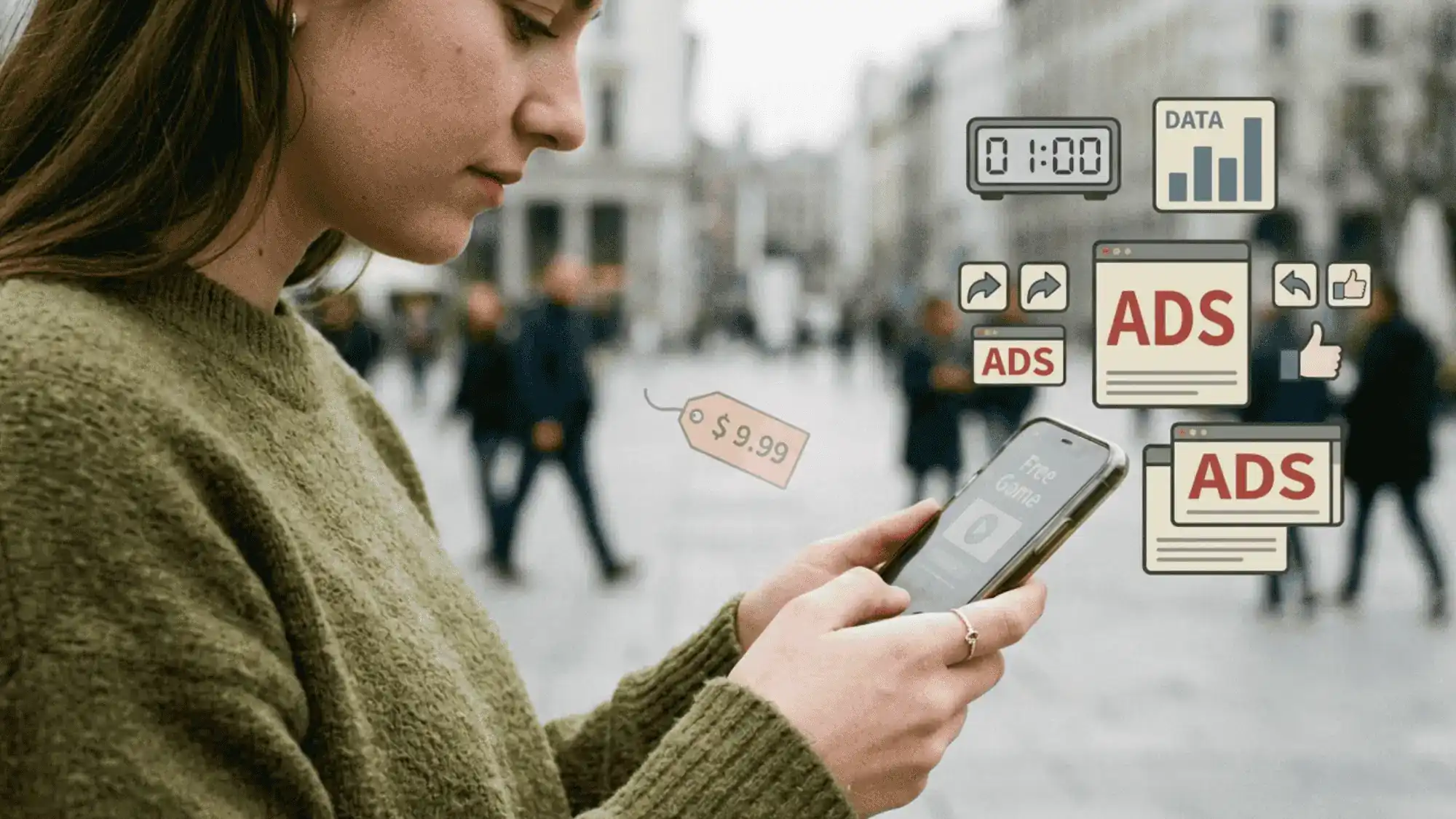



Most people have a favorite free app on their phone. Games, tools, and social platforms are all free to download and use. No credit card needed, no monthly fee.
So how do these apps actually stay alive? Running an app costs real money: servers, developers, updates, support. None of that is cheap. And yet, millions of apps charge users nothing.
That gap between “free to use” and “costs money to run” has always raised a fair question. Someone, somewhere, is paying for it all.
This blog summarizes the real ways free apps make money. Read on to find out.
Why Companies Offer Apps for Free?
Putting a price tag on an app can stop a lot of people from downloading it.
So, many companies skip the upfront charge entirely. A free app gets more downloads, reaches more users, and builds a bigger audience faster.
It also gives companies a chance to collect real feedback. They get to see how people actually use the app and fix what isn’t working. No guessing, no assumptions.
And once a large user base is in place, making money becomes much easier. More users mean more opportunities for ads, upgrades, and everything in between.
Top Ways Free Apps Make Money

Free apps use several smart strategies to generate revenue. None of them requires charging users a single rupee upfront.
1. In-App Advertising (The Most Common Revenue Model)
Most free apps run on ads. Every time a user opens an app, there’s a good chance an ad is already waiting. Companies like Google and Meta have built entire businesses around this model.
Types of Ads Used in Apps:
- Banner Ads: Sit at the top or bottom of the screen
- Interstitial Ads: Take over the full screen between actions
- Video Ads: Play before or during content
- Native Ads: Blend with app content and don’t look like ads
How Advertisers Pay:
| Model | Meaning |
|---|---|
| CPM | Pay per 1,000 views |
| CPC | Pay only when someone clicks |
| CPA | Pay only when a user takes a specific action |
Facebook and Instagram rely heavily on this approach, earning billions each year from targeted ad placements alone.
2. In-App Purchases (Freemium Strategy Explained)
The freemium model is simple. The app is free to download, but certain features or items cost money. Users get a taste of the experience first, and then spend to get more out of it.
Two Types of In-App Purchases:
- Consumables: Items that get used up, like coins, lives, or power-ups in a game
- Non-consumables: One-time buys, like unlocking a level pack or removing ads permanently
PUBG sells weapon skins and outfits. Candy Crush sells extra moves and boosters. Players don’t have to buy anything, but millions do, and that adds up to serious revenue for developers.
3. Subscription Model (Recurring Revenue Strategy)
Subscriptions bring in steady, predictable money. Instead of a one-time purchase, users pay monthly or yearly to keep accessing content or features.
How the Subscription Funnel Works:
- User downloads the app for free
- Gets full access during a free trial period
- Builds a habit around the app
- Converts to a paid plan after the trial ends
| App | Free Plan | Paid Plan |
|---|---|---|
| Spotify | Ad-supported listening | Ad-free Premium subscription |
| Netflix | No free tier | Monthly/yearly plans |
| Duolingo | Basic lessons free | Super Duolingo removes ads and adds features |
4. Data Monetization (How User Data Generates Profit)
Apps collect a lot of information. Search history, location, time spent on screen, content preferences, all of it builds a detailed picture of who a user is and what they want.
What Kind of Data Gets Collected:
- Browsing and search history
- Location and movement patterns
- Time spent on specific content
- Purchase behavior and preferences
This data is anonymized, no names or personal identifiers attached, and shared with advertisers for more targeted ad placements. Google’s ecosystem works this way across Search, Maps, YouTube, and Chrome.
Ethical Side to Keep in Mind:
- Privacy laws in many countries now require clear data disclosure
- Users must be informed about what data is collected and how it is used
- Apps that misuse data risk heavy fines and loss of user trust
5. Affiliate Marketing & Partnerships
Some apps make money without selling anything directly. They point users toward other products and earn a cut when someone buys.
How It Works:
- App includes a referral link to a product or service
- User clicks the link and completes a purchase
- App earns a commission on that sale
Common Examples by App Type:
| App Type | Typical Affiliate Strategy |
|---|---|
| Finance Apps | Recommend credit cards or loan products |
| Fitness Apps | Suggest supplements or workout gear |
| Shopping Apps | Link to partner brands for a commission |
It’s a low-effort revenue stream that doesn’t interrupt the user experience and scales well with a large audience.
6. Sponsorships & Brand Collaborations
Some apps partner directly with brands to feature their products inside the experience; less like a traditional ad, more like a brand becoming part of the app itself.
How Sponsorships Show Up in Apps:
- A food delivery app features a restaurant chain at the top of its listings
- A fitness app runs a month-long challenge sponsored by a sportswear brand
- TikTok and YouTube offer sponsored content formats through creators or featured placements
Why Brands Prefer This Model:
- Fixed payments mean predictable costs
- Feels more organic compared to standard display ads
- Reaches specific, highly engaged audiences
7. Selling Physical or Digital Products
Some apps skip the ad model entirely and act as full storefronts, selling products, services, or courses directly from within the app.
What Gets Sold Inside Apps:
- Physical products: Clothing, accessories, lifestyle items (e.g., Instagram Shops)
- Digital products: E-books, online courses, templates
- Services: Coaching sessions, consultations, memberships
This model works because the app already has a ready audience. Users buy without leaving the app, and developers don’t need a separate website or checkout process.
Freemium vs Paid Apps: Which Model Works Better?
Both models have their strengths. The right choice depends on the app’s goals, target audience, and long-term revenue strategy.
| Aspect | Freemium Apps | Paid Apps |
|---|---|---|
| Upfront Cost | Free to download | One-time payment required |
| User Base | Larger, lower entry barrier | Smaller, more committed users |
| Revenue Model | Ads, subscriptions, in-app purchases | Single upfront payment |
| Conversion Rate | 2–5% free-to-paid | 100% if downloaded |
| Best For | Games, social, content apps | Niche tools, productivity apps |
Are Free Apps Really Free?
Free apps don’t always cost money, but that doesn’t mean they cost nothing.
Every time someone uses a free app, something is being exchanged, even if it’s not cash. It could be personal data, attention, or time spent watching ads.
Most users don’t stop to think about this. They see “free” and tap download without a second thought.
And that’s exactly what these apps count on. The real price of a free app is often hidden behind smooth design and easy access. Understanding what actually gets traded makes for much smarter choices as a user.
How Much Money Can Free Apps Make?
Free apps can make a surprising amount of money. In fact, some of the highest-earning apps in the world charge users nothing to download.
The real earnings come from the sheer number of people using the app every single day.
Scale is everything here. An app with millions of active users has millions of opportunities to show ads, sell upgrades, or push a subscription. Even a small conversion rate across a massive user base adds up to serious revenue.
Top apps like TikTok and Instagram report billions in yearly earnings. Games like Candy Crush have crossed the $1 billion mark in lifetime revenue.
And those numbers keep climbing as user bases grow larger and engagement gets stronger.
Tips for Choosing the Right Monetization Strategy
Picking the right monetization strategy can make or break an app. Here are some practical tips to get it right.
- Know the Audience First: Subscription models suit utility apps better, while in-app purchases work well for games.
- Start with Freemium: Focus on growing the user base first, then layer in ads or purchases later.
- Test Before Committing: Run A/B tests on different models and track lifetime value against acquisition costs.
- Don’t Overload Users with Ads: Too many ads push users away; balance revenue goals with a good experience.
- Use Organic Growth Strategies: Strong app store optimization brings in more users, which directly boosts revenue potential.
- Match the Model to The Content: Digital product sales work best when the app already has a loyal, engaged following
Conclusion
Free apps have clearly figured out how to turn a zero-dollar download into a steady stream of revenue.
From ads and subscriptions to data and direct sales, the options are wide, and the earning potential is real.
For anyone building an app, the smartest move is to pick a model that fits the audience and grows with it. Start simple, test often, and adjust along the way.
And for users, knowing how these apps make money changes the way one looks at “free.” Nothing truly comes without a cost. The question is just knowing where to look.