

Picking a smart TV used to be simple, back when the screen size was the whole conversation.
Now, the operating system quietly shapes everything from how fast you find a show to whether your living room setup actually feels like yours.
Roku TV and Google TV sit at the top of that conversation, each with a genuinely different philosophy about what your streaming life should look like.
So before you add anything to your cart, let’s actually talk about what sets them apart.
Your Remote is the Easy Part. The OS is Where it All Happens
Most people spend time picking the right screen size, the right brand, the right price point, and then barely think about the operating system underneath it all.
That is a quiet mistake!
The OS is what controls your apps, shapes your recommendations, and decides how smoothly everything moves.
It determines whether your TV talks to your smart home, which voice assistant answers when you call, and how well the whole experience holds up a few years from now. The screen is just the surface.
Roku TV: No Learning Curve, No Fuss, Just Streaming
Roku keeps things refreshingly uncomplicated. Its app-first interface loads quickly, stays lightweight, and does not ask much of you, which is exactly why it shows up inside TCL, Hisense, and Roku’s own lineup of TVs.
The home screen is minimal by design, and with a massive library of streaming channels plus free content through the Roku Channel, there is genuinely a lot to work with.
The tradeoff is that personalization stays pretty surface-level, ads have been creeping onto the home screen, and advanced smart home features are not really its strong suit.
Google TV: Smarter by Design, Personal by Default
Google TV takes a different approach from the ground up. Built on Android TV with a more intuitive layer on top, it lives inside Sony, TCL, Hisense, and Chromecast devices and genuinely learns how you watch over time.
Recommendations pull from across your streaming apps, Google Assistant is always close by, and multiple user profiles mean everyone gets their own experience. The Play Store keeps the app library deep.
Where it gets tricky is that the interface can feel like a lot, a Google account is basically non-negotiable, and new users sometimes need a moment to find their footing.
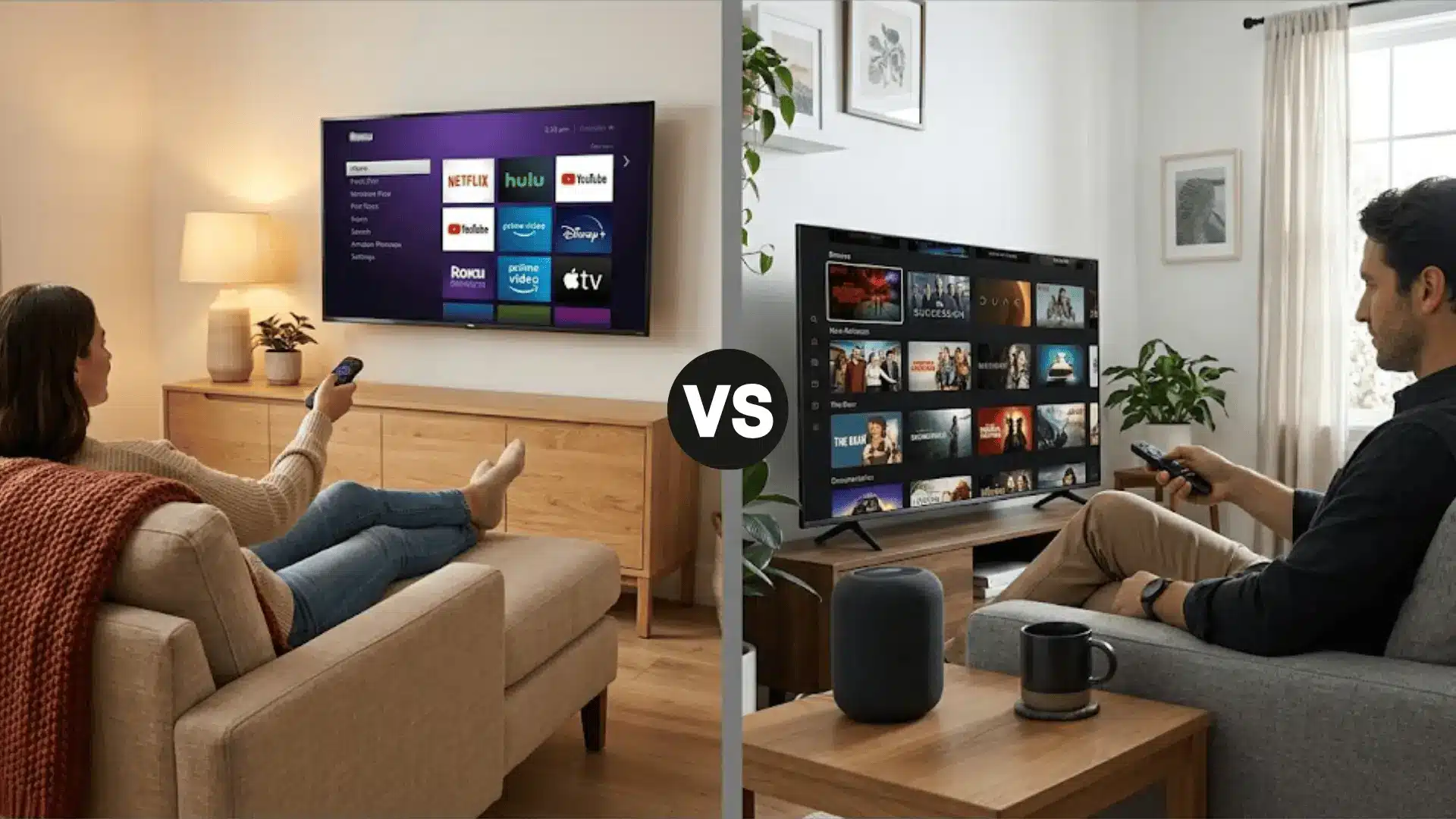
Roku TV vs. Google TV: Side-by-Side Comparison
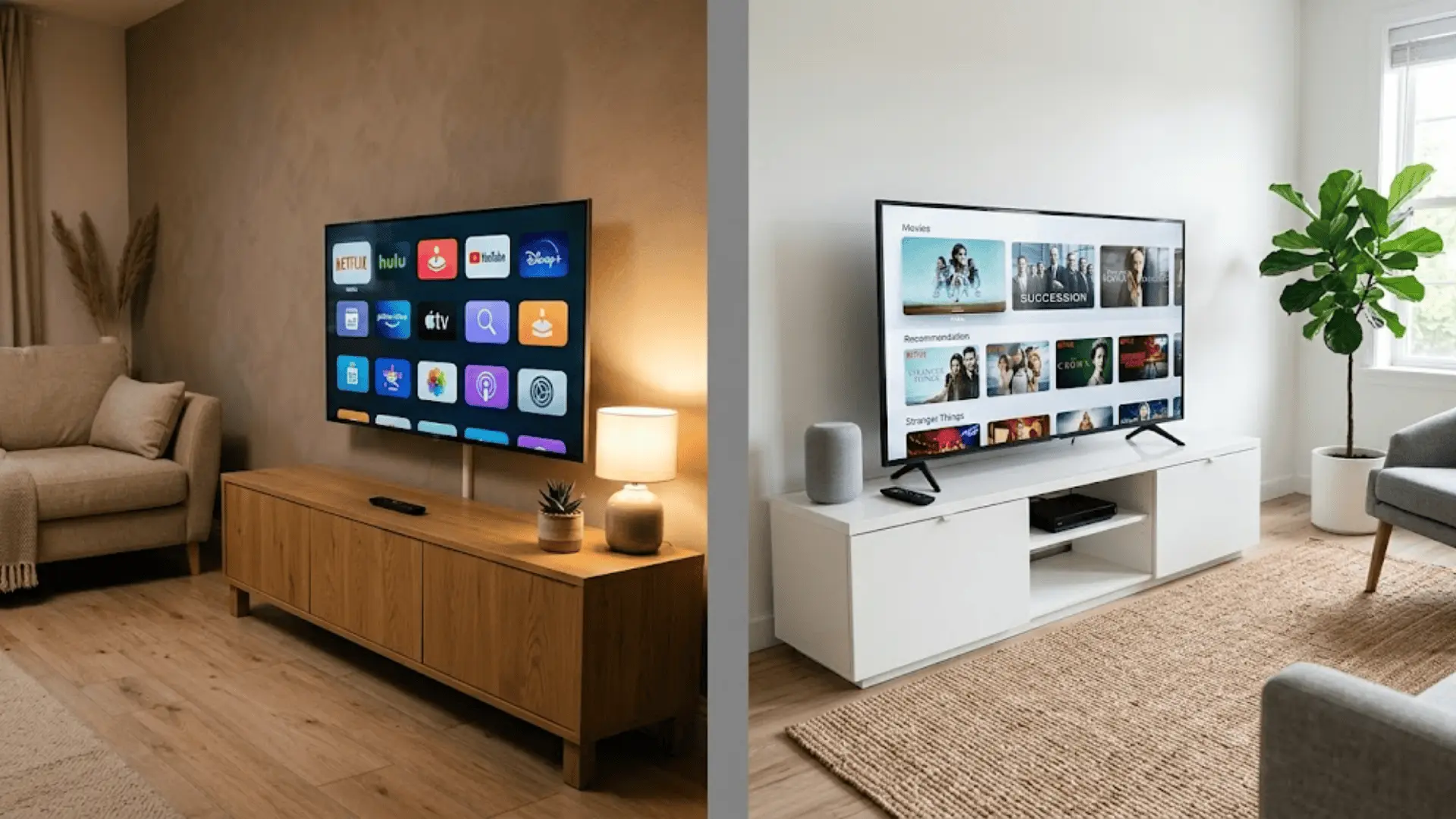
Both platforms do the basics well. Where they differ is in how much they want to do for you, and how much you actually want that.
1. User Interface and Ease of Use
Roku keeps its home screen clean and grid-based, putting your apps front and center without much noise. Google TV flips that around, leading with content recommendations the moment you turn it on.
If you just want to open an app and press play, Roku feels instantly familiar. If you like the TV doing some of the thinking, Google TV’s content-first layout is genuinely hard to go back from.
2. Content Discovery and Personalization
Roku offers basic search and category browsing, which works fine, but does not really teach you over time. Google TV pulls from your watch history across apps and surfaces suggestions that actually feel relevant.
The gap in personalization is noticeable, especially once Google TV has had a few weeks to settle into your habits.
3. App Availability
Both cover the essentials comfortably, Netflix, YouTube, Prime Video, and Disney+, all present on either platform. The difference shows up at the edges.
Google TV’s Play Store access fills in the gaps that Roku occasionally leaves, making it the safer bet if you use niche or regional streaming apps.
4. Voice Control and Smart Features
Roku handles basic voice commands well enough for everyday use. Google TV brings the full Google Assistant experience, including smart home controls, routines, and device management across your Google ecosystem.
If your home already runs on Google, the integration feels less like a feature and more like an extension of something you already use.
5. Performance and Speed
Roku’s lightweight build means it moves quickly and rarely stutters. Google TV carries a bit more processing weight but handles multitasking and richer interfaces without breaking a sweat on mid-range devices.
Performance really comes down to the hardware you pair each OS with rather than the platform itself.
6. Ads and User Experience
Neither platform is completely ad-free, but they handle it differently. Roku places sponsored rows visibly on the home screen, which some users find distracting over time.
Google TV blends promotions into its recommendation feed, making them feel less jarring but no less present. Roku’s ad placement tends to feel more interruptive simply because the interface is otherwise so minimal.
7. Price and Availability
Roku TVs start around $100 and top out near $500, keeping things accessible across most budgets.
Google TV spans a wider range, from $150 entry-level sets all the way to $1,500 and beyond for premium Sony models, so there is more room to grow into better hardware over time.
| Feature | Roku TV | Google TV |
|---|---|---|
| Starting Price | ~$100 | ~$150 |
| Mid-Range | $200 to $400 | $300 to $600 |
| Premium | Up to ~$500 | Up to $1,500+ |
| Key Brands | Roku, TCL, Hisense | Sony, TCL, Hisense |
| Where to Buy | Best Buy, Amazon | Best Buy, Amazon |
| Verdict | Best for budget buyers | More range to grow into |
Which One Should You Choose?
Both platforms are genuinely good. The right pick really comes down to how you like to watch and what your setup already looks like.
Choose Roku TV if…
Roku is a natural fit if simplicity is the priority. It does not try to do too much, and that is exactly the point.
- You want a clean, no-fuss interface that anyone can pick up instantly.
- You are working with a tighter budget and want solid streaming without the extras.
- You prefer your TV to stay out of the way and just play something.
Choose Google TV if…
Google TV makes more sense if you want your television to work a little harder for you.
- You want a platform that learns your taste and surfaces what to watch next.
- You are already in the Google ecosystem with YouTube, Google Home, or Gmail.
- You want smart home control and voice assistant features baked right in.
Real People, Real Setups: Who Each Platform is Made For?
The best platform is not always about specs; sometimes it just comes down to who is using it and what their daily life looks like.
| Use Case | Best Pick | Why it Works |
|---|---|---|
| Beginners and Seniors | Roku TV | Minimal interface with no steep learning curve |
| Tech-Savvy Users | Google TV | Layered customization and Play Store access |
| Smart Home Users | Google TV | Built-in Google Assistant ties into your existing devices |
| Budget Buyers | Roku TV | Reliable streaming hardware at consistently lower price points |
The Devices Behind Each Platform
The platform experience only goes as far as the hardware carrying it.
For Roku, TCL, and Hisense are the go-to names, offering reliable sets at prices that do not ask too much of your wallet.
On the Google TV side, the lineup stretches further.
Sony Bravia brings a more premium, cinematic feel to the OS, Hisense’s U Series sits comfortably in the mid-range, and Chromecast with Google TV gives you a wallet-friendly way to bring the platform to any screen you already own.
The Bottom Line
Choosing between Roku TV and Google TV is less about which one is better and more about which one fits the life you are already living.
Roku keeps things calm and clutter-free. Google TV grows with you, learns your habits, and connects the dots across your home. Neither will let you down on a cozy movie night.
Think about what your evenings actually look like, and the answer will come naturally.
Already made your pick? Drop your thoughts in the comments below. We would love to know which side you landed on.
Frequently Asked Questions (FAQs)
Is Google TV Better Than Roku TV?
It depends on what you value. Google TV pulls ahead on personalization and smart features, but Roku holds its ground when simplicity and ease of use matter more.
Does Roku TV Have Fewer Apps Than Google TV?
For the most part, all the major streaming apps are present on both. The gap shows up with niche or regional apps, where Google TV’s Play Store access gives it a quiet but noticeable edge.
Which Platform is More Future-Proof?
Google TV has the longer runway, backed by consistent updates, Gemini integration, and a growing ecosystem. Roku is stable and well-supported, but Google’s infrastructure gives it more room to evolve.