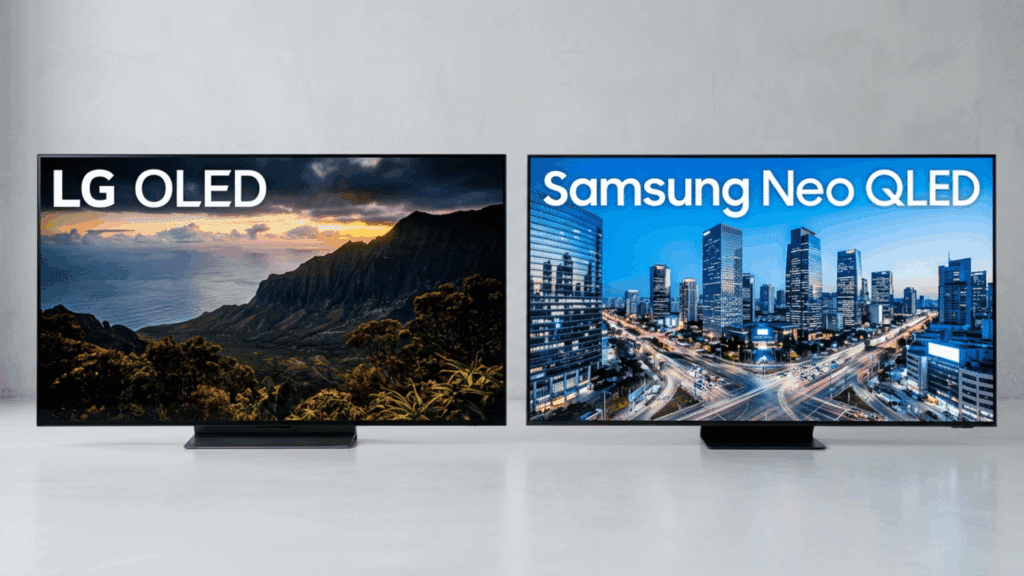
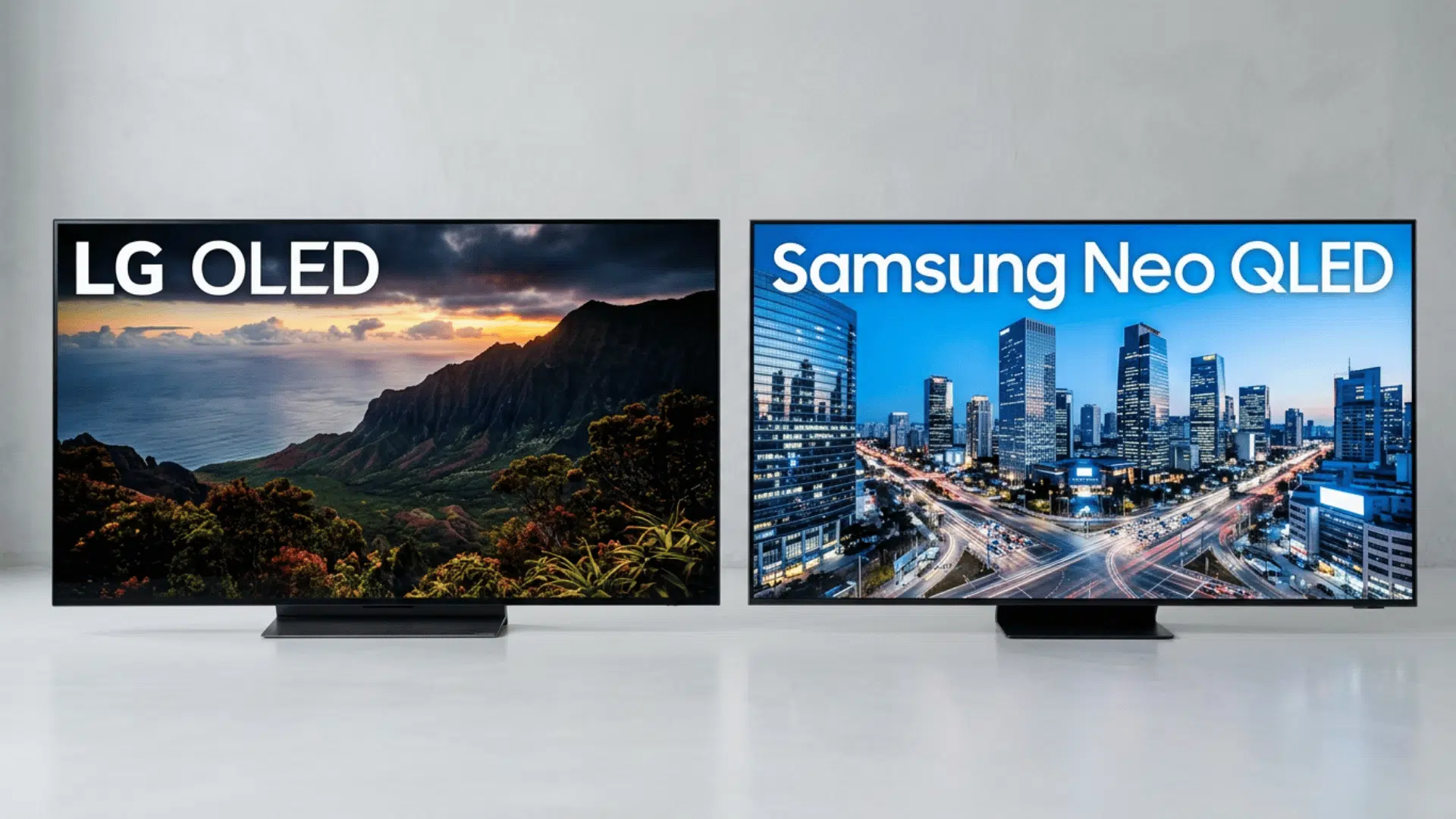



Choosing between Samsung and LG TVs can be difficult because both brands offer a wide range of models with different features, display technologies, and price points.
Samsung is known for its QLED and Neo QLED displays, while LG is widely recognized for its OLED TVs and smart TV features.
Neither brand wins outright. The better choice depends on the room lighting, budget, and whether brightness or contrast matters more to the owner.
This blog breaks down the differences so readers can match the right TV to their space. Keep reading to see exactly where each brand pulls ahead, and where it falls short.
Samsung vs LG TV: Key Differences at a Glance
Samsung and LG offer TVs across different prices. This comparison covers their picture quality, gaming, smart features, sound, and connectivity.
| Feature | Samsung TVs | LG TVs |
|---|---|---|
| Display Technology | Uses QLED, Neo QLED, QD-OLED, and Micro LED options | Offers OLED (WOLED), QNED, and LED TV options |
| Price Range | Roughly $1,300 to $4,500+ across QLED and OLED lines | Roughly $1,000 to $4,500+ across LED, QNED, and OLED lines |
| Best For | Bright rooms, sports, and high-luminance viewing | Movie watching, OLED performance, and gaming |
Display Technology: OLED, QLED, QD-OLED and Mini LED Explained
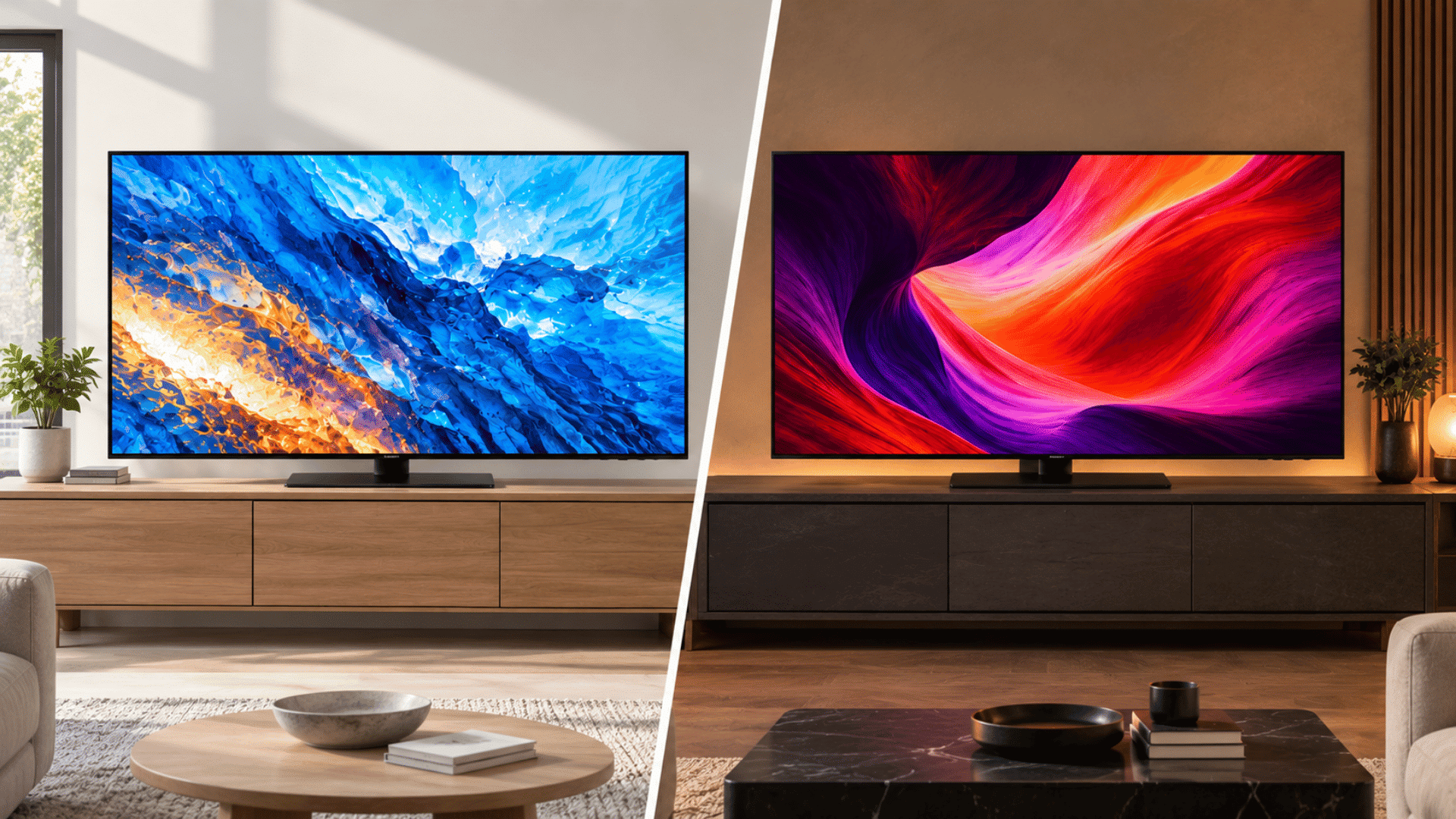
Samsung and LG use different display technologies across their TV lineups, affecting brightness, contrast, color performance, and viewing experience. Here is how the main options compare.
OLED: OLED TVs use self-lit pixels that can turn on and off individually. This allows deep blacks, strong contrast, and accurate colors.
QLED: QLED TVs use a quantum dot layer with an LED backlight to improve brightness and color range. Samsung uses QLED technology across many of its premium LCD models, making it suitable for bright rooms.
- QD-OLED: Samsung combines blue OLED light with quantum dots for deep blacks and strong color. LG uses WOLED panels with a white sub-pixel to increase brightness while maintaining excellent contrast.
Mini LED: Mini LED TVs use thousands of smaller LEDs behind the screen for improved brightness and better local dimming compared with standard LED TVs.
Disclaimer: OLED TVs can develop image retention from static content left onscreen for extended periods. Modern pixel-shifting and screen-saver features reduce this risk, but buyers should still consider it.
Samsung vs LG TV: Feature-by-Feature Comparison
Beyond display technology, Samsung and LG differ in several areas that can affect everyday viewing. The comparison below covers picture quality, gaming, smart features, sound, and connectivity.
Picture Quality
Samsung TVs generally prioritize higher brightness, making many QLED and Mini LED models better suited to bright rooms.
LG OLED TVs focus on deep blacks, precise contrast, and strong dark-room performance. Samsung QD-OLED models combine OLED contrast with strong color and glare control.
Neither brand is automatically sharper, so room lighting and preferred viewing conditions should influence the final choice.
Gaming Performance
Both Samsung and LG offer strong gaming features on compatible premium TVs, including HDMI 2.1, VRR, low input lag, and high-refresh-rate 4K gaming.
Samsung supports AMD FreeSync on many models, while compatible LG OLED TVs also support NVIDIA G-Sync. LG OLED’s fast pixel response can benefit motion-heavy games.
Both brands provide dedicated gaming modes that automatically optimize important settings for consoles and PCs.
Smart Platform and Interface
Samsung uses Tizen OS for streaming apps, settings, gaming services, and SmartThings controls.
LG uses webOS, offering straightforward navigation alongside ThinQ smart home integration. Both platforms support major streaming services, though availability can vary by region and model.
LG’s Magic Remote provides pointer-based navigation on compatible TVs, while Samsung favors simpler button controls. The better platform largely depends on navigation preferences and existing smart devices.
Sound Quality
Samsung and LG include AI-based audio processing that adjusts sound according to the content being played. Premium Samsung TVs offer Object Tracking Sound and can integrate with compatible Samsung soundbars through Q-Symphony.
LG models support features such as Dolby Atmos pass-through and WOW Orchestra with compatible LG soundbars.
Built-in speakers remain limited on both brands, so a dedicated soundbar is preferable for a more immersive home theater setup.
Connectivity and Ports
Samsung and LG TVs commonly provide HDMI, USB, Wi-Fi, Bluetooth, Ethernet, and eARC connectivity, depending on the model. Samsung integrates compatible devices through SmartThings, while LG uses its ThinQ ecosystem.
Port numbers, HDMI specifications, and supported features differ considerably across individual models and price ranges.
Checking the exact specifications before purchasing is important, particularly when connecting multiple consoles, soundbars, streaming devices, or other home theater equipment.
Smart Features and Operating System Differences
Samsung’s Tizen and LG’s webOS provide quick access to streaming apps, settings, voice controls, and connected devices.
- Samsung Tizen OS: Tizen provides access to apps, gaming services, settings, and SmartThings controls for compatible connected devices.
- LG webOS: webOS allows users to switch between apps, inputs, and settings. ThinQ manages supported smart home devices.
- App Support: Both platforms include Netflix, YouTube, Prime Video, and Disney+, though availability differs by country and model.
- Remote Experience: LG’s Magic Remote adds pointer control on supported TVs, while Samsung remotes focus on quick access.
- Overall Use: Tizen works well with Samsung devices, while webOS keeps menus direct and easy to manage.
Samsung and LG TV Model Lineups
Samsung and LG organize their TV lineups across several tiers, giving buyers different display technologies, features, sizes, and price points.
Samsung TV Lineup
Samsung’s lineup ranges from affordable Crystal UHD TVs to premium QD-OLED models. QLED and Neo QLED options provide increased brightness, with Neo QLED using Mini LED backlighting.
Samsung’s OLED range includes different performance tiers, while Micro LED occupies the ultra-premium end for large installations.
Available model names, sizes, features, and technologies vary across price levels, giving buyers several options based on budget and viewing requirements.
LG TV Lineup
LG offers standard LED and QNED televisions alongside its extensive OLED range. Each step generally adds improvements in brightness, processing, or design.
Its OLED models are divided into tiers, with the B-series positioned as the entry option, C-series covering the popular mid-range, and G-series serving as the premium Gallery range.
Specific models and features change between generations, so buyers should compare current specifications before choosing.
Price and Value: Which Brand Offers More?
Samsung offers TVs across a broad price range, from affordable Crystal UHD models to premium Neo QLED and OLED options.
LG also covers budget and mid-range categories, but its OLED lineup is particularly competitive for buyers prioritizing premium picture quality.
Samsung often provides more choices across QLED and Mini LED price levels, while LG offers several OLED tiers for different premium budgets.
Overall, Samsung may provide greater price flexibility, while LG can offer stronger value for shoppers specifically interested in OLED performance.
Disclaimer: TV prices change frequently based on screen size, model year, retailer discounts, and promotions. Always confirm current specifications and pricing before purchasing.
Samsung TV and LG TV: Pros and Cons
Samsung and LG TVs come with different strengths in picture quality, gaming, software, and pricing. Comparing their pros and cons makes it easier to see which brand better matches the viewer’s needs.
| Brand | Pros | Cons |
|---|---|---|
| Samsung TV |
|
|
| LG TV |
|
|
Wrapping Up
Samsung and LG both offer excellent TV options with different strengths. Samsung stands out with high brightness, wide model choices, and strong performance in QLED and Neo QLED displays.
LG is a strong choice for OLED picture quality, gaming features, and wide viewing angles. The better option depends on the owner’s room setup, preferred content, and budget.
Compare display technology, smart features, and connectivity before making a final decision. A TV should match the daily entertainment needs and viewing habits.
Share your thoughts in the comments and let us know which brand you prefer.
Frequently Asked Questions
Which TV Brand Has Better Upscaling Technology, Samsung or LG?
Both brands use AI-based processing to improve the quality of lower-resolution content. Samsung uses AI upscaling in many Neo QLED and premium models, while LG includes AI Picture Pro features in select TVs.
Do Samsung and LG TVs Support Voice Control?
Yes, many Samsung and LG smart TVs support voice commands through built-in assistants or connected devices. Availability depends on the model and region.
How Long Do Samsung and LG TVs Usually Last?
A quality TV from either brand can provide many years of use with proper care. Lifespan depends on usage habits, model type, and maintenance.